Showing posts with label bibliotourism. Show all posts

Friday, May 28, 2010

How Poetry Grew in Emily's Garden

She knew a great deal about plants, and she grew them very well ... And what we found is that her poems are not sentimental valentines to flowers. They're serious poems, but they're tied to her great passion for plants and nature. So we decided, well, we should introduce people to Emily Dickinson not only as a poet, but as a gardener.
The New York Botanical Gardens pays tribute to the reclusive poet in an exhibition called Emily Dickinson's Garden: The Poetry of Flowers. You can take a look at the slides of the garden on the NPR website and listen to the radio programme.

I also came across a beautiful blog dedicated to Dickinson's garden.

Thursday, July 30, 2009

Burgess in Kuala Kangsar Tour

Thought you might like to see a pic of some of our delegation of members of the International Anthony Burgess Foundation and Badan Warisan Malaysia on our trip to Kuala Kangsar yesterday. You might recognise Dr. Rob Spence who came to talk to Malay College Old Boys Association about Burgess last year, and his wife Elaine (in blue at the front). We gave books by, and about, Burgess to the schools as a thankyou for their hospitality. We were really privileged to be allowed to see around the schools - the first MCKK where Burgess taught, and the second the girl's school housed in what used to be King's Pavilion (the old residency) where Anthony Burgess and his wife Lynne lived 1954-6. The two schools are rightfully proud of their traditions, and I hope we have added yet another layer to that by reminding them that a very famous author was connected with the buildings. The teacher at the front in the picture is holding a copy of The Long Day Wanes, the US edition of The Malayan Trilogy which I passed to her (... a bit of informal book-crossing!). The biggest thrill for me was being allowed to go up to the top of the tower of the old residency where there were panoramic views of the forested hills, Perak River, and sultan's palace. This is the very scene that inspired Burgess to start writing about Malaya (just read the opening of the second chapter of Time for a Tiger). And of course, our tour took in all the other famous sites in Kuala Kangsar ... mosque, palaces, oldest rubber tree, cemetaries, Idris club (aka Burgess' Iblis Club), riverside ... Our Badan Warsian members added to our enjoyment significantly, being able to explain about history and architecture and culture much more effectively than yours truly, and I must say a big thank you particularly to Najib Ariffin (who also happened to be a Malay College old boy) for his entertaining and informative commentary on the coach. Thanks too to my former student Hasnul Ariffin, who present a spectacular time-lapse photograph of Malay College Big School to the IABF taken to mark the centenary of the school. Thank you to everyone who helped to make our trip a big success. Next - (and I am quite serious here) going to work on a Perak literary tour taking in Ipoh and other places and focusing on more contemporary literature!

Monday, July 27, 2009

BiblioTour Guide

Apologies in advance for not blogging much over the next day or two. The International Anthony Burgess Sympozium starts tomorrow at the Istana Hotel. I am so excited that the event has come to Malaysia (as a result of the success of our Burgess evening last year).

I have the chance to play tour guide on Wednesday for a trip to Kuala Kangsar. The delegates have come from around the world and we will be joined by members of Badan Warisan Malaysia.

We'll be visiting both Malay College where Burgess taught (as Mr. J.B. Wilson) and SMK Raja Perumpuan Kalsom which is housed in the old Residency building, better known as King's Pavilion when it was Malay College's prep school. It was here that Burgess lived with his wife Lynn, and wrote Time for a Tiger, the first part of The Malayan Trilogy.

Besides the literary hagiography (!) we will also do the usual Kuala Kangsar sights - the Ubudiah Mosque and the plethora or palaces around Bukit Chandan. If you don't know the town, do go take a trip up there some time. It's probably the prettiest Malaysian town, with plenty of historical stuff to explore.

So if there's nothing much new on the blog for a while, panic not. There are sure to be adventures to be written up.

Saturday, June 13, 2009

Authors on the Beach

Those in cooler parts of the northern hemisphere and looking forward to that thing called "summer" and the book page editors play along. The Washington Post asked authors which book character they would like to accompany them for a day on the beach. Can you imagine Jodi Picoult playing frisbee with Mr. Darcy; Garrison Keillor coaxing Emily Dickinson out of the house for some much needed sun; or Arthur Philips looking to Captain Ahab to protect him from the jellyfish? Fun. (I think I'd take along Jeeves to mix me cocktails exactly as I like them and be there with the cold towels ... an unobtrusive but ever vigilant presence.) The Guardian asks writers including A.S. Byatt, AL Kennedy and David Lodge to recall the book that best recaptures for them a favourite holiday spot in Britain. My choice here would be Bruce Chatwin's On the Black Hill, which is set in the Black mountains on the border between England and Wales - it brought back strong memories of a family holiday where we stayed in a farmhouse, helped out with the animals and rode a pony along green countrylanes. (This novel is one of my lifetime favourites and I'd love to nudge you to read it. It should be a classic.) You can go to two extremes with summer reading says Betty Simnacher on the Dallas morning News blog:
... or, of course, take the middle way. You can go for the beach book -- fluffy reads that don't require a lot of concentration -- or you can tackle the heavyweights.
I've never been one for fluffy reads, but I can't stand anything too depressing or heavy on the beach. I'll vet the books I take on holiday more carefully since having to restrain myself from throwing Anne Enright into the swimming pool in Bali. (The novel, not the author, luckily.) Simnacher links to interesting summer reading lists at The Wall Street Journal, and to NPR's website where a whole lot of independent booksellers across the States weigh in with their choices. (You can listen to the podcast too.) Eric Forbes profiles June reading suggestions on his blog. I'll append any more summer reading lists as I find them. (And perhaps some winter ones from down under!)

Tuesday, March 31, 2009

Literary Berlin

More and more, the city is expanding on its historic role as an incubator of books. Award winners and anonymous scribblers, locals and expatriates, everyone in Berlin has a book in him and everyone with a book in him seems to have roosted in Berlin. ... The teeming masses of authors are supported by a superstructure of foundations and grants and ubiquitous antiquariat (used-book stores) seemingly on every corner, not to mention the noble cultural villas, like the Literarisches Colloquium Berlin and the American Academy in Berlin, both on the same lovely lake — the Wannsee — near where the poet Heinrich von Kleist killed himself in 1811 after first shooting the incurably ill Henriette Vogel.
Nicholas Kulish writes about the literary health of Berlin in The New York Times. One can't help but be envious. Foundations ... grants ... used bookshops ... cultural villas ... *sigh*

Wednesday, March 25, 2009

Putting Independent Bookstores on the Map ...

... quite literally!

The Millions
offers a "new and improved version" of their fascinating walking tour of New York's independent bookshops. Even if you will never visit the city, you can indulge in an enjoyable bit of bibliotourism from a distance!

(Thanks Grace for sending me the link via Facebook.)

Sunday, March 01, 2009

Literary Dreamscape

Bookshops are important places for us word merchants. The good bookshop will contain an air of intrigue. It will smell musty, it will lure you into its interior and, with warm armchairs and a glowing fire perhaps, it will embrace you and invite you to discover the thousands of stories hidden there. The good bookshop will enhance the delicious experience of browsing, touching covers, pulling volumes from the shelves and even buying a book.
Diane Dempsey in The Age describes her search for the "dream bookshop" on an overseas trip. her search takes her to the London Review Bookshop in Bloomsbury, London, and The Winding Stair in Dublin (which novelist John Banville apparently apparently uses as his personal post office). But its only in Shakespeare & Company on the Left Bank in Paris that she finds her bookish nirvana :
All the ingredients were there — mystery and chaos, and eccentric and lovely people whose passion has created the most fabulous bookshop in the world.
And if you want more, here's the shop YouTubed! Postscript : Jeanette Winterson revisits Shakespeare & Co. and paints a loving portrait of its owners.

Friday, April 25, 2008

Literary London

Don't know about you, but when I travel I love to fit my reading to the place I'm visiting.

If you're off to London any time soon (one or two of you are there already!), you might enjoy this guide to the city in books, produced by Booktrust for the Get London Reading campaign. (The full, interactive map features 400 books set in, or about the capital, and if you find that any books have been forgotten - you can just add them!)

Of course Dickens and Conan Doyle are necessary choices, but there are plenty of suggestions for contemporary fiction including Sarah Waters The Night Watch, Zadie Smith's White Teeth, and Gautam Malkani's Londonstani.

Thursday, January 17, 2008

Our Burgess Pilgrimage

Thought I'd share with you some of the photos I took on the trip up north to Kuala Kangsar on the "Burgess pilgrimage" I made with Rob, Elaine and Abu. For those of you who've skipped a beat, this town was my home for three years. And Anthony Burgess ... or rather John Burgess Wilson also lived and taught and began his career as a novelist there in the fifties.

Posted by Picasa
Even Burgessians (for such we are, said Dr. Rob) have to eat. First stop, breakfast at the Tapah service station. While globalisation leads to a distressing homogenization of the world, and fast food franchises looking the same the world over, at least the local branch of Dunkin' Donuts is bold enough to initiate a new variety.

Posted by Picasa
The only place to eat if you want to connect with the real Kuala Kangsar is Yut Loy restaurant, famous for possibly the best pau (steamed buns with a range of fillings) in Malaysia, and also as a smokers' haven for the Malay College boys, allowed out to town on Saturdays. They congregate in the room upstairs as they have for decades. And no doubt the friendly proprietor tips them off when a prefect or teacher approaches. Ah, tradition!

Posted by Picasa
And the only dish to eat in Yut Loy if you want to follow local traditions is "egg steak". (A culinery delight i don't think even Boolicious has discovered.)

The dish that was invented for British and Aussie servicemen stationed in the town after the war and during the emergency when they couldn't afford beef steak. It consists of two runny yolked fried eggs, dowsed in a gravy made of dilute Worcestershire sauce, enriched with tinned processed peas, and served with thick slices of toast. Of such stuff are gourmet dreams made.

It feels like a place where time has stood still. These pictures of Kuala Kangsar in the floods date from 1967.

Posted by Picasa
On to the official tourist route, which took us on a winding drive around Bukit Chandan, the town's royal hill and one of the richest spots for architecture in the country. Above, of course, is the famous Ubudiah Mosque:
... bulbous as a clutch of onions ...
as Burgess said irreverently in Time for a Tiger. We also pointed out to Rob and Elaine the Sultan's Palace, Istana Iskandariah (left):
... designed by a Los Angeles architect ...
Posted by Picasa
Sadly, the Istana Kenangan (built without the use of a single nail) was closed to the public.

Posted by Picasa
An army of asplenium nidus bent on world domination in the branches of an ancient rain tree on Bukit Chandan.

An old house (right) I loved to cycle to when I lived in Kuala Kangsar had burned down and only the blackened frame remains. Really this breaks my heart. I remember exploring inside the house, being careful of the broken floorboards ... and finding two thrones in an otherwise empty upstairs room! The house became the hang-out of drug addicts and I guess that's how the fire started. Clearly, it was yet another palace on a hill of palaces and I guess that no-one really cared enough to try to preserve it.

Posted by Picasa
The most important stop was to see King's Pavilion, built 1905, which served as the British resident's home and later as the prep school for Malay College. This is where Anthony Burgess/ JB Wilson lived (upstairs) when he was hostel master. My husband was one of the seven year olds he describes in his autobiography Little Wilson and Big God, crying themselves to sleep at night and pissing off the balcony (which Abu says isn't true, but as Rob says, if Burgess were given the choice between the truth and a better story, he'd go with the latter). This is also where Burgess' protagonist Victor Crabbe lived in the alternate universe's Kuala Hantu.

Posted by Picasa
The building now houses the Sekolah Menegah Raja Perempuan Kalsom.

Posted by Picasa
Next stop was the Idris Club, named after the fun-loving Sultan Idris. In Time for a Tiger, Burgess rechristened it the Iblis Club. Iblis, of course, means Devil. All these cheeky renamings of Malaysian towns and landmarks would have passed the books foreign readers by. My theory - Burgess wanted to share a joke with his Malay speaking readers (to whom the book is dedicated) and not let the others in on it. (He didn't even fully explain the joke in his autobiography).

I used to be a member of the club. (Actually this is where I brought Abu on our first date!) To quote Burgess in Earthly Powers:
It was in Kuala Kangsar, if you will forgive the novelettish circumlocution, that I met the love of my life.
But now the Idris Club seems a very sad, rundown place and the people running the place seemed more than a little suspicious of us.

Posted by Picasa
I had to sneak this picture of the billiard table through an open window. Can't see Burgess being a snooker player but I'm sure his characters played a frame or two here.

Posted by Picasa

Of course, our trip culminated in a visit to Malay College, where the author taught. The school features prominently in Time for a Tiger.

Posted by Picasa

On our trip home, we stopped off in Ipoh and christened the trip with Tiger Beer and tea. The 101 year old FMS bar is faced with closure, and many of the old shophouses seemed to be boarded up. More heritage buildings about to be lost?

I did a sterling job of pointing out other landmarks that make their way into Tan Twan Eng's The Gift of Rain ("That's a cave temple over there") and Preeta Samarasan's forthcoming Evening is the Whole Day. Am thinking of taking up bibliotourism for a living.

If you'd like more on Burgess in Kuala Kangsar, I think you will find this extract from the first volume of his autobiography, quite fascinating ... particularly on the topic of Malay ghosts and the affair he carried on with a coffee-shop waitress called Rahimah.

Sunday, August 05, 2007

Balram Dass and the Great Indian Book Bazaar

I loved Stephen McClarene's piece in the Times about Delhi's huge weekly book market and a certain gentleman called Balram Dass who has had his pavement stall for 40 years. Then there were only 3 other dealers. Now there are 160!:
They make up the Great Indian Book Bazaar, often described as the world’s biggest weekly book market. Every Sunday, from 9am to 8pm, Daryaganj, a hectically busy commercial street in the shadow of the Red Fort, is lined by literally a mile of books, mostly secondhand and in English.

If you want a copy of Chaucer’s Wife of Bath’s Tale (slightly scuffed) for about 20p, or Increase Your Height – Well Tried Methods for Wonderful Results (80p), or a clutch of Danielle Steels at 65p each, this is the place to come. There are tales of first editions of A Passage to India changing hands for 60p.

Mr Dass, aged 67, delves into a pile of Mills and Boons and “hot-cakes” (bestsellers) and pulls out the Woman’s Journal Home Cookery manual. With its colonial recipes for stuffed sheep’s heart, sardine sandwiches and Nell Gwynne pudding, it’s the sort of book left behind by British memsahibs when they went home to Pinner or Oxted. “Very good copy,” Mr Dass says. “150 rupees only.” That’s less than £2.

He and his son Manish have a pitch halfway along Daryaganj, the street where all the wonders of the Orient are sold, plus air-conditioning systems.

These shops open during the week, but on Sundays the shutters are pulled down and the bookstalls set up in front of them. The dealers sit crosslegged behind their stock, wads of rupee notes stuffed in their shirt pockets, cannily observing the passing crowds. If it’s raining, they shelter under plastic sheets.

For Mr Dass, the bazaar, which lures customers and dealers from all over India, is his only source of income. Like three quarters of his colleagues, he has no shop, and spends the week scouring Delhi for stock.

Some books come from private libraries; others are left on trains and buses and auctioned by the transport authorities; others still are bought from radhi-wallahs, who cycle around middle-class enclaves collecting wastepaper for recycling.

On a good Sunday, with successful haggling, Mr Dass may take £35; on a bad Sunday, perhaps as little as £10. “It is hard to predict,” he says. “Nothing has a fixed price. People are looking for value, not price.” So what has his best sale been? “ Encyclopaedia of Ports and Cities, 1928 edition,” he intones reverently. “Sold for 1,200 rupees.” At about £14, we are not talking mega-books.
The article also mentions some more upmarket bookshops, those of:
Khan Market and Jor Bagh Market (twin haunts of expats), the glitzy new western-style Oxford Bookstore at Connaught Place, the city’s commercial hub, and the air-conditioned showrooms of upmarket South Delhi dealers.
and here's a list of New Delhi bookshops!

I am always envious of Malaysian friends who head to India to do their book-buying, especially as they always gloat about the choice and the price. (But isn't Mumbai more the centre of the bookselling world?)

If you have had a chance to check out Indian's bookshops please leave a note as to which you recommend. And maybe one day I'll pop over with an empty shopping bag.

Wednesday, June 06, 2007

Bringing Magic to Macondo

Perhaps the bookish biggest news story of the last few days was the story of Columbian author Gabriel Garcia Marquez' return to the town of Aracataca which he immortalised as Macondo in his classic novel One Hundred Years of Solitude. The book has sold 30m copies worldwide.

Marquez spent the first eight years of his life in the town, living with his grandparents. Writes Juan Forero in the Washington Post:
It was here that a young García Márquez heard ghost stories, fairy tales and one adventure yarn after another, drawn from the region's rich and often blood-soaked history. The inspiration led him to become one of the leading writers in the style known as magical realism, with its penchant for weaving sharply drawn realism with dreamlike, even preposterous twists, all presented in a deadpan tone.
Marquez arrived in style on the Macondo Express decorated with yellow butterflies that have come to symbolise Macondo and a train-load of musicians, singers, friends and family - and even a government minister. Forero describes the scene:
Thousands of people had lined the route, screaming "Gabo, Gabo, Gabo" and holding up giant posters featuring the irreverent author's smiling face framed by enormous glasses. They threw confetti, set off fireworks and let loose yellow balloons. Brass bands played and pint-size schoolgirls performed, dressed as butterflies.
Marquez' triumphant return marks the launch of a new passenger service which it is hoped with bring much needed tourism to the area. A holiday with a little magical realism sprinkled in, anyone?

(Pics nicked from Guardian (top) and the Age (bottom))

Saturday, June 02, 2007

Oh to be in Hay Now that Summer's Here

I am reading the Guardian's coverage of the Hay Literary Festival with a great deal of envy, not only because they have a formidable line-up of authors (including no less than four Nobel prize winners) but because ... well, if there is one spot on earth where the mystical ley lines of bibliomagic converge, it is in this tiny town on the border between England and Wales which has ... wait for it ... thirty-nine second hand bookshops! (The population is 80,000 so that makes it one bookshop for every 37 residents.)

Bookseller Richard Booth, whose empire quickly spread across all the empty shops in the town, as well as the former firestation and 17th Century Jacobean mansion, declared independence from both England and Wales in a bloodless coup on 1st April, 1977. No-one actually took him seriously, but it certainly put Hay on the map.

Our family once visited the town back in the early 1970's when were on holiday on a Herefordshire farm (yes, British people do such strange things!) and I remember spending a whole afternoon in just one section of one shop, utterly mesmerized by the choice of antiquarian books. I had glimpsed paradise, and one day, I have promised myself, I will return.

But has the festival, now in its 20th year (with150,000 ticket sales for 435 events) got too big, too impersonal and too concerned with commericialisation and celebrity glitz? Some critics think so, writes Andrew Johnson in the Guardian.

Another much smaller UK festival I read about with much envy is the Way With Words festival in Dartington, Devon.
A well-run literary festival should be something like a convivial garden fête - lots of strangers milling around in the sunshine and striking up conversations over a coffee, at the bar, waiting in the queue for the next event.
says author Penelope Lively in the Telegraph, who reckons that she's found bookish heaven in Dartington.

I know the venue well from my days living just down the road in Plymouth or visiting my friend Helen in Totnes and have happy memories of chamber concerts in this beautiful old hall, scones and clotted cream in the tea shop, and long walks in the beautiful gardens.

The trouble is perhaps that when I think of England I always see it on a perfect Summer's day and am just swallowed up by waves of nostalgia ...

*Sigh*
(Top picture from Guardian blog, bottom picture form the Telegraph)

Saturday, April 21, 2007

Dickensville

In an aptly titled piece in the Guardian, Simon Swift asks What the Dickens?, referring to the £62m Dickens World theme park which is due to open in Chatham, Kent at the end of May.

It is described as:
... an exciting indoor visitor complex themed around the life, books and times of one of Britain’s best loved authors, Charles Dickens. It will take visitors on a fascinating journey through Dickens’ lifetime as they step back into Dickensian England and are immersed in the urban streets, sounds and smells of the 19th century.
And it boasts the following attractions:
... one of Europe’s largest dark boat rides, the Haunted house of Ebenezer Scrooge, a state-of-the art animatronic show, Victorian School Room, 4D high definition show and Fagin’s Den.
Is this an exciting way of bringing literature alive or just another great British monument to tackiness? (I confess a deep affection for all things tacky, and I firmly believe that Malaysia does tacky with a great deal more style than the Brits. Look no further than Sunway Pyramid!)

And on behalf of Britain's Tourist Board, if you were in UK on your hols, would you make a special journey to go and see Dickens World?

Meanwhile, on the Guardian blog Judith Flanders worries that the social issues that Dickens cared so much about could be trivialised, while Lindesay Irvine runs away with the idea of the turning other writers' works into theme park material. (Any one up for a nice family day out at Kafka's Castle?) Flanders has invited readers to say what authors they think should get the theme park treatment, and one commenter could well have a workable proposal for Harry Potter Land! (Oops, too late, dear!)

The closest I've come to proposing the tacky and materialistic exploitation of any author's work is this though.

(While writing this post I was haunted by the memory of an article I read, but not unfortunately blogged, last year about the rebuilding of Hardy's Wessex in China. Would be grateful for help in tracking it down.)

Tuesday, June 21, 2005

The Harmony Silk Factory Tour of Perak

Our book club, Fiction&Friends, would like to point out a factual inaccuracy on page 13 of The Harmony Silk Factory:

"In 1947, my father installed the first flush cistern and septic tank north of Kuala Lumpur ..."

Jessica is aggrieved because the first flush toilet was in fact installed in her family house in Taiping in 1938. The house was the first one to be built of concrete in the town, and it was commandeered by the Japanese during the war.

Jessica is prepared to open up the toilet for public viewing ... for a fee.

This leads us to discuss the possibility of getting in ahead of Tourism Malaysia and organising our own Harmony Silk Factory Tour of Perak.

After all, something similar has been done in Britain with writers from the Brontes to the Bard.

The tour could take in all the places mentioned in the book and include, not only a visit to Jessica's family throne, but also a romp through the Cameron Highlands (and make it back to Kampar on foot in time for tea),

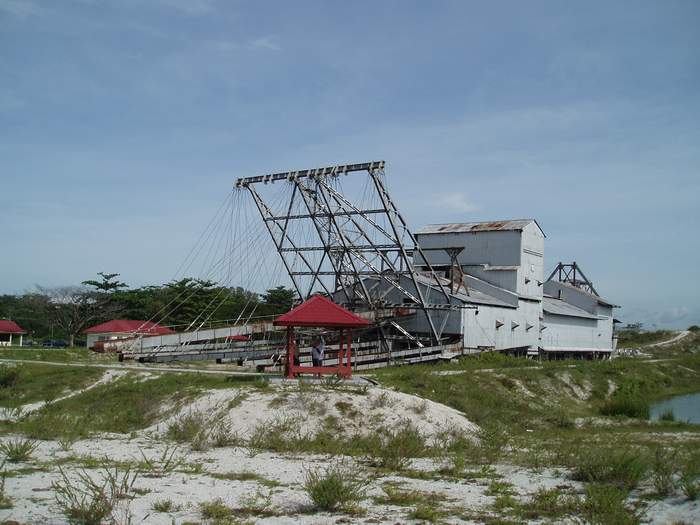
... a ride on a specially restored tin dredge (with costumed Mat Salleh bosses to shout at everyone) ...


... a now-you-see-it-now you-don't drive through the forest to Kellie's castle with twin sisters hawking fruit by the roadside ...


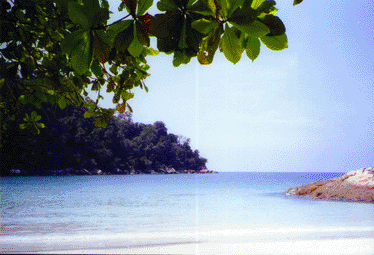
... and of course an optional boat trip out to the islands ...


... in a highly unseaworthy boat with self-assembly engine and no crew. (For this part of the trip, tourists would have to sign an indemnity clause covering both physical and psychological damage.) Accomodation would be provided in rest houses along the way (bathtowels and pontianak provided).

Think about it - the possibilities are endless!

Seriously, though, we had a really good evening discussing the book. There are many books which we enjoy reading, but which don't lend themselves to a deeper level of scrutiny. The many twists and turns and ambiguities of plot and different viewpoints of The Harmony Silk Factory provided us with one of the liveliest book debates in our three year history.

And how nice it is to read a book in which we recognise Malaysia.