Well, none of our local chaps made it to the shortlist of the Frank O'Connor this year. Instead, American writers dominate the list this time round, taking five of the six slots and demonstrating the health of the form in the US despite dire prognostications. (The only non-American author is David Constantine who is British.)
Here's the list for you to check out, and there looks to be much good stuff here, so do check out the links :
If I Loved You, I Would Tell You This by Robin Black
Mattaponi Queen by Belle Boggs
Wild Child by T.C. Boyle
Burning Bright by Ron Rash
What the World Will Look Like When All the Water Leaves Us Laura van den Berg's
The Shieling by David Constantine
Showing posts with label frank o'connor international short story prize. Show all posts
Showing posts with label frank o'connor international short story prize. Show all posts
Tuesday, July 13, 2010

Wednesday, April 28, 2010
Three Friends on Frank O'Connor Longlist!
Biggest congrats to friends longlisted for the Frank O'Connor short story award : Wena Poon for The Proper Care of Foxes; David T.K. Wong for Chinese Stories in Times of Change and O Thiam Chin for Never Been Better. (All three books are sitting on my dining table been read in rotation! And if you should want copies of your own, they all should be in our local bookshops.)
The total longlist is 54 strong this year (comprising 26 women/ 28 men; 21 Americans, 12 British, 6 Indians, 3 Canadians, 3 Irish, 2 New Zealanders, 2 Singaporeans, and one each from Bangladesh, Bhutan, Bulgaria, China, US Virgin Islands.
David TK Wong, incidentally, is appearing at Readings@Seksan this Saturday and reading an extract from the new novel he is working on.
Postscript :
The longlist for the Edge Hill Short story prize has also just been announced.
Wednesday, January 14, 2009
Three for the Story Prize
 The judges for The Story Prize (which honours collections of short fiction written in English and published in the US) has selected a shortlist of just 3 books out of the 73 submitted :
- Unaccustomed Earth by Jhumpa Lahiri
- Demons in the Spring by Joe Meno
- Our Story Begins by Tobias Wolff
Meno's book, the only small press publication of the three, sounds very much my kind of thing :... when a version of the National Book Award winner was published thirty years previously, I don't think that hurts Wolff's chances.

Each of theses 20 stories evokes a different and surprising world, where, for instance, victims held at gunpoint fall in love with their captors, freed zoo animals roam the streets, a wife turns into a cloud whenever her husband makes a romantic overture, miniature elephants become prized and acutely sensitive pets, and a tiny city grows inside a woman like a cancer. Yet, no matter how imaginative the situation, the stories remain grounded in real empathy and plausible detail.


Sunday, October 05, 2008
Wena's Irish Adventure

Despite being excited about the opportunity to read from my book at Cork, I had my reservations. I've always had a horror of "lit fests." I was, however, relieved to find that the Frank O'Connor Short Story festival wasn't about writers preaching about "Literature" into microphones, or groupies lining up to get their books signed. It was about taking small, intimate workshops and learning from some of the most talented and generous writers in English fiction today. It was about chattering with writers and editors and getting pissed in the Long Valley, an old literary pub with faded lamps, night after night. And, best of all, it was about endless readings—which were really, at their best, performances—and screaming and giving high fives to the writers whenever they delivered a gut-wrenching, one-two punch performance of a story that just slew everybody. Together we rediscovered the oral tradition of storytelling, and for five days we experienced what the old bards already knew: the simple happiness of huddling together and telling each other stories over a pint or two.Wena Poon's account of the Frank O'Connor Short Story Festival is published in Starmag today.
By the end of the first night, I was delighted to find that the Frank O'Connor International Short Story Festival wasn't highfalutin. If anybody had any corners, they were knocked off. If anybody had any doubts, they were dispelled. We had—after many rounds of Beamish and Guinness—distilled the Frank O'Connor Short Story Festival to its very essence. It had become, as the American writer Jon Boilard calls it, the "Frank O." And whether we were world-famous, or not famous, or editors, or publishers, or literary agents, or writers, or poets, we had become a fellowship. It was as if Pat Cotter, the organiser, aimed to replicate in five days what a community of writers in Cork, Ireland, would have naturally formed in five decades. And he came very close to doing so. Good literary festivals inspire readers. Great literary festivals inspire writers. Thank you, City of Cork, and thank you, Pat. Old Frank O himself would have been proud..
Wena also wrote a lovely email to Eric Forbes which I'm sure neither of them will mind if I quote from :
I hope your business people know that Lions was very successful at this festival, that editors asked for my next book, that the audience loved the story I read, and wanted to buy copies of this book that sold out, and what a great publicity this event has been for both Lions In Winter and MPH. I told everyone what a great publisher MPH has been in terms of taking the risk and promoting this work in Singapore and Malaysia.
 To me Wena wrote:
I feel like I'm standing right at a live volcano of contemporary fiction watching the red hot lava flow past. The writers that I got to know are all amazing.And then she asks the big question :
How, how can we create this in Malaysia?(Top pic is from Wena's blog, bottom pic is of Wena flanked by fellow short story writers Carys Davis and Vanessa Gebbis)
Monday, August 04, 2008
Wena in Cork
I'm excited for Wena Poon all over again.
Longlisted for the the Frank O'Connor Short Story Award, she had no chance of being shortlisted for the same ... because, of course, there wasn't a shortlist in the end.
But Wena has been invited to read her work at the Frank O’Connor Literary Festival in Cork, Ireland, on September 17-21, 2008. Also appearing will be Jhumpa Lahiri, Yiyun Li, Clare Wigfall and ZZ Packer. You just don't get bigger names in short fiction than these.
As Wena reminds us on her blog :
(Pic above is Wena being interviewed recently on Channel News Asia.)
Longlisted for the the Frank O'Connor Short Story Award, she had no chance of being shortlisted for the same ... because, of course, there wasn't a shortlist in the end.
But Wena has been invited to read her work at the Frank O’Connor Literary Festival in Cork, Ireland, on September 17-21, 2008. Also appearing will be Jhumpa Lahiri, Yiyun Li, Clare Wigfall and ZZ Packer. You just don't get bigger names in short fiction than these.
As Wena reminds us on her blog :
This is the first time a Singaporean author, and MPH, a Malaysian publisher, appeared on the FOC longlist. The longlist had a preponderance of authors from the West: 36 out of 39 authors. Only 3 authors were not from the West - they were from Singapore (Wena Poon), Nigeria and Taiwan.What I hope for most now is a way for Wena's book to find it's way into the hands of a wider readership overseas ...
(Pic above is Wena being interviewed recently on Channel News Asia.)
Friday, July 25, 2008
All the Lonely People
 I asked you a couple of days ago what you are reading and it's only fair I should reciprocate! I have a fair bit of catching up to do here. Here's a start.
The book I've enjoyed most recently is far and away No-one Belongs Here More than You, Miranda July's funny, sad, startling collection of short stories that won the Frank O'Connor last year. You may remember that the book comes with different coloured covers so that you can coordinate your copy with your clothes. I bought mine via Abebooks and got a bright green copy which clashed a bit with my wardrobe. (Just read on Eric's blog that he found copies at MPH Midvalley but he doesn't say what colour.)
Often bordering on the bizarre, these 16 stories of lonely misfits, injured by life, aching for love and acceptance would really hurt to read, but the characters are survivors, buffered by their rich fantasy lives.

The protagonist of Shared Patio longs to write for a magazine advice column and the story is sprinkled with offbeat advice. She builds fantasies around her neighbour which she gets close to fulfilling when he has an epileptic fit on the shared patio one day.
In Swim Team a woman coaches a swimming team comprising old people in her apartment and without the aid of water (although she does provide them with bowls when they need to practice breathing exercises!)
 A woman dreams of an erotic encounter with Prince William in Majesty and awake plots how she might meet him.
In The Sister A lonely man is set up on a date with a colleague's sister who never turns up, and turns out never to have existed. Perhaps it doesn't matter in the end.
It's hard to pick a favourite, but Something That Needs Nothing is a love story that broke my heart. This Person is about how we will always go on sabotaging ourselves is as perfect a short short story as they come, and you can read the whole thing here.
I wonder it everyone reading the book will find themselves reflected in this book. Do you feel as lonely, as out of sync with the world, as uncertain, as July's characters?
It's frightening to admit, but I do sometimes. I really do! And if you say yes too, I think I will look at you oddly (as of course you will have to look at me). Maybe this is the great unsayable - we aren't as together as we'd like the world to think we are.
 But when you look at Miranda July, who successful, young and beautiful, everything her characters are not, you wonder how the hell she channels these voices!
I feel like turning the book over and beginning it all over again. This is a collection that is staying on my writing desk to stir up my slothful own muse.
Here's a video from a really fun literary event organised around the book by Strangers in Seattle, and you can hear the author reading excerpts that are bound to have you rushing out for the book.
Just make sure you coordinate clothes and handbag and shoes.
Monday, June 23, 2008
First Dates and Marriages
Eric Forbes and Tan May Lee of MPH have done an incredible job, interviewing the longlisted authors of short story collections nominated for the Frank O'Connor International Short Story Prize (in which of course MPH has a vested interest!).
The most recent interview is with Witi Ihimaera ofNew Zealand Aotearoa. I met Witi when he came to a Commonwealth literary conference (MACLALS?) some years ago. As a speaker, he just sparkled. (Would that all academics were in that mould.) And when I went to New Zealand some time later for my hols I picked up his novel Bulibasha : King of the Gypsies, a Maori western and romance (new genre there!) which I was so enjoying that I could hardly bear to tear my eyes from it to look at yet another snow-capped peak or turquoise lake. (Kidding I am but only just.)
Later I enjoyed Whale Rider, which as you will remember, got made into a film. Had to order the book from Amazon since it never made it to the shops here. (Why is it so hard to get fiction from other countries in the region??)
Sorry for the diversion. Now where were we?
Ah yes, short stories and Eric's blog. Well one of the questions Eric and May Lee are asking is about how short stories differ from novels. I really liked Witi's answer :
If you would like to actually read some excellent short fiction online, The New Yorker, always the best place to start, has Natasha, a hitherto unpublished story by Vladimir Nabokov (which you probably noticed a couple of blog readers raving about in the comments!).
And I also forgot until just (and apologise to both writer and blog readers!) but Preeta Samarasan sent me a link to her short story Fair Trade on the Ego magazine website which you really must read.
The most recent interview is with Witi Ihimaera of
Later I enjoyed Whale Rider, which as you will remember, got made into a film. Had to order the book from Amazon since it never made it to the shops here. (Why is it so hard to get fiction from other countries in the region??)
Sorry for the diversion. Now where were we?
Ah yes, short stories and Eric's blog. Well one of the questions Eric and May Lee are asking is about how short stories differ from novels. I really liked Witi's answer :
I believe that writing short stories requires the same commitment as writing a full-length novel. When I write a short story I put the same amount of thought, intensity and commitment into it as I do into a novel. So in Ask the Posts of the House you are getting seven “novels” as it were. One of the stories in my collection, “Ask the Posts of the House,” for instance, took five months to write. Others have been in my head for years, so the thinking process has actually taken as long as any novel I have written. On another level, I also think short stories are harder to write. They have to work so precisely at the micro level where all one’s faults and weaknesses can be exposed. With novels, I am able to obscure my faults with technical trickery and, I think, I can forgive myself a little easier for letting things pass that I wouldn’t pass in a short story.Adam Marek, author of another shortlisted book, Instruction Manual for Swallowing, also talks about the greater need for precision in the short story :
There are so many analogies to draw between short stories and novels. How about this one: a short story is like a first date with someone you’re crazy about—you’ve only got their attention for a night; you can strive to be the perfect you, well-groomed, wearing your coolest outfit, smelling of something expensive. You can go out somewhere incredible and unexpected. You can reel off all your best anecdotes and make your date feel like the most magnificent creature on earth. And the kiss at the end of the night will be like no other kiss and you’ll always remember it. Writing a novel is like the relationship that comes after—you spend a long time with this person; your understanding of them is deep and rich; you get to know where all their moles are. But you can’t be perfect all the time. One foggy morning they walk in on you taking a shit and all your illusions fall away. I don’t think it’s possible to have a perfect novel, any more than it’s possible to have a perfect relationship. You can, however, have a perfect night.There is so much good stuff in these interviews, I urge you to go over to Mr. Forbes' blog and read the whole lot! Even the official award site links Eric's interviews!
If you would like to actually read some excellent short fiction online, The New Yorker, always the best place to start, has Natasha, a hitherto unpublished story by Vladimir Nabokov (which you probably noticed a couple of blog readers raving about in the comments!).
And I also forgot until just (and apologise to both writer and blog readers!) but Preeta Samarasan sent me a link to her short story Fair Trade on the Ego magazine website which you really must read.
Tuesday, May 06, 2008
Believing in Your Story Collections
One of the things that Kunal Basu said to me the other day which really struck home. :
The book is there because Eric and Janet Tay* of MPH believed in the book, not only enough to publish it, but also enough to promote it overseas. (This could be the first time that a work of fiction published by a local publisher has been listed for an international award.)
Update :
More on this year's Frank O'Connor prize at the Guardian.
*How nice if those guys could start their on literary imprint with MPH!
I'd like to debunk once and for all the notion that short stories don't sell. All publishers need to do is believe in their short story collections. If you start out saying I don’t believe this book will sell, then it won’t. But if you believe in it passionately, then you can convey that passion to readers.I got news today that made my day! Eric Forbes sent me an SMS to say that Wena Poon's Lions in Winter has been nominated for the Frank O'Connor International Short Story Prize, the world's richest award for short fiction. (Other nominated authors include Anne Enright and Jhumpa Lahiri.)
The book is there because Eric and Janet Tay* of MPH believed in the book, not only enough to publish it, but also enough to promote it overseas. (This could be the first time that a work of fiction published by a local publisher has been listed for an international award.)
Update :
More on this year's Frank O'Connor prize at the Guardian.
*How nice if those guys could start their on literary imprint with MPH!
Monday, May 22, 2006
A Shot for the Shorts
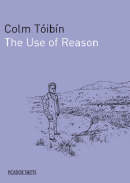

Picador is about to do for books what Top Shop did for high-street fashion ...announced one online fashion magazine talking about a new series of twelve tiny pocket books each containing a short story or two and priced just £1 each (RM6+), writes Rachel Cooke in the Observer.
In doing so, the publishers hope to promote short fiction, declared before now to be a dying breed in Britain and difficult to sell to the reading public. Picador will, of course, be also promoting their writers by giving readers a tasty snack that might whet their appetite for the main dish, in much the same way Penguin have done with 70's.
The books include short works by big names such as James Salter, Colm Toibin and Tim Winton. ... And I do so hope they find their way into the bookshops here soon. The selfish reason is that I am so totally consumed by bookgreed: I love short fiction and it's a thrill to discover more great writers of the form. I also think that little books like these would lure in a lot of Malaysian readers who might feel daunted by longer works of "quality" fiction and stick to the safer waters of more popular stuff. (But "Would Malaysians welcome such a price of admission for a half-hour or so read?" asks Ted on his blog. Valid point.)
Much has been said on this blog already about the peril short fiction is in in Britain (though not in America ... or even here in Malaysia.) Cooke reminds us:... it is more difficult than at any time in the last 100 years to make money from short stories and this may eventually have serious consequences for the form. It is not just that collections don't sell; individual stories have nowhere to go, since there are no longer any literary magazines to publish them.Perhaps the most effective form of rescue has for the short story is to throw wads of prize money at it.
The National Short Story competition, open only to already published writers in the UK a awards a whacking £15,000 (RM100,00-ish) to the winner. This year's prize went to James Lasdun for his story Anxious Man.
And then there's the Frank O'Connor International Short Story Prize award of 35,000 euros (the biggest prize for a collection of short fiction anywhere in the world!), won in 2005 by Yiyun Li for A Thousand Years of Good Prayers. (Still sitting on my to-be-read shelf.)
Subscribe to:
Posts (Atom)