I'm willing to admit this to you, my dear reader. I am such a voracious consumer of books that I used to steal in order to satisfy my need.Former book buyer with Kinokuniya Abby Wong starts an occasional column of things book related in Starmag and begins by telling us about her obsession. Another avid reader, Christine Jalleh tells a heartwarming story about how a stranger in a shopping mall turned Book Angel. (And, you know, we could do with a few more of those!) Elsewhere, Kuan Guat Choo hobnobs with ghosts. Deputy Prime Minister and Education Minister Tan Sri Muhyiddin Yassin reiterates the message that Malaysians don't read enough, as he launches the Kuala Lumpur International Book Fair 2009. (But there's no word about where his statistics about reading are taken from. Perhaps it is the mythical National Library Survey?) And Datuk Lat gets orchestrated.
Showing posts with label malaysian reading habits. Show all posts
Showing posts with label malaysian reading habits. Show all posts
Sunday, April 19, 2009
Sunday Shorts

Sunday, March 02, 2008
Malaysian Book Academy
So Malaysia now has a "Book Academy"? I only realised this when I read this editorial about Malaysian reading habits in the New Sunday Times :
While offering information and entertainment, books also provide an architecture to make sense of life. More importantly, reading civilises our inner self. And in a multiracial nation such as Malaysia, a passion for reading about each other's ways can help prevent cultural or religious conflict. Which is why any move to improve the reading habit among Malaysians -- such as the establishment of the Malaysian Book Academy -- is most welcome. The academy, launched on Friday, aims to train people for the book publication industry, and encourage writers. Admittedly, past efforts do not appear to have turned Malaysians into rapacious readers. Which is why, bearing in mind that the availability of more books does not equate to a greater readership, the academy must work in tandem with bodies such as the Education Ministry and libraries if it is to produce results.Here's Bernama's report dated 29th Feb (which, forgive me, I'm quoting in full because I think it is very important) :
The country's book publishing industry has yet to reach the desired standards with its rate of publication of less than 10,000 titles a year, National Book Development Foundation Chairman Datuk Khalid Yunus said.If this works it could be a real shot in the arm for local writers and publishers and I really am looking forward to hearing more.
He said not only were there insufficient publications for general reading, the type and quality of the publications were also limited.
"Compared with Korea and Japan, we are still far behind. Taiwan, whose population size is about the same as Malaysia, has 30,000 books published a year," he said at the launch of the Malaysian Book Academy by Culture, Arts and Heritage Minister Datuk Seri Dr Rais Yatim here today.
Khalid said publication companies in the country were not managed professionally and their staff were not exposed to modern technology.
"It is for this reason that the Malaysian Book Academy is set up," he added.
He said besides collaborating with the Culture, Arts and Heritage Ministry, the setting up of the academy would involve cooperation with the London Book House, Insitute of Book Publishing New Delhi and the School of Publishing New York.
Meanwhile, Rais, when met by reporters later, said he believed the setting up of the academy would help overcome problems in the industry, like book tax, tax on printing machine, ways to promote publications, etc.
He also hoped it would encourage people from other races to publish books in Malay, saying that the books could be sold at the more than 2,000 rural and public libraries nationwide.
If the sale of the book reached 3,000 copies, it was already a best-seller, he added.
On reading habit in the country, Rais said people read English publications more than those written in Malay as reflected in the statistics on English and Malay newspaper readers.
Monday, August 28, 2006
The Reading Habits of Malaysians: Some Stats
I linked to a Starmag article a couple of weeks ago about the depressing state of readership in Malaysia. The Malay Mail yesterday gave more detail of a 2005 National Library study carried out by the National Statistics Department and designed look into local reading habits. This is what we learn:
But this is strange: bookchains MPH and Borders though, report increasing sales and the book business locally is apparently worth two billion ringgit a year! What's happening?
Maybe Malaysians are buying books but not reading them!
Postscript:
I came across this very interesting study about the readership habits of Malaysian students by Dr. Ambigapathy Pandian of USM.
Afterthought:
It strikes me as very odd that I have so far met no-one (in the media or education field) who has had a chance to read the National Library study. Apparently at the press conference, the journalists had to be content with a few figures hastily scribbled down on a piece of paper by the minister. Shouldn't there be more transparency?
More than half of the 60,441 odd Malaysians surveyed read less than seven pages a day.Two books a year is the figure that the last survey in 1996 came up with, so on the face of it Malaysians are not reading any more than they were ten years ago, despite reading campaigns.
Those 10 years and above read about two books a year! (The figure excludes text books for students and books that are work-related for working adults.)
Also shocking is that most of those who read books and magazines, read less than three hours a week.
The older we get, the less we read.*
The survey also showed that 55 per cent of those aged 10 to 24, read books, compared to 39 per cent within the 25 to 56 age bracket. Only six per cent are those aged 57 and above.
Reading is not even the favourite pastime of Malaysians as most prefer to watch television and video.
The reading habit looks to be a thing of the past as the survey also unearthed the trend among the young who read only to acquire knowledge.
Most Malaysians read in Bahasa Melayu, followed by English. Reading in Jawi comes third and finally, Mandarin.
About 56 per cent of the respondents of the study were city dwellers and 44 per cent rural Malaysians.
Of the total number of respondents, 60 per cent were aged 10 years old and above and 99.9 per cent of them had formal education.
But this is strange: bookchains MPH and Borders though, report increasing sales and the book business locally is apparently worth two billion ringgit a year! What's happening?
Maybe Malaysians are buying books but not reading them!
Postscript:
I came across this very interesting study about the readership habits of Malaysian students by Dr. Ambigapathy Pandian of USM.
Afterthought:
It strikes me as very odd that I have so far met no-one (in the media or education field) who has had a chance to read the National Library study. Apparently at the press conference, the journalists had to be content with a few figures hastily scribbled down on a piece of paper by the minister. Shouldn't there be more transparency?
Sunday, August 13, 2006
Depressing Picture of Book Sales
The cover story in the education section of the Star today paints a depressing picture of local book sales.
While the cost of books is a problem and any initiative to bring down prices is to be welcomed, there is an even bigger need to change mindsets. Law is certainly on the right page when he says that many not only have no interest in reading but also no inkling of what to buy, how to read or what to read.
Throw as much money at reading campaigns as you like, sell books at knockdown prices and make them available on every street corner. But nothing will happen without a concerted effort to help non-readers and marginal readers find their way into books they will enjoy.
It says a lot about Malaysia when in a population of 25 million, the local book industry can only print 1,000 to 3,000 copies per general titlesays Law King Hui, president of the Malaysian Book Publishers Association, while the figures about readership seem to be as depressing as ever. According to the article:
A survey conducted in 1996 showed that Malaysians read an average of two books a year. … The results of a survey in 2005 show that things have not improved at all – many still read only two books a year. About 98% of 10-year olds read only two books a year, with 60.4% citing other interests and 28.7% lack of time as the reason.Now, it seems to me that while there is much hand-wringing about the problems, those with the wherewithal to take action seem depressingly stumped for ideas about how to get the nation reading.
While the cost of books is a problem and any initiative to bring down prices is to be welcomed, there is an even bigger need to change mindsets. Law is certainly on the right page when he says that many not only have no interest in reading but also no inkling of what to buy, how to read or what to read.
Throw as much money at reading campaigns as you like, sell books at knockdown prices and make them available on every street corner. But nothing will happen without a concerted effort to help non-readers and marginal readers find their way into books they will enjoy.
Friday, July 29, 2005
Toyols Steal the Reading Public
Interesting article in yesterdays New Straits Times about Malay reading habits. (Thanks again, Dina, for forwarding the link!)
Apparently Datuk Seri Abdullah Ahmad Badawi said during his adjournment speech at the Umno general assembly last week that the Malays are religious but tend to resign themselves to fate and can be very superstitious.
Syed Nadzri takes up the theme and relates it to the kinds of books and magazines favoured by the Malay Community:
All well and good. Everyone to his or her own taste. But what is really worrying is what Syed Nazri says at the end of the article:
Would be interested to hear your views.
Apparently Datuk Seri Abdullah Ahmad Badawi said during his adjournment speech at the Umno general assembly last week that the Malays are religious but tend to resign themselves to fate and can be very superstitious.
Syed Nadzri takes up the theme and relates it to the kinds of books and magazines favoured by the Malay Community:
... it is quite disconcerting to note that the cerita hantu or cerita toyol (creepy gothic stories) are among the most popular among Malay readers.
That is why some tabloids and magazines are cashing in on this craze by sensationalising with headlines such items as Kubur berasap (Smoke on the grave) or Mayat bertukar menjadi babi (Dead turns into pig).
They are certainly worse than the News of the World-type of stories about UFO sightings, Elvis alive and women giving birth to crocodiles.
Among the best-selling Malay storybooks not too long ago was the Bercakap Dengan Jin series (conversations with the spirits) by an author called Tamar Jalis.
His books were all about grisly tales and they were told in a not-so-tasteful language.
The books also have garish covers. Yet these were so popular that most were sold out the moment they hit the shelves.
I know an avid reader of the series. He would spend nights on end reading the books to the point that he always overslept and was often late for work.
One of the books he read was about a snake god and the snake man.
He must have liked this book because he read it over and over until one day when he came to me with a horrified look.
I asked him what was wrong and he said: "Please help me, please, please. I am going to turn into a snake tonight. I can feel it in my skin. And they are calling me."
When I asked who "they" were, he said: "My snake family."
To my horror, he was indeed writhing and squirming on the floor when night came, although he looked as human as ever. Things were never the same for the poor chap ever since.
This could be dismissed as a remote case of a good mind gone wrong.
Some magazines and tabloids even stretch the reader’s imagination by suggesting a twist to sicknesses suffered by somebody — as in "Artis dijangkiti penyakit misteri" (Singer down with mysterious illness) when there must be a medical explanation for the ailment.
It is no surprise, therefore, that the best-selling Malay reading materials are those featuring either these kinds of bizarre fare or those with sexy and gossipy elements.
All well and good. Everyone to his or her own taste. But what is really worrying is what Syed Nazri says at the end of the article:
Journals on current affairs, literary magazines or special interest periodicals in Bahasa Malaysia hardly sell. Massa, a political and current affairs news magazine, had to cease publication not too long ago, while Dewan Bahasa’s Dewan Masyarakat and Dewan Sastera are struggling.
Would be interested to hear your views.
Monday, July 18, 2005
The 'World's Biggest Readers'?
There's a nice little table in the Silverfish litmag about which nation reads the most. The source was the NOP website. Which country do you think came top of the list? Go look.
The answer may surprise you. As it did me.
And I'm not alone. According to the BBC website:
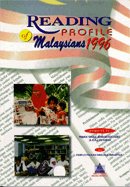 Just as I always wonder how Frank Small and Associates arrived at estimate of two books a year for how much the average Malaysian reads when they carried out their 1996 survey for the National Library. Maybe I should go buy the book?
Now Malaysia doesn't feature at all in the NOP survey, but I'd love to know where it comes now. Is it possible that the Thais can read so much more?
The answer may surprise you. As it did me.
And I'm not alone. According to the BBC website:
Indian writer and editor, Tarun Tejpal, said the survey only made sense if it excluded the high numbers of illiterate Indians.As always, you wonder how the survey was carried out. (Sadly, no information is given on the website.)
The National Readership Survey shows more than one-third of rural Indians and about 15% of the urban population is still illiterate.
"A lot of [book reading] is aspirational, getting ahead in the rat race, getting admission into schools and colleges etc. It has less to do with reading, more to do with rote," Mr Tejpal said.
Leading columnist, Venkateshwar Rao, told Britain's Sunday Times newspaper he could not see Indians flocking to book stores.
 Just as I always wonder how Frank Small and Associates arrived at estimate of two books a year for how much the average Malaysian reads when they carried out their 1996 survey for the National Library. Maybe I should go buy the book?
Now Malaysia doesn't feature at all in the NOP survey, but I'd love to know where it comes now. Is it possible that the Thais can read so much more?
Saturday, June 11, 2005
Malaysian Anti-Semitism
Bloghopping (great word!), came across Asiapundit's entry about Malaysian anti-semitism, from where I stepped across to Ranjan's entry, from where I stepped across to this little story in the Traveller's Tales section of the Far Eastern Economic Review:
What Are Malays Reading?
Entering the bookstore in the check-in hall at Kuala Lumpur airport, the first book we saw on the table near the door was Hitler's "Mein Kampf." Odd. Then our eyes were drawn to a cover with a caricature of a Jewish financier straight out of Nazi propaganda. Yup, it was Henry Ford's anti-semitic tract, "The International Jew," with the "Protocols of the Elders of Zion" thrown in for good measure. Elsewhere on the table was "The High Priests of War: The Secret History of How America's 'Neo-Conservative' Trotskyites Came To Power and Orchestrated the War Against Iraq as the First Step in Their Drive for Global Empire" by Michael Collins Piper. Mr. Piper is a Holocaust "revisionist" and JFK assassination conspiracy theorist. It would appear that former Prime Minister Mahathir Mohamad's complaints about the Jews have had their desired effect on Malays' reading habits.
I really am surprised that this issue has not been brought up before.
I am not at all one for censorship, as anyone reading my blog will know, and I believe that it's necessary for readers to read their way round all sides of an argument come to their own conclusions about what they're reading. Just because I don't approve of a book doesn't mean that I want it banned.
Henry Ford's ugly piece of anti-semitism The International Jew (written in the 1920's for heaven's sake!) sits there on the shelves of major bookshops in this country and positively screams at you from the counter of almost every little newsagents shop here even when they have scarcely any other books to display.
And it makes me furious! Just as I would be furious if I came across anti-any-racial- or-religious-group propaganda. Here or overseas.
(I've not yet confronted a bookshop owner, not because I'm afraid of speaking my mind, but because I am afraid of how far over the edge my anger would carry me ... Sharon is a formidable force of nature when roused!)
But I have been appalled by how deeply anti-semitism runs in this country.
Let me give you this example:
I was teaching literature to students on a B.Ed matriculation course here a few years ago. I took to class some poems for them to discuss - personal favourites - to sharpen their interpretive skills. The subject of the holocaust came up. I was stunned to discover that none of these 20 year olds had ever heard of it.
Then one student said: "Why should we care? Anyway they were Jews ...".
My blood froze. I couldn't believe what I was hearing and told them so. What are these kids being taught in schools?
A couple of days later I booked one of the teaching rooms with a video-player and loaded up a couple of episodes of The World At War, the BBC documentary with war footage and interviews. They saw concentration camps for the first time. And yes, were chastened by the experience, and able to answer the "Why should we care?" for themselves. Thank goodness.
We need to be reminded of the holocaust. Lest the same thing happens again.
It's such a pity that the film Schindler's List got banned here. I think a naked boob could be seen in one scene. (Shock horror!) Spielberg refused to make the cut. So the film was never shown at the cinema, although it circulated in pirated copies. But I think Spielberg made the wrong decision - a little cut would have meant a much wider audience for his film, and a chance to educate a new audience about the holocaust.
We not only need to be reminded, we sometimes need to be informed in the first place, of the genocide which stems from the propaganda of hatred.
What Are Malays Reading?
Entering the bookstore in the check-in hall at Kuala Lumpur airport, the first book we saw on the table near the door was Hitler's "Mein Kampf." Odd. Then our eyes were drawn to a cover with a caricature of a Jewish financier straight out of Nazi propaganda. Yup, it was Henry Ford's anti-semitic tract, "The International Jew," with the "Protocols of the Elders of Zion" thrown in for good measure. Elsewhere on the table was "The High Priests of War: The Secret History of How America's 'Neo-Conservative' Trotskyites Came To Power and Orchestrated the War Against Iraq as the First Step in Their Drive for Global Empire" by Michael Collins Piper. Mr. Piper is a Holocaust "revisionist" and JFK assassination conspiracy theorist. It would appear that former Prime Minister Mahathir Mohamad's complaints about the Jews have had their desired effect on Malays' reading habits.
I really am surprised that this issue has not been brought up before.
I am not at all one for censorship, as anyone reading my blog will know, and I believe that it's necessary for readers to read their way round all sides of an argument come to their own conclusions about what they're reading. Just because I don't approve of a book doesn't mean that I want it banned.
Henry Ford's ugly piece of anti-semitism The International Jew (written in the 1920's for heaven's sake!) sits there on the shelves of major bookshops in this country and positively screams at you from the counter of almost every little newsagents shop here even when they have scarcely any other books to display.
And it makes me furious! Just as I would be furious if I came across anti-any-racial- or-religious-group propaganda. Here or overseas.
(I've not yet confronted a bookshop owner, not because I'm afraid of speaking my mind, but because I am afraid of how far over the edge my anger would carry me ... Sharon is a formidable force of nature when roused!)
But I have been appalled by how deeply anti-semitism runs in this country.
Let me give you this example:
I was teaching literature to students on a B.Ed matriculation course here a few years ago. I took to class some poems for them to discuss - personal favourites - to sharpen their interpretive skills. The subject of the holocaust came up. I was stunned to discover that none of these 20 year olds had ever heard of it.
Then one student said: "Why should we care? Anyway they were Jews ...".
My blood froze. I couldn't believe what I was hearing and told them so. What are these kids being taught in schools?
A couple of days later I booked one of the teaching rooms with a video-player and loaded up a couple of episodes of The World At War, the BBC documentary with war footage and interviews. They saw concentration camps for the first time. And yes, were chastened by the experience, and able to answer the "Why should we care?" for themselves. Thank goodness.
We need to be reminded of the holocaust. Lest the same thing happens again.
It's such a pity that the film Schindler's List got banned here. I think a naked boob could be seen in one scene. (Shock horror!) Spielberg refused to make the cut. So the film was never shown at the cinema, although it circulated in pirated copies. But I think Spielberg made the wrong decision - a little cut would have meant a much wider audience for his film, and a chance to educate a new audience about the holocaust.
We not only need to be reminded, we sometimes need to be informed in the first place, of the genocide which stems from the propaganda of hatred.
Subscribe to:
Posts (Atom)