Showing posts with label travel writing. Show all posts

Wednesday, November 04, 2009

Farish in the Madrasahs

Congratulations to Farish Noor who this week launches his new book Qur'an and Cricket : Travels Through the Madrasahs of Asia and Other Stories at Silverfish.

Catch the event at 7.00pm on Friday, 6th November, 2009 at Silverfish Books, 58-1 Jalan Telawi, Bangsar Baru, Kuala Lumpur. Tel: 448 449 37 Email: info@silverfishbooks.com. Admission: Free

Here is the blurb :

Farish A Noor, academic, activist, traveller extraordinaire, visits, lives and interviews students (and others) in 'jihad factory' madrasahs (Islamic seminaries) from Patani to Pakistan and from Kashmir to Cairo, and comes away dazed and confused. In attempting to make sense of it all, he ends up confronting his own demons and nightmares.
and a taster from the book :

However, in the course of the same research I have also visited some rather dodgy institutions that can hardly be called madrasahs. Once in Pakistan I had to interview some students while in the corner of the room played a videotape of the gruesome murder and decapitation of the American journalist Daniel Pearl. The boys I was speaking to were between seven to ten years of age, and were smiling and laughing -- while others lay asleep. I tried to look away as long as I could, resisting the urge to puke.
Farish is one of my favourite writers. I really value his intelligence, his calm rationality and careful research.

Silverfish was kind enough to send me a copy, and I am really looking forward to reading it.

Sunday, August 23, 2009

Following the Linggi

I almost missed this very nice piece from Saturday's Star. Our friend Caving Liz makes a journey to find the Linggi River in Negri Sembilan, following in the footsteps of intrepid 19th century British traveller Isabella Bird.

Bird was probably the greatest of the women explorers of her day, and travelled to many other parts of the world. The Golden Chersonese and The Way Thither (1883) is an incredible account of a journey made through the Malay Penininsula, and you can learn exactly what places like Malacca, Kuala Lumpur and Kuala Kangsar were like back then. And I love to imagine the lady trecking through steaming jungle and riding on an elephant wearing her long Victorian dresses.

(Should your curiosity to read the book be stirred, you can read it online here.)

Tuesday, March 17, 2009

What Are YOU Reading?

So ... what are you reading, guys, and is it something you'd recommend to the world?

I must confess to feeling like lighter reads at the moment. For me that usually means non-fiction. And I find it easier to take my book out of the house than to be distracted by things I need to do at home.

Today I had a lovely long lunch at the P.J. Hilton with the excellent company of Elizabeth Gilbert. Or at least her book Eat, Pray, Love.

It was actually my Christmas tree present from someone in our book club, and perhaps not something I'd have otherwise chosen for myself - a travel book as much about an internal journey for healing in the aftermath of a painful divorce and a failed love affair, as it is about the places she visited.

Structured to resemble a string of prayer beads, the books falls into three sections of 36 chapters each. She takes a year out of her life spending four months each in Italy (to enjoy a love affair with the language and enjoy the best of the food); India (where she confronts inner demons in an ashram); and Bali, Indonesia (where she plans to spend time with a traditional healer ... except that life seems to have other plans for her).

Sure, Gilbert is a bit of a flake sometimes, but she is very good company warm and funny, and actually pretty wise. Although she doesn't get to see an awful lot of each country (in India she never leaves the ashram, and in Bali it's only at the end of her stay that she leaves Ubud to see the beaches!), the real pleasure is in her descriptions of the characters she meets and the conversations she has. She's willing to open her heart and learn, willing to bend down to listen.

I enjoyed the Bali section the best as she lands up in Ubud which is of course a place I know well, and I think she describes it with clear insight, including her observations about the expat community.

Anyway, I look forward to the next journey she takes me on, and will also be slipping copies of this book to a few friends I know will enjoy it.

I'm also reading The Collected Poetry of Dorothy Parker - another book which fell into my hands serendipitously. This scruffy old volume (1931!), ex-library, and broken spined, was rescued from a flea market by a friend who always brings me scavenged books. She's more than a little bit wicked, and her little verses, which look so tame and domestic at first, really do bite back. I should though slip this copy in the microwave, I think, as I'm sure there are all kinds of microbes hanging out among the pages.

My next read is Child 44 by Tom Rob-Smith. Our book club members chose it and I have barely a week to get through it now. I did begin it and got mightily put off by a cat being hunted for food when I think one of the starving humans should have sacrificed his body for the sake of the rest and let the moggy be! (I really am going to set up that Society for the Prevention of Cruetly to Fictional Cats.) Am not overly impressed with the writing - it's a bit simplified reader, and just hope the plot makes up for it. Even a few pages in I'm quite shocked that this made the Booker shortlist - where got standard lah?

Still, will try to read with an open heart and let you know how it goes.

So over now to you guys! Make me jealous.

Sunday, February 22, 2009

Adeline Goes Bush

A couple of months after I returned from Zambia. I was seeking a more meaningful direction in my life, and decided that I wanted to do some creative writing. At the same time, I had what you could call an “African hangover”, which made me reflect obsessively about my trip. Nobody I knew understood what was so great about my trip or where in the world was Zambia. ... So I thought, why don’t I write about it and tell people about the wonders of this country? It was when I started to work on it that I knew a book was taking shape. Mostly because I think Chan and me were hilarious together.
Adeline Loh shares the story behind her new book, Peeing in the Bush, with Amy de Kanter in the Readsmonthly supplement of Starmag today, while S.W. Low reviews it. And Bissme S. also interviews her in The Sun.

It's an account of a journey into Zambia that I enjoyed very much, and it reminded me of my own backpacking days and the odd characters and scrapes along the way with her naive sidekick, Chan, in tow.

Adeline is more a Bill Bryson than a Paul Theroux, and the humour often somewhat erm ... scatalogical. But I really hope that it encourages more Malaysians to venture off the beaten track and away from the package tour.

Adeline will be reading from the book at Seksan's next Saturday.

(BTW there's a 20% off coupon to clip in the paper to use at Popular Bookstores!)

Monday, February 16, 2009

Ke Sini Sana

Here's another MPH collection to get writing for :
SUGGESTED TITLES: Sini Sana: Travel Stories in Malaysia
Call for Submissions

The diverse culture of Malaysia invites travellers both local and foreign to marvel at towering cityscapes where modernity dazzles with luxury or go through old trunk roads surrounded by oil palm plantations to get to breathtaking mountains, caves, beaches and the tropical rainforests. And, of course, every traveller is amazed by food that can be exotic or a fusion of everything you know!

Perhaps during a jungle trek, you stumbled upon an enchanting place, or had a (nonfatal) swim with wild animals. Maybe you once spent an afternoon befriending villagers who had never met an urbanite off the beaten track before. If you were a journalist invited on a ‘famtrip’, did you encounter something outside the usual itinerary of visiting the most popular marketplaces, skyscrapers and restaurants? You might have enjoyed the tranquillity of a hideaway before it was discovered and destroyed in the name of progress and development. Here is a chance to recapture those scenes.

MPH GROUP PUBLISHING is looking for true travellers’ tales, preferably on places outside the tourist hubs in Malaysia. Stories should be in the form of travelogues with rich, firsthand descriptions of sights and sounds and even tastes. We want engaging stories that will move us to visit the places for ourselves and also to understand why we should preserve the beauty of such places. This is not a travel guide; we do not want to know just where to visit and how to get there. We do not want photographs; the words in the story should capture all the wonders. Tentatively entitled Sini Sana: Travel Stories in Malaysia, we aim to publish the book in 2010, depending on the number of submissions we receive.

Travel stories must be original, nonfiction, between 3,000 and 5,000 words, and must not have been previously published. We invite submissions from both emerging and established writers. Manuscripts must be edited, typed double-spaced with 12pt font and emailed to editorial@mph.com.my. Please include your name, address, telephone number and email address. You may submit as many pieces as you wish. Faxed or handwritten submissions will not be entertained and manuscripts will not be returned. We will contact you only if your piece has been selected for inclusion in the compilation. Writers whose submissions are selected will be expected to work with the editors to fine tune their stories.

DEADLINE: 30 August 2009
PAYMENT: A small flat fee and two copies of the collection

Friday, June 06, 2008

Hearts of Darkness

Two works of non-fiction I've read this week were both in a sense journeys into the heart of darkness.

I picked up a copy of William Styron's Darkness Visible: A Memoir of Madness at the Big Bookshop sale. It's a very slim volume, just 84 pages long, which started life as a lecture given at a symposium sponsored by the Department of Psychiatry at the Johns Hopkins University School of Medicine. It was later developed into a piece for Vanity Fair before being published as a book.

Styron was hit by serious depression at the age of 60, and describes most evocatively his own struggle with the life-threatening illness from first symptoms, through his treatment, his brush with suicide, hospitalisation to eventual cure. Along the way he includes the stories of friends and others so afflicted - many of them also writers.

It's the honesty of the book that makes it so compelling. It was one of the first "insider" accounts of depression, and captures extremely well just what it feels like. (You have to have been there to know.) I agree with him that the word "depression" is totally inadequate, sounding more like a mild case of the blues rather than something that fills your soul with dread and despair.

The second book involved a physical journey into the part of the world that Conrad described in his novel Heart of Darkness - the Congo. Tim Butcher, a journalist for The Daily Telegraph decides to recreate H.M. Stanley's famous expedition in the 1870's. (Stanley had been also sponsored by the same newspaper!) He was also curious to see the country that his mother had visited in the 1950's as a tourist. He was told that by just about everyone he contacted that the journey was impossible, but against the odds he manages to enlist the help of aid workers (including a pygmy human rights activist and the Malaysian commander of a vessel working for the UN) and others. Each stage of the journey is uncertain, and he's constantly in danger of his life and in great discomfort. But he does manage in the end to find the transport he needs (motorcycles, dugouts, a UN barge) and the journey continues. It's impossible not to salute his courage.

Blood River : A Journey into Africa's Broken Heart is a fascinating account, not just because it takes us into a part of the world we wouldn't normally venture into and lets us share the journey (from our comfy armchairs!), but also for the historical perspectives which are woven into the narrative.

In the space of half a century, Congo has gone completely backwards - it is not "a developing country", or an "underdeveloped country", so much as an "un-developing country", going backwards so fast that almost nothing remains of the infrastructure left under Belgian rule due to the greed and incompetence of its leaders. It's a terrifying portrait of how quickly things can unravel. You also come to realise that putting things right isn't a matter of throwing financial aid at the problems, but in establishing the rule of law.

It's impossible not to really pity the ordinary people of this failed country, but that there is such potential for economic growth (minerals, fertile land) turns this missed opportunity into a tragedy.

As you would expect, there's plenty of coverage of the book on The Telegraph website, including photos and extracts.

The book was chosen as one of the reads for the Richard and Judy bookclub and of course made the shortlist for this year's Samuel Johnson Prize.

Many thanks to Kavita of Pansing for passing me this copy.

Thursday, March 27, 2008

Theroux by Train

As you read travel books, you should be able to see the people and places, to hear them, to smell them. Some of it is painful, but travel - its very motion - ought to suggest hope. Despair is the armchair; its indifference and glazed, incurious eyes. I think travellers are essentially optimists, or else they would never go anywhere. A travel book ought to reflect that optimism.
I'm a little slow posting a link to Paul Theroux's excellent piece on reinventing travel writing in the Guardian the other day (so thanks Uma for the nudge). Some of Theroux's best books have been based on long train journeys, and two of them The Great Railway Bazaar and The Old Patagonian Express, have just been reissued in the Penguin Modern Classics series.

I've read almost all of Theroux's travel writing over the years (the exception being Dark Star Safari which is on my to-be-read shelf).

He is, though, something of a grouchy travel companion at times. I did get a bit cross with him in The Great Railway Bazaar which describes a journey across Asia. When he got to the part of the trip I was most anticipating, the Trans-Siberian leg, the author was so pissed off with travelling that he offered really jaundiced descriptions of the great snowy wastes of Russia. It's still a journey I'd love to make one day.

And I've never forgiven him for his rather negative descriptions of Britain in Kingdom by the Sea. perhaps he sees us Brits as we really are, but that's not an excuse to tell the whole world.

Wednesday, August 22, 2007

Travelling Hopefully

MPH's monthly Writers' Circle meetings are an excellent way to find out about making a career in writing and getting published.

Saturday's meeting was on Travel Writing and the two guest speakers talked from very different perspectives, and the audience participation provided a lively discussion.

Vanitha K. is editor of Plan Your Own Holiday, a magazine which was conceived as a marketing tool for Reliance Travel.

She described how she feel into writing by accident, and said you really need to have the passion for the work.

She says that she likes to feature more offbeat destinations and "back-alley places", and she is concerned to provide quick information for the reader, in an easy to absorb form.

Surprisingly, she hardly travels at all herself - leaving the fun part to her writers. She accepts freelance contributions and articles, and encouraged those in the audience to send in their articles. Her magazine pays RM100 a page, and RM60-70 per photograph. If you have an idea for a story you'd like to pitch to her, you can contact her at vanitha@pyoholiday.com

The second speaker was Zhang Su Li whose book A Backpack and a Bit of Luck is an unusual travel book, focusing not just on the destinations, but also on the random kindness of the strangers she meets along the way.
I learned so much getting lost
she says.

She looked for the human stories, and says that there are so many people she wants to thank for touching her life ... but she doesn't know their names. She says she wrote from the heart, stories that she needed to tell.

I've enjoyed the stories I've read so far, appreciating how important this human dimension is to Kim (as she prefers to be known) - she also has a very nice writing style and I'm looking forward to seeing what she will come up with next.

Friday, August 17, 2007

Travel and Get Paid for It

Stuck for something literary to do tomorrow? Come along to this:
The idea of being a travel writer sounds very romantic, but is it the reality? Come and join the next KL Writers' Circle and find out:
. How to write sound travel articles
. How to determine salable travel article ideas
. How to target suitable travel publications

Details of the meet are:
Date: Saturday, 18th August, 2007
Time: 11am-1pm
Booker Room, MPH Megastore 1 Utama

Guest speaker is Zhang Su Li, author of travel book A Backpack and a Bit of Luck and Vanitha K, Editor of Plan Your Own Holiday magazine.
This session is facilitated by ... me! Hope to see you there!

Monday, April 09, 2007

Beasts and Bollocks

So what are you reading this week?

I didn't get a whole lot of reading during the litfest, with so many events to attend and people to talk to. And over the past week I've been a bit of a nibbler, dipping into several different books.

One book I did finish was Uzodinma Iweala's Beasts of no Nation. It was high on my must-read list anyway, especially as it is written by a Nigerian author (albeit one who is also an American author) and Nigeria's a part of the world I know and care about. And then Ms. D declared it her favourite book of last year, and I respect her opinion. And then it won the John Rhys Llewellyn Award.

I can't recommend this little book (142 pages) too highly. It's the story of a child swept up into the chaos of Nigeria's Civil War, abducted by a rag-tag group of rebels and forced to become a child soldier. Agu narrates his own story in broken English: the voice is very well done, capturing the essence of Nigerian pidgin without ever slowing the writing down.

The book addresses a very basic human question - how can an individual be drawn in to committing inhuman acts? Poignant flashbacks of family and school days show us Agu's life before the war. But his descent into hell is rapid and fueled by starvation, drugs and the sure knowledge that if he does not kill, he will himself be killed. Soon he is slaughtering innocent victims along with the rest, and even deriving pleasure from it. Despite the setting , the book could actually have been set anywhere in the world where children are recruited to fight.

I could write a whole lot more about the book but will save that for a review I'm writing for Off The Edge.

I must also add that I love this particular paperback edition from HarperPerennial for its handfeel, cover design, the flexibility of the spine, the weight of the pages, the size of print ... and all the add-ons at the end including an essay by the author talking about how the book came to be written. This is how I would like all paperbacks to be.

I've been dipping into a couple of books that I acquired at the last Big Bookshop warehouse sale, among them Bollocks to Alton Towers is a sort of alternative travel guide to places in UK. Most books of this sort direct you to the famous tourist spots (like the amusement park, Alton Towers, in the title), this quirky little book recommends day trips to all kinds of obscure places which also guarantee a dose of fun. Here's a pub built like a pack of cards in Devon, the David Beckham trail in North London, a village on Salisbury Plain abandoned during the war when the army wanted to test weapons, the Cumberland pencil museum ... and much much more. The pieces by Robin Halstead, Jason Hazely, Alex Morris and Joel Morris are amusing and informative and I'd love to follow up some of these unusual day-trips next time I go back to dear old Blighty. (I'm getting homesick!!)

Actually I've several more books I want to talk about but I'm afraid I'll be sucked into the black hole of this blog for the rest of the morning when my typing fingers are demanded for elsewhere things.

So I kick the ball to you, and promise to post about other reads later.

Friday, February 23, 2007

Another Reader for my Backpack!

While I was having a little panic about finding my sixth reader for tomorrow was contacted by Zhang Su Li who has a new book coming out with Marshall Cavendish. I snatched her up!

Su Li (aka Kym) is an award-winning copywriter. A Backpack and a Bit of Luck looks like a travel book with a difference, and I look forward to hearing an extract from it.

This from the back cover:
This journal is about the importance of trust, and not knowing what the hell you are doing, basically. From the stylish geriatric, to an 18th Century pickled egg of a glutton with a wooden leg, and toasting marshmallows amongst 2.5 million corpses, these stories tell of a different type of beauty, one which reveals itself only when our minds and hearts are open. It’s also about spiritual growth, and the abundance of kindness in this world. What’s attractive to the potential buyer is that this book appeals to the human spirit’s sense of freedom and adventure! Be surprised and be enticed!
If you miss the reading tomorrow (heaven forbid!), the author will also be appearing at Borders The Curve, Sat 10th March, and for those of you South of the causeway at Borders Singapore, Sat 17th March.

Saturday, September 02, 2006

Guide to Guidebooks

Want to travel to exotic destinations and get paid for it? Become a travel writer!

In Star Weekend Tan Tee Kuan finds out just what the writers for the Lonely Planet guidebooks go through to do their research, and it's not all sundowners on a sandy beach.

Says Kayala Ryan South-East Asia commissioning editor for the guides:
All authors who work for Lonely Planet are expected, first and foremost, to have extensive travel experience and excellent writing skills. They need to be adventurous, intrepid, independent, passionate and willing to work long, long hours. When we hire an author for a particular title, we look at a number of different factors based on the requirements of a specific destination.
It still sounds like fun though ... and something I'd love to have a shot at myself! (I used to be an intrepid explorer before I had to become sensible.)

Monday, October 17, 2005

Fallen City

Here's a book I didn't enjoy at all. Didn't even finish it - wimped out a little over halfway with only a feeling of relief.

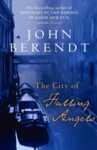
The City of Falling Angels is set in Venice and revolves around the author's inquiry into the fire which destroyed the Fenice Opera House. Along the way he meets all kinds of eccentrics (feuding glassblowers, rat catchers, itinerant plant salesman, American expats) and paints an unflattering portrait of the city's underbelly. Berendt uncovers some fascinating material but fails to make the most of it - it reads like background research waiting for a novel to happen. But the writing plods and is at times dismaying clumsy.

I also can't fathom why there are no pictures at all. Is it just assumed that we know our way around the architecture and geography of Venice? I certainly don't.

Berendt is best known for his Pulitzer winning Midnight in The Garden of Good and Evil his 1994 book (non-fiction but with some invented scenes!) about a murder in Savannah, Georgia. I have a copy on my shelves but haven't yet read it. There was also a film made of it. This time though, he doesn't get the formula right.

Can't help thinking that it would be fun to write a non-fiction novel like this about another historical city slowly sinking into the mud of ineptitude and indifference - our own Malacca.