Showing posts with label d.h. lawrence. Show all posts

Tuesday, December 05, 2006

Pheasant Plucking

This pictorial account of the day-to-day life of an English gamekeeper is of considerable interest to outdoor minded readers as it contains many passages on pheasant-raising, the apprehending of poachers, ways to control vermin, and other chores and duties of the professional gamekeeper.

Unfortunately, one is obliged to wade through many pages of extraneous material in order to discover and savour those sidelights on the management of a midland shooting estate, and in this reviewer's opinion the book cannot take the place of J.R.Miller's Practical Gamekeeping.
review of Lady Chatterley's Lover in Field and Stream (1928)

(from Book Lovers Quotations ed. Helen Exley)

(Painting is The Gamekeeper by Richard Ansdell)

Monday, July 17, 2006

The Sex Life of David Herbert

Lady Chatterley's Lover created a storm of controversy when it was first published: never before had any novelist written so frankly about sex. And the book remained banned in Britain for three decades until the famous obscentity trial at the Old Bailey in 1960. (It's apparently still banned in Malaysia where the censors haven't woken up to the fact that it is pretty mild fare compared to much of the fiction that's on our shelves!)

But what was Lawrence's own sex life like?

In this fascinating article from the Guardian Doris Lessing talks about Lawrence's sexual relationship with his wife, Frieda, and how the tuberculosis he suffered from while writing Lady C. heightened his sexuality and its feverish imaginations but at the same time cruelly caused impotence.

Lawrence lived in an era that "was sexually ignorant to the point these days that it is hard to rmember it or understand it" and Lessing claims that Lawrence was clued up about some aspects of sex, but totally ignorant about others. (I leave which and what for you to discover!)

Lady Chatterley's Lover for all it's reputation for being a racy read, a smutty book, is a beautiful novel about the power of sex to redeem the human spirit, and I was much moved by it when I read it as a teenager going through my Lawrence phase and feeling that no writer before had ever come so close to understanding what I felt. Lessing tells this wonderful story about another reader greatly affected by it:
I once owned a farm cottage on the edge of Dartmoor and I often drove up and down from London, giving lifts, as in those days we thought nothing of it. Once, coming up from Devon, I stopped near Salisbury Plain, where they train soldiers, to give a lift to a very young soldier who I at once saw was in an unusual state of mind. He was flushed, smiling, could not stop talking, sometimes exploding in a young laugh, surprising himself and me. He was in love. Scarcely conscious of me, the middle-aged woman driving him up to London and his true love, he had to talk, had to tell someone ... he wished he could tell me how he felt, he didn't have the words, but did I know this book here? And he brought out a copy of Lady Chatterley's Lover. A friend had given it to him, saying it was all about love, and yes, he was right, this friend, he had never read anything like it, well, he wasn't really a reader, actually this was the only book he had ever read. But he had read it several times, and kept finding new things in it. Had I read it? he wanted to know, and if not I must look out for a copy. Then I would understand what he was feeling now ... and there he sat, all the way to London, Lady Chatterley's Lover in his hand, smiling, laughing.

Sunday, April 30, 2006

Kaavya and Carver: Cryptonesiacs?

One of the things I love most about having this blog is the way folks drop by and leave links to stuff that's much more interesting than the post that lead to the comments in the first place! Am I humbled or what?

That certainly happened the other day when I wrote about Kaavya Viswanathan's plagiarism and if you have the time, do go and pick up some of the leads.

Dear old Anon left an intriguing note about an interesting article in IHT which highlighted that the author actually worked with a book packager to come up with the storyline. I tracked down the article to the New York Times, and intriguing reading it makes too. Like Anon, I had never heard of a book packager before and my eyes are opened. Tom Tomorrow tackles the same subject on his blog (thanks so much Swifty, for this link) and smells a rat:
Obviously I don’t know what’s going on here, but I’d be willing to bet some modest sum (my own advances falling rather short of the half million mark) that there’s more to this story than is being reported so far.
Also worth checking out is the story from the archives of salon.com that Sufian mentioned: why is Raymond Carver's most famous short-story Cathedral so similar to a D.H. Lawrence: The Blind Man? Of course, there can be no question of a great writer like Carver getting up to Kaavya-like shenanigans ... can there?

Meanwhile, copies of Kaayva's book are stacked high in Times in Bangsar Shopping complex. Since the book is apparently being recalled, you might want to whiz over there and bag one, because it's bound to have rarity value later on. (One of the biggest regrets of my life is that I didn't buy the locally produced Gulf War board game back in 1991. Just think how much that would be worth now!)

Just in case you aren't sure what a cryptonesiac is, check it out here.

Sunday, February 05, 2006

When is a Writer Like a Lava Lamp?

There is an awkward period in the lives of clothes, furniture and writers, when they become something more than dated but something less than a piece of history. We call things that have reached this state ‘unfashionable’, and usually throw such stuff away without thinking any more about it ...
writes Colin Burrow in the London Review of Books, describing novelist Anthony Burgess as:
.... a 1960s sideboard of a writer ...
Tastes change. Authors fall horribly out of fashion. Never noticed it when I was younger, but I've realised that many of the writers I read back then are no longer talked about on literary pages, no longer to be found in the bookshops, not read by posers on the tube, not studied on courses. Burgess, John Fowles, William Golding and perhaps D.H. Lawrence don't seem to be enjoying too much popularity at the moment, although all are held in great respect. (Who would you say is missing from the list?)

An obituary creates a brief flurry of attention. A controversial biography revives interest for a while among the literatti if not the general public.

The Hollywoodisation of your life works best, though it seems you have to be as loopy as a carousel (ala Iris or Sylvia) if you want to achieve big-screen immortality.

But books which still have something to say to future generations will eventually be rediscovered. And that in the end is the acid-test of a classic.

Friday, September 23, 2005

What Flavour is Your Novel?

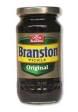
I can't eat cheese and Branston pickle sandwiches without thinking of D.H. Lawrence.

See, cheese and pickle sandwiches were my staple diet the summer I worked in Barnaby's toyshop, and hungrily read Women in Love, The Virgin and the Gypsy and The Rainbow in quick succesion during my all too short lunch breaks.

Edgar Allan Poe is the scent of overripe bananas. His Tales of Mystery and Imagination (Birmingham Library copy) was squashed at the bottom of my rucksack with the remains of my picnic lunch as I trudged 22 miles across the Malvern Hills on a sponsored walk. (Coincidentally on the same day as those guys landed on the moon.) Neither book nor banana survived the trip.

Ipoh Chicken Rice with extra beansprouts is the flavour of my induction into science writing. I devoured Steven Jay Gould's essays in that shop in Section 5 in between teaching practice observations. (Hmmm ... why do men have nipples? Glad I know the answer.)

A Suitable Boy smells of the calamine lotion I had to dab on when I had shingles.

Many of my more recent reads taste of fishball mee soup from Centrepoint.

Pucuk ubi masak lemak* is going to be the flavour of John Banville's The Sea. I'm doing an awful lot of my reading these days in the canteen of Damansara Specialist Hospital, going for physiotherapy for an achilles tendon that refuses to heal. (Step class goddess no longer.) And the Malay food in the canteen is surpringly good, including this dish which is a favourite.

This information may save some PhD student a lot of time as he embarks on DNA research into the various little stains on the library of the famous Sharon Bakar.


*Tapioca leaves cooked in coconut milk.