Showing posts with label john banville. Show all posts

Saturday, November 21, 2009

Another Year of Bad Sex

Maybe Neil Gaiman got it succinctly right on Twitter a few hours ago :
Just read the Guardian Bad Sex Award contenders ... I may never write a sex scene ever again. O Roth. O Banville. Argh.
Yes, it's that time of year again when literary lust becomes fodder for fun. The Guardian has extracts from all the 2009 nominees for The Literary Review's annual Bad Sex Award which you can read at your peril. But those of you of a somewhat tenderer disposition may want to ignore the link. (I started down the list earlier but had had a surfeit of fictional bonking before I made it through all the contenders, so will resume later in the interest of - ahem - research. ) My question to you is, do you really think these are examples of bad writing about sex? The Roth extract, green dildo aside (!) i though pretty intriguing and I'm off to buy the book. I didn't snigger pruriently at Banville's :
... tang of fish-slime and sawdust ... .
Theroux's : '
Yoni puja – pray, pray at my portal.
is a rather sweet line I can hear being taken up as a reprise by his female readers and Richard Milward's, yes, IS funny - but that is his intention surely? The usual refrain on posts of this nature on my blog - sex is very difficult to write well anyway. Postscript : And that is the point made very well in Sarah Duncan's response on The Guardian blog :
Writing about sex can be like a complicated game of Twister. You sit in front of your laptop, trying to work out where everything's going. It's worse than following the instructions for assembling flatpack furniture.

Tuesday, December 04, 2007

Enright and the Workings of Memory

Just a-musing for my own amusement ...

One aspect of Anne Enright's Booker winning novel that I found fascinating was the way the author takes apart memory.

As I mentioned in the review I wrote for the Star:
Most novels play out the past in flashbacks which make memory appear to be an instantly accessible video with every detail rendered distinctly. This is of course not at all how our minds work, and Enright shows how an apparently solid memory of an event has to be modified in the light of objective evidence. “I don’t know if I have the correct picture in my mind,” she says, and talks of “shifting stories and waking dreams” which she must sift through to find the truth.
How do we actually remember things that have happened to us in the past? In fact we don't, the brain quite simply creates an illusion.

Here's an extract from Daniel Gilbert's Stumbling on Happiness. Try this on for size. :
If you've ever tried to store a full season of your favourite television show on your computer's hard drive, then you already know that faithful representation of things in the world require gobs of space. And yet, our brains take millions of snapshots, record millions of sounds, add smells, tastes, textures, a third spatial dimension, a temporal sequence, a continuous running commentary - and they do this all day, every day, year after year, storing these representations of the world in a memory bank that never seems to overflow and yet allows us to recall at a moment's notice that awful day in the sixth grade when we teased Phil Meyers about his braces and he promised to beat us up after school. How do we cram the vast universe of our experience into the relatively small storage compartment between our ears? ... We cheat ... the elaborate tapestry of our experience is not stored in memory, at least not in its entirety. Rather, it is compressed for storage by first being reduced to a few critical threads, such as a summary phrase ("Dinner was disappointing") or a small set of key features (tough steak, corked wine, snotty waiter). Later, when we want to remember our experience, our brains quickly reweave the tapestry by fabricating - not actually retrieving - the bulk of the information that we experience as a memory. This fabrication happens so quickly and effortlessly that we have the illusion (as a good magician's audience always does) that the entire thing was in our heads the entire time.
The other writer I said similar things about was John Banville - the way memories in The Sea cascade one from another.

Both Enright and Banville are Irish writers, so is there something in the drinking water that makes them so concerned with the depicting memory in a more realistic way?

Of course, they might be part of a legacy inherited from James Joyce, the grandaddy of stream-of-consciousness writing and they must be influencing each other.

Truth is, I'm getting less and less happy to read novels in which characters remember everything in full technicolour detail without the slightest hesitation.

But then there's the danger of slowing the narrative down so I suppose that as a payoff we accept the artifice.

So how do the writers among you deal with memory?

Wednesday, October 12, 2005

Booker Bores

Aiyolah! The spillover. The venom. The agonising post-mortem ...

I'm truly sorry for all my regular readers who are scratching their heads and wondering what on earth is the big deal with this Booker business which may not seem very important to most folks - enthusiastic readers even - in this part of the world. (Don't think I don't see my counter numbers dropping ...)

But I'm gonna be a Booker bore and chuck more links at you just so you can see how things are being chewed up and down both here and there. I am throroughly enjoying the debate.

Start at the Independent where Boyd Tonkin has declared the decision of the Man Booker Prize committee:
the worst, certainly the most perverse, and perhaps the most indefensible choice in the 36-year history of the contest
He hurls plenty of invective Banville-ward:
icy and over-controlled exercise in coterie aestheticism ... chilly perfection of a waxwork model ... glacial evocation ... lifeless, pallid work ...
You didn't like it then, Mr. Tonkin? But I can't blame him for being more than a little pissed off that Banville shredded McEwan's novel in The New York Review of Books and probably jeopardized the novel's chances ...

Then Subtext Whore finds the whole 2005 shortlist sadly lacking compared to the books that made it through last year ... Most inspired line:
Kazuo Ishiguro’s Never Let Me Go, yet another dystopic vision of cloning, reads like a nested story from Cloud Atlas, and seems less worthy because of it.
And nearer home our own Hari Kingston chews over the issues arising ... with specific reference to our own peripheral literary status. Would Tash have got long-listed if he's chosen to publish here? Would he even have been published here?

Certainly not and probably not are my answers. Very very very sadly. We have to do something.

Hari proposes that dear old Raman, superhero of the literary universe should initiate our own literary award "The Silvers". What is this Hari trying to stir up, hey?

Anyway, I'm posting this just before bed and no doubt by the morning there will be a tidal wave of opinions to cope with.

And this really is the fun. More than the bloody books!

An Appropriated Language

Laughed at this quote from Banville in an Independent interview last month:
Peculiarly for Irish writers, English isn't really our language. We might have spoken it for 200 years, but we don't necessarily always feel at home in it. The problem for us Irish novelists is that we publish in London and are reviewed in England by English reviewers who often regard Irish novels as a failed attempt to be English. I read something the other day that referred to the 'Celtic fringe' of writers. I thought: Wilde, Shaw, Joyce, Yeats, Beckett - if this is the Celtic fringe, where would I find the full head of hair?

Tuesday, October 11, 2005

Omigosh - Banville Won!


John Banville's The Sea won the Booker.
Am I surprised? Nope because the book is excellent. Because I feel Banville moves the novel into new territory - (as I said in an earlier post, can't think of another writer who has captured memory as beautifully as this writer).

So yes, I'm happy with the decision.

And for most readers, I don't think the book is as enjoyable a read as others on the list. It's beautifully written sure - but slow and meandering and melancholy.

According to The Financial Times chairman of the panel, John Sutherland:
... commented on the judges’ debate with the usual politesses – “civilised argument”, “closely contested” etc – but paid eloquent tribute to the winner’s “masterly” and “virtuoso” writing. The Sea is an elegy of grief and love remembered: Sutherland dramatically referred to it as a “slit-your-throat” novel, but its prevailing mood is melancholy.
This is the way the voting went in the People's Booker:
498 for Kazuo Ishiguro
430 for Julian Barnes
240 for Zadie Smith
198 for Ali Smith
181 for John Banville
132 for Sebastian Barry
If you're the kind of reader who values good storytelling above style - go for the Barnes or the Ishiguro or Zadie Smith because you will enjoy yourself much more.

Postscript:

If you can bear any more about Banville, nice piece from the Guardian . Apparently Banville is a very difficult guy to live with when he's writing. His demeanor is compared to that of "a murderer who's just come back from a particularly bloody killing".

Sunday, October 02, 2005

Some Further Thoughts on Banville's The Sea

Just to add a little coda.

Yes, again I feel that it it hard to do justice to such a complex novel with such a niggardly word limit. I wanted to write more about the characters, especially about Max the narrator whom I did not warm to at all. (Presumably we are meant to feel like this about him, Banville is much too skilled a writer to think otherwise, but then it begs the question - why?) I also must confess that although I felt that he wrote beautifully about his wife's illness (i was close to tears at times, particularly at the achingly sad scene in the kitchen after her diagnosis, and the description of her bleak photographs of the suffering of other patients in the hospital), the other thread of plot - the events of that fatefully childhood summer, never quite ring true.

Are most Malaysian readers going to enjoy this novel? I don't think so. I think many folks looking for a pacier, more accessible read will judge it to be slow and depressing. (I found it beautifully written and thought-provoking. But then I'm odd!)

But if you are a fiction writer or aspire to be one, then you should take a look under the bonnet and see how the engine works, and then see what you can take for yourself.

Most fiction writers are pretty clunky when it comes to handling time past and drawing on a character's memories: cue the heavy-handed flashback - a couple of pages about what happened five years ago with every little detail and line of dialogue realled intact and then back to the present in time for tea.

Our thought processes are much much messier than that! Just watch where your mind goes for any length of time and you have to agree. (Try to meditate and empty your mind and just see those little monkeys of thoughts scampering about!)

Many writers (most notably Joyce in Ulysses) adopted a 'stream-of-consciouness' style, which can place considerable demands on the reader. Banville's prose flows effortlessly from past to deeper past to present and back to pasts again without hiatus, excavating layers of memory and holding them up to the light. It's beautifully done, and I think so far no writer has done it better, although I hunger now to read that other great book about memory Proust's Remembrance of Things Past. (Was this an influence on Banville's prose?)

Friday, September 23, 2005

What Flavour is Your Novel?

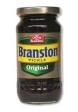
I can't eat cheese and Branston pickle sandwiches without thinking of D.H. Lawrence.

See, cheese and pickle sandwiches were my staple diet the summer I worked in Barnaby's toyshop, and hungrily read Women in Love, The Virgin and the Gypsy and The Rainbow in quick succesion during my all too short lunch breaks.

Edgar Allan Poe is the scent of overripe bananas. His Tales of Mystery and Imagination (Birmingham Library copy) was squashed at the bottom of my rucksack with the remains of my picnic lunch as I trudged 22 miles across the Malvern Hills on a sponsored walk. (Coincidentally on the same day as those guys landed on the moon.) Neither book nor banana survived the trip.

Ipoh Chicken Rice with extra beansprouts is the flavour of my induction into science writing. I devoured Steven Jay Gould's essays in that shop in Section 5 in between teaching practice observations. (Hmmm ... why do men have nipples? Glad I know the answer.)

A Suitable Boy smells of the calamine lotion I had to dab on when I had shingles.

Many of my more recent reads taste of fishball mee soup from Centrepoint.

Pucuk ubi masak lemak* is going to be the flavour of John Banville's The Sea. I'm doing an awful lot of my reading these days in the canteen of Damansara Specialist Hospital, going for physiotherapy for an achilles tendon that refuses to heal. (Step class goddess no longer.) And the Malay food in the canteen is surpringly good, including this dish which is a favourite.

This information may save some PhD student a lot of time as he embarks on DNA research into the various little stains on the library of the famous Sharon Bakar.


*Tapioca leaves cooked in coconut milk.

Thursday, February 10, 2005

The Sea

My review of John Banville's The Sea from today's Star :
“The past beats inside me like a second heart,” writes Max Morden, the elderly narrator of John Banville’s Booker Prize shortlisted The Sea. Max takes up lodging in a boarding house, The Cedars, in the small Irish seaside town where he once spent childhood holidays. Ostensibly there to finish writing a book of art criticism, he makes instead a journey into the past, writing a memoir to make sense of his personal history. A tragedy is foreshadowed from the very first page of the novel.

The Sea is about memory and how we reconstruct the past for ourselves. We embroider and edit, recall insignificant details with perfect clarity and yet forget things that are important to us. In Max’s narrative one memory conjures another as he moves between different layers of the past. Much of the story is told in a series of vignettes: time is frozen so that Max can step inside the frame, and examine each detail for fresh significance.

Recently widowed, Max wanders back through “the chamber of horrors” in his head and revisits his wife Anna’s terminal illness, from prognosis to death. “She is lodged in me like a knife” he laments, yet already the memory of her is fading. Memories are as “real” as anything in the physical world, he decides: “Which is more real, the woman reclining on the grassy bank of my recollections, or the strew of dust and dried marrow that is all the earth any longer retains of her?”

Max’s relationship with the Graces is also re-examined. The events of the “the day of the strange tide” continue to haunt him and he hopes that by returning to the Cedars which the family made their holiday home, he can make sense of what happened.

In flashbacks we watch as ten year old Max encounters the family on the beach and falls into the easy acquaintance with the strange twins, Myles and Chloe. Max, already aware of social distinctions, adopts the family hoping that something of their “godlike” stature will rub off on him.

Despite definite echoes of L.P. Hartley’s classic novel The Go-between, this is not a tale of childhood innocence lost. The children taunt the child-minder, Rose cruelly when they think they have discovered the object of her secret infatuation. (The truth revealed much later.) Max harbours violent feelings for the strange web-footed mute, Myles, and feels for Mrs. Grace with an emotional intensity which has him weeping for her in “rapturously lovestruck grief”, until he transfers his affections to the capricious and sexually precocious Chloe.

The twins though, remain distant and inscrutable: the mysterious psychic bond between them so strong that as Chloe tells Max, it’s as if they were a couple of convicts on the run, shackled together.

The Sea is an achingly melancholy and beautifully written novel. It is impossible to read it without feeling grief for our own small lives measured against the immensity of time and the uncaring physical universe. Consequently, we do not feel a particular horror at the long anticipated tragedy played out at the end of the book. It is Max realises “just another of the great world’s shrugs of indifference” and there is a strange justice in the novel’s climax.