Showing posts with label iraq. Show all posts

Friday, February 15, 2008

Fisk-al Forgery

What would you do if you discovered a book on sale with your name on it, and it was a book that you definitely didn't write?

Independent journalist Robert Fisk discovers a biography of Saddam Hussein with his name on the cover.
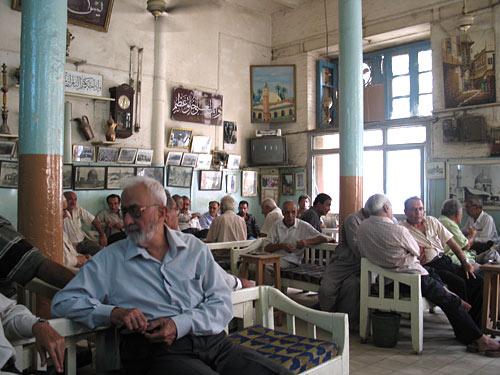
It arrived for me in Beirut under plain cover, a brown envelope containing a small, glossy paperback in Arabic, accompanied by a note from an Egyptian friend. "Robert!" it began. "Did you really write this?"

The front cover bore a photograph of Saddam Hussein in the dock in Baghdad, the left side of his head in colour, the right side bleached out, wearing a black sports jacket but with no tie, holding a Koran in his right hand. "Saddam Hussein," the cover said in huge letters. "From Birth to Martyrdom." And then there was the author's name – in beautiful, calligraphic typeface and in gold in the top, right-hand corner. "By Robert Fisk."

So there it was, 272 paperback pages on the life and times of the Hitler of Baghdad and selling very well in the Egyptian capital. "We all suspect a well-known man here," she added. "His name is Magdi Chukri."
And of course being the great investigative journalist he is, Fisk is soon on Magdi Chukri's tale.

A very enjoyable piece which you can read here.

Wednesday, May 16, 2007

Of Machine-Guns, Doorbells and Cancer: The 2007 Blooker Prize

The 2007 Lulu Blooker Prize, awarded for a book blook based on a blog, has been won by a former American machine gunner with My War: Killing Time in Iraq. Colby Buzzell based his memoir on the blog he began while in Mosul, in northern Iraq, in 2004, about eight months into his deployment.

According to the Guardian:
... he portrayed the texture of daily life ... from listening to Metallica on his iPod to watching his fellow "grunts" surf the web for pornography.
Within weeks his blog was receiving thousands of hits a day, and he was contacted by literary agents wanting to sign him up.

There is an irony about the timing of the prize as the US military high command is clamping down on blogs written by its personnel - ostensibly for security reasons.

The winner in the Fiction category is The Doorbells of Florence by British blogger Andrew Losowsky based in Madrid. His book of short stories was based on photographs he had posted on Flickr (which makes the genre he's writing in "fliction", it seems).

The Comics section was won by Brian Flies with a true-life account of his mother's struggle with lung cancer. The blook is called simply Mom's Cancer and is based on an Eisner Award-winning webcomic. The original blog has had to be removed from the internet now that the book has been published, but you can see some of the graphics here.

There were more blooks shortlisted, and I do hope that you will take a look and come away inspired. Blooks are certainly a very interesting route to publication. But first find the right concept for your blog.

Now before I end this post, I'd like to make mention of an excellent litblog:
... about fiction - both online and offline. It deals with the way the Internet is changing the way we read - whether it is books we’re dealing with or not. What is the future of the book? Can blooks make a lasting impact in the publishing industry?
I'd landed up at Novelr a few times after googling stuff about blooks and having been much informed by the posts. Then one day I checked to see who the blogger is. American? British? Someone in the publishing industry?

Nope. Eli James is a student in Kucing, Sarawak. And I don't even dare ask how young he is ...

(Picture of Colby Buzzell from the Guardian)

Wednesday, March 07, 2007

Car Bomb in Book Market

Before and after in the bookmarket in Al-Mutanabi Street the literary and cultural heart of Baghdad. The car bomb that ripped through the area left at least 26 dead and wounded 65.
The terrorists are trying to kill knowledge. Today they have killed the books in our oldest market ...
said bookstore owner Naim al-Shatry.

(Pics scanned in from Malay Mail article)

Monday, February 12, 2007

Library in a Battle Zone

The battle to keep some semblance of normalcy in a corner of the world gone mad is chronicled in the diary entries of the director of Iraq’s National Library and Archive in Baghdad, Saad Eskander.

Saad is struggling to keep the central library open and replace the rare books and documents that have been destroyed despite:
... bombings, blockades, shootings, threats, shortages and petty frustrations that make up everyday life.
The diary is now available online via the British Library website, reports Patricia Cohen in the New York Times. Here's just a few of the things he has had to contend with:
As he wrote in his latest entry, he was having trouble repairing the Internet system; the Restoration Laboratory “was hit by 5 bullets”; and “another librarian, who works at the Periodical Department, received a death threat. He has to leave his house and look for another one, as soon as he can; otherwise, he will be murdered.”
A single poignant story that represents the whole mess that is Iraq.

Update (10/6/08) :
I want to make the library a democratic model of how Iraq should be. From the start I hired Sunnis, Kurds, Shias, women, men. The national library must be a place - perhaps even the most important place - where Iraqis from many different groups come together." He claims to have paid special attention to women's rights.
Saad Eskanderhas more to say about running his library in heart-breaking timees in this interview by Stuart Jeffries in The Guardian.

Friday, October 27, 2006

Bookless in Baghdad

The news that a street of bookshops is now practically deserted hardly seems to figure in the scheme of things when a city is torn by daily sectarian violence and an ever mounting death toll. But this story made me feel very sad.

Al-Mutanabbi Street, named for an Iraqi poet was once the centre of Baghdad's intellectual and literary life. Yassin Al-Rubai'i reports on the website of the Institute for War and Peace Reporting:
For many years, Friday was the day Iraq’s intellectuals and lovers of literature would descend on Al-Mutanabbi Street, in the historic heart of Baghdad. From morning ‘till early afternoon, the small alley, home to the oldest bookstores in town, turned into a crowded open-air book fair.

The pavement on both sides was covered with well-thumbed titles from around the globe - in Arabic, English, German, Farsi and other languages - along with dictionaries, science texts, light and heavy novels alike. For more precious or - in Saddam’s times - forbidden books, customers would follow dealers into their labyrinthine stores in one of the adjacent courtyards, usually stacked to the ceiling with antiquarian tomes.

The oldest store on the street, the Al-Arabia Bookshop, was opened in 1904, at a time when Baghdad’s appetite for literature was particularly keen. “What is written in Cairo and published in Beirut, is read in Baghdad,” an old saying goes.
But with the violence and the Friday curfew which followed the customers stopped coming and many of the booksellers were forced to sell out.

Also forced to closed was the Shabander teahouse at the end of the street was the place where poets, writers and artists would meet over sweet tea and a hubble-bubble pipe. A place known for intellectual resistance to the regime and a center for liberal ideas:
Today, the street where books and writers coexist has become a street of ghosts. ... Iraqis still shop in the book district, but most of the intellectuals who felt free to say what they thought in public are either in hiding or have fallen silent out of fear that spies for various armed groups will target them for assassination. Iraqi writers are starting to head underground, retreating to protected offices. Because literary culture is so bound to a particular neighborhood of Baghdad, an attack on Al Mutanabbi Street is an attack on Iraqi culture itself. This is a culture once so vibrant that a famous slogan in the Arab world ran, "Cairo writes, Beirut publishes, Baghdad reads."
writes Philip Robertson in an excellent article about the effect of the war on Baghdad's intellectuals and writers on salon.com. Do read.

(Pic at top nicked from Iraq Blog Count, pic of Shabandar tea house from saloon.com)

Friday, June 23, 2006

Not George

The book on the left is an absolute must-read: George W. finally coming clean and admitting the massive cock-up he made in invading Iraq.

Naw. It's a tease of course. It's one of four free e-cards of "not-books" on Abebooks website to celebrate ten years of online second-hand bookselling linking 13,500 booksellers across the globe (including, you will be overjoyed to learn, our own Payless books).

Abebooks is a dangerous place for a bookaholic. It's fun to browse and every little itch for a particular title can be satisfied, and relatively cheaply. Every book I've ordered (and that's a distressing number) has turned up quickly and has fitted exactly the description on the website. It's nice too to sometimes find a bookmark inside with a description of the bookshop it came from: I like books with histories.

I'm slowly replacing books I've lost over the years, or which I read but didn't own.

Sunday, September 04, 2005

His Saturday - My Sunday

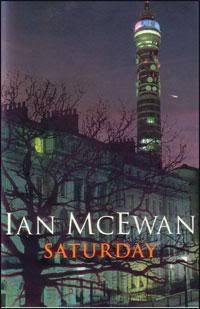
My review of Saturday by Ian McEwan in Starmag today.
Image hosted by Photobucket.com

IT’S Saturday, Feb 15, 2003.The Iraq invasion is imminent, and the largest demonstration in British history has more than a million people converging on central London.

It is also Henry Perowne’s day off, and the neurosurgeon has a full schedule of activities planned: a game of squash with a colleague; a trip to the fishmonger; a visit to his mother in a nursing home (the most poignant scene in the book); then on to his son’s blues gig, before finally coming home to cook for a reunion dinner. As he goes about his routine, the reader is privy to his thoughts, memories and musings in scenes that are beautifully observed.

Anyone who knows McEwan’s writing will appreciate that he makes a specialty of shattering everyday normality, and violent incident eventually smashes into the novel. A minor car accident leads to an unpleasant confrontation with the thuggish Baxter (whom Henry quickly realises has the symptoms of the degenerative disease Huntington’s Chorea). Baxter resurfaces later in the novel to hold Henry’s family captive.

McEwan’s greatest achievement in the novel is the atmosphere of fear he creates from the first few pages, when Henry spots a plane on fire from his bedroom window in the small hours of the morning and imagines a terrorist attack. This is after all the new age of anxiety, post 9/11. Henry also fears “the city’s poor, the drug-addicted, the downright bad”; despite an elaborate home security system, he realises nothing keeps you safe. Later events bear him out.

The difficulty of making a moral choice is a reoccurring theme here. Henry’s conversation with his daughter Daisy about the morality of the war must have been repeated in kitchens up and down the country, and in much the same words. Henry realises the war is “all about outcomes and no one knows what they’ll be”, so there is little point in making a stand. He knows about Saddam’s excesses from one of his patients, an Iraqi professor who has been systematically tortured. (Incidentally, McEwan actually gives Tony Blair a walk-on part in one of the cleverest moments of the novel.)

McEwan as social commentator is spot on, but McEwan as storyteller is a different matter. There are times in the novel when the reader’s credulity is stretched almost to breaking point.

Henry’s long cogitations in moments of crisis, coupled with generous doses of medical jargon, is unintentionally laughable. As Baxter lunges at him after the car accident, the thought running through Henry’s mind is: “This is bound to imply the diminished presence of two enzymes in the striatum and lateral palladium – glutamic acid decarboxylase and choline acetyltransferase.”

Who needs to parody McEwan when he is more than capable of doing it himself? (Be warned: this is not a novel that wears its research lightly, and you will feel as if you’ve taken a crash course in brain surgery by the end!)

The scene in which the family is held hostage seems awkwardly ill-fitting with dialogue that could have been lifted from a TV drama. And is it really credible that a poem (a recitation of Dover Beach by Matthew Arnold) could bring about a total change of heart in the knife-wielding Baxter? Literature lovers would be delighted to think so.

The real pleasure of Saturday, though, is in the quality of writing and level of intellectual engagement the novel offers. This is fiction with its finger on the pulse of the times, and not surprisingly, it is currently odds on favourite to win this year’s Booker prize.

S'difficult, y'know, trying to cram everything you think and feel about a book into the 500-600 words of a review. I had pages and pages of notes and quotations and would love, just love to sit down over coffee with someone and chat at length about this book, because I loved its complexity and intelligence.

Will Saturday appeal to Malaysian readers? Only those who into serious literary fiction and appreciate style more than plot. Anyone looking for an easy read with a racy storyline won't get through this.

There's also a review of another of the Booker longlisted books The Accidental by Ali Smith by Lee Tsi Ling on the same page as mine. Funny, I never read reviews until after I've read a book because I want to know what I think first before anyone esle does! But afterwards, I always dig the reviews out to see how far we agree or don't. I don't even read the blurb on the back of books! A journey through a book is always a very personal thing and I don't want to be influenced.

Kinokuniya is offering 30% off all the books on the Booker longlist with the voucher next to my review. I must go out and buy some extra copies of the paper because I want several of the books for myself, and pretty well all of them for the British Council.

Daphne Lee's article on Penguin Books is also worth a read. (And hey, you can get 20% off the tiny Pocket Penguins if you flash the article at the folks at Times!) She quotes Mike Bryan, international sales and marketing director for Penguin United Kingdom as saying:
“Penguin India, of course, publishes many great Indian authors, and our office in China is signing up the new wave of Chinese authors. It would be great to get more Singaporean and Malaysian authors in print.”

Tuesday, August 16, 2005

Not in my Name

Was working hard yesterday reading McEwan's longlisted Saturday at the hairdessers. (Good reading spot apart from the fact that you have to keep blowing away the bits of hair that fall on the pages.) Anyway, the book is set on a single day - Saturday 15th February 2003, the day of the first huge demonstration against the Iraq with more than a million marching in London alone.

I was here, not there, or I would have marched.

A few weeks later, the war started and a second demonstration was held in London on another Saturday: 22nd March, a little smaller (just half a million marchers) and more subdued than the first. This time I was part of the crowd and this is the piece I wrote that day:

My placard is a piece of cardboard rescued from the bin in my sister's house. I haven't written anything profound on it, just ANGRY, BETRAYED. Which is how I feel. Only ANGRY doesn't do justice to this gnawing pain in my guts. INCENSED, would perhaps have been better.

A nice young man helps me to stick my homemade banner with brown parcel tape to a Socialist Worker banner saying STOP THE WAR. Though of course it can't be stopped now it's started, can it? Still it's important to stand up and be counted, to send the message around the world that there is opposition. (And what a joy it is to hear a BBC newscaster say later a propos of the march: "This is still a country deeply divided." The biggest wartime demonstration in this country ever.)

I buy a whistle and a pocket full of badges to give away to the kids: NOT IN MY NAME. Left wing newspapers and flyers are thrust into my hand.

This is my first demonstration. Ever. Middle-aged protest virgin. I'm self-conscious as I take my place behind the other marchers, expecting to feel out of place. But there's a real cross section of people in this march. Many marchers are elderly, some are kids with their parents. There's a real feeling of camaraderie, but the mood is sombre rather than defiant.

Helicopters from the television stations hover overhead. Reporters push among the crowd looking for photo opportunities.

The chanting picks up, and I gingerly join in as I manage to catch the words.

What do we want? Peace. When do we want it? Now. Peace now peace now peace now peacenowpeacenowpeacenow.

We start off late from Gower Street, move slowly down Shaftesbury Avenue, police lining the route. At Picadilly, another river of protesters joins us, moving from the South of the city.

Bush Blair USA. How many kids have you killed today?

It's a glorious spring day. I feel so blessed to be walking through this magnificent city in the sunshine. I'm proud to be among others who care enough about the state of the world to come from all over the country and march. And we're free to do so without the fear of being arrested for dissent against the government. (Believe me, you value this when you live in a country like Malaysia.)

Who let the dogs out? Bush Bush and Blair.

I start up a conversation with a woman named Roz who tells me that she is a veteran of all the marches. She's around my age, and so diminutive that I have to bend sideways to hear her over the noise of the whistles, sirens and chanting, not so easy with my unwieldy banner which has the wind billowing behind it. But I learn that Roz been protesting at Westminster all week, sitting in the road to stop the traffic. She fills me in on all the other protests and demonstrations around the country, and tells me about the thousands arrested in San Fransisco, including the a man who fell or was pushed from the Golden Gate bridge.

1-2-3-4 we don't want your bloody war.


Roz seems to think I'm doing quite well as a protester. Maybe I'll take it up more seriously.

5-6-7-8 stop the killing stop the hate.


We flood into Hyde Park. Thank goodness there are toilets and food stalls set up. I have an improvised picnic of fish cake and soggy chips on the grass and then join the crowd again to listen to speeches. One Welsh Labour MP who voted against Blair gives an eloquent speech about the dangers of American Imperialism. There's a moments silence and the Moslems in the crowd are asked to say the Al-Fateha prayer. Some of the speeches are shallow sloganeering though, and I was unhappy about the Palestinian issue being linked to this protest about war with Iraq so I decide not to stay till the end.

As I leave, I see a field of hands made by children from all over the country. Tiny banners made by drawing around their hands and cutting them out, then decorating them with peace messages. The sight of all those tiny hands and the heartfelt words on them has the tears pricking my eyes.

I trudge up to Bond street to take the tube home. My feet hurt like hell by now, but my heart is lightened.

Thursday, December 16, 2004

A New Forum (Blogging) Inspires the Old (Books)

If you want your writing to be noticed - write a blog! Interesting article about how bloggers such as Salam Pax commenting on the invasion of Iraq and Belle de Jour writing about the life of a callgirl in London (both blogs I have read and enjoyed greatly) landed publishing deals based on their blogs.

The New York Times > Books > A New Forum (Blogging) Inspires the Old (Books)

I enjoy reading blogs very much - have a whole list of them bookmarked and dip in and out of the soap opera of other people's lives. I especially love the voices that come through - the way that character and personality, gender and personality are revealed through the words people use and sometimes hide behind. It would be an interesting writing exercise (not one I've tried myself yet though) to read a blog for a while and then see if you could construct an imaginary entry keeping the voice consistent.

Where else but the pages of a novel or in a film can you enter the head of someone so very different from yourself and whose life experiences are as far removed from your own as it is possible to get?