Showing posts with label john llewellyn rhys award. Show all posts

Friday, November 28, 2008

When Words Have a Life of Their Own

As I confided to you some time back, in some alternative universe I think have a thriving career as a lexicographer. I am turned on by dictionaries, love words and their etymologies.

It's really nice to hear about a book on the English language winning the John Llewellyn Rhys this year - the first time a work of non-fiction has won since it's inception.*

Henry Hitchings's The Secret Life of Words, about the roots of modern English and the origins of words is, according to the chair of the judges :
... Amazingly accessible, it's written with great grace and enthusiasm and humour, and is also a scholarly work.
You can read reviews of the book in a number of places including the Times, the New York Sun, and the Independent.

I'm looking to laying my hands on a copy soon!

* (Oops i get corrected in the comments!)

Thursday, November 20, 2008

John Llewellyn Rhys Shortlist

Told you there was a lot of award news at the moment! The shortlist for the 2008 John Llewellyn Rhys Prize, which rewards the best work of literature (fiction, non-fiction, poetry, drama) by a UK or Commonwealth writer aged 35 or under was announced on Monday 3 November, and comprises:
The White Tiger by Aravind Adiga

The Broken Word by Adam Foulds

The Secret Life of Words by Henry Hitchings

The Bloody White Baron by James Palmer

God’s Own Country by Ross Raisin

Selling Your Father’s Bones
by Brian Schofield
There are three works of fiction on the list. Ardiga's novel was the winner of this year's Booker prize, of course, and you may remember that Ross Raisin has been nominated for the Guardian First Book Award.

Fould's The Broken Word sounds fascinating - it is a verse novella (and how often do you get those?) set in Kenya at the time of the Mau Mau uprising, and following it's protagonist, Tom, as he returns to the family farm in between leaving public school and going up to Cambridge.

You can read about all the books here on the British Council's Animating Literature website, and there is information about all the authors here. The winner will be announced on Monday 24 November.

Friday, November 30, 2007

Novel of Future Without Oil Wins Rhys Llewllyn

This year's John Llewellyn Rhys prize has been won by Sarah Hall for her novel The Carhullan Army, described by Richard Lea in the Guardian as:
... a tough portrait of life in a near-future Britain after the oil runs out. ... The novel presents itself as the statement of a detained woman prisoner, and follows a narrator, known only as "Sister", as she escapes her regimented life of tinned food and rationed electricity to join a separatist female commune on the Cumbrian moors.
Chair of the judges, Suzi Feay said of the book:
Sarah Hall's fierce, uncomfortable story of a radical dissident group holed up in the far north after the total breakdown of society seemed to all the judges to be the book that tackled the most urgent and alarming questions of today ... The quality of The Carhullan Army was simply unignorable. We need writers with Hall's humanity and insight.
Katy Guest interviewing the author in the Independent back in August, reckons the book :
... contains elements of The Handmaid's Tale, 1984, Lord of the Flies... But it is entirely of the moment ... If the introduction makes it sound like a satire on current government policy, it is not far wrong: this is a political book. But it is also part-thriller, part-science fiction, and a love story, of sorts.
Sounds like a real must-read!

And talking of dystopian future scenarios, well worth reading is Margaret Atwood's essay on those two classics of speculative fiction, Aldous Huxley's Brave New World and George Orwell's 1984, which appeared in the Guardian a week or two back.

Tuesday, October 23, 2007

Llewellyn Rhys Shortlist Announced

The John Llewellyn Rhys shortlist has been announced and pitches two works of non-fiction:
Robert Macfarlane - The Wild Places

(Macfarlane, one of Britain's best nature writers, travels the length and breadth of the country to find wilderness.)

Rory Stewart - Occupational Hazards: My Time Governing in Iraq

(Stewart was an administrator in the early days after the invasion.)
against four novels:

Sarah Hall - The Carhullan Army

("The world has changed. War rages in South America and China, and Britain - now entirely dependent on the US for food and energy - is run by an omnipresent dictatorship known simply as The Authority. Assets and weapons have been seized, every movement is monitored and women are compulsorily fitted with contraceptive devices. This is Sister's story of her attempt to escape the repressive regime. From the confines of her Lancaster prison cell she tells of her such for The Carhullan Army, a quasi-mythical commune of 'unofficial' women rumoured to be living in a remote part of Cumbria...")

Gwendoline Riley - Joshua Spassky

(According to the Times "Riley writes with a Woolf-ish exactitude... A brilliant and
beautiful novel" but readers on amazon.co.uk don't seem too impressed! "It gave me great pleasure to toss it in the bin," says one.)

Ceridwen Dovey - Blood Kin

("A barber, a chef and a portraitist are held hostage in a sparsely-furnished room, in a grand summer residence perched on a hill overlooking the capital city of a nameless hot country. They have been seized in a bloody coup to depose the President, their boss. In the city streets below them, chaos reigns." The novel is described as "masterful, thrilling and deeply affecting".)

Joanna Kavenna - Inglorious

("Rosa Lane is a fashionable journalist in her thirties, already the picture of London achievement. Her handsome boyfriend is something in politics and her other friends are confident, prosperous and ambitious. But one afternoon, staring at her computer screen at work, she fails to see the point, walks out of her job - and begins her long fall from modern grace.")
Richard Lea reports on the award in the Guardian, noting that poetry and drama (the award is open to all) been totally overlooked have this year.

Tuesday, December 12, 2006

Tale of Child Soldiers Wins Llewellyn Rhys Award

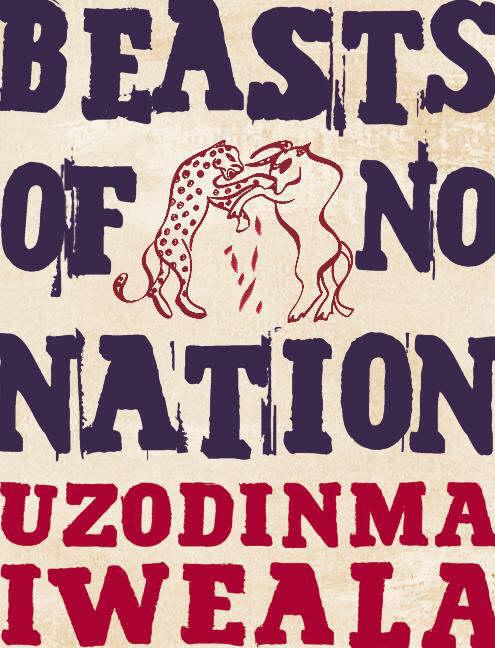
The John Llewellyn Rhys award for debut writers was won by Uzodinma Iweala's for his Beasts of No Nation, described by Michelle Pauli in the Guardian as:
a brutal but surprisingly poetic novel about an African child soldier ... an intensely moving story, as well as a horrifying one, all the more so for tackling an issue of our time ...
The issue of course being child soldiers and as the Pauli points, Save the Children estimates that around 300,000 children around the world are currently fighting in wars.

Nigerian born Iweala is just 23. He grew up in the US and studied at Harvard where his novel grew out of the thesis he was writing. His mum Ngozi Okonjo-Iweala is Nigeria's finance minister (and hailed as "a great reformer").

You can read with him about his writing and about his views on Africa in this very interesting interview from the Morning News.

And as this article from the Herald Tribune points out, there is a whole new generation of Nigerian writers taking the literary world by storm. Some names to watch out for Sefi Atta, Helen Oyeyemi, Chris Abani, Segun Afolabi, and Chimamanda Ngozi Adichie.

All of which makes me very happy. Not least because a part of my heart still lives in Nigeria.

Related Posts:

Shakespeare the African (15/3/05)
Read and Become Wise (11/5/05)

Thursday, November 16, 2006

Debut Writers for John Rhys Llewellyn

The Visitor who commented on the previous post that prize money shouldn't be for "established authors who are already making money from their books" but for "new and aspiring writers" will no doubt have the cockles of his heart much warmed by the John Llewellyn Rhys prize which recognises and celebrates the best work of literature by a UK or Commonwealth writer aged 35 or under. The winner takes home £5000, and all the finalists received £5oo.

Mosts of the finalists this year are debut writers, the Guardian reports.

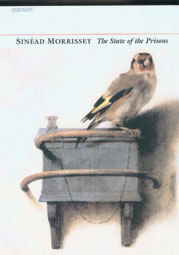
One volume of poetry (Sinéad Morrissey's The State of the Prisons) has made it through. The other finalists are fiction:
Rebecca Ray - Newfoundland
Rana Dasgupta - Tokyo Cancelled
Uzodinma Iweala - Beasts of No Nation
Peter Hobbs - The Short Day Dying
Rachel Zadok - Gem Squash Tokoloshe
I liked (but am still pondering) this quote from Lemn Sissay, the only poet on the judging panel:
Poetry is the concentrated juice of the novel.