My
telephone interview with Jung Chang and Jon Halliday in
The Star today, alongside
a review of their new books
Mao: The Unknown Story by Phar Kim Beng.
Jung Chang’s new book (co-written with historian husband, Jon Halliday) grew from her own unanswered questions about the man who had so profoundly influenced her own life. “I didn’t know what he did exactly or how he came to power and I wanted to find out,” she says in a telephone interview. The couple found out a great deal more than they bargained for and Mao: The Unknown Story is the result of more than ten years of painstaking research.
.
“I didn’t know that there was this much new material,” says Chang “One piece of research just lead to another.” Chang carried out the research in China while Halliday, did the non-Chinese research. They delved into foreign archives and interviewed more than 100 people who had known Mao personally including members of his family, former colleagues and staff, heads of state and leading political figures. It was a process that was exhausting and both suffered from serious health problems along the way.
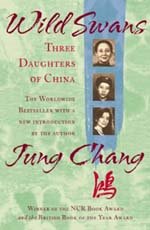
Their research turned up many surprises along the way. “The biggest shock,” says Chang “was about the great famine. We calculated that thirty-eight million people died. We thought initially that the economy was mismanaged, and that’s what I said in Wild Swans.” They were amazed to learn instead that “Mao had calculated the number of deaths as part of the plan to buy nuclear arms. Few in the world know that Mao’s single-minded pursuit of the weapons. He was ruthless and would not let the death of millions stand in his way.”
Halliday estimates that around 95% of the “really important stuff” they uncovered was from Russia, and he visited the country four times while they were researching the book “One file alone was a quarter of a million pages. There were tens of thousands of pages detailing for example, Mao’s first big purge and how his colleagues tried to leave him behind on the Long March. There were cables between Stalin and Mao towards the end of the civil war. And I got wonderful interviews with people who’d dealt with Mao during the 1950’s including Khrushchev’s interpreter ”
The most difficult archive to access was that of the Russian Foreign Ministry. Halliday says he was surprised at how much closer the relationship was with Russia than had been pretended, “By 1929 Stalin had identified Mao as the guy who was going to win and decided to back him. We were able to document that up to the hilt.”
I tell Halliday that the book has provoked some strong reactions in some of the online forums I’ve been reading. Some have accused Jung and Halliday of having “an obvious bias”. Someone else described the book as “unremittingly negative.’
Halliday seems quite upset by such accusations. “I dislike people saying we acted with ulterior motives. We did not set out with any agenda, just to write a well done comprehensive biography. We did a lot of hard work to get the details right and fair. We set out to answer questions, for example, what were Mao’s political decisions throughout his life? We did uncover a lot of new material and we found that his policy decisions were entirely consistent. We looked hard at everything he said in public and to his inner circle and in her research in China, Jung captured the real Mao.”
“In fact,” he goes on “We would welcome an open debate on the facts. But no-one so far has come up with any evidence to refute what we’ve said.”
Both agree that the success of Chang’s Wild Swans, opened doors for them which would otherwise have remained closed. “People in China were very keen to talk to Jung because she had written Wild Swans. It was thought that the book made people sympathetic to the Chinese. World statesmen were interested and agreed to see us including former presidents and I don’t think any of that would have happened without Wild Swans,” says Halliday.
I tell Chang that for all it’s meticulous research and careful scholarship, this is a surprisingly readable book.
“We tried very hard not to make the book dry,” says Chang adding that it was important to her to add a strong human interest angle. Particularly revealing, she says, is the way that Mao treated his wives with great callousness and indifference. It’s hard not to feel pity for Kai-Hui, Mao’s second wife, who was executed by nationalists in 1930. Chang was able to use a cache of letters that Kai-Hui had hidden behind a roof-beam before she was imprisoned. “She was abandoned with three children and he didn’t lift a hand to save her. He was completely indifferent. He didn’t care about her, the people or the party.”
With their new book poised to blow the myth of Mao apart, do they think that Chinese society is ready to take on a changed view of Mao?
Halliday thinks it unlikely though that the biography be available in China where Mao is still acknowledged as being “30% wrong but 70% right” in official parlance. “But I think China would be a healthier and stronger place if the truth were open to scrutiny. The Chinese have a right to know what happened to their country and I believe that Chinese society is ready to take this on because facing the truth can’t be as hard as living under him.”
“Mao was simply the most anti-Chinese person there’s ever been,” Halliday adds. The book makes a convincing case for that.
I was greatly impressed by the meticulous research that went into the book. Chang and Halliday had access to archives in Mainland China, Russia, Taiwan, Albania, USA, Great Britain, India and Germany. They interviewed over 100 people who knew Mao personally, as well as an impressive list of world leaders (including presidents Bush Snr. and Ford), and major political figues. This is scholarly work ... not the work of a couple who set out merely to grind an axe as some have implied. And it is extremely readable with plenty of human interest on the pages.
If the book is a catalyst for debate reassessment of China's history, then it will have done its job very well indeed.