Showing posts with label samuel johnson prize. Show all posts

Saturday, July 04, 2009

A Whale of a Winner


This year's Samuel Johnson prize for non-fiction has gone to a book about whales, Philip Hoare's Leviathan which has been described as :
... part natural history, part literary criticism, part economics and part memoir but at its heart is the author's lifelong obsession for all things whale.
Hoare apparently fell in love with whales after reading Moby Dick and first encountered the mammal when he saw a killer whale at Windsor safari park.

The chairman of judges, Jacob Weisberg, said of the book :
The quality of his writing was just so impressive, it is literary, just beautiful. It is a model of a certain kind of writing and I imagine it is a book that will be read for a long time to come.
You can listen to Hoare talking about his book to Claire Amistead here and find an extract here.

Wednesday, July 16, 2008

Murder Most 'Orrid

This year's Samuel Johnson prize for non-fiction has been won by In The Suspicions of Mr Whicher by Kate Summerscale, which takes for its subject a notorious 1860 murder case in which Saville Kent, a three year old child from a respectable middle-class family disappeared from his bed. His body was later found stuffed down the privy (outside toilet).

As Charlotte Higgins explains in the Guardian :

The Road Hill House murder provoked national hysteria, and inspired writers such as Charles Dickens and that great exponent of the Victorian sensation novel, Wilkie Collins.
Chair of Judges, Rosie Boycott described the book as:

... one of those great non-fiction books that uses the techniques of fiction to magnificent effect. On first reading, it is an absolute page-turner. Then, when you reread it, you realise how many levels it has, how much it tells you - about the founding of the police, the Victorian study of physiognomy, the inherent snobbery of the time that meant that the police wouldn't touch anyone from the upper classes, because they 'couldn't' have committed a crime. ... And then there's the way the case became a media event, in a very McCann-like way. The newspapers of the time started spinning stories of who might have done it.
There's a really whizzy website for the book, complete with interactive map of the house where the murders took place. And you can read an appetite-whetting extract here.

There was a very strong shortlist for this year's prize and the other books that were nominated are :

Blood River: A Journey to Africa’s Broken Heart by Tim Butcher
Crow Country by Mark Cocker
The Whisperers by Orlando Figes
The World Is What It Is: The Authorized Biography of V.S. Naipaul by Patrick French
The Rest is Noise by Alex Ross

Saturday, May 17, 2008

Naipaul Bio in Running for Samuel Johnson

The shortlist for the Samuel Johnson Prize for non-fiction sponsored by BBC4 has been announced. This from The Guardian :
Blood River: A Journey to Africa's Broken Heart by Tim Butcher
With a few thousand dollars in his boots, the author sets about recreating Stanley's expedition

Crow Country Crow Country by Mark Cocker
A celebration of Norfolk, its oceanic flatness, its immense skies and its human intimacies

The Whisperers by Orlando Figes
Drawing on letters, memoirs, conversations, this work tells how Russians endured life under Stalin

The Authorized Biography of V.S. Naipaul by Patrick French
An account of the writer's life

The Rest is Noise by Alex Ross
A survey of the cacophony of the 20th century

The Suspicions of Mr Whicher by Kate Summerscale
In 1860, a Kent family wakes to a horrific discovery: a gruesome murder has taken place in their own home ...
The money's on the Naipaul biography to win - bookies William Hill have it as 5/4 favourite. More comment on the shortlist here, while Claire Armistead who is judging the prize this year talks about how she copes with the tower blocks of books by her bed.

The winner will be announced on the 15th July.

Monday, June 25, 2007

Another Award or Two

So who's been winning what, and why?

The BBC Four Samuel Johnson Award for Non-Fiction has gone to Rajiv Chandrasekaran for Imperial Life in the Emerald City, which looks at life in Baghdad's Green Zone. Baroness Helena Kennedy, the Chair of the judges, described it as being:
... up there with the greatest reportage of the last 50 years – as fine as Hershey on Hiroshima and Capote’s In Cold Blood. The writing is cool, exact and never overstated and in many places very humorous as the jaw-dropping idiocy of the American action is revealed. Chandrasekaran stands back, detached and collected, from his subject but his reader is left gobsmacked, right in the middle of it.
You can watch a short film clip about the book here and find out about the other shortlisted titles here.

Phlip Pullman has been awarded the 'Carnegie of Carnegies' after being voted the favourite winner of the prestigious medal for children's literature in the 70 years it has been awarded. Pullman won the medal in 1985 for Northern Lights, the first part of the His Dark Materials trilogy.

These were the other great children's books competing for the prize:
  • Skellig David Almond (1998)
  • Junk Melvin Burgess (1996)
  • Storm Kevin Crossley-Holland (1985)
  • A Gathering Light Jennifer Donnelly (2003)
  • The Owl Service Alan Garner (1967)
  • The Family From One End Street Eve Garnett (1937)
  • The Borrowers Mary Norton (1952)
  • Tom's Midnight Garden Philippa Pearce (1958)
(Tom's Midnight Garden and The Owl Service are books I particularly loved as a kid and I'd recommend them strongly even to adults looking to transport themselves through time and different dimensions.)

The top Australian award, the Miles Franklin was won by Alexis Wright for Carpentaria, a portrait of life in the newly established coastal town of Desperance, North Queensland, and the novel is about:
... the strained relationship between the white folk of the fictional town of Desperance and the internal struggles of the Indigenous community, who are fighting for survival against an all-powerful mining company.
Carpentaria must be quite something to have won from such a strong shortlist where it ran against Peter Carey's Theft (my favourite book of last year), Gail Jones' Sixty Lights, and Deborah Robertson's hotly tipped Careless. Carole Ferriere in the Australian Women's Book Review goes as far as to call Carpentaria the best Australian novel for years.

And one last award I think it's interesting to mention in this pot-pourri of great reads: the Oxford-Weidenfeld Translation Prize, awarded for translations into English from any living European language. The award:
... aims to honour the craft of translation, and to recognise its cultural importance.
This year's winner was Michael Hofmann for Durs Grunbein's Ashes for Breakfast: Selected Poems (Faber). Guest judge and literary editor of The Observer Robert McCrum praised Mr Hofmann for his:
... startling, and occasionally magical, rendering of Durs Grunbein's Ashes for Breakfast, a new collection from one of Germany's contemporary masters. A vindication of the translator's alchemy, Hofmann's versions do not smell of the lamp. They look like poems that want to be poems. As translations they feel voluntary, unforced.
The collection was also shortlisted for the Griffin Poetry Prize last year.

The short-listed runners-up were:
  • Joel Agee for Friedrich Durrenmatt, Selected Writings (University of Chicago Press).
  • Anthea Bell for Eva Menasse, Vienna (Weidenfeld and Nicolson).
  • Robin Kirkpatrick for Dante, Inferno (Penguin).
  • Sverre Lyngstad for Dag Solstad, Shyness and Dignity (Harvill Secker).
  • Sandra Smith for Irene Nemirovsky, Suite Francaise (Chatto and Windus).

Friday, June 16, 2006

Shakespeare and Monkey Win Awards

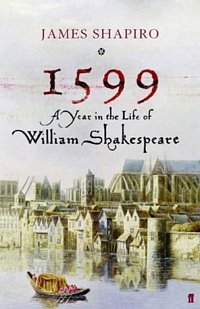
The Samuel Johnson Prize for non-fiction was last night carried off, not by Alan Bennet's Untold Stories, as many had expected, but by a biography partly inspired by the film Shakespeare in Love. American academic James Shapiro's 1599: A Year in the Life of William Shakespeare was described by Peter Kemp in his Sunday Times review as :
... the product of marathon scholarship, inspired insight, narrative flair, astute surmise and searching intelligence ... (it) brings Shakespeare’s outer and inner worlds, and the interplay between them, alive with such thrilling immediacy
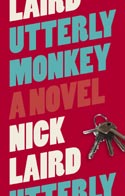
Meanwhile, poet Nick Laird has won the Betty Trask Award for his "lad-lit novel" Utterly Monkey.

A reviewer in the Independent describes it as:
'a novel that combines lad-lit staples – car chases, pub crawls and beautiful women – with grown-up savoir faire.'