Now Dan Brown's
Da Vinci Code interests me not at all, and I'd happily go along with
The Visitor's assessment of its literary merits. But I have been watching the press for news of the plagiarism trials against the author, because the issues raised are important to all fiction writers who use information from other published sources. At what point does using become plagiarism?
Last August, Brown appeared at the District Court in New York to defend himself against the claims of writer Lewis Perdue that he had lifted elements of the
Da Vinci Code from two of his novels,
Daughter of God, (2000) and
The Da Vinci Legacy (1983). Purdue said he felt violated, like somebody had broken into his head. The judge concluded that:
Any slightly similar elements are on the level of generalised or otherwise unprotectable ideas ...
- a line that was used by Dan Brown's defence
in the current hearing at London's High Court where two historians Michael Baigent and Richard Leigh are suing Brown over his plagiarism of their earlier work
The Holy Blood and the Holy Grail.
As copyright lawyer David Hooper says in the Guardian:
If people were able say that's my idea, that's my theme, it would make the whole creative process incredibly difficult. ... It's one thing if somebody has picked up somebody else's book and copied large chunks of it, but how on earth do you know if somebody's taken too much of somebody else's theme?
Anyway, it's interesting to make comparisons with another case that came to light some years back. The following from Moby Lives:
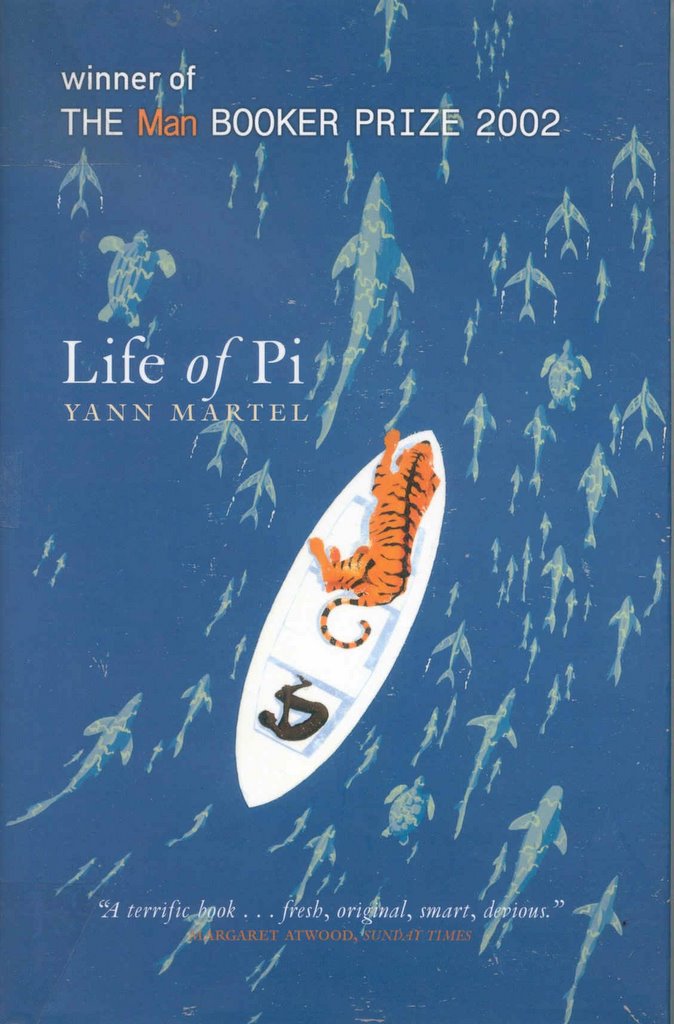
You've got to admit, it's an unusual premise for a book: a little boy survives a shipwreck and winds up sharing a lifeboat with a large, predatory cat. Sound familiar? ... Well, if you're thinking it's the premise of one of the most talked–about novels of the year, "Life of Pi" by Yann Martel, last month's winner of the Booker Prize, you're right. But it also turns out to be the plot of book called "Max and the Cats," by esteemed Brazilian writer Moacyr Scliar ... which was published in 1981.
Scliar decided not to sue, although he certainly had a case. Purdue intends to appeal against the New York court's decision. I don't hold out much hope for him, but at least the publicity should be good for his book sales.
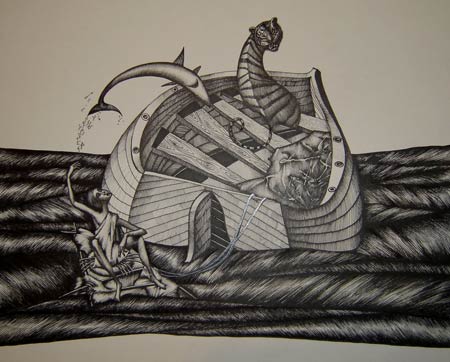
 You may remember the competition that was held some time back to find an illustrator for Yann Martel's Booker winning The Life of Pi.