Showing posts with label Indian writers. Show all posts

Thursday, February 15, 2007

Writing from Here vs. Writing from There

Kathleen McCaul writing in the Guardian discusses the current literary scene in India and how the focus is changing from the NRI (non-resident Indian writer i.e. living in the west and writing for a predominantly western audience) to homegrown writers. (Of course, there are some interesting parallels with the situation for Malaysian writers.)

Literary critic Nilanjan Roy (who turns out to be Huree Babu of the Kitabkana litblog!) explains why so many Indian authors have moved westward in the past:
For the Indian writer working in English, going abroad was one way to reach the marketplace, to lessen the very considerable distance between publishers, editors and agents in the west and the writer at 'home'. Vikram Chandra and Amit Chaudhuri teach at universities abroad; other writers have shifted because they have access to better jobs, more scholarships.
But other Indian writers feel they want to stay close to their roots, and author Altaf Tyrewalla talks about his difficulties writing as a NRI:
I don't know how, for instance, I could write from the perspective of an imaginary butcher in a chicken shop if I wasn't also suffering the humidity like him, suffering the noise of a ghetto like him, and yet trying, like him, to think amidst this discomfort, this cacophony ... Midway through writing No God In Sight, I went to New York to be with my fiancée (now wife), hoping to continue with the novel there. I assumed I could write anywhere, that I could stretch my imagination wide enough to surmount the distance of thousands of kilometres. I was back in Mumbai in two months. It was a very expensive misadventure.
The article points out the need for a local literary infrastructure for writers. Delhi-based reviewer Hirsh Sawney says:
There aren't as many literary institutions in India so writers aren't challenged to produce better work - aren't nurtured.
However, things there do seem to be improving and there's another sign of a maturing literary culture - Indian writers are beginning to write novels set in parts of the world, says Rana Dasgupta*
I have a lot of pressure from my publishers to write about India (but) it is a colonial hangover in publishing to think that writers in India, Africa and the Caribbean must write about their home cultures while writers from the West could write about anywhere. Mature literary cultures should feel like they can write about the world.
*Rana Dasgupta has a very cool website - you can leave your graffiti all over it!

Pic of a Calcutta bookseller nicked from the Guardian.

Friday, December 29, 2006

The Need for "Adda"

The other day when I couldn't happily surf for new stuff hither and thither because of the slow internet, I began sorting through a whole lot of pages I'd bookmarked for possible blogging ... and then over the months forgotten.

Thus I re-encounted and re-enjoyed this article by Navtej Sarna which appeared in the Hindu back in March: there's plenty in it all writers would recognise ... the insecurities, the panic when confronting a blank screen, the desire for a talisman ... but above all, it seems to me that it's about the need for community among writers.

Sarna recalls the adda that Sacred Games author Vikram Chandra (left) used to organise for Indian writers in Washington DC:
The main event of the adda were the readings by the somewhat subconscious just-published or unpublished writers leaning against the wall amongst comfortably old leather sofas and entrapped in the sophisticated decadence of red wine. But the spirit of the evening was hidden in the sub-text. Most of the audience was made up of people who wanted to be writers; many had novels at various stages in their minds, or on their computers. A careful glance around the room would reveal tentative literary ambition and silent envy of the published gods. A desire to seek help with a recalcitrant manuscript usually overcame a natural tendency to shroud the pending masterpiece in secrecy. Inevitably, the writer of the evening would be asked — When do you write? Evenings? Early mornings? In long hand or on the screen? Is it autobiographical?... Sometime the red wine would help foment more private conversations in which the writers in the making would then exchange every possible idea about the writing process, searching for the secret mantra that would finally end the painful search for elusive words for a blank screen and result in a completed book, publication, fame... In one such weak moment I recall telling an- investment- banker-during- day- budding- novelist- by-night that I could write a novel only on a computer screen and a short story only with a fountain pen, and the scratchier the nib, the more time I had to find the right nuance.
Adda is a word I hadn't come across before. Clearly it means something like talk or discussion but it wasn't until I read this defintion in an interview with one of my favourite litbloggers, Huree Babu (of Kitabkhana), that I appreciated the nuances of the word :
In Bengal, we grew up with the idea of the “adda” versus the podium: the “adda” was an informal, but often intense and lengthy discussion that could take place anyway–at the university, on the open lawns of the Maidan, at the local tea shop, a friend’s house. The podium was where the official speeches and the formal arguments were made; the adda was often the place where multiple opinions came into play, where you could go back and forth and discuss several aspects of a book or its author, where there was constant feedback, and constant challenge.
(And interestingly, he describes litblogs as being a type of adda!)

I found more about Vikram Chandra's Washington Adda in this interview on Sonia Faliero's blog:
It's really valuable. It's nice to have a community, even if it's a fractitious one, where people are fighting. ... It's sort of like what in the film industry is called the biradri. ... And the filmi biradri is an interesting one. They bitch about each other, they backstab. But finally, it's nice to have that environment where you are at home and there are other people concerned with the things you're trying to do. So you can have an ongoing conversation with them, not just in the sense of hanging out and talking to each other, but also through the nature of your work. I like that. It's fruitful.

A few years ago, in the late 1990s, my friend Anuradha Tandon and I started this thing called Adda. The whole idea was that once a month we'd meet at (the restaurant) Goa Portuguesa and invite a bunch of people, and someone would lecture, read or do a performance. What was amazing was how fast and vibrantly it took off. Pretty much after the first time we had to do it by invitation only. Some really amazing collaborations came out of that.
Lessons for here?

Tuesday, October 17, 2006

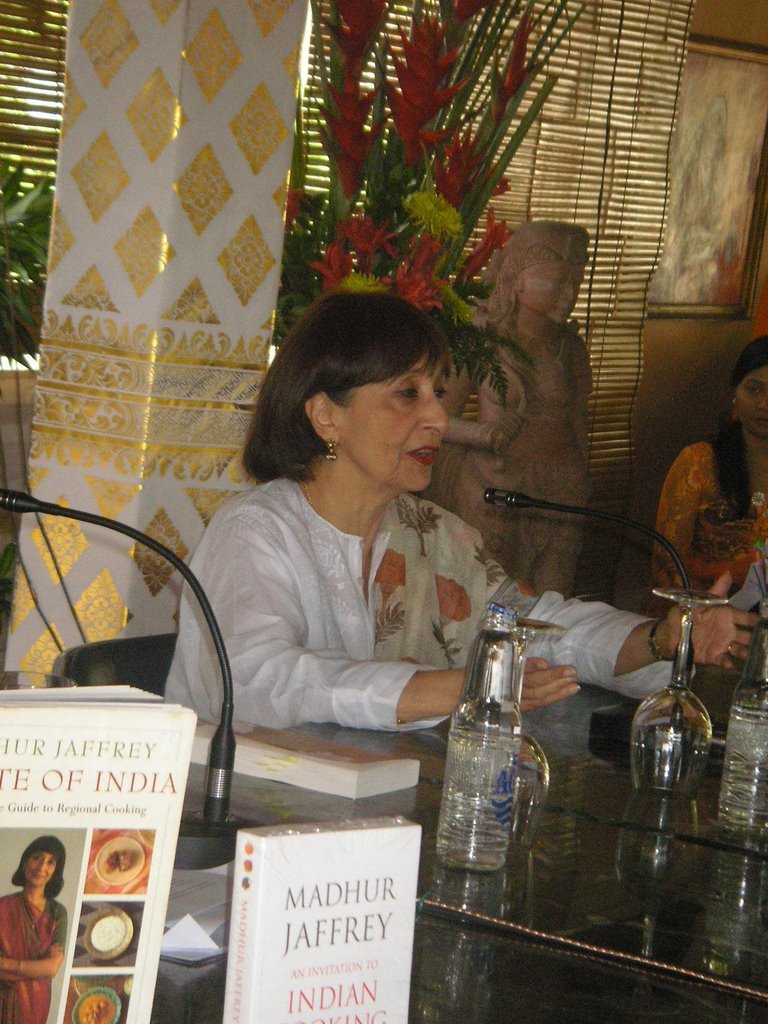
Mad for Madhur

I've loved Madhur Jaffrey for years, with that special affection engendered for those who teach us to cook and transform our kitchen lives.

I thought about taking my cookbooks along to Bali for Madhur to sign, but quite aside from AirAsia's measly baggage allowance, wouldn't she have been insulted to see her books curry splattered, the pages stuck together with splashes of my own attempts, and my comments and adaptations scribbled on them? (I have the fantasy of presenting her with a stained page and saying "Here, Madhur, sniff this. Did I get the proportions right?")

Madhur says that she learned to cook after she moved to London from Delhi to take up a course at the Royal Academy of Dramatic Arts (RADA) and discovered just how dreadful British food was "apart from the fish and chips". She encountered "beef grey in colour and cabbage boiled for days" in the canteen. She longed for the spicy food of home.

Learning to cook, then was a matter of survival. She asked her mother for recipes, and the air letter arrived with fairly vague instructions ("add a little bit of this, a little bit of that") so that she had to rely on her memory of taste to get the proportions right.

When she came to write recipes for others she said that she "thinks like a dummy" to make sure that the instructions are as foolproof as possible.

Althought there were numerous Indian restaurants in Britain at that time, they did not reflect the authentic cuisine of the subcontinent, and tended to behave for example, as if India did not have fish.

After graduation, Madhur became a successful film actress, appearing in Shakespeare Wallah, Heat and Dust, and numerous others, as well as in TV and radio productions. She moved married actor Saaed Jaffrey and moved to New York. (She later divorced, and married Sanford Allen.)

But being an actress is a precarious business and she realised that if she wanted to be able to aford to send her children to good schools and colleges, she needed to supplement her income. She decided to write about the arts for newspapers and magazines, then got "somehow hijacked" into food writing and started writing for magazines like Gourmet.

She says she picked pieces according to countries she wanted to go to and then set out with her "begging bowl" to ask ordinary folk for their recipes. She would enlist "the farmer's wife, the fisherman's wife" and then go to their houses to watch exactly how the recipe was cooked. She enjoys exploring the cultural connections along with the food.

I can personally attest for the authenticity and user-friendliness of the recipes in Far Eastern Cooking, one of my favourite cookbooks of all time. (I have the videos too.) Everything works. Everything tastes right.

Madhur has always been a "one woman band, with no assistance", she says. When she tests a recipe, she does all her own shopping, chopping, preparation and cooking, and records her notes onto the computer. "Any mistakes in the recipes are all mine," she says. She says that when writing a cookbook, she typically puts on 8lbs as she tests recipes and ends up with all the left overs in the fridge!

Her first book was published in 1973, though the early publications didn't do well. Then in the early 80's the BBC decided that they would like to do an educational programme about Indian food and asked Madhur to audition.

The print run of 30,000 copies of Indian Cooking sold out first week the programme aired! Her audience "were hungry for recipes that didn't come out of flock papered restaurants" and Indians wrote to tell her that they were proud of her. The restaurants began to change, and she says she feels responsible in a sense for that change.

Several more very successful books followed it including World Vegetarian. My favourite (and she says it's hers too!) though is a book which did not sell well - Food for Family and Friends a fusion cookbook she says "was ahead of its time". (I got my copy at a bargain basement price at MPH years ago.)

At the festival she read an extract from her latest book - not a cookbook this time, but a memoir, Climbing the Mango Trees: A Memoir of a Childhood in India. She says that in writing it she had to wrestle with issues such as how truthful should you be? Who do you hurt? Who do you not hurt? And she notes that "when you start writing one thing a whole host of other things come back to you: writing awakens what seems to be sleeping and dormant".

At 73, (I couldn't believe it until I did the maths just now) Madhur Jaffrey shows no sign of slowing down and still relishes the idea of travelling the world to collect recipes. Indeed, one of the things she enjoyed doing in Ubud was going on the market walk Janet de Neefe organises weekly, along with a cookery demonstration.

No doubt there will be some Balinese dishes in her next collection!

Sunday, October 15, 2006

Always an Outsider

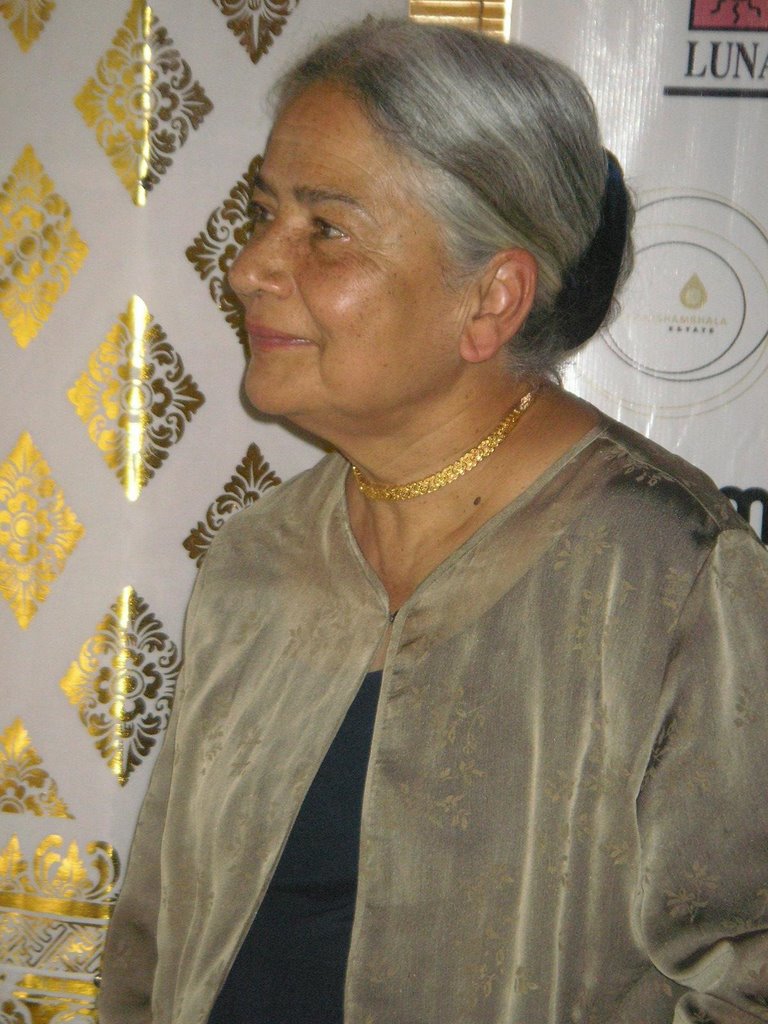
My article on Anita Desai in Starmag today. Here's my original version of the piece. (The printed article got skewed Kiran-wards for obvious reasons! But I'm not at all unhappy with the rearrangement.)
“I see India with my mother’s eyes – as an outsider, but with my father’s heart.”

Novelist Anita Desai explains to her audience at the Ubud Readers’ and Writers’ Festival in Bali, that being an outsider has always felt perfectly normal to her. Although nearing seventy, Desai has a serene beauty about her, and speaks in a soft, carefully modulated voice.

Desai was born in Mussorie, a hill station north of Delhi, yet her father was a Bengali business man who had met her German mother when he went to study in Berlin, just ahead of the Hitler period. Neither of her parents revisited their original homes: the country her mother knew had been destroyed, and she did not want to see the new Germany.

The novelist grew up between cultures but it wasn’t until she went to school that she began to see herself as different from other children.

She says that her mother made a huge effort to bring her up as an Indian, but German was the language at home. She remembers her singing German lieder, and baking German kuchen, as well as cooking Bengali food. Her mother was also a great storyteller and fired the young Anita’s imagination with highly embellished stories from Hans Anderson and Grimm’s fairy tales.

Desai started writing aged six, and had her first work published at nine when a little piece she had written was chosen for a magazine. From the beginning she wrote in English, which she claims has always given her writing a sense of separation from other parts of her life. “I am most myself when I write,” she adds “In social life you are always adapting. But when writing, here you can tell the truth.”

When she began writing, she says, only a handful of writers scattered throughout India were writing in English. “It is a challenge to inherit a language which is not your own,” she says “you need to internalize it and recreate it.”

At the same time though, most Indian writers looked down on the language. “We believed ours would be the last generation to use it.” But when Salman Rushdie’s Midnight’s Children “came like a thunderbolt”, she says, it gave later generations the courage to use English as an Indian language.

Married in 1958 to a businessman, Desai raised four children while continuing to write. Her first novel The Peacock was published in 1963, and was followed by fourteen more, including works for children. She reached the Booker shortlist three times: Clear Light of Day (1980), In Custody (1984), and Fasting, Feasting (1999).

Desai usually waited to write until her four children were out of the house because she felt that it would be distressing for them to see that her mind was elsewhere than on family life.

“When the inevitable happened and copies of a book arrived from the publisher, the children would tiptoe past it. It took until they were adults before they could face the fact that I had a separate life.”

She says that she has felt especially close to Kiran since her daughter started writing. “I can talk about things to her that I can’t talk about to the others,” she confides. The two of them share a house in upstate New York. Kiran writes upstairs, she writes downstairs and they tend to meet in the kitchen and they tend to meet up in the kitchen when they’re hungry.

When Desai moved to the West, first of all to take up and a take up a post of Cambridge University and later to New York, Kiran was only 15. Desai says that now she has very conflicted feelings about the move and the emotional impact of it on her daughter.

“One has to spend one’s childhood in one’s own country,” she says wistfully. But it is clearly the experience of living between cultures, and the challenge defining an identity as an immigrant which has given Kiran Desai the subject matter for her novel, The Inheritance of Loss, which this week won the ultimate literary prize, the £50,000 Booker Prize an award which for so long eluded her mother. It should come as no surprise though that the novel is dedicated to Anita.

Also in Starmag today, reviews of Booker shortlisted novels Hisham Matar's In the Country of Men reviewed by Tee Shiao Ee, and Kate Grenville's The Secret River reviewed by Tan Shiow Chin.

Saturday, October 14, 2006

Bloggers in Bali

One of the panel discussions at the Ubud Readers and Writers Festival featured bloggers. Festival organiser Janet de Neefe told us later that there had been some argument among members of the festival committee about whether to include it or not.

Bloggers are used to being on the border line of legitimacy. The medium is free. We don't have to struggle to be published. There's no editorial control. And this is the Wild West of writing.

Fortunately, our panelists were not lacking in credentials! Apart from yours truly, and Dina Zaman (she of the erstwhile and ever disappearing Gongkapas Times - the blog that got me writing), there was Jeremy Wagstaff, an Asian Wall Street Journal columnist, and novelist Shalini Akhil whom we coopted onto the panel after hearing her speak at an earlier session. The session was moderated by Deepika Shetty, also a mad keen blogger.

That our blogs are so very different was a fact we established pretty quickly!

Jeremy Wagstaff writes the Loose Wire blog which is full of useful information about making technology work for you. During the festival, he also launched Loose Wire: Making the Technology Work for You which he describes as an accessible book you can read in the bath!

Shalini Akhil is an Australian of Fijian Indian heritage and has recently published her first novel, The Bollywood Beauty. She's also does stand uo comedy. We just had to include her when we heard she has two blogs and confesses to being "a bit of a nerd"! (When I mentioned the cyber cafe across the road, you should have seen her eyes light up!)

Shalini's main blog, Kai-India is about her everyday experiences of being a published author. The other, i, writer is more personal. She says she wanted to blog anonymously when she began, but of course that isn't possible once everything you write about is a dead giveaway as to your identity.

Since many in the audience were people who had thought of blogging but weren't sure of the technicalities of setting up a blog, we tackled that first - Jeremy giving a quick dummies guide to what blogs are and how to get started.

Deepika threw in some pretty interesting facts and statistics from her reading - this lady really researches! (Did you know that almost all the top 100 bloggers in the US are journalists or professional writers? Or that Technorati is now tracking over 50 million blogs?)

Deepika had some pretty good questions to throw our way, beginning with: how did you get started and what keeps you going? (I blogged about this a short while back.)

But the discussion got most interesting when we were talking about the position of bloggers vis-Ă -vis the print media, and whether the one was threatened by the other. We were able to talk about how bloggers not only draw from the print media (now increasingly online) but also in many cases feed back into it. (I gave the example of one of my posts being picked up by USA Today and another by the Guardian - could have given several more.) I also mentioned the fact that blogs fill a gap where there is little or no coverage of a topic in the print media. (How many pages are there for literary news in the local press?)

Deepika and I agreed that it is often frustrating to do an interview with a writer and get a ton of great material from it, but only have a few hundred words to squeeze it in to for more conventional media. Blogs give us the space we need to give our material (which we feel should be in the public domain) justice.

We also talked about privacy issues, problems with wierdos and stalkers ... and one issue we haven't talked about here, but both Dina and I are beginning to connect the dots ... Malay women bloggers suffering abuse and hacking from their (male) readers if they dare to step out of line in some way. (Under investigation - if you have a story to share, e-mail me in confidence.)

During the questions, someone asked how we'd feel if someone "stole" our writing from the blog. I realised (with something of a sense of shock) that this simply isn't an issue for me. I'm very happy if my writing gets picked up and quoted elsewhere - provided that I'm credited. I want my words out there. I want them to travel. (That's egotistical, but aren't all bloggers shameless self-promoters?) I've also realised that I'd rather write for my blog and post it here than I would sell my words to newspapers and magazines. That also has surprised me.

All of us on the panel that day were incredibly positive about blogging - an enthusiasm many in the audience (and we had quite a crowd) shared. And others who haven't yet dipped their toes in the water, I hope are inspired to try.

Monday, October 09, 2006

The Lure of the Independents

Johan Jaafar described every literary buff''s bookshop fantasy (well certainly mine!) in the New Straits Times on Saturday:
Back in 1988, I visited a small bookshop in New Delhi. I was browsing through a remarkable collection of Indian classics when a gentleman appeared. Since we were confined to a small space we had no choice but to acknowledge each other’s presence.

We talked about a book I was holding, the Bhagavad Gita — probably one of the best known war treatises in the history of mankind. I told him of my interest in the Mahabharata and how it went through a magnificent "local colouring" in my country.

Before he left he took out a book and gave it to me, The Golden Gate, which he signed. "My last copy, not in pristine condition I’m afraid, but since you can’t get it here, I’ll let you have it," he said.
It was of course Vikram Seth.

The Golden Gate is an incredible work (imagine this a whole novel written in sonnets!) I didn't know though that:
It was inspired in part by Aleksandr Pushkin’s Eugene Onegin. Legend has it that he found the copy at a second-hand bookstore in Stanford. That discovery changed his life forever. He chose to be a writer rather than an academic. See what a bookshop can do to a person?
This leads him to reminisce about other bookshop encounters both abroad:
... I was in Paris in 1997 when I came across the Shakespeare and Company bookshop (left) across the Seine from the Notre Dame Cathedral. It was not the original bookshop of the same name started by Sylvia Beach in 1919. That shop became famous for it was the meeting place for English- speaking expatriates and lovers of English books, not to mention the place where Ernest Hemingway, Ezra Pound and John F. Fitzgerald spent hours. In the world of Francophiles, Shakespeare and Company was the symbol of all things English. Beach died in 1962 but the name was retained by another bookshop.

It is cramped, cold, even stuffy, with books spilling into narrow corridors and whatever spaces available, but it was where the "real books" were. Unlike modern book stores that are well-lighted and better arranged, this place reminds you of penniless authors and unpretentious scholars lingering with only one purpose in mind — to immerse themselves in the world of books.

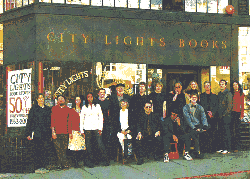
And then there is the City Lights of San Francisco. It was co-founded by poet Lawrence Ferlinghetti in 1953 and became the first in the United States to concentrate on paperbacks. The best thing about the bookshop is its unusual triangular structure.
... and nearer home:
I grew up in a village in Johor, 35km from the nearest town, Muar. There was no bookshop in the village. Whenever my father went to Muar I accompanied him. He would spend his time having teh tarik at his favourite mamak shop facing the Muar River. I was left to hang around at Kedai Buku Manap. What an experience it was. I was surrounded by books of all shapes and sizes. In my kampung, I read The Thirty Nine Steps and King Solomon’s Mines over and over again, for those were the only English books I had. At Kedai Buku Manap, there were few English books, none that I could afford anyway, but there were books published by Sinaran Brothers of Penang and Dewan Bahasa dan Pustaka. The best my father could do was to buy me a comic book.
He singles out those two little independent bookshops for praise:
I am more of the "Silverfish kind" – I am referring to the little bookshop in Bangsar the size of a convenience store, next to a famous eatery. Silverfish is unpretentious, it is a booklovers haven, and more importantly it offers the feel of familiarity that has eluded the bigger chains. ... Silverfish, which belongs to Raman Krishnan, is also a respectable publisher. Or I would prefer my friend’s little hideout — Thor Kah Hoong’s Skoob Books. Hideout, I say? It is hidden somewhere in the bowels of the tallest building in Old Petaling Jaya. Sadly, you will find a lobby with unoccupied shoplots, a hair salon and a snooker parlour before you come across this gem of a bookshop. Thor, the former journalist, is also an actor and playwright. His books are old and new, expensive and cheap, but like any small independent bookshop, it has the smell of genuineness.
I would so love to visit Shakespeare and Co. especially since reading Books, Baguettes and Bedbugs (which I've not told you about yet, have I?) and City Lights of course.

Independent bookshops are idiosyncratic and fun ... you never know what you'll find, who you'll bump into and just how grouchy or chatty the owner might be.

One of the delights of travelling is to seek them out independent bookshops in whichever country you find yourself. (There is such a phonomena as "bookshop tourism" you know!) Trouble is that the "personal touch" usually leads to more recommendations ... leads to more book buying ... leads to more penury!

Related Posts:

Skoob is Books Drawkcab (17/1/06)
A Home for Bookworms (20/2/06)

Monday, October 17, 2005

Kunzru Makes An Impression

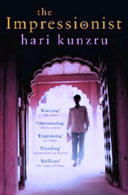
Last Monday night it was my turn to host supper for my book club buddies and the book under discussion was The Impressionist by Hari Kunzru.


I was a bit shamefaced because I hadn't quite got to the end (had to read other stuff for review and am not the fastest anyway, especially when I'm enjoying the writing). By unanimous verdict the book was declared excellent.

Now that doesn't happen all that often ... the last time this happened was with Rohinton Mistry's A Fine Balance and the time before that with Barbara Kingsolver's The Poisonwood Bible.

The Impressionist is about a half-cast boy, conceived during a flash flood when his forester father is rescued by a young woman on her way across the desert to her arranged marriage. (Not very a likely occurrence? Far crazier things happen in this book, be warned.)

Pran is brought up in luxury and revered for his fair skin, but when his true parentage is revealed, he is cast out onto the streets to fend for himself. A born-survivor, the boy takes on different identities and reinventing himself at every turn. He makes an epic journey through the turbulent Indian subcontinent, and later to England and West Africa.

The Impressionist is a hilarious romp of a book, wonderfully farcical. It's richly imagined, and replete with historical detail. The characters are delightfully eccentric - the British coming off particularly badly (as they surely deserve to).

It's a novel about empire, but also about identity. And it sparked off good discussion about racial identity and "fitting in" in the Malaysian context.

Yes, this one comes very highly recommended.

Saturday, May 07, 2005

Tea and Tagore

Well, Happy 144th Birthday, Rabindranath!

Raman - praise be he who makes book things happen - held a celebration today for Tagore's birthday at Silverfish.

Tagore is of course, India's greatest modern writer, and won the Noble prize for literature in 1913 with Gitanjali. He was incredibly versatile - not only poet but also short story writer, novelist, dramatist, essayist, painter, composer of songs and political activist too.

Singers from the Bengali Association performed a couple of Tagore songs; an elderly lady who had come up with her daughter from Seremban had actually met the poet when she was ten years old and read a poem in English and Bengali; Professor Quayum gave a talk about Tagore's life and work; and then there were further readings from Prof. Lim Chee Seng, poets Wong Pui Nam (in Mandarin) and Raja Ahmad Aminullah (in Malay). Tagore precious to all of them. (But where was Yasmin Ahmad who makes a point about the universal appeal of Tagore in Sepet? She was also going to read.)

It was a pleasant evening apart from the fact I sat on the floor and got a numb bum! Many friends there including Diana Cooper, Saras, Datuk Shan, Ioannis and met Sharanya Manivannan for the first time since she got back from India. Plentiful Pakoras and sweet jelebis to eat.

And for me a good introduction to Tagore. Knew his work mostly through the works of the various Indian writers (notably Vikram Seth). Now making a start on reading him and bought a book of thoughts and verses taken from a selection of his books:


Shall no doubt be peppering my pages here with his words of wisdom!