Showing posts with label oprah. Show all posts

Monday, November 23, 2009

A Hooker Unmasks, A Diva Retires, and A Poet Appropriates

Really, my apologies for not being a very good blogger over the last week or two. I'm not sure what's happened to me, but I seem to be more easily distractible than usual. (I just spent 20 minutes getting distracted by this nice blog while looking to see if I had spelt the word right!). This being the case, I offer you some quick links to stories that have caught my eye over the last week or two and hope you enjoy them : Margaret Atwood turned 70 and on The Guardian books blog Daragh McManus celebrates the work of a writer whose versatility astounds. (I am currently reading and relishing After the Flood and reckon it needs to be the second book of a trilogy.) Zadie Smith suffers from what she calls 'novel nausea' and turns to the essay in a piece that is both erudite and refreshing. Oprah Winfrey announces that her talk show is coming to an end and Bookninja gets very emotional. Call-girl blogger Belle De Jour (one of the earliest to be successfully "blooked") reveals her real identity after years of speculation in the press - she's Bristol-based researcher named Dr. Brooke Magnanti and she turned to prostitution to finance her education. (As Rowan Pelling at The Telegraph says, the revelation is shocking because it turns on its head what we think we know about the world's oldest trade.)
I stand behind every word with pride ...
unearthed her secret way back but - bless him - gave away nothing about:
... the greatest story in the history of blogging, and probably the biggest literary puzzle in the UK this century.
British poet laureate Andrew Motion is accused of "shameless burglary” by a military historian for "extracting sexy soundbites" from his work on military psychiatry. The creation of collages of words - often called found poetry - is though a time-homoured technique. Motion's resulting poem for Armistice Day, An Equal Voice, is far better than the usually trite stuff offered up by laureates on official occasions. But still, the argument raises interesting questions about what plagiarism is and what poets can get away with. (Ellen Whyte tagged me with a link to this article on Facebook, feeling properly angry I think.) Apologies to those who have asked me to blog this and that. I am slowly sorting myself out and plan to put up some local book news very soon.

Friday, January 16, 2009

Now for the Good News!

There has been a measurable cultural change in society’s commitment to literary reading. In a cultural moment when we are hearing nothing but bad news, we have reassuring evidence that the dumbing down of our culture is not inevitable ...

says Dana Gioia, chairman of the National Endowment for the Arts, in The New York Times. A new report, Reading on the Rise: A New Chapter in American Literacy, shows that adults are now reading more literary works than they did previously.

Factors that helped reverse "the perilous decline" (recorded in the Endowment's previous study four years ago) include a programme called The Big Read :
... to encourage communities to champion the reading of particular books, like “The Great Gatsby” by F. Scott Fitzgerald and “Their Eyes Were Watching God” by Zora Neale Hurston.

(The complete list of books for The Big Read is here and would make a great guide for anyone wanting to make a start on becoming a more convinced reader - do take a look!)

Also :
Oprah Winfrey’s book club, the huge popularity of book series like “Harry Potter” and Stephenie Meyer’s “Twilight,” as well as the individual efforts of teachers, librarians, parents and civic leaders to create “a buzz around literature that’s getting people to read more in whatever medium.”
And we in Malaysia, of course, have something very important to learn from this!

Monday, May 26, 2008

McCrum in Ten Chapters

The Observer's literary editor Robert McCrum hangs up his hat after more than 10 years in the job and gives us a fascinating whistle-stop tour of the changes he has seen in the publishing world in that time.

Along the way he shares his thoughts on subjects such as: Zadie Smith and the new generation of authors; how Amazon.com has changed the retail market; the rise and rise of Rowling; Franzen snubbing Oprah; the explosion of literary festivals; how literary prizes have come to be the most reliable guides in a perplexing landscape; why McEwan's success typifies the decade; how blogs have taken over the role of reviewing; how Lynne Truss talks to our anxiety in an age of cultural upheaval; and finally, the Kindle.

This article is a must-read for anyone interested in the trends, and it's nice to discover that McCrum is very optimistic about the future of the book :
... what I have described are the birth pangs of a golden age. The market for the printed book is now global; the opportunities for the digital book are almost unimaginable. To be a writer in the English language today is to be one of the luckiest people alive.

Sunday, June 24, 2007

The End of The World News

Cormac McCarthy’s The Road is a novel that forces us to imagine the totally unthinkable: What would it be like to be one of the last human beings in a world in which every plant, and tree and creature were long dead? An unnamed boy and his father travel through an American landscape destroyed by nuclear war, all their worldly possessions contained in a shopping cart. The journey itself generates the plot as the pair struggle to survive from one day to the next, always on the brink of starvation.
From my review of The Road in StarMag's Readsmonthly supplement. (Read the rest here.)

This book is (honestly) still haunting my dreams, and I can't get it out of my waking head either.

What scares me most is that this is an all too possible scenario particularly given the rampant stupidity of world leaders, including those of the "we-must-climb-on the-nuclear-bandwagon" persuasion so we can stick our fingers up at x, y or z. Idiots!

My fingers want to rant on and on here, but I'm deleting as fast as I'm typing because otherwise you would get a nice bit of Sharon polemic about the utter immorality of any country possessing a nuclear arsenal, and how a general yawn yawn apathy seems to grown around any public discussion of nuclear disarmament, an issue we all seemed to care much more about in the 60's and '70's. (Or is that my imagination?) But unless we pull ourselves back from this brink, this could be a picture of the future.

In The Road it's McCormac's portrait of the total deadness of everything that terrifies and that actually holds my attention more than the story of the man and his son (whom I honestly don't care about probably as much as I should).

I found I was quite affected when after reading the book for a while, I glanced up to see the world around me still exploding with life and colour. Sunshine. Birds. Trees. Flowers.

The novel is a quick read - it took me just a couple of days in odd moments. For the most part it's easy going and well written, though as I say in the review, McCormac's style did get up my nose at times, especially when he comes over all pseudo biblical. I found some of his excesses extremely annoying and just wished that the self-conscious author would get out of the way of the story he was telling!

Would I recommend it?: Yes, it's powerfully affecting and deeply thought provoking and it will change the way you see the world.

Oprah did well to pick it as her book of the month, although her interview with McCormac seems to have bombed. New York Entertainment slammed Oprah for her utterly inane questions, wasting "one of the five most culturally significant interviews she'll ever conduct" while McCormac appeared monumentally ill at ease.

If you still want to watch the recording, you can find it on the Oprah Book Club website, but will need to sign up first.

Monday, June 04, 2007

Nuke Them Darn Apostrophe's!

Ahah! I said to myself. A typo. A carelessly missed apostrophe.

Why it should be there on the second page of the novel, I couldn't imagine: this was certain not the first edition of this book, it was published by Random House, honoured with the Pulitzer, endorsed by our beloved Oprah.

I looked again.
He thought the month was October but he wasnt sure.
Frustrations of frustrations - I didn't have a free hand to fumble in my big bag for an editor's pen (automatic reaction), trying to read while strap- hanging on the LRT.

And then the next sentence:
He hadnt kept a calendar for years.
Ouch and double ouch!

Because now I could see that the novel was part of a sinister plot to rid the world of its apostrophes. I flicked through the pages with my nose to confront my darkest fears. With great relief I saw that this strange disease had not yet spread to other contractions:
I'm ... they'd ... there'd ... what's ...
maybe there was hope for the world after all!

As soon as I got home after teaching my class I googled:
"cormac mccarthy"+apostrophes
and found that numerous others had the same problem with his writing. Kimbofo of Reading Matters went so far as to write the author an open letter:
Dear Mr McCarthy,

I am currently about a third of the way through your latest book, The Road. I am very much enjoying it. The post-apocalyptic setting reminds me of Mad Max meets Stephen King's The Stand. However, there is one thing that is really bugging me, and it is this:

WHAT HAS HAPPENED TO THE APOSTROPHES IN THE CONTRACTED WORDS?

For example, why have you written don't as DONT, won't as WONT, couldn't as COULDNT?

Is this some kind of clever literary thing I don't understand, or a lazy editor's error? I find it so annoying I have to do everything within my power not to scribble proofing marks in red pen all over the book's crisp white pages.

Yours sincerely,
Kimbofo.

P.S. I wonder what the Apostrophe Protection Society would have to say about the matter.

Another blogger, Jodi of iwilldare.com writes:
The random apostrophes are bothering me and take me right out of the story. See, he apostrophizes I’m, I’ll, I’d, and It’s, but not cant, wouldnt, aint, isnt, and dont. It drives me bonkers. I think I am paying more attention to the contractions then to the story. While reading, I’m constantly making a mental tally of the apostrophes and trying to figure out the mystery. Why do some words get them? What could possibly be the symbolism? Does anyone have any idea why he did this?
Jordan Lapp reckons with some justification that McCarthy is resorting to what he calls Stupid Pet Tricks to get attention, and takes issue with his use (or lack thereof) of other punctuation marks.

But it's Sam Leith on the Telegraph blog who really gets it right about The Road:
Why, for example, is his vision of the apocalypse one in which the imaginary holocaust seems to have destroyed apostrophes? This is hard core stuff. ... These people don't just need gasoline and tinned food: they need punctuation.
Now I can live with the short choppy sentences, the incomplete sentences that present themselves as sentences, and the dropping of colons and semi-colons. The paucity of commas holds no fears for me. (Peter Carey didn't use a single one in True History of the Kelly Gang, recreating the voice of an unschooled man, based on the style of Ned Kelly's own writing.) And I'm perfectly happy to see inverted commas dropped from dialogue anyway.

But please, Mr. McCarthy, hands off the apostrophes.

Maybe Oprah can set you right when she interviews your reclusive self on her show tomorrow (only the third one ever). But then again, I think she (or whoever writes her publicity blurbs) might be apostrophically challenged too:
Oprah's Book Club has approximately one million online members. Each of it’s selections have skyrocketed to the top of bestsellers lists.
Punctuation aside, McCarthy's novel is very well worth reading, if harrowing. I'm reviewing it so will post more about it later.

Monday, February 06, 2006

A Clutch of Bogus Memoirs

I'm writing a piece about truth and the memoir and if you haven't already been bored to death by the Oprah/Frey story, you might like to read the original expose piece, A Million Little Lies, on the Smoking Gun website.

(If you decide that this whole issue is being taken way too seriously, please do go read the very funny spoof by Kenneth J. Harvey on the Times website!)

Anyway - I decided to see if I could find other memoirs which have pulled the wool over the eyes of readers (and publishers) and found, surprise surprise, that Frey is certainly not the first nor the worst offender.

First there's the case of Nasdijj. Purportedly of Navajo descent, Nasdijj wrote an ode to his adopted son who died of fetal alchohol syndrome. The piece, published in Esquire magazine was a finalist for a National Magazine Award and won him a contract for a full-length memoir. He went on to write two more volumes of memoir about his lifetime of suffering.

Except that Nasdijj was no more Native American than my left elbow, and his stories were largely lifted from accounts by other writers. The LA Times blew the whistle and outed Nasdijj as Tim Barrus a white-writer of gay erotica.

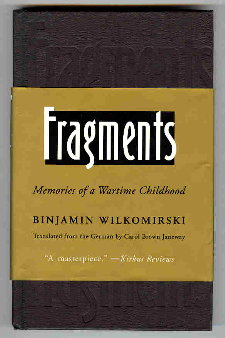
Then there's Binjamin Wilkomirski. His prize-winning memoir Fragments: Memories of a Wartime Childhood, was hailed as a classic and earned him comparisons to Elie Wiesel, Primo Levi and Anne Frank.

Except that he never was the holocaust survivor he claimed to be.

Author Daniel Ganzfried researched the case and discovered that legal documents and school records contradict the author's claims. Wilkomirski was outed in an article in Swiss publication, Weltwoche in 1998, and revealed to be a Swiss protestant called Bruno Grosjean. Unlike Barrus though, he appeared to be genuinely convinced of the truth of his story.

Another memoir fraud was unmasked in Australia's Sydney Morning Herald with the aid of Jordanian journalist and woman's rights activist Rana Husseini .

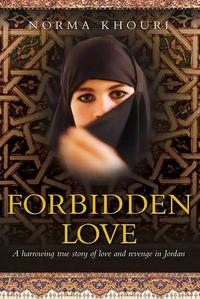
In her memoir Forbidden Love, Norma Khouri told the "true" story of the murder of a young Jordanian woman by her father because she dared to date a Christian man . The book was a great hit and sold more than 250,000 globally. In Australia, where the author has been granted asylum, it was voted one of the country's 100 favorite books of all time.

Her story was exposed as a fraud and as the Lebanese Times reports:
The scandal was a setback for advocates of women's rights in Jordan and provided a disturbing case study of how lies and distortions can masquerade as "fact" in Western discussions of the Arab world and Islam.
and the book was withdrawn from sale.

Publishers beware!

Saturday, January 28, 2006

Oprah Chops Frey into a Million Little Pieces (Fries Him in Hot Oil)

Poor old Oprah - she doesn't seems to have much luck with the living authors she features on her show, does she?

Reverberations continue to be felt after her most recent pick, James Frey, admitted that he had embellished parts of his memoir A Million Little Pieces. According to the Guardian, Frey:

.. made a second appearance on her show yesterday, and listened in silence as the occasionally tearful host accused him of "embarrassing and disappointing" her. In his memoir, Frey claimed to have spent three months in jail. When allegations first emerged that he had exaggerated his criminal record, Winfrey made a surprise call to Larry King's CNN show in support of him, in which she called the alleged fabrications "much ado about nothing". But yesterday, to the delight of her viewers, she made a sharp about-turn, telling Frey that she felt "duped", and accusing him of "betray[ing] millions of readers." Frey was met with a barrage of groans, gasps and boos when he confessed that certain facts and characters had been "altered" for inclusion in the memoir. He admitted that he had been jailed for just a few hours, rather than (as he initially claimed) 87 days, and went on to say that he had made mistakes and lied.

The big question is how much does all this really matter? Oprah's public clearly seems to think that it does.

But truth is of course entirely subjective, and all writers who use their lives as material select and shape facts to serve their purpose.

As one reader said in a New York Times forum :
It's about unreliable narrative, baby.

Monday, September 26, 2005

Soap Oprah

Fiction needs all the big mouth friends it can get, so pleased I am indeed that Oprah Winfrey is going to feature works by contemporary writers again. Now, I'm no fan of her often melodramatic and always glurgy talk show, but she's put some pretty strong titles in the limelight in the past, including works by Toni Morrison, Wally Lamb and Anita Shreve. And her endorsement means that these works are also thrust before the Malaysian reading public. We all like to be told what's good to read - no shame in that.

My own particular debt of gratitude to Oprah is that without her book club, I probably never would have heard of one of my favourite books - Bernhard Schlink's The Reader.

Oprah stopped featuring contemporary titles after a spat with Jonathan Franzen (author of The Corrections, a novel I very much enjoyed) in 2002.

She then decided that dead authors were a safer bet, since they couldn't talk back. But the classic titles she chose did not generate the same enthusiasm, and readers lobbied for contemporary fiction to be put back on the menu. She's now featuring A Million Little Pieces by James Frey.

Do check out Oprah's website for some interesting discussion of some very good reads.