Showing posts with label shakespeare. Show all posts

Monday, March 30, 2009

Saying Thank You

Blogging about books doesn't make money - but one of the perks is that bookshops/publishers/distributors/authors are very generous in giving me copies.

I've been a bit lazy blogging about donated books in the past, but am going to try to turn over a new leaf - and if I haven't time, energy or brain space to actually review them - at least I can feature them and let you know what's out there. Follow the links to find out more about each title.

The stack above came from distributor Pansing who are incredibly kind to me! Topping the pile is Mario Vargos Llosa's Bad Girl in which one of the masters of postmodernism takes possession of the plot of Flaubert's Madam Bovary, and makes it entirely his own. (Reviewed here by The New York Times).

Several of the books are historical novels. There's Ken Follet's historical epic World Without End, a sequel to his best-seller Pillars of the Earth, which takes place in the same cathedral city. The China Lover by Ian Burma is set in the movie industry in Shanghai during World War II and in postwar Tokyo. While The Lost Army by Valerio Massimo Manfredi is another historical novel - this time exploring the darker side of the Greek conquest. Narrated by a female camp follower the book tells of the katàbasis (return) of the Greek mercenaries of Xenophon's famed 'Anabasis'.

The two books that interest me most are Crime, in which Irvine Welsh tackles the topic of paedophile rings. It is hailed as a return to form for the author and Neal Stephenson's Anathem, shortlisted for this year's Hugo awards. The latter is set in the far-future on an Earth-like planet, Arbre, where scientists, philosophers and mathematicians—a religious order unto themselves—have been cloistered behind concent (convent) walls. It's a huge read - almost 1,000 pages, but looks fascinating. (I'm debating with myself - do I have the stamina to make this climb?)

At the bottom of the pile is a book I really will treasure - William Shakespeare on the Art of Love : The Illustrated Edition of The Most Beautiful Love Passages in Shakespeare's Plays and Poetry. It is also a stunning edition, bound in green silk, printed on quality paper and filled with photos and reproductions of paintings. I'd say that it would be the perfect Valentine's gift, but then you'd have to wait till next year to buy it for your sweetheart.


If there's anyone out there who would like to write a review for their own or this blog on any of these books, do let me know!

Monday, March 09, 2009

The Real Billy the Bard?

Is this the first portrait of William Shakespeare and the only one painted during his lifetime?

The world’s foremost expert on Shakespeare, Stanley Wells, supports the claim and the story of the portrait and how it came to be identified is told in The Sunday Times. :
(It) was painted in 1610, six years before the playwright’s death, has been in the possession of the Cobbe family since the early 18th century. It was initially kept at a property in Hampshire but more recently in Hatchlands, the family house in Surrey, which is run by the National Trust. ... For three centuries the family was unsure of the identity of the figure in the portrait. According to Alec Cobbe, an art restorer, at one time it had been thought to be of Sir Walter Raleigh.
More evidence will be presented today ...

Wednesday, April 30, 2008

Billy de Bard for de Yoof of Today, Innit?

Whenever I'm back to Britain I feel like Rip van Winkle ... until my niece Lauren takes me under her wing to update me on the most recent developments in British culture. (From Big Brother to Little Britain, at least.) And I also have to play catch-up on the English language as spoken by her and her friends if I don't want to be left behind.

I learned, for example, that a very fanciable bloke is described as "fit" (as in "He's well fit.") and anything rather disgusting is "minging", so I've developed at least a nodding acquaintance with Yoof-Speak.

Which is just as well because it seems that the works of Shakespeare, or at least 15 abridged plays anyway, have been translated into it - the work of satirist Martin Baum, who has compiled To Be Or Not To Be, Innit: A Yoof-Speak Guide to Shakespeare, Benjie Goodheart on the Guardian blog reports. :
Using the sloppy syntax and enunciation of some youngsters that is the bugbear of older generations, Shakespeare's tragedy Hamlet, for example, becomes 'Amlet. And his famous line "To be, or not to be?" becomes "To be or not to be, innit?"; the state of Denmark is no longer "rotten" but "minging". The Two Gentlemen of Verona have become "geezas" and Romeo, one of the star-crossed lovers of Romeo and Juliet, now pines for his "fit bitch Jules". "Verona was de turf of de feuding Montagues and de Capulet families," according to the synopsis of the classic story of young love spurned in the language of the street. "And coz they was always brawling and stuff, de prince of Verona told them to cool it or else they was gonna get well mashed if they carried on larging it with each other."
The purists will probably scream blue murder. Baum thinks the bard might say "Am I bovvered?" (a la Catherine Tate). I think this sounds rather fun.

I'll send Lauren a copy!

Friday, March 21, 2008

Shakespea-Her?

Could Billy the Bard really have been an Italian Jewish (wait for it!) woman? Theatre Director John Hudson provides some very interesting evidence and provokes some lively debate. (Found via.)

Homer, we learned some time back may also have been a woman. Which other literary icons do you think should be given a sex-change?

Tuesday, February 26, 2008

Redrawing Shakespeare

John Mullan is the Guardian finds Jon Howard's graphic fiction version of Macbeth:

... a jarring experience

But notes that it is:
... something more interesting than just another attempt to make the Bard look flashy and relevant. The graphic novel helps the unschooled reader see that Macbeth - extraordinary as its language might be - is not just words. Every frame has people acting and reacting, pressed by events. Pupils reading the play often have difficulties simply understanding what is happening. Here, the illustrations will let them see, and leave them (you hope) free to absorb the words.
Graphic fiction representations of the bard are taking off in a big way as some of you will realise from attending events organised by the British Council when Paul Duffield and Emma Schofield were in town.

But how do the literary purists feel about this? Shakespearean expert Professor Lim Chee Seng of University Malaya is all for it, in this very nice review of Duffield and Schofield's manga interpretations on the Kakiseni website.

Me? I think it looks great fun and I love to see Shakespeare interpreted in new and interesting ways. (By the way, I love the series of BBC dramas based on Shakespeare plays that were shown here last year.)

Such interpretations never harm the original. Shakespeare's work was meant to be performed and not poured over on the page. And every performance is of course a reinterpretation.

Monday, January 21, 2008

Shakespeare Goes Manga!

From the British Council news of events I'm sure many of you will be interested in:
MANGA SHAKESPEARE

Bringing to life the great Bard’s words!

To kick start 2008, British Council has something for Shakespeare enthusiasts and manga fans alike with Manga Shakespeare.
Published by UK-based SelfMadeHero, Manga Shakespeare is a series of graphic novel adaptations that fuses classic Shakespeare with manga visuals in cutting-edge adaptations, drawing inspiration from trend-setting Japan. Using Shakespeare's original texts, this series brings to life the great Bard's words. The collection includes Hamlet, Romeo & Juliet, Richard III, The Tempest and A Mid-Summer Nights’ Dream. Emma Hayley (Director, SelfMadeHero) and Paul Duffield (Artist for The Tempest) will be in Kuala Lumpur 23 to 26 January 2008 to run workshops and will meet the public at a bookshop talk.

Meet Emma Hayley and Paul Duffield!

Date : Wednesday, 23 January 2008

Time : 8.00 p.m.

Venue : Kinokuniya Bookstore, Suria KLCC

Admission : This event is free
Emma and Paul will be at Kino’s to talk about Manga Shakespeare and sign books.
If you’re a Manga/Comic artist, bring your best artwork and the Top 3 as selected by Emma and Paul will win Kinokuniya vouchers.

Illustrating graphic novels and manga for aspiring artists – workshop by Paul Duffield

Date : Saturday 26 January 2008

Time : 10.00 a.m. to 4.30 p.m.
Venue : Dram Projects, Happy Mansion, Section 17, Petaling Jaya
Admission : This event is free. Participants should be 16 years old and above.

This workshop is for the casual manga or comics hobbyists with an interest in learning more. Paul will take participants through drawing exercises that focus on observing and drawing the figure, the process of designing a character, and producing a
character sheet with turn-arounds, costumes and notes.

The workshop is free but space is limited. If you’d like to be a part of this workshop, please contact us via email (arts@britishcouncil.org.my) letting us know a bit about your background and interest manga/comics/graphics/drawing/doodling and a sample of your work.


We’re also running a graphic story competition in conjunction with Manga Shakespeare - watch this space for more details! In the meantime, send us an email at arts@britishcouncil.org.my if you have further queries.

More about Emma and Paul:

Paul Duffield is an illustrator and animator who takes influence from a fusion of manga and european comics. After graduating from a BA in animation at Kingston, he went on to win both Tokyopop's Rising Stars of Manga, and the International Manga and Anime Festival grand prizes, and is now at work on several upcoming publications.

With a background in journalism, film PR, and as editorial director for a number of publishers, Emma Hayley launched SelfMadeHero in March 2007 with the first titles in the Manga Shakespeare series - Hamlet and Romeo and Juliet. She was recently shortlisted as Young Publisher of the Year in the British Book Industry Awards.

Wednesday, April 11, 2007

Dead Crows or Inspiration?

Nurjehan's story in last week's Sunday Times about the introduction of literature into the English syllabus for Malaysian schools was interesting (well certainly for me, with my teacher-training cap on).

The literature component was first introduced in 2001 at lower secondary level. The feedback to it in the article is extremely positive. I was particularly interested to learn that one of Universiti Malaya Professor Lim Chee Seng's postgraduate students, who is doing a study on the teaching of literature in the English language syllabus for the national curriculum:
... found that about 70 per cent of students across Malaysia love the literature component that has been inserted into the English language syllabus.
70%!

That statistic interests me, and I'd love to take a look at the methodology used to arrive at that figure.

In my previous reincarnation I was preparing my students to work with those texts in the classroom. So many of the pieces chosen for the syllabus were gloomy and too far from the kids' own experience to really be accessible without a lot of help. Just to give one or two examples:

A Samad Said's The Dead Crow might be a much better poem in the Malay original, but it's very limp in its English translation. Haven't stronger poems been written on the theme of pollution?

While Macbeth's Life's Brief Candle soliloquy is great stuff, will young adolescents be able to take on board the utter despair of it, and what more when it is taken completely out of context? (Who is this bloke Macbeth anyway?)

Don't get me wrong, I do whole heartedly believe that Shakespeare should be taught in schools, but the only brush with the bard at Upper Secondary levels is Sonnet 18. I've sat at the back of innumerable classrooms watching sweating kids kids under ceiling fans struggle with the concept of finding a hot, sunny day desirable (when, of course, they long for cool overcast ones).

I've watched students struggle with a particularly gloomy choice of text Emily Dickinson's There's Been a Death in the Opposite House, not so much because the description of the funeral is so foreign to our Malaysian kids, but because it necessarily opens up some painful discussion in the classroom ("Tell me about a funeral you recently attended") which needs to be handled sensitively.

I'm not arguing that young people should not be exposed to texts that are difficult or outside their own experience - literature should stretch us all, should take us to places we've never been before. But if for most kids the component is going to be their only brush with literature - why shouldn't the texts be enjoyable and accessible and directly relevant?

As it happens the component is currently being reviewed. I was asked to go and take part in the selection of texts, but got waylaid by other things I'd promised to do. I'm very proud to see that the team includes one of my former teacher-training students, and I'm sure they will do a good job.

Methodology - how the subject is taught - is another issue, of course.

While I was goggling around I came across this piece by Amir Muhammad which originally appeared in the New Straits Times in 1999 about the literature component (and it gives a complete list of texts used at different levels at the end). Amir raises one of the most important questions - teaching literature in the classroom effectively demands a move to greater democracy in the classroom, a move away from the teacher as font of all knowledge. Personal response and personal opinion, matter far more.

But how far is this possible when students are examined on their knowledge of the texts? Most of the questions (as I remember) are multiple choice. I've also heard (from a chief examiner) that in the open questions brighter students who give imaginative answers run the risk of losing marks because they don't give the examiner what they expect! Just regurgitate what your teacher told you and you will do fine.

Having thusly ranted, I must say that I am still glad that literature is on the syllabus and I'd like to see teachers making even more use of literary texts in their classes - for fun, for enjoyment, to touch the students' hearts. Because no one (apart from parents) can build the initial love of books as teachers can.

I'd particularly love to hear from some of the younger readers of this blog who have studied the literature component in school - how did you find it? Would you consider yourself in that 70% that love it? Why? Why not?

Parents, teachers ... anyone, your views are very welcome too.

Wednesday, September 27, 2006

Billy the Bard on the Booze?

This probably won't wash with purists who like to think of Billy the Bard as unassailably perched atop his pedestal, but it seems that some of the crappiest lines might have been written while he was hung over! Dominic Dromgoole, artistic director of the Globe reckons that there are "Monday morning lines" in Shakespeare's masterpieces.

So which lines were probably written under the influence? John Sutherland has a whole list of candidates in the Guardian.

More discussion of Shakespeare the Boozer on Michael Prescott's blog.

And I love this poem pete the parrot and shakespeare by humourist DonMarquis which depicts our Bill sobbing on Ben Johnson's shoulder down at the Mermaid Tavern, lamenting about how all he wants is to be a poet when he has to keep churning out plays. There could be some truth in it.

Friday, June 16, 2006

Shakespeare and Monkey Win Awards

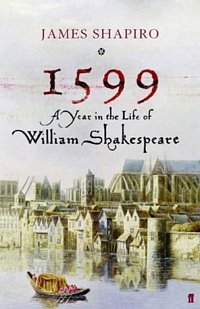
The Samuel Johnson Prize for non-fiction was last night carried off, not by Alan Bennet's Untold Stories, as many had expected, but by a biography partly inspired by the film Shakespeare in Love. American academic James Shapiro's 1599: A Year in the Life of William Shakespeare was described by Peter Kemp in his Sunday Times review as :
... the product of marathon scholarship, inspired insight, narrative flair, astute surmise and searching intelligence ... (it) brings Shakespeare’s outer and inner worlds, and the interplay between them, alive with such thrilling immediacy
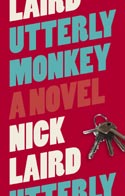
Meanwhile, poet Nick Laird has won the Betty Trask Award for his "lad-lit novel" Utterly Monkey.

A reviewer in the Independent describes it as:
'a novel that combines lad-lit staples – car chases, pub crawls and beautiful women – with grown-up savoir faire.'

Thursday, September 15, 2005

Cut and Paste Review - The Murder of Macbeth

Goodness me - what is the quality of our local reviewers?

I'm referring to the Malay Mail's review of Macbeth by Theatre Babel which was featured in the Buzz section of the paper today. (Sadly, this article doesn't seem to be up on the website, so you will need to go buy a copy or just trust me on this.)

I was pondering the miracle of Sharmila Vella managing to see three witches clad in red on stage in the local production of Theatre Babel's Macbeth when I saw only one, dressed in white. Clearly, she hadn't been in the audience for this production at all. Then I decided to Google some phrases from her article and low and behold, much was lifted from elsewhere:

Sharmila writes:
Striking visuals like a thicket of swords were suspended on wires over the stage. The swords were sometimes lowered to become a treacherous forest or sometimes simply looming threateningly.
By some strange coincidence Ian Shuttleworth of the Financial Times wrote in his review of an earlier UK production:
A thicket of swords is suspended on wires over the stage: sometimes they are lowered to become a treacherous forest, sometimes they simply loom threateningly, like the dark fate awaiting almost all concerned.
Much more is lifted virtually word for word from this review on the Edinburgh Festival website including
... a thick mist billowing out from the stage into the auditorium, accompanied by a haunting soundtrack that sucked the audience quickly into the strange and heady world of the Thane of Cawdor.
and
the almost motionless witches clad entirely in crimson red ...
I probably could go further but my heart is in my coffee cup.

This is not reviewing - it's shameless plagarism.

And plagarism, frankly, is theft.

Sunday, September 11, 2005

A Babelous Macbeth

Went to see Theatre Babel's Macbeth last night with Abu.

Now Abu is not a great one for "culture" in any shape or form unless it takes place on a rugby pitch. The last play I was able to lure him to was Alone It Stands which tells of the All Blacks defeat by Munster.

But he has a fondness for Macbeth which he studied for 'O' Level and got A2 for, as he constantly reminds me. (He actually repeated his fifth form so that he could stay on at school as Malay College rugby captain, so he studied The Merchant of Venice as well.)

We arrived at KLPac just in time for the performance: a combination his tardiness (why do men have to take so long to get ready to go out?) and the traffic snarl on Tun Razak, which makes you want to scream at the folks who had the clever idea of siting a new theatre in the most conjested part of the city.

We had complementary seats courtesy British Coucil (perk of the job!), and Pentas 1 was packed out.

The play was visually gorgeous - a lesson in how much effect can be achieved with great simplicity: suspended swords and churning mist, copious quantities of it. And the film had a soundtrack (composed by Anthea Haddow) which created an ambience of unease with ghostly, distorted sound. You can taste the atmosphere here - (click on Current).

I don't often give much thought to the lighting designer of a play but Kai Fischer created convincingly - eerie marshland, claustrophobic castle and Birnam Wood.

This was an extremely pacy version of Macbeth which had the whole drama played out in an hour and a half. Much was cut, much was reshaped. The three witches with their hubbly-bubbliness had disappeared (much to Abu's chagrin because this was the only bit of the play he could quote at me in the car), in their place a demonically possesed child who physically stayed with Macbeth through much of the play. There were echoes of The Exorcist and The Ring for sure.

Despite strong performances (I particularly liked Lewis Howden's Macbeth and Peter d'Souza's magnanimous Duncan), I felt emotionally removed from the production - was this because of physical distance from the stage? (I think I would have preferred to see the play in a more intimate theatre-in-the-round setting ... Pentas 2 would have suited the staging much more, though of course it's much smaller).

And though I liked the paciness, it meant that much of the dialogue was delivered very quickly. Couple that with Scots accents and I found that I missed perhaps half of the words. (This seemed to be a common complaint, talking to other folks afterward.) What a relief it was when the famous soliliquies were delivered and I knew them word for word. (How many times have I taught this?)

Abu said he liked the performance, especially the sword fight at the end. Though he thought that Macbeth should have won because he was much the better fighter. Now that would have been a totally original version!
Image hosted by Photobucket.com

Tuesday, March 15, 2005

Shakespeare the African

I hadn't known that Shakespeare was African, until my students taught me.

My Form Five girls were studying literature for their West African School Certificate. We'd plowed through Acebe's Things Fall Apart, grappled with aspects of negritude in a selection of West African poetry, and analysed Ama Ata Aidoo's play about an interculture marriage Dilemma of a Ghost.

But reading Julius Caesar with the class was something I dreaded. I railed against the setters of the syllabus in the staffroom. Weren't my kids finding it hard enough already to cope with even modern English, and what could a British playwright born centuries earlier possibly have to say to them?

I soon found out.

Julius Caesar is an African play.

Nigerians know all about coups and their aftermath. Superstition and black magic, soothsayers, omens and prophetic dreams is part of the currency of everyday life in West Africa. Great oratory is loved and valued.

Mark Anthony stirred the class into action in the last lesson of the day, with the girls taking turns to read his part. The atmosphere in the classroom was electric - I'd never seen my students so enthusisatic about a text before.

The bell for lunch rang. The class seemed not to have heard it. I let them read on for a while. The rest of the school streamed out of classrooms towards the canteen.

"Let's continue, Ma," said one of the girls seeing that I looked worried about holding them back.

We went on for a few more minutes until my conscience got the better of me: "Right," I said "you'd better go for your lunch."

"Ohhhhhh, so it's lunchtime is it, Ma?" said someone and the class laughed but made no move to close their books. It was a mutiny!

It was only when we finished the scene some twenty minutes later that they finally packed away their things and left the classroom. They'd missed their lunch, but no-one seemed to mind.

The story of Julius Caesar seemed to pass into legend around the school compound, being told and retold even by girls who weren't in my class. Someone composed a song for Brutus which had the words "Farewell, Brutus, farewell," sung to the tune of Two Lovely Black Eyes. (Now where on earth had they got that from?) I heard it being sung around the school compound for weeks afterwards.