Showing posts with label david lodge. Show all posts

Tuesday, July 11, 2006

So Why Bother?

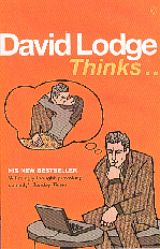
... So much that in reality is simply 'given' has to be decided when you're writing fiction. Facts have to be represented by pseudo facts, labouriously invented and painstakingly described. The reader must memorize these facts in order to follow your story, but they are flushed away almost as soon as the book is finished, to make room for another story. Before long, nothing remains in the reader's memory but a name or two, a few vague impressions of people, an indistinct recollection of the plot, and the general sense of having been entertained, or not as the case may be. It's frightening to think how many novels I must have read in my lifetime, and how little I retain the substance of most of them.
From Thinks by David Lodge

Isn't that just so true? Do you ever feel scared by how quickly the details of a book leach away from you? How much do you actually retain in your head of your favourite books?

Monday, July 03, 2006

An Evening's Lodging

Realised after writing the last post I had never posted here my account of talking to David Lodge by video link at the British Council back in March 2004. I slip it in now!
The interview with David Lodge went fine. Why am I so much of a worrier? It took place in the small conferencing room off the library. There were supposed to be about twenty-five people but quite a number didn't show up which was a shame. Of course, I had rent-an-audience - a large group of my own friends whom I'd coerced and persuaded because I knew that they could be relied on to read a book or two and ask questions.

There was one guy in the audience I could see had lots of opinions so I got talking to him before the thing started, while everyone was tucking into the sandwiches and coffee. I asked him what he thought of David Lodge's books. "It's just pornography, isn't it?" (A good start, hey?) "Of course he's not as good as that woman who wrote Harry Potter."

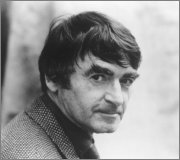
On the screen we could see into a room in the British Council's office in London (how strange is that?) and after a little bit of confusion at both ends ("Are you ready for us yet?"). There he was, David Lodge, on screen. Looked like his publicity picture on the back of his book but a bit more grizzled. Every inch the academic. Serious. Listening very intently to catch the questions because he's a little hard of hearing. (Sometimes his publicist had to help him out.)

He began by reading extracts from his latest novel "Thinks ..." which gave the flavour of the book and the characters. I kicked off with a question about why had he decided on these particular points of view to tell the story, and I asked about the extemely funny send-ups of different writing styles that had had me convulsed with laughter. Then I did my bit and invited questions from the audience. Jean asked a good question about would "Thinks ... " be filmable (No, he said.), Vino (my ex-student and now a lecturer) asked him if he's be writing an autobiography (No, he said - and he comes across as a very private sort of person who doesn't at all like the idea of his private life being in the spotlight). The strange guy asked a question that no-one could understand about Lodge's loss of belief in Catholicism. (Think he was trying to say how Westerners lack values because they are not religious.) And Lodge talked at length about that. Said that although, like most British catholics, he is no longer able to believe in many of the central teachings of the church in a literal sense, he felt the church was still important to him in a cultural sense. Kate asked if he had any advice for young writers (as there were some teenagers on British council creative writing course present) and he said read, read and read. Practice writing. Experiment and don't be afraid to make mistakes.

The forty minutes was over all too quickly. I still have a pile of questions I'd love to ask him ... But I have so enjoyed having the excuse to sit down and read his books one after another, and I've learned so much - especially from his essays in "Consciousness and The Novel."
Somewhere along the way he did mention that he was writing a novel about Henry James!

Saturday, July 01, 2006

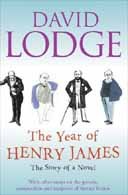
2004: The Year of Henry James

How would you feel if you wrote a novel about a famous historical character, only to find that another novelist had chosen exactly the same subject and even focused on the very same period of his life?

Poor David Lodge! He did not realise until after he'd finished his Author, Author that Colm Toibin had also written a novel about Henry James, the highly acclaimed, The Master.

Lodge must have felt pretty gutted as he saw more critical praise heaped on his rival's novel than on his, along with nominations for the top awards. (And of course, The Master won the IMPAC Prize.)

Lodge has now written The Year of Henry James, in which he looks back on the experience. But he still hasn't managed to bring himself to pick up Toibin's book, he says.

Was there something in the air or in the water in 2004, that made the world suddenly go mad for Henry James? As this piece in the Telegraph points out:
There were no features in Vanity Fair, no editorial columns, and no heated discussions in pubs. But among writers, everything went a bit James. ... Four Jamesian novels came out within months of each other: biographical works by Colm Tóibín and David Lodge, and more tangential novels from Alan Hollinghurst and Toby Litt (The Line of Beauty and Ghost Story). How should one respond to this synchronicity, other than to accept it as proof that novelists are not only cut off from the wider world, but that they are cut off in the same kind of way?
James has always been a writer's writer and I think the apparent synchronicity reflects a desire for a return to a kind of elegant craftsmanship that seems to have fallen by the wayside in modern fiction writing.

Time to reread the master himself!