I have news of other writing workshops locally ... and the first one to talk about is mine!
My course Getting Started has found a new home now, and I am very excited at the prospect of starting up again with two new groups in February. I haven't usually announced to the world when my courses were taking place (well, kept secret!) because the British Council put the word out for me, word of mouth was working its magic too, and we more people wanting to do the course than I could fit in since I keep the group size small.
Now Eileen and Dennis of Learning Works have offered me space in a very pleasant and newly renovated house in Bandar Utama, just a short distance from where I live. The feel of a place is very important to me, and without wanting to go all touchy-feely on you, I just felt that the vibes for creativity were right!
You can read about Learning Works here, and find details of my course here. Please can you pass the news on to anyone you know who might be interested?
One of the courses I'm starting is in the daytime, which should help me to tap into a whole new market.
If this works out well for me, I have all kinds of plans for other classes I might teach.
Learning Works is also going to be the home of Daphne Lee's workshops and I will put up some thing about her workshops in another post.
Showing posts with label creative writing. Show all posts
Showing posts with label creative writing. Show all posts
Sunday, February 07, 2010

Friday, January 08, 2010
Have You Sent Your Story In Yet???
This is a reminder to the writers among you to get your stories in for the So You Think You Can Write event. It is going to be great fun, and it will be a unique opportunity for the wordsmiths among us,but it can only happen if enough people send in their work. All the details you need are here.
My story is almost good to go, and it would like a few friends!
My story is almost good to go, and it would like a few friends!
Saturday, January 10, 2009
Robert's Workshop
 Here's something for those of you who live in Kuching :
Robert Raymer of Lovers and Strangers Revisited will be conducting a writing workshop in conjunction with The MPH-Alliance Bank National Short Story Prize 2009. A creative writing lecturer at University Malaysia Sarawak, Raymer will teach you how to write and improve your short story! Limited seats available for participants age 13 years and above. For registration and enquiries, please contact MPH The Spring at 082-244 800. The theme is Improving Your Short Story.
Date : Saturday, January 31, 2009
Time : 10-1 pm
Place : Conference Room, Level 2, MPH The Spring, Kuching
Register: at MPH, The Spring (082-244 800), for age 13 and above; first come, first served; first 25. (If more, another date may be arranged)
Thursday, July 19, 2007
Getting Started
I very much enjoyed Lydia's post about how she got started as a writer and thought I'd respond. I did try to leave a comment over there, but it somehow disappeared into the ether. And anyway I'd rather like to run with the ball!
I can't remember a time when I didn't want to write. At school I had this great running rivalry with my best friend Helen to see which of us could write the best composition for English classes. I ignored all other homework completely to put aside time to write because my poem or story had to be the best. We both wrote well above and beyond the call of duty, pages and pages where one or two would have sufficed. Helen always got a slightly higher grade though (and is now a published poet).
I still have my English exercise books (below) filled with my scribblings. My writing was frequently melodramatic and wonderfully florid! And always full of spelling errors. (Mild dyslexia?) It's pretty embarrassing to read them now.
I also started a diary in 1969 and kept it right up to the time I got married in 1990. (Too much honest writing left lying around probably wasn't a very good idea ... particularly as a diary is always a space for a good sound off! Keeping an online password protected journal was a substitute later on.)
But I digress.
I got my first poems published at 13 in the Coventry Evening Telegraph and my first boyfriend, a gardener called Francis, was one of my fans ... although on the two occasions we actually met up for a date, I was so much taller than him that I walked in the gutter while he walked on the pavement!
Although I'd always told myself one day I'd love to write. I didn't start writing seriously until I was in my 40's. I guess that's a good point at which to evaluate your life since it hits you that the sand is slipping through the hour glass (speeding up, even) and if you don't do the things you want to do now, you're probably never gonna.
But there was always the fear - would I measure up or end up disappointing myself in an area that meant so much to me? My favourite writers like Annie Proulx wagged their fingers at me saying "You'll never measure up." Spoilsports!
I also didn't know how to "get into" writing.
So when I saw an ad for a correspondence course with The Open College for the Arts, I decided to give it a go. I found the materials they sent very useful, and the tutor I was assigned to gave me excellent feedback. But I didn't finish the course because:
First of all, I lost my nerve several units in when there was a big jump from simple exercises involving description to suddenly writing a complete short story. (How the hell do I think up a plot, I thought, in the days before I realised that plots can just happen onto paper if you let them.) Looking back, I think the course was aimed at more experienced writers.
Secondly, because this was in the days before the internet had really taken off (and OCA was a particularly slow adopter!), each assignment had to be mailed to the UK (with an international reply coupon inside it for the postage), and then there was a long wait for it to come back to me. My tutor felt so far away!
Thirdly, only my tutor saw my assignment and (afraid to show my efforts to those close to me)
I had no chance to see how other readers reacted to it. I felt so lonely!
Much more helpful to me was a book I found in a bookshop in London: Writing for Self-Discovery: A Personal Guide to Creative Writing by Myra Schneider and John Killick which is a fantastic collection of exercises for exploring the material from your own life and experience. (The book appears to be currently out of print, but you can buy it from Abebooks for as little as US$1.)
I went crazy, filling notebook after notebook with recollection and thoughts and fiction and dreams. I never knew I had so much inside that wanted to break free.
There were many other useful books, and I should say more about these, but this one was my catalyst, my turning point.
I signed up with Writers Village which offers a whole range of short courses for one very reasonable joining fee and found friends and support. The course material is online, and the work posted to a bulletin board and feedback given by your coursemates rather than a tutor. The atmosphere was supportive and friendly, I made some writing buddies across the world (Most of the participants are from the US.) and the first two short stories I had published grew from assignments I posted there.
I also did a creative writing course organised by author Chuah Guat Eng at Silverfish. This was the first time I'd written with others and my - what a heady experience it turned out to be - with moments of real magic when we read back our pieces. Much much better than scribbling away lonely and alone!
But the teacher/trainer in me said ... hey ho, I want to encourage others to write and think I can do this better ... and that's why and how my own course for beginners was born. (And it sounds as if Lydia is thinking along these lines too ... good for her!)
I've just finished one run of it at the British Council and hope that the next will be in November, when I finish the project I'm currently involved with and have had a chance to rediscover my Mat Salleh roots in the UK for a few weeks.
There are lots of threads here I might pick up on another day.
But like Lydia I'd love to know, what got YOU writing?
I can't remember a time when I didn't want to write. At school I had this great running rivalry with my best friend Helen to see which of us could write the best composition for English classes. I ignored all other homework completely to put aside time to write because my poem or story had to be the best. We both wrote well above and beyond the call of duty, pages and pages where one or two would have sufficed. Helen always got a slightly higher grade though (and is now a published poet).
I still have my English exercise books (below) filled with my scribblings. My writing was frequently melodramatic and wonderfully florid! And always full of spelling errors. (Mild dyslexia?) It's pretty embarrassing to read them now.
I also started a diary in 1969 and kept it right up to the time I got married in 1990. (Too much honest writing left lying around probably wasn't a very good idea ... particularly as a diary is always a space for a good sound off! Keeping an online password protected journal was a substitute later on.)
But I digress.
I got my first poems published at 13 in the Coventry Evening Telegraph and my first boyfriend, a gardener called Francis, was one of my fans ... although on the two occasions we actually met up for a date, I was so much taller than him that I walked in the gutter while he walked on the pavement!
Although I'd always told myself one day I'd love to write. I didn't start writing seriously until I was in my 40's. I guess that's a good point at which to evaluate your life since it hits you that the sand is slipping through the hour glass (speeding up, even) and if you don't do the things you want to do now, you're probably never gonna.
But there was always the fear - would I measure up or end up disappointing myself in an area that meant so much to me? My favourite writers like Annie Proulx wagged their fingers at me saying "You'll never measure up." Spoilsports!
I also didn't know how to "get into" writing.
So when I saw an ad for a correspondence course with The Open College for the Arts, I decided to give it a go. I found the materials they sent very useful, and the tutor I was assigned to gave me excellent feedback. But I didn't finish the course because:
First of all, I lost my nerve several units in when there was a big jump from simple exercises involving description to suddenly writing a complete short story. (How the hell do I think up a plot, I thought, in the days before I realised that plots can just happen onto paper if you let them.) Looking back, I think the course was aimed at more experienced writers.
Secondly, because this was in the days before the internet had really taken off (and OCA was a particularly slow adopter!), each assignment had to be mailed to the UK (with an international reply coupon inside it for the postage), and then there was a long wait for it to come back to me. My tutor felt so far away!
Thirdly, only my tutor saw my assignment and (afraid to show my efforts to those close to me)
I had no chance to see how other readers reacted to it. I felt so lonely!
Much more helpful to me was a book I found in a bookshop in London: Writing for Self-Discovery: A Personal Guide to Creative Writing by Myra Schneider and John Killick which is a fantastic collection of exercises for exploring the material from your own life and experience. (The book appears to be currently out of print, but you can buy it from Abebooks for as little as US$1.)
I went crazy, filling notebook after notebook with recollection and thoughts and fiction and dreams. I never knew I had so much inside that wanted to break free.
There were many other useful books, and I should say more about these, but this one was my catalyst, my turning point.
I signed up with Writers Village which offers a whole range of short courses for one very reasonable joining fee and found friends and support. The course material is online, and the work posted to a bulletin board and feedback given by your coursemates rather than a tutor. The atmosphere was supportive and friendly, I made some writing buddies across the world (Most of the participants are from the US.) and the first two short stories I had published grew from assignments I posted there.
I also did a creative writing course organised by author Chuah Guat Eng at Silverfish. This was the first time I'd written with others and my - what a heady experience it turned out to be - with moments of real magic when we read back our pieces. Much much better than scribbling away lonely and alone!
But the teacher/trainer in me said ... hey ho, I want to encourage others to write and think I can do this better ... and that's why and how my own course for beginners was born. (And it sounds as if Lydia is thinking along these lines too ... good for her!)
I've just finished one run of it at the British Council and hope that the next will be in November, when I finish the project I'm currently involved with and have had a chance to rediscover my Mat Salleh roots in the UK for a few weeks.
There are lots of threads here I might pick up on another day.
But like Lydia I'd love to know, what got YOU writing?
Thursday, April 19, 2007
Writings from the Dark Side
 Terri, from my British Council writing group, sent me this yesterday:
Sharon,
Do you ever feel like you can see directly through people when you read a few pieces of their writing? I imagine you must. It's always their inner voice speaking somewhere beneath the adverbs and the plots.
The excerpt below really made me think about the role teachers play in the lives of their students. Not just writing teachers but all teachers ...
A Virginia Tech professor told NBC News that Cho’s creative writing was so disturbing that she referred him to the school’s counseling service, but he would not go. The professor, Lucinda Roy, the English Department’s director of creative writing, would not comment at length on Cho’s writings, saying only that in general they “seemed very angry.”It's easy to be wise after the act, but weren't the clues to his later behaviour all in place?
“I kept saying, ‘Please go to counseling; I will take you to counseling,’ because he was so depressed,” Roy said. But “I was told [by counselors] that you can’t force anybody to go over ... so their hands were tied, too.” Fellow students in a playwriting class with Cho also noticed the dark and disturbing nature of his compositions.
“His writing, the plays, were really morbid and grotesque,” Stephanie Derry, a senior English major, told the campus newspaper, The Collegiate Times “I remember one of them very well. It was about a son who hated his stepfather. In the play, the boy threw a chainsaw around and hammers at him. But the play ended with the boy violently suffocating the father with a Rice Krispy treat,” Derry said.
Should I be worried when my own creative writing students harbour dark thoughts of murder?
(And to Terri, does your writing show a way into your soul? Oh yes, all writing does!)
Update:
Thanks Chet for pointing the way to other links which discuss Cho's writing. This article from CNN tells how renown poet and author, Nikki Giovanni, immediately suspected Cho when she got word of the shootings. She said that she had found Cho's poetry was intimidating, and his behavior so menacing that she had had him removed from her class.
And AOL News has acquired two of his plays from a Virginia Tech student.
Required reading at this point in time - of course, DBC Pierre's Vernon God Little which will remain just as relevant as long as history is allowed to repeat itself by courtesy of US gun laws.
Postscript:
Blake Morrison on the Guardian blog writes:
... in truth, the plays are no more violent than Shakespeare's. In fact, despite their banality, Shakespeare is arguably a key influence ... many theatres have staged bloodier dramas. And if creative writing programmes excluded students with personality disorders, they would all have to close down.Cho's literary experiments neither caused his psychosis nor purged him of it. Psychoanalysing them for clues to his behaviour is a pointless distraction from the underlying cause of the massacre: American gun law.
Sunday, February 04, 2007
Those Who Must, Write. The Rest? Forget It!
Creative writing courses, workshops, retreats ... should be stopped says Jenny Sinclair (who is herself doing an honours year in creative writing at the University of Melbourne). The only people who be allowed to write are those who must write.
The lady talks a lot of sense, so listen up, wannabes!
The lady talks a lot of sense, so listen up, wannabes!
Monday, January 29, 2007
Good Stuff On Elsewhere Blogs
This is where I suck you all in to a whirling vortex of local litblog news and spin you out in all directions again.
 Deepika is just back from the Galle Literary Festival in Sri Lanka (here and here ... with more to come) where she interviewed Booker winner Kiran Desai.
Another Malaysian writer has begun blogging - master of horror Tunku Halim. I met him for the first time at MPH Writer's Circle the other day, and he wasn't at all what I expected ... much younger and a lot less spooky. Am looking forward to reading his new collection of stories, due to be launched soon.
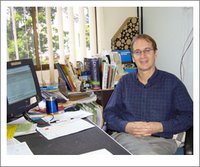 I hadn't realised that short-story writer and long-term Malaysian resident Robert Raymer has a website, until one of his former students (Yan Yi at Marshall-Cavendish) told me about it. Robert previously taught creative writing at Universiti Sains Malaysia, and is now based in Sarawak. He was the editor of Silverfish New Writing 4 and has a collection of short fiction, Lovers and Strangers Revisited (both avaialble from Silverfish). Robert has put up some very useful tips and exercises for writers.
Eric, as always, has much good stuff on his blog, but this superb list of reading recommendations for the short story is well worth printing off and keeping as checklist.
Daphne Lee has had her first four children's books published (congrats!) and is taking criticism on the chin.
Ted gets steamed up about the ignorance of local teenagers who haven't realised that - yes, there actually is a writing scene here. There is! There is!
Lydia reacts to a comment made by Glenda's daughter that writers websites tend to be self-absorbed and whiny.
Amir is spot on when he talks about how to read like a writer. (Caution though, easily offended sensitivities and young minds should stay clear of this blog entirely.)
Then there are book reviews: YTSL has applauds Adibah Amin's new novel This End of the Rainbow. I was surprised to see a book review on Malaysian Medical Resources, a consistently informative and yes, even entertaining blog. Palmdoc recommends Michael Crichton's Next for stressed out doctors and medical student in need of a good diversion from work!
Okay then, what bookish things have I missed? Fill me in in the comments.
Oh, the frustrations of posting here at the moment! I began this post several days ago but my internet connection kept going down. My internet provider I am rechristening Screamyx. Is it still that cable problem? Very inconsiderate of the Taiwanese to host an earthquake.
 Deepika is just back from the Galle Literary Festival in Sri Lanka (here and here ... with more to come) where she interviewed Booker winner Kiran Desai.
Another Malaysian writer has begun blogging - master of horror Tunku Halim. I met him for the first time at MPH Writer's Circle the other day, and he wasn't at all what I expected ... much younger and a lot less spooky. Am looking forward to reading his new collection of stories, due to be launched soon.
 I hadn't realised that short-story writer and long-term Malaysian resident Robert Raymer has a website, until one of his former students (Yan Yi at Marshall-Cavendish) told me about it. Robert previously taught creative writing at Universiti Sains Malaysia, and is now based in Sarawak. He was the editor of Silverfish New Writing 4 and has a collection of short fiction, Lovers and Strangers Revisited (both avaialble from Silverfish). Robert has put up some very useful tips and exercises for writers.
Eric, as always, has much good stuff on his blog, but this superb list of reading recommendations for the short story is well worth printing off and keeping as checklist.
Daphne Lee has had her first four children's books published (congrats!) and is taking criticism on the chin.
Ted gets steamed up about the ignorance of local teenagers who haven't realised that - yes, there actually is a writing scene here. There is! There is!
Lydia reacts to a comment made by Glenda's daughter that writers websites tend to be self-absorbed and whiny.
Amir is spot on when he talks about how to read like a writer. (Caution though, easily offended sensitivities and young minds should stay clear of this blog entirely.)
Then there are book reviews: YTSL has applauds Adibah Amin's new novel This End of the Rainbow. I was surprised to see a book review on Malaysian Medical Resources, a consistently informative and yes, even entertaining blog. Palmdoc recommends Michael Crichton's Next for stressed out doctors and medical student in need of a good diversion from work!
Okay then, what bookish things have I missed? Fill me in in the comments.
Oh, the frustrations of posting here at the moment! I began this post several days ago but my internet connection kept going down. My internet provider I am rechristening Screamyx. Is it still that cable problem? Very inconsiderate of the Taiwanese to host an earthquake.
Sunday, January 21, 2007
Social Whirl ... Social Embarassment
Here's a bits and pieces post from the last few days.
Last Saturday was at the International Islamic University at the invitation of Dr. Faridah Manaf to run a creative writing workshop for her Language and Literature students and other students from different departments. (And it was really nice to have students of other nationalities in the group). I didn't want to go into lecturer mode because writing is such a practical thing - you only learn from doing.
I usually teach small groups, concened to create an atmosphere of trust and openess so running activities with a larger crowd ... offers its own challenges, and I had to rely on using group work and carefully monitoring it.
It worked fine though (Faridah describes one of my favourite activities here) and some nice pieces were created which I hope the students will go on to polish up and somehow publish. But I loved the way the atmosphere in the room changed as everyone relaxed and entered into their own personal spaces.
In the feedback I was most happy that students said they felt the exercise had helped the students to get to know each other better. And one student (Sudanese, I think) was so revved up that he didn't want to stop writing about things that needed to be written about and he clearly has something very painful inside him that needs to escape onto paper. I hope he lets it.
Anyway, many thanks to Shakira for organising the event so well.
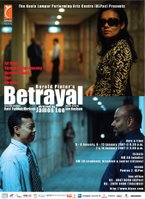 Sunday, Chet dragged me off to KLPAC to see the Harold Pinter play Betrayal, which I very much enjoyed, especially as it was a piece I didn't know at all. I loved the utter social awkwardness of the Pinteresque dialogue (wonder if anyone else speaking like a Pinter character when they walked out of the theatre?) and the way the story moves backwards in time to uncover layers of guilt and deception in this love triangle.
The acting was good. Couldn't quite believe in Ari Ratos as the Jerry though, because the chemistry between him and Bernice Chauly was a bit lacking, but I liked his outrage when he felt that he was the one who was betrayed. Vernon Adrian Emuang was nicely icy as the betrayed husband. Bernice as Emma, shrouded in clouds of cigarette smoke, was best of all. She looked a bit of a wreck in the opening scene, but seemed to physically change and acquire a glow as time shifted back to the beginning of the affair! And she has such an enviable figure when she's dressed up glam - that took me by surprise because we only ever see her in jeans at the readings!
Wednesday afternoon one of my good friends launched her book at IPBA (Institiut Peguruan Bahasa-Bahasa Antarabangsa). Jean Floyd came out to Malaysia to teach English just a few months after me, and our professional paths have been crossing ever since. She's one of the most dynamic and energetic people I know, though she's now over 70.
I used her study skills book when I was teaching on the 'A' Level Course in Kuala Kangsar, and very good it was too. Now the book has been brought into the cyber-age and rechristened Study Skills for Higher Education. Many of my friends from way back and from my teacher-training days were at the launch, which was good.
Wednesday night we had our book club meeting at Muntaj's house. Julian Barnes' Arthur and George was very much liked (note: not loved by anyone) although we all felt that it could have been shortened by 100 pages or so and the seance part dropped. Barnes style was much praised, as well as his seamless weaving of fiction and research. At least a couple of us are suckers for Sherlock Holmes stories and loved the book for giving Conan Doyle himself a chance to play detective. Our group felt that racism in Britain has cropped up in just too many of our chosen books this year, including Small Island by Andrea Levy, and Nirpal Singh Daliwhal's Tourism. Still, of course, there does seem to be plenty of it to go round.
(Thinking about Arthur and George makes me think of Walker Moore who used to drop by this blog to leave witty comments and who seems to have vanished into thin cyberspace after his altercation with Mr. Barnes over the factual accuracy of the novel. I do miss Walker. If anyone knows of his whereabouts, please give him a nudge from me. )
We also had a necessary chat about limiting numbers for our group. 10-12 is an ideal group size, up to 15 manageable. Most of our members who host have limited space in their homes, limited capacity to cater for so many. But more and more folks want to join us, so we might just have to put them in touch with each other and ask them to form their own group. Logistics!
Thursday, was of course teaching my course at British Council. I don't write too much about my classes when they are ongoing as I feel, I suppose, too protective towards the group to talk about individual writing journeys and the work that appears on the page. (I say "appears" quite deliberately, as the participants find themselves ready to nudge out into unchartered waters.) But yes, it's going fine, and my latest crop of writers are beginning to surprise themselves and write some very fresh stuff, which is what it's all about.
Then yesterday, MPH Writer's Circle. About blogging for writers. How I wish more people had shown up because the audience was a little small and I feel it is a topic very useful to writers. Ted couldn't come as he had to go down to Johor, so Lydia, Nizam Zakaria and myself talked about our online experiences. Nizam was particularly interesting - talking about how blogging his novel has created a fan-base for his work, a greater understanding of his readers' demography and how they react to his text, and bringing him lucrative script-writing work.
Lydia talked about using her blog for promoting her book, and about the difficulty of trying to not let a blog eat up too much of your time (a losing battle!) There was a real give and take discussion with audience members, some of whom were bloggers themselves. (I wish we had got Eric to talk a bit more!) David did a very good job of chairing the discussion - he has such a nice personality, can handle folks with ease and humour.
And it was great to meet local horror writer, Tungku Halim, in real life! (Or unreal life ...)
And in between all these events? Reading reading reading in every spare moment. Running away from the articles I'm supposed to be writing ...
And the social embarrassment bit?
Imagine you are standing in front of a roomful of people, trying to creat a good impression, trying to sound like an expert, dressed neatly in a new outfit with a brand new skirt from Iseten ... and you feel that the waistband is a little looser than when you bought it, and you're glad because you might just have lost a pound or two since you tried it on ... and then it starts to get a little looser ... and a little looser ... until you realise that your elastic has gone, and if you don't keep a tight grip on it you risk losing it altogether ... and that won't do at all in the Islamic University where I'm already the only person for miles around not wearing a headscarf! (Still no-one noticed my dilemma, did they? And they will still ask me back one day, won't they?)
Imagine heading out the door bound for your class in town with everything in your bag except your purse ... and you have no money at all for parking, the LRT fare, dinner, or snacks for class ... and then frantically trying to phone all your friends who know and accept the real you and who live along the route and finding they are all out ... and then realising you will have to ask someone to lend you the money because you are just so incompetent and uncool ... but finally being saved by the fact that you are SO untidy that there are ringgit notes scattered around all over the car, even in the boot, and in the debris at the bottom of your bag ... and finally finding RM16 which is more than enough to cover everything!
Dina - am I still "a brand" now?????
Last Saturday was at the International Islamic University at the invitation of Dr. Faridah Manaf to run a creative writing workshop for her Language and Literature students and other students from different departments. (And it was really nice to have students of other nationalities in the group). I didn't want to go into lecturer mode because writing is such a practical thing - you only learn from doing.
I usually teach small groups, concened to create an atmosphere of trust and openess so running activities with a larger crowd ... offers its own challenges, and I had to rely on using group work and carefully monitoring it.
It worked fine though (Faridah describes one of my favourite activities here) and some nice pieces were created which I hope the students will go on to polish up and somehow publish. But I loved the way the atmosphere in the room changed as everyone relaxed and entered into their own personal spaces.
In the feedback I was most happy that students said they felt the exercise had helped the students to get to know each other better. And one student (Sudanese, I think) was so revved up that he didn't want to stop writing about things that needed to be written about and he clearly has something very painful inside him that needs to escape onto paper. I hope he lets it.
Anyway, many thanks to Shakira for organising the event so well.
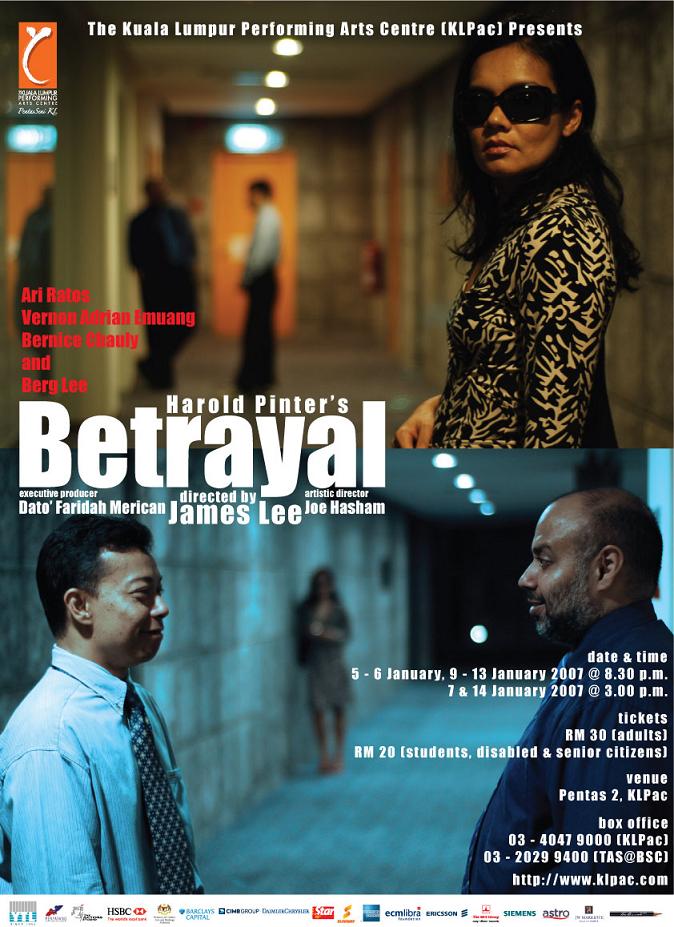 Sunday, Chet dragged me off to KLPAC to see the Harold Pinter play Betrayal, which I very much enjoyed, especially as it was a piece I didn't know at all. I loved the utter social awkwardness of the Pinteresque dialogue (wonder if anyone else speaking like a Pinter character when they walked out of the theatre?) and the way the story moves backwards in time to uncover layers of guilt and deception in this love triangle.
The acting was good. Couldn't quite believe in Ari Ratos as the Jerry though, because the chemistry between him and Bernice Chauly was a bit lacking, but I liked his outrage when he felt that he was the one who was betrayed. Vernon Adrian Emuang was nicely icy as the betrayed husband. Bernice as Emma, shrouded in clouds of cigarette smoke, was best of all. She looked a bit of a wreck in the opening scene, but seemed to physically change and acquire a glow as time shifted back to the beginning of the affair! And she has such an enviable figure when she's dressed up glam - that took me by surprise because we only ever see her in jeans at the readings!
Wednesday afternoon one of my good friends launched her book at IPBA (Institiut Peguruan Bahasa-Bahasa Antarabangsa). Jean Floyd came out to Malaysia to teach English just a few months after me, and our professional paths have been crossing ever since. She's one of the most dynamic and energetic people I know, though she's now over 70.
I used her study skills book when I was teaching on the 'A' Level Course in Kuala Kangsar, and very good it was too. Now the book has been brought into the cyber-age and rechristened Study Skills for Higher Education. Many of my friends from way back and from my teacher-training days were at the launch, which was good.
Wednesday night we had our book club meeting at Muntaj's house. Julian Barnes' Arthur and George was very much liked (note: not loved by anyone) although we all felt that it could have been shortened by 100 pages or so and the seance part dropped. Barnes style was much praised, as well as his seamless weaving of fiction and research. At least a couple of us are suckers for Sherlock Holmes stories and loved the book for giving Conan Doyle himself a chance to play detective. Our group felt that racism in Britain has cropped up in just too many of our chosen books this year, including Small Island by Andrea Levy, and Nirpal Singh Daliwhal's Tourism. Still, of course, there does seem to be plenty of it to go round.
(Thinking about Arthur and George makes me think of Walker Moore who used to drop by this blog to leave witty comments and who seems to have vanished into thin cyberspace after his altercation with Mr. Barnes over the factual accuracy of the novel. I do miss Walker. If anyone knows of his whereabouts, please give him a nudge from me. )
We also had a necessary chat about limiting numbers for our group. 10-12 is an ideal group size, up to 15 manageable. Most of our members who host have limited space in their homes, limited capacity to cater for so many. But more and more folks want to join us, so we might just have to put them in touch with each other and ask them to form their own group. Logistics!
Thursday, was of course teaching my course at British Council. I don't write too much about my classes when they are ongoing as I feel, I suppose, too protective towards the group to talk about individual writing journeys and the work that appears on the page. (I say "appears" quite deliberately, as the participants find themselves ready to nudge out into unchartered waters.) But yes, it's going fine, and my latest crop of writers are beginning to surprise themselves and write some very fresh stuff, which is what it's all about.
Then yesterday, MPH Writer's Circle. About blogging for writers. How I wish more people had shown up because the audience was a little small and I feel it is a topic very useful to writers. Ted couldn't come as he had to go down to Johor, so Lydia, Nizam Zakaria and myself talked about our online experiences. Nizam was particularly interesting - talking about how blogging his novel has created a fan-base for his work, a greater understanding of his readers' demography and how they react to his text, and bringing him lucrative script-writing work.
Lydia talked about using her blog for promoting her book, and about the difficulty of trying to not let a blog eat up too much of your time (a losing battle!) There was a real give and take discussion with audience members, some of whom were bloggers themselves. (I wish we had got Eric to talk a bit more!) David did a very good job of chairing the discussion - he has such a nice personality, can handle folks with ease and humour.
And it was great to meet local horror writer, Tungku Halim, in real life! (Or unreal life ...)
And in between all these events? Reading reading reading in every spare moment. Running away from the articles I'm supposed to be writing ...
And the social embarrassment bit?
Imagine you are standing in front of a roomful of people, trying to creat a good impression, trying to sound like an expert, dressed neatly in a new outfit with a brand new skirt from Iseten ... and you feel that the waistband is a little looser than when you bought it, and you're glad because you might just have lost a pound or two since you tried it on ... and then it starts to get a little looser ... and a little looser ... until you realise that your elastic has gone, and if you don't keep a tight grip on it you risk losing it altogether ... and that won't do at all in the Islamic University where I'm already the only person for miles around not wearing a headscarf! (Still no-one noticed my dilemma, did they? And they will still ask me back one day, won't they?)
Imagine heading out the door bound for your class in town with everything in your bag except your purse ... and you have no money at all for parking, the LRT fare, dinner, or snacks for class ... and then frantically trying to phone all your friends who know and accept the real you and who live along the route and finding they are all out ... and then realising you will have to ask someone to lend you the money because you are just so incompetent and uncool ... but finally being saved by the fact that you are SO untidy that there are ringgit notes scattered around all over the car, even in the boot, and in the debris at the bottom of your bag ... and finally finding RM16 which is more than enough to cover everything!
Dina - am I still "a brand" now?????
Saturday, January 13, 2007
The Honourable Failure
A novel is a two-way street, in which the labour required on either side is, in the end, equal. Reading, done properly, is every bit as tough as writing - I really believe that. As for those people who align reading with the essentially passive experience of watching television, they only wish to debase reading and readers. The more accurate analogy is that of the amateur musician placing her sheet music on the stand and preparing to play. She must use her own, hard-won, skills to play this piece of music. The greater the skill, the greater the gift she gives the composer and the composer gives her.
This is a conception of "reading" we rarely hear now. And yet, when you practise reading, when you spend time with a book, the old moral of effort and reward is undeniable. Reading is a skill and an art and readers should take pride in their abilities and have no shame in cultivating them if for no other reason than the fact that writers need you. To respond to the ideal writer takes an ideal reader, the type of reader who is open enough to allow into their own mind a picture of human consciousness so radically different from their own as to be almost offensive to reason. The ideal reader steps up to the plate of the writer's style so that together writer and reader might hit the ball out of the park.
What I'm saying is, a reader must have talent. Quite a lot of talent, actually, because even the most talented reader will find much of the land of literature tricky terrain. For how many of us feel the world to be as Kafka felt it, too impossibly foreshortened to ride from one village to the next? Or can imagine a world without nouns, as Borges did? How many are willing to be as emotionally generous as Dickens, or to take religious faith as seriously as did Graham Greene? Who among us have Zora Neale Hurston's capacity for joy or Douglas Coupland's strong stomach for the future? Who has the delicacy to tease out Flaubert's faintest nuance, or the patience and the will to follow David Foster Wallace down his intricate recursive spirals of thought? The skills that it takes to write it are required to read it. Readers fail writers just as often as writers fail readers. Readers fail when they allow themselves to believe the old mantra that fiction is the thing you relate to and writers the amenable people you seek out when you want to have your own version of the world confirmed and reinforced. That is certainly one of the many things fiction can do, but it's a conjurer's trick within a far deeper magic. To become better readers and writers we have to ask of each other a little bit more.
 This from Zadie Smith's fascinating (but be warned, pretty demanding) essay in the Guardian today in which she ponders what makes a good writer, the duty of the novelist and why novelists are always bound to fail. There's much food for thought here and I'm off to read it a second, third, morth time. I reckon it's worth it.
And there's more to come next week.
It's interesting, by the way, that Zadie, just like John Sutherland in the extract I posted the other day, reckons reading a novel to be every bit as much a challenge as writing one.
For a long time reading was felt to be a "passive" activity. I know that educationalists are now talking much more about reading as a creative activity ... as they should. But as difficult as???
Wednesday, November 22, 2006
Writing Vision
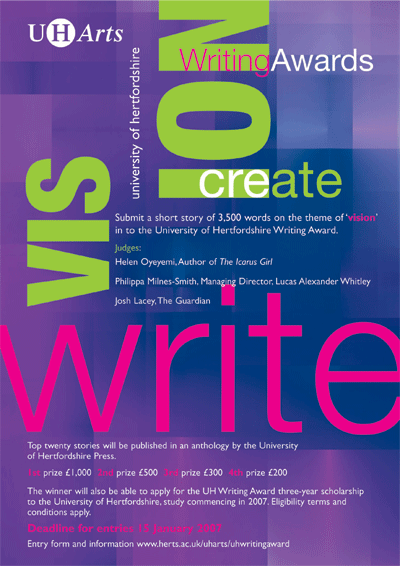
News of a new writing award, launched by the University of Hertfordshire in the UK, which accepts entries from around the world. Here are the details:
Welcome to the inaugural UH Writing Award celebrating creative writing and supporting flourishing new talent.The Entry Form and Rules can be downloaded from the site and the deadline for Entries 15 January 2007. Good luck!
The UH Writing Award is free to enter. Entrants are invited to submit a short story of up to 3,500 words on the theme of 'vision'.
1st prize £1,000 2nd prize £500 3rd prize £300 4th prize £200
The winner will also be able to apply for the UH Writing Award three-year scholarship to the University of Hertfordshire, study commencing in 2007. Eligibility terms and conditions apply, these can be viewed on the Entry Form.
The top twenty stories will be published in an anthology by the University of Hertfordshire Press.
Friday, October 20, 2006
The Writing Ecosystem
I might have got the whole thing wrong but here are my ideas.
There are two factors that will contribute to the growth of a writing community and they are diametrically opposed to each other but entirely complementary.
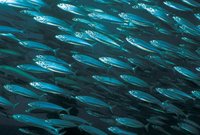 The first factor is encouragement. You need to get a community of writers up and running. You need courses, workshops, small press publication, readings, dialogue to make this happen. You create a pool of writers, the larger the better.
Some of those writers will seek to be published. Many others will derive happiness from personal writing and perhaps the occasional piece in the newspaper or a magazine or an anthology.
The first responsibility of the encourager is to the writer. We have some great encouragers in the writing community right now and hopefully this will produce shoals and shoals of writers, working hard to improve their skills. They do, though, owe it to the writers to temper encouragement with a dose of realism.
But a writing community will amount to nothing in the end (although it may well be happy in its self-congratulationariness) with the second factor.
 The second factor is selectiveness. The gate-keeping of high standards in print and the necessity of rejecting all but very best of the best for quality publication. This is the role of agent and the editor, and their first responsibility has to be to what will sell, not to the individual writer.
In Malaysia we have no agents. The fishtank is too small, not lucrative enough. Writers have to deal directly with editors. (Unless they decide they want to swim out into the ocean. Some do, and thrive.)
An editor selects the content for publication, rejects the rest. There's necessarily a very high wastage. An editor guides the shaping of the finished work in collaboration with the writer.
There aren't enough editors here, though, and of the ones we have, some are better than others. If an editor does his/her job badly, substandard material gets through. It muddies the water for the rest - because readers lose faith in the local product entirely if they feel they have wasted their money on substandard editons.
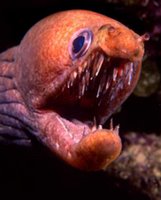 I would include on this side of the divide, the critics, the groundfeeders of the publishing ecosystem. The first responsibilty of the critic is to the reader.
A critic gives feedback through the pages of a newspaper or magazine. Hopefully they write objectively and fairly, kindly but firmly. We don't have enough good critics. We don't have enough space for critics to do their stuff. Local work often doesn't get reviewed. It's a real problem.
So there you have it: without encouragement, nothing will grow and thrive: without selectiveness, nothing of quality will be produced.
A lot of thoughts spin off for me from this central thesis.
First, where am I in this system? I am a writer, but seem to have drifted away from fiction which I consider (for myself) the real challenge. Partly that's because fiction is tough to write. Partly that's because I'm finding a lot of satisfaction in writing features and articles and I have no problem getting published. Partly because others seem to want to be published more than me and I think, why not let them? A writer needs to be hungry, and I don't think I'm hungry enough.
I am an encourager though my creative writing courses, and the teacher in me thoroughly enjoys this role and takes great satisfaction from seeing writers grow.
I'm not an agent but if I spot something good, I give advice and suggest a place to send it.
I can edit. Have edited a short story collection. Loved doing that because it gave me the chance to encourage new talent. Don't enjoy working with bad manuscripts. Could never do what Eric does.
I can be a critic. Am a critic. But feel guilty because I should be making more effort to write about local publications, but becomes hard to be critical when those writers are my friends, so I guess I run away from this task. No excuse. And if on the one hand I'm keen to be an encourager, does it help if morph occasionally into the sharp-toothed critic lurking among the rocks?
But multiple roles are a symptom of the smallness of the fishtank, I guess, and we have to live with that.
Related Posts:
The Gentle Cycle (20/5/06)
From the Lips of an Editor (19/5/06)
Those Who Can, Write: Those Who Can't Edit (6/8/05)
Giving Writers A Chance (18/5/06)
There are two factors that will contribute to the growth of a writing community and they are diametrically opposed to each other but entirely complementary.
 The first factor is encouragement. You need to get a community of writers up and running. You need courses, workshops, small press publication, readings, dialogue to make this happen. You create a pool of writers, the larger the better.
Some of those writers will seek to be published. Many others will derive happiness from personal writing and perhaps the occasional piece in the newspaper or a magazine or an anthology.
The first responsibility of the encourager is to the writer. We have some great encouragers in the writing community right now and hopefully this will produce shoals and shoals of writers, working hard to improve their skills. They do, though, owe it to the writers to temper encouragement with a dose of realism.
But a writing community will amount to nothing in the end (although it may well be happy in its self-congratulationariness) with the second factor.
 The second factor is selectiveness. The gate-keeping of high standards in print and the necessity of rejecting all but very best of the best for quality publication. This is the role of agent and the editor, and their first responsibility has to be to what will sell, not to the individual writer.
In Malaysia we have no agents. The fishtank is too small, not lucrative enough. Writers have to deal directly with editors. (Unless they decide they want to swim out into the ocean. Some do, and thrive.)
An editor selects the content for publication, rejects the rest. There's necessarily a very high wastage. An editor guides the shaping of the finished work in collaboration with the writer.
There aren't enough editors here, though, and of the ones we have, some are better than others. If an editor does his/her job badly, substandard material gets through. It muddies the water for the rest - because readers lose faith in the local product entirely if they feel they have wasted their money on substandard editons.
 I would include on this side of the divide, the critics, the groundfeeders of the publishing ecosystem. The first responsibilty of the critic is to the reader.
A critic gives feedback through the pages of a newspaper or magazine. Hopefully they write objectively and fairly, kindly but firmly. We don't have enough good critics. We don't have enough space for critics to do their stuff. Local work often doesn't get reviewed. It's a real problem.
So there you have it: without encouragement, nothing will grow and thrive: without selectiveness, nothing of quality will be produced.
A lot of thoughts spin off for me from this central thesis.
First, where am I in this system? I am a writer, but seem to have drifted away from fiction which I consider (for myself) the real challenge. Partly that's because fiction is tough to write. Partly that's because I'm finding a lot of satisfaction in writing features and articles and I have no problem getting published. Partly because others seem to want to be published more than me and I think, why not let them? A writer needs to be hungry, and I don't think I'm hungry enough.
I am an encourager though my creative writing courses, and the teacher in me thoroughly enjoys this role and takes great satisfaction from seeing writers grow.
I'm not an agent but if I spot something good, I give advice and suggest a place to send it.
I can edit. Have edited a short story collection. Loved doing that because it gave me the chance to encourage new talent. Don't enjoy working with bad manuscripts. Could never do what Eric does.
I can be a critic. Am a critic. But feel guilty because I should be making more effort to write about local publications, but becomes hard to be critical when those writers are my friends, so I guess I run away from this task. No excuse. And if on the one hand I'm keen to be an encourager, does it help if morph occasionally into the sharp-toothed critic lurking among the rocks?
But multiple roles are a symptom of the smallness of the fishtank, I guess, and we have to live with that.
Related Posts:
The Gentle Cycle (20/5/06)
From the Lips of an Editor (19/5/06)
Those Who Can, Write: Those Who Can't Edit (6/8/05)
Giving Writers A Chance (18/5/06)
Sunday, October 15, 2006
Anita Desai's Advice to Writers
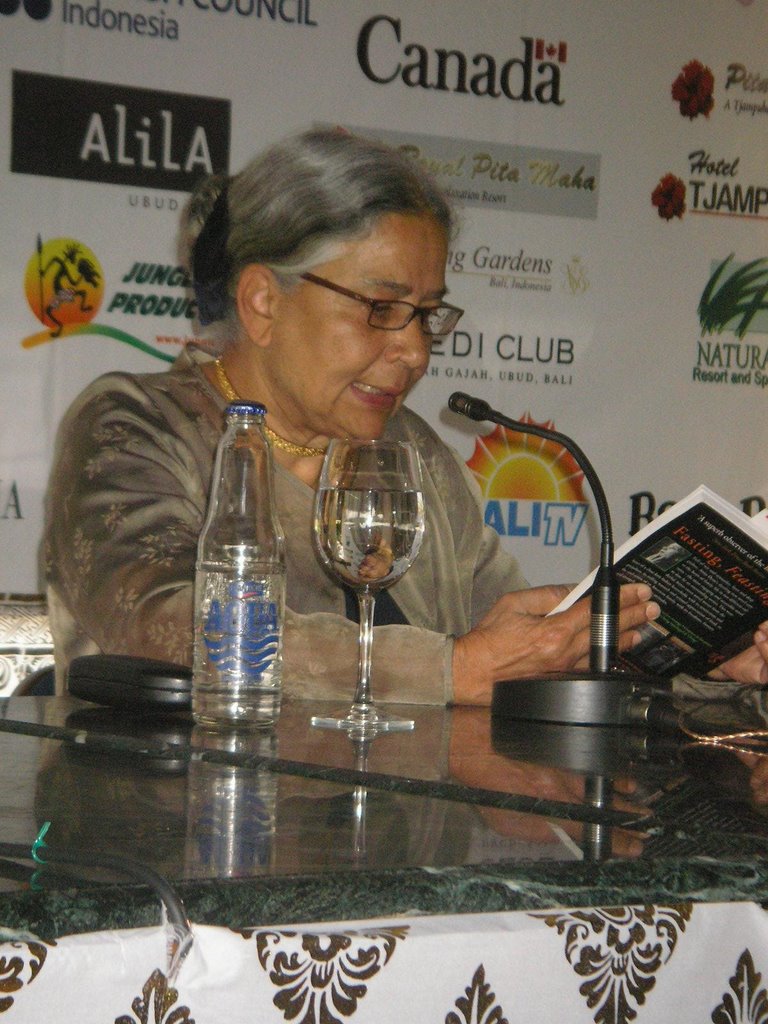 Some snippets I couldn't squash into the article because of the word limit, but feel are important to the writers amongst you:
Anita Desai was asked at the Ubud Readers and Writers festival what advice she would give to writers.
Actually it is a stupid question, because ask any successful writer for advice and they will tell you exactly the same thing. And you've heard it so many times before.
(Hey, it's not just me nagging you, wanna-be's!)
In her exact words though:
Read, read, read a lot. Read voraciously. Be discriminating about what you read, because if you read rubbish, you tend to write rubbish. Read with a critical sense. It is always important to be a tough critic of everything.She also talked about her own writing process at Ubud. She says that she rarely knows how a book is going to evolve, and writing is a process of exploration where characters can take you in unexpected directions. ("I wish it wouldn't happen sometimes," she says.) When she wrote Baumgartner's Bombay, she says, she did not know who the murderer would be until she wrote the scene!
She revises a great deal - each book 3-4 times:
Until I recognise a theme and everything has fallen into place. I am always intersted in reducing, refining, distilling.To be a writer, she says, you need to become senstitive to language:
...like a musician with an intuitive feel that this word has resonance but that one does not.About writing practice she says:
You are not always working on a book or short story but you should be constantly scribbling and using words to keep that practice alive.She also says that you can't teach writing, but creative writing courses are valuable because they give students space and time, which is essential.
Monday, August 28, 2006
Prose ... On Prose to Emulate

Can creative writing be taught?
It's a reasonable question, but no matter how often I've been asked, I never know quite what to say. Because if what people mean is: Can the love of language be taught? Can a gift for storytelling be taught? then the answer is no. Which may be why the question is so often asked in a skeptical tone implying that, unlike the multiplication tables or the principles of auto mechanics, creativity can't be transmitted from teacher to student. Imagine Milton enrolling in a graduate program for help with Paradise Lost, or Kafka enduring the seminar in which his classmates inform him that, frankly, they just don't believe the part about the guy waking up one morning to find he's a giant bug.
Thus begins Francine Prose's new book, Reading like a Writer. So if Prose is cynical about the value of writing workshops, how are writers expected to learn their craft?
Prose believes that the best way to learn to write well is to read extensively, especially the good stuff.
Ah yes, that's what everyone tells you, isn't it? But how far is the advice heeded by most wannabe writers?
Not very far, declares novelist and creative writing teacher Emily Barton reviewing Prose's book in the New York Times. It's not just a lack of interest in reading that bothers her, but that:
those who do read often lack the training to observe subtle writerly clues ...
She praises Prose's Reading Like a Writer, and recommends it both for aspiring writers and for readers who’d like to increase their sensitivity to the elements of the writer’s craft.
Prose points out that writers were learning from the best their predecessors long before writing courses were dreamt up. She also recommends savouring books rather than racing through them, which I think many of us tend to do. (I'm guilty of this. Ah, the pressure of all the books on my to-be-read shelf, all screaming at me in unison every time I pass by.) And she emphasises the delight that reading brings us. (Probably the very reason why we want to write.)
Prose's book sounds like a very useful guide and I Amazon "one-clicked" it as soon as I'd read the review. Read more on the Harper Collins website.
Friday, July 28, 2006
An Eating Course?
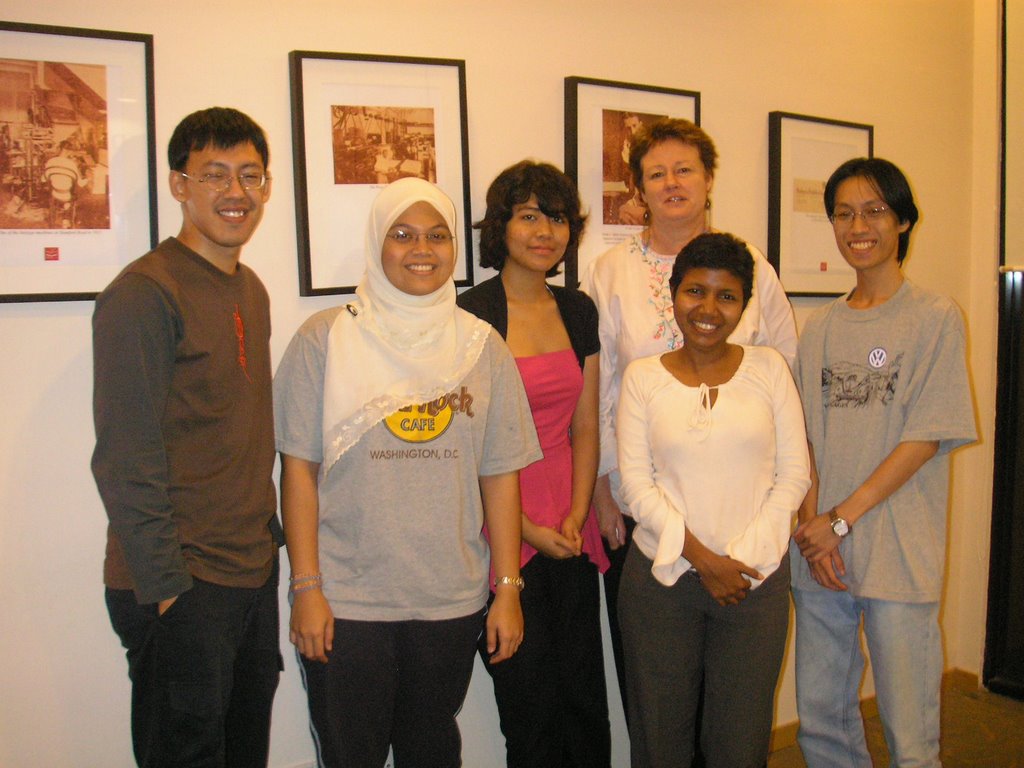
Last night the final session of my creative writing course at MPH 1 Utama a. I took my sister, Tess along. After all, when I go back to Britain, I want to find out about her life and follow her to work (she provides counselling for families with kids with ADHD and other behavioural problems). Bibi, Ted, Martini and Jerusha brought along their writing for discussion and had some very powerful pieces between them. Philip was in an earlier group but had missed his "graduation" so I was happy he could drop by and get to know some new writing buddies.
Tess, has formed the impression (probably quite rightly!) that Malaysians are totally food obsessed. It was Bibi's birthday and she totally surprised by having husband Ammar turn up bearing a ton of delicious food from a friend's restaurant in Taman Tun. (The tomato soup was especially good!)

A most enjoyable evening altogether.
Wednesday, July 19, 2006
Writing at the British Council
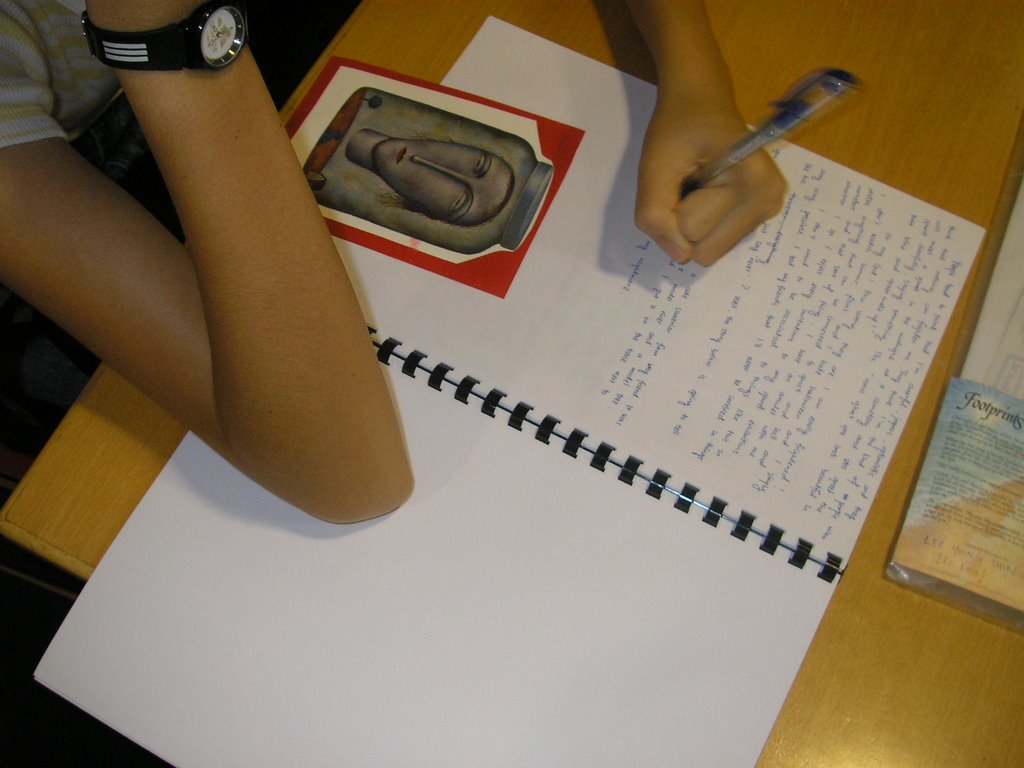 My next creative writing course Getting Started - Finding the Flow will held at the British Council starting August 29th, and is partly sponsored by the BC Library. Details and registration here. (Get in touch if you want to know more - sbakar at streamyx.com.)
There is a slight amendment to the dates though - I will be in Bali late September - early October at the Ubud Readers and Writers Festival - so the final session will be on October 10.
I'm really happy about British Council giving my course a home and promoting it for me. They were happy with the feedback from the last course I taught there, which really was fun.
I plan to launch further courses beginning September and have lots of schemes and plans buzzing round in my head but need to sit down and get the actual planning done and the scheduling worked out. Watch this space!
Friday, July 14, 2006
The Muse Works in Crowds
Bibi put her finger on it last night in the writing class when she asked why it seems so much effort to write when you're alone, yet when there's a group of you writing together from the same starting point, the words just flow.
I see this happen time and time again, and I love how fresh and surprising the pieces scribbled in just a few minutes in the company of friends invariably are. I used to meet my friends on Friday nights for a beer and scribble session, either in someone's house or a restaurant. (Didn't we get some funny looks!) Some of us were pretty motivated writers flying solo during the week, one or two didn't put pen to paper between meetings. But when we got together, took a random writing prompt (a word from a dictionary, the first line, a picture) and wrote at speed (a whole story in five, ten, twenty minutes!) there was a strange synergy that seemed to attract stories to our notebooks. Saras' short story which appears in the next Silverfish collection got written this way one magical evening at Leah's house. (Leah and I were both very happy with our pieces too!)
And here's something I wrote way back about one of our meet-ups in the early days:
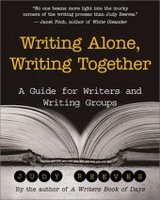 Judy Reeves in Writing Alone, Writing Together (a book that influenced me a great deal) notes the same phenomena in action:
Oh ... and a beer is nice.
I see this happen time and time again, and I love how fresh and surprising the pieces scribbled in just a few minutes in the company of friends invariably are. I used to meet my friends on Friday nights for a beer and scribble session, either in someone's house or a restaurant. (Didn't we get some funny looks!) Some of us were pretty motivated writers flying solo during the week, one or two didn't put pen to paper between meetings. But when we got together, took a random writing prompt (a word from a dictionary, the first line, a picture) and wrote at speed (a whole story in five, ten, twenty minutes!) there was a strange synergy that seemed to attract stories to our notebooks. Saras' short story which appears in the next Silverfish collection got written this way one magical evening at Leah's house. (Leah and I were both very happy with our pieces too!)
And here's something I wrote way back about one of our meet-ups in the early days:
The electricity was off in Soo Choon's house, which gave us a wonderful excuse to sit in the garden and write by the combined light of two torches and a candle. The simplest writing exercises are often the most fun. I'd brought a little pocket dictionary with me and we took it in turns to open it at random and read out the first noun on the page, which was our starting point for writing for three exhilerating minutes. Four people. Four words. Twelve minutes of frantic scribbling. And then we took turns to read out what we'd written. It was amazing how differently everyone had interpreted the words, and what a variety of images leapt from the mind. We were all off in completely different directions, with images and anecdotes and the start of stories that might yet be written. Mercy had chosen to follow one character, a sculptor, through all four of the prompts. "How come I've stared at my notebook all week and not been able to write a thing" said Saras "but the minute we all sit down together my pen can't keep up with my thoughts?"
 Judy Reeves in Writing Alone, Writing Together (a book that influenced me a great deal) notes the same phenomena in action:
During writing practice groups, prompts are given and from these few words, stories, poems and essays and scenes from novels get written right then and there. At least first drafts that flare up wild as prairie fires or emerge soft as twilight in September. Seeds are sown, characters appear (and disappear), ideas take root, and notebooks get filled. Something else happens, too. A certain and electric current of connection, not just from one writer to another, but one human to another. ... Some call it the creative force. Magic. I say that the muse likes to work in crowds. Something happens when we write together that - if you trust it and go with it - can take the writing and the writer to unexpected, surprising places of memory and imagination.You don't need much to make this happen ... a couple of friends, a space, a notebook, and a prompt for a starting point ...
Oh ... and a beer is nice.
Monday, July 03, 2006
An Evening's Lodging
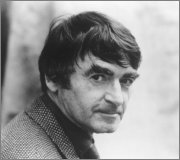 Realised after writing the last post I had never posted here my account of talking to David Lodge by video link at the British Council back in March 2004. I slip it in now!
The interview with David Lodge went fine. Why am I so much of a worrier? It took place in the small conferencing room off the library. There were supposed to be about twenty-five people but quite a number didn't show up which was a shame. Of course, I had rent-an-audience - a large group of my own friends whom I'd coerced and persuaded because I knew that they could be relied on to read a book or two and ask questions.Somewhere along the way he did mention that he was writing a novel about Henry James!
There was one guy in the audience I could see had lots of opinions so I got talking to him before the thing started, while everyone was tucking into the sandwiches and coffee. I asked him what he thought of David Lodge's books. "It's just pornography, isn't it?" (A good start, hey?) "Of course he's not as good as that woman who wrote Harry Potter."
On the screen we could see into a room in the British Council's office in London (how strange is that?) and after a little bit of confusion at both ends ("Are you ready for us yet?"). There he was, David Lodge, on screen. Looked like his publicity picture on the back of his book but a bit more grizzled. Every inch the academic. Serious. Listening very intently to catch the questions because he's a little hard of hearing. (Sometimes his publicist had to help him out.)
He began by reading extracts from his latest novel "Thinks ..." which gave the flavour of the book and the characters. I kicked off with a question about why had he decided on these particular points of view to tell the story, and I asked about the extemely funny send-ups of different writing styles that had had me convulsed with laughter. Then I did my bit and invited questions from the audience. Jean asked a good question about would "Thinks ... " be filmable (No, he said.), Vino (my ex-student and now a lecturer) asked him if he's be writing an autobiography (No, he said - and he comes across as a very private sort of person who doesn't at all like the idea of his private life being in the spotlight). The strange guy asked a question that no-one could understand about Lodge's loss of belief in Catholicism. (Think he was trying to say how Westerners lack values because they are not religious.) And Lodge talked at length about that. Said that although, like most British catholics, he is no longer able to believe in many of the central teachings of the church in a literal sense, he felt the church was still important to him in a cultural sense. Kate asked if he had any advice for young writers (as there were some teenagers on British council creative writing course present) and he said read, read and read. Practice writing. Experiment and don't be afraid to make mistakes.
The forty minutes was over all too quickly. I still have a pile of questions I'd love to ask him ... But I have so enjoyed having the excuse to sit down and read his books one after another, and I've learned so much - especially from his essays in "Consciousness and The Novel."
Monday, June 12, 2006
Novels to Inspire Writers
You learn about writing by reading, of course. But some novels address writerly issues: I thought this list drawn up by The British Council's Literature Matters team was fun and might help you with your own magnum opus:
 Jill Dawson – Wild Boy
Beg, borrow or steal a plot. Plenty of great novels are based on real events and Wild Boy is the perfect example of how to take a blurry historical event and turn it into fascinating and compulsive fiction. Based around the first documented case of autism, it explores early attitudes and medical approaches to the condition.
 Jill Dawson – Wild Boy
Beg, borrow or steal a plot. Plenty of great novels are based on real events and Wild Boy is the perfect example of how to take a blurry historical event and turn it into fascinating and compulsive fiction. Based around the first documented case of autism, it explores early attitudes and medical approaches to the condition.
Also well worth reading on this site is novelist David Pearce's take on taught creative writing courses (he's less than impressed) and advice on alternative paths to publication.Marian Keyes – The Other Side of the Story
For an insight into handling the bitchy, cut throat and not-for-the-faint-hearted world of publishing and literary agents, pick up a copy of the latest from one of Ireland’s sparkiest novelists. As well as exploring issues around guilt, infidelity and depression, not to mention sex and shopping, Marian Keyes' latest will guide you through the many and varied machinations involved with publishing a book.Toby Litt – Finding Myself
Another witty insight into the world of writers as the hideous Victoria About sets up a literary hideaway in deepest, darkest Suffolk, intent upon creating a Big Brother type setting in which to spy on her companions who she intends to use as inspiration for her next novel. Possibly not the best way toendear yourselves with your friends and loved ones, but if you’ve hit a wall with your plot development, it might just offer a way forward.
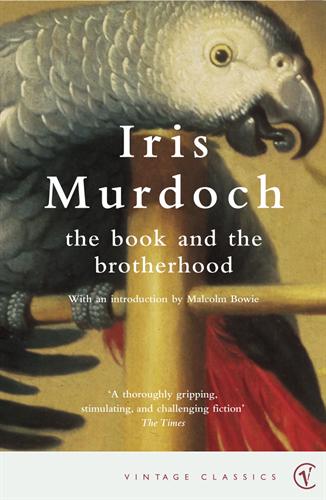
Iris Murdoch – The Book & the Brotherhood
Now this is the way to go. Appear intellectual and clever to a group of your friends and they might just offer to sponsor you to write a book that they think is going to change the world. However, you’d better come up with the goods, or they might turn nasty as the protagonist of Murdoch’s novel found out to his cost. Still, nice work if you can get it.
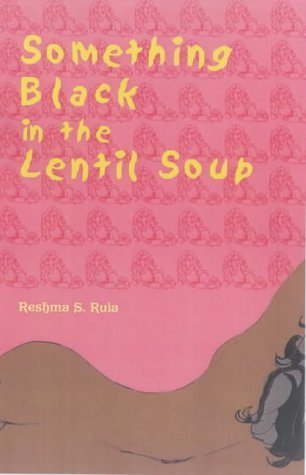
Reshma S. Rhia – Something Black in the Lentil Soup
This comical and irreverent account of poetic rivalry should help to prepare anyone shortlisted for a literary prize. Featuring a host of sneering and sniping writers, hanger-onners and scholarly big cheeses, if it wasn’t for the money, the fame and the possible British Council trips overseas, it may even make the more tender-hearted among you run for the hills at the mere mention of the words Man Booker/Forward/Orange.Dodie Smith – I Capture the Castle
If anything is likely to terrify a writer out of their writer’s block, I Capture the Castle is it. This tender story of a young woman’s coming of age is also an entertaining and inventive account of what happens when her father, who has achieved some literary fame with his first novel, is blocked and slowly but surely brings his family down into his pit of despondency with him. Their inventive cure for his literary lethargy may just be worth a try should things get desperate.Barbara Trapido – Frankie & Stankie
Write about what you know is the long-standing piece of advice offered to fledgling writers. Well, it took Barbara Trapido a long time before she followed that advice, but her 6th novel neatly captures her South African childhood and is an absorbing piece of personal and political history.Barbara Vine – The Blood Doctor
If biography is your bag, then the latest from Barbara Vine may offer some inspiration. Wading through the complex and mysterious family secrets of a Victorian doctor, historian and biographer Lord Nanther uncovers a number of unsavoury details that bring into question the role and the integrity of the biographer, conflicting loyalties and what we can ever really know about another person.

Friday, May 05, 2006
Another Creative Writing Course?
Oh shit! (Sorry for the expletive.) However could I have missed the news on Raman's website that he is going to be running writing workshops (Write with the Right Side of Your Brain) for teens and adults in June.
I guess he's changed his mind about the fact most creative writing courses are hocus. Ooooooh I forgot, the difference is in that word "creative". You can do all the same kinds of things, but you must call them "right brain" activities.
Right brain = creative? Left brain = logical reasoning? This, though, is the pseudoscience of the 1960's. As psychologist Brad Fowell of Vanderbilt University puts it:
But I hope I've given my participants enough of a starting point from which their writing can develop, and more importantly, the confidence in their own voice.
Had the final session with MPH Tuesday night group this week. (Quite emotional, because this was everyone's opportunity to present their written work, and each person had crafted a piece which had personal significance for them.) And am still running the course in conjunction with the British Council on Thursday nights.
Will run the beginners course (Getting Started) again in June and plan new courses for September as well as a creative reading course.
Meanwhile am trying to find other venues for my course ... does anyone know a space that has the right kind of touchy-feely vibes (preferably that I can use for a daytime course), yet is no too expensive?
I guess he's changed his mind about the fact most creative writing courses are hocus. Ooooooh I forgot, the difference is in that word "creative". You can do all the same kinds of things, but you must call them "right brain" activities.
Right brain = creative? Left brain = logical reasoning? This, though, is the pseudoscience of the 1960's. As psychologist Brad Fowell of Vanderbilt University puts it:
In the scientific community, the popular idea that creativity exists in the right side of the brain is thought to be ridiculous, because you need both hemispheres of your brain to make novel associations and to perform other creative tasks.Of course, his course will not be like the one I'm running. He makes this clear in his blurb:
This is not a 'rudimentary course' for 'beginners'. This is for those serious about their writing. This programme is designed to make real writers out of you. It is not one of those 'creative writing course' where no writing happens after the course.Well there you are! Success guaranteed! How can I compete? I certainly haven't had anyone from my courses create the Malaysian War and Peace. Yet.
But I hope I've given my participants enough of a starting point from which their writing can develop, and more importantly, the confidence in their own voice.
Had the final session with MPH Tuesday night group this week. (Quite emotional, because this was everyone's opportunity to present their written work, and each person had crafted a piece which had personal significance for them.) And am still running the course in conjunction with the British Council on Thursday nights.
Will run the beginners course (Getting Started) again in June and plan new courses for September as well as a creative reading course.
Meanwhile am trying to find other venues for my course ... does anyone know a space that has the right kind of touchy-feely vibes (preferably that I can use for a daytime course), yet is no too expensive?
Wednesday, April 19, 2006
Writing Fibs
 A new form of poetry has taken off the U.S. in the last couple of weeks. Gregory K. Pincus, A Los Angeles screenwriter invited blog readers to send him Fibs* - sixline poems that use a mathematical progression known as the Fibonacci sequence to dictate the number of syllables in each line. The idea spread like wildfire across the internet, and it has been estimated that more than 1,000 Fibs have been posted since the beginning of April.
The New York Times explains:
The sequence apparently features in the Da Vinci Code, and shows up in the nautilus shell, knitting patterns and the compositions of Bartok.The Fibonacci progression is a mathematical formula that starts with 0 and 1 and then continues to add numbers that are equal to the sum of the previous two numbers. Thus, the first seven numbers in the sequence are: 0-1-1-2-3-5-8. ... To write a Fib, a more complicated version of the classic, highly constrained haiku, the poet composes a six-line poem that has the correct number of syllables in each line corresponding to each digit in the sequence. (The real first line of each Fib is silence.)

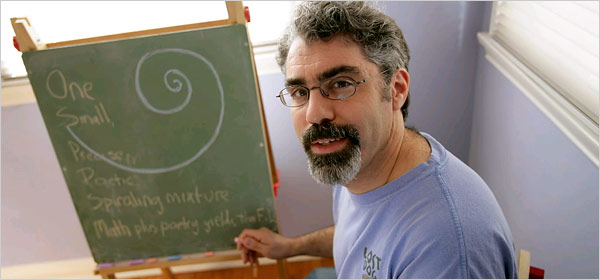
Now me, I don't understand maths at all and managed to fail every single maths exam that life ever threw at me (honestly!), but the creative part of one's soul can't resist squeezing itself into self-imposed limits. Here's my very first one.
INow it's over to you. Compose one or two while the boss isn' t looking and post them up. The best Fibber buys me lunch at a fancy restaurant of their choice.
don't
care that
i'm not math
matical, I just
want to write a poem in this form.
(*Hmmm. I'm just wondering if a better name for the form might not have been the Pincushion, immortalising its inventor.)
Subscribe to:
Posts (Atom)