Showing posts with label anita desai. Show all posts

Sunday, October 15, 2006

Anita Desai's Advice to Writers

Some snippets I couldn't squash into the article because of the word limit, but feel are important to the writers amongst you:

Anita Desai was asked at the Ubud Readers and Writers festival what advice she would give to writers.

Actually it is a stupid question, because ask any successful writer for advice and they will tell you exactly the same thing. And you've heard it so many times before.

(Hey, it's not just me nagging you, wanna-be's!)

In her exact words though:
Read, read, read a lot. Read voraciously. Be discriminating about what you read, because if you read rubbish, you tend to write rubbish. Read with a critical sense. It is always important to be a tough critic of everything.
She also talked about her own writing process at Ubud. She says that she rarely knows how a book is going to evolve, and writing is a process of exploration where characters can take you in unexpected directions. ("I wish it wouldn't happen sometimes," she says.) When she wrote Baumgartner's Bombay, she says, she did not know who the murderer would be until she wrote the scene!

She revises a great deal - each book 3-4 times:
Until I recognise a theme and everything has fallen into place. I am always intersted in reducing, refining, distilling.
To be a writer, she says, you need to become senstitive to language:
...like a musician with an intuitive feel that this word has resonance but that one does not.
About writing practice she says:
You are not always working on a book or short story but you should be constantly scribbling and using words to keep that practice alive.
She also says that you can't teach writing, but creative writing courses are valuable because they give students space and time, which is essential.

Anita on Video!


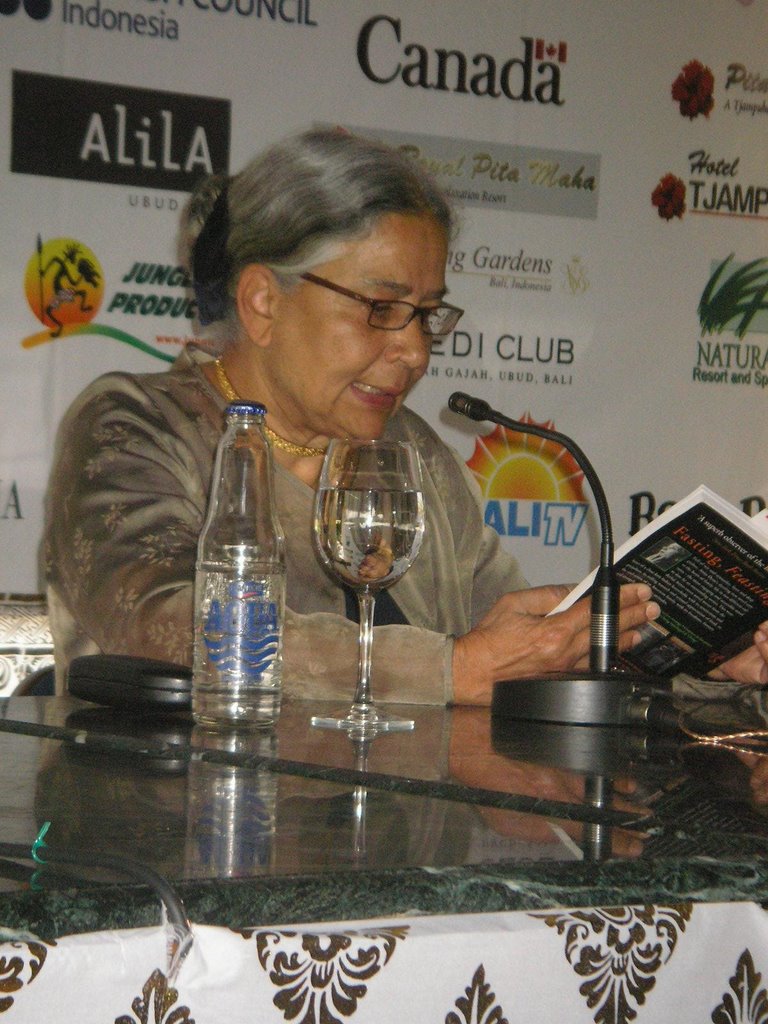
My first attempt at putting up video - am so amazed that this is possible! Here's Anita Desai reading from the first page of Fasting, Feasting.

Always an Outsider

My article on Anita Desai in Starmag today. Here's my original version of the piece. (The printed article got skewed Kiran-wards for obvious reasons! But I'm not at all unhappy with the rearrangement.)
“I see India with my mother’s eyes – as an outsider, but with my father’s heart.”

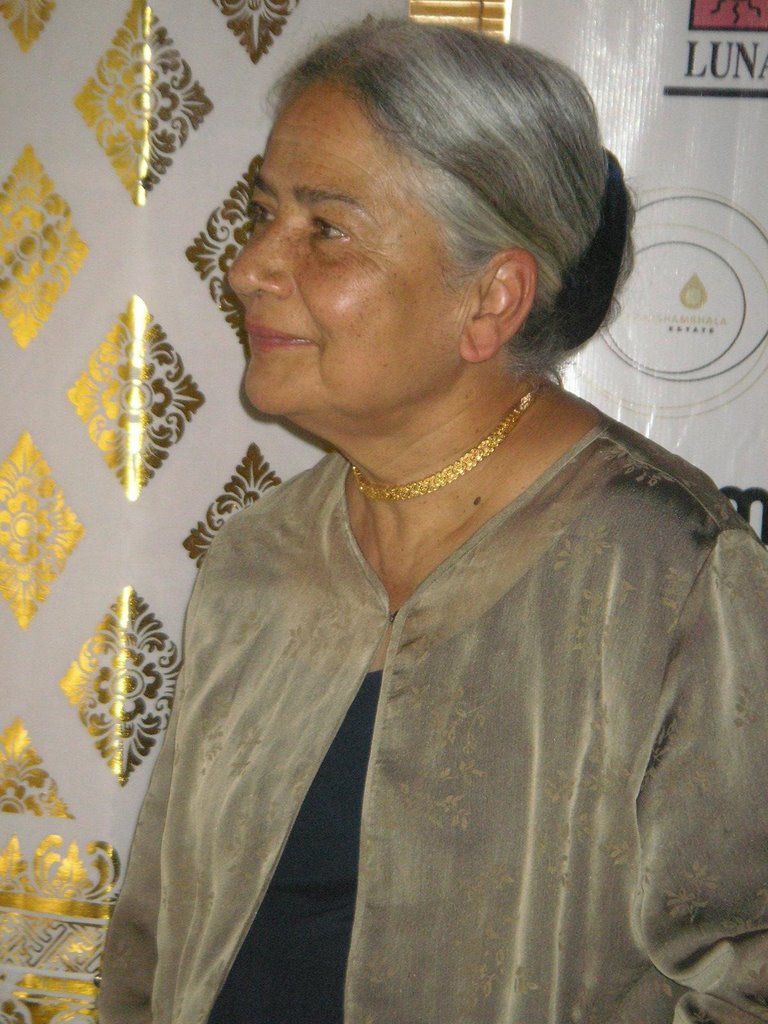
Novelist Anita Desai explains to her audience at the Ubud Readers’ and Writers’ Festival in Bali, that being an outsider has always felt perfectly normal to her. Although nearing seventy, Desai has a serene beauty about her, and speaks in a soft, carefully modulated voice.

Desai was born in Mussorie, a hill station north of Delhi, yet her father was a Bengali business man who had met her German mother when he went to study in Berlin, just ahead of the Hitler period. Neither of her parents revisited their original homes: the country her mother knew had been destroyed, and she did not want to see the new Germany.

The novelist grew up between cultures but it wasn’t until she went to school that she began to see herself as different from other children.

She says that her mother made a huge effort to bring her up as an Indian, but German was the language at home. She remembers her singing German lieder, and baking German kuchen, as well as cooking Bengali food. Her mother was also a great storyteller and fired the young Anita’s imagination with highly embellished stories from Hans Anderson and Grimm’s fairy tales.

Desai started writing aged six, and had her first work published at nine when a little piece she had written was chosen for a magazine. From the beginning she wrote in English, which she claims has always given her writing a sense of separation from other parts of her life. “I am most myself when I write,” she adds “In social life you are always adapting. But when writing, here you can tell the truth.”

When she began writing, she says, only a handful of writers scattered throughout India were writing in English. “It is a challenge to inherit a language which is not your own,” she says “you need to internalize it and recreate it.”

At the same time though, most Indian writers looked down on the language. “We believed ours would be the last generation to use it.” But when Salman Rushdie’s Midnight’s Children “came like a thunderbolt”, she says, it gave later generations the courage to use English as an Indian language.

Married in 1958 to a businessman, Desai raised four children while continuing to write. Her first novel The Peacock was published in 1963, and was followed by fourteen more, including works for children. She reached the Booker shortlist three times: Clear Light of Day (1980), In Custody (1984), and Fasting, Feasting (1999).

Desai usually waited to write until her four children were out of the house because she felt that it would be distressing for them to see that her mind was elsewhere than on family life.

“When the inevitable happened and copies of a book arrived from the publisher, the children would tiptoe past it. It took until they were adults before they could face the fact that I had a separate life.”

She says that she has felt especially close to Kiran since her daughter started writing. “I can talk about things to her that I can’t talk about to the others,” she confides. The two of them share a house in upstate New York. Kiran writes upstairs, she writes downstairs and they tend to meet in the kitchen and they tend to meet up in the kitchen when they’re hungry.

When Desai moved to the West, first of all to take up and a take up a post of Cambridge University and later to New York, Kiran was only 15. Desai says that now she has very conflicted feelings about the move and the emotional impact of it on her daughter.

“One has to spend one’s childhood in one’s own country,” she says wistfully. But it is clearly the experience of living between cultures, and the challenge defining an identity as an immigrant which has given Kiran Desai the subject matter for her novel, The Inheritance of Loss, which this week won the ultimate literary prize, the £50,000 Booker Prize an award which for so long eluded her mother. It should come as no surprise though that the novel is dedicated to Anita.

Also in Starmag today, reviews of Booker shortlisted novels Hisham Matar's In the Country of Men reviewed by Tee Shiao Ee, and Kate Grenville's The Secret River reviewed by Tan Shiow Chin.
Thursday, October 05, 2006

Opening

Some photos from the official opening ceremony of the festival held at the Royal Palace, Ubud. (Right) The gateway.


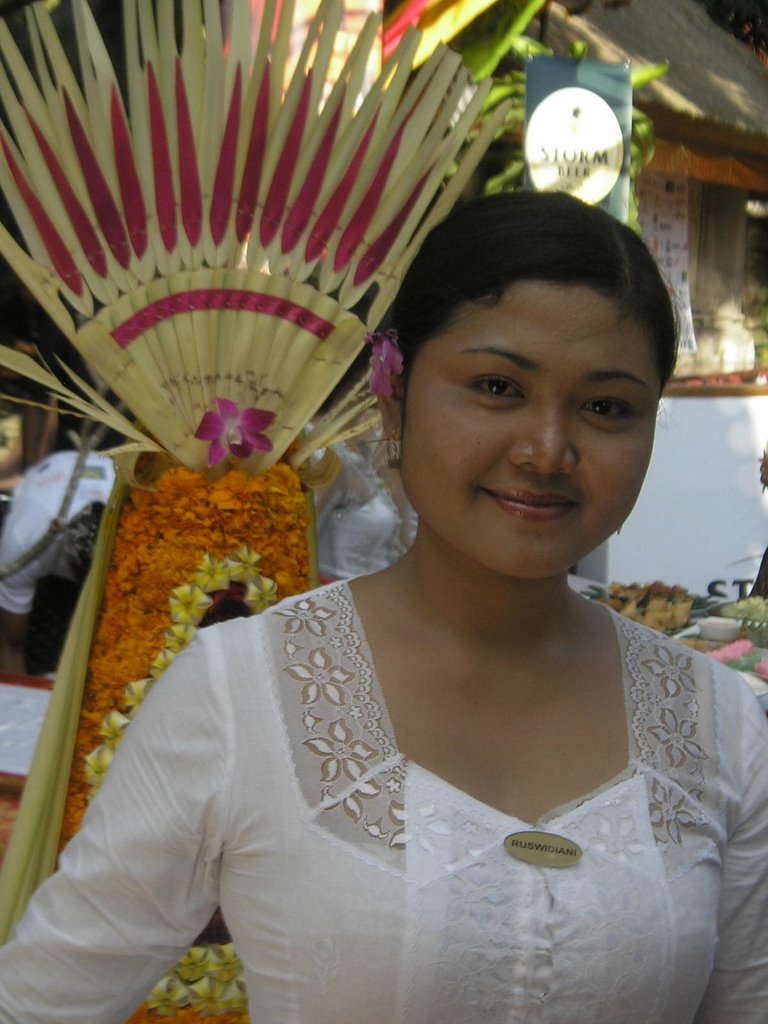
(Left) Roswidiana, greeting guests. She works at Indus and also met us at the airport.


(Right) The guests arrive. Anita Desai chats to Ziauddin Sardar.


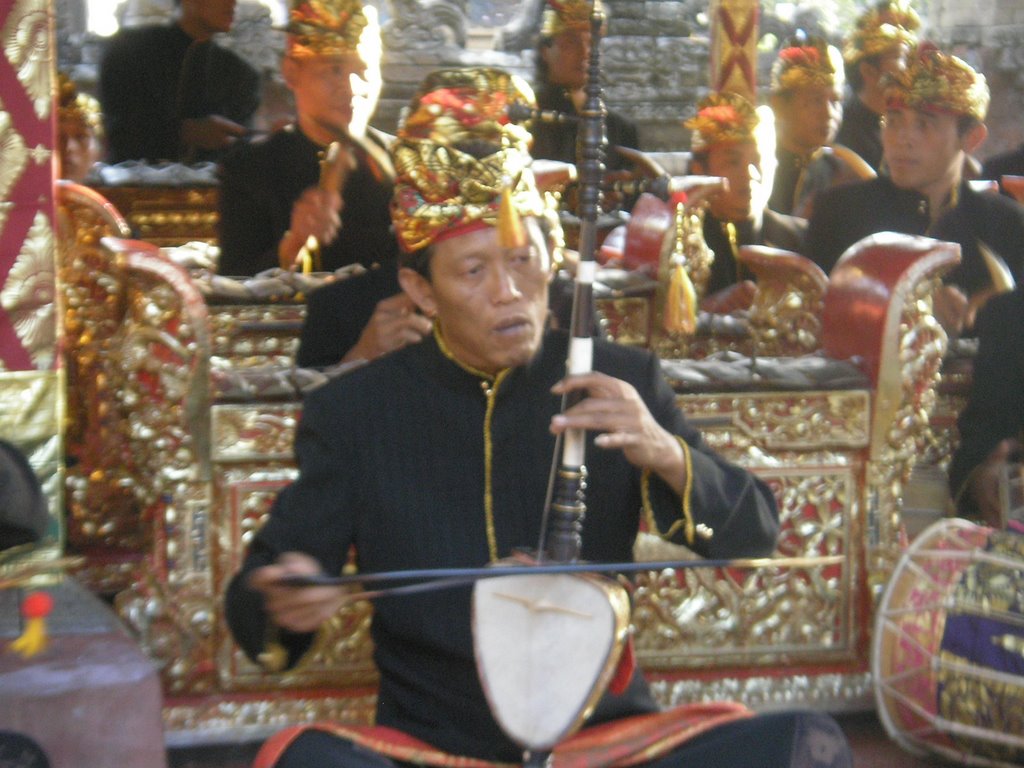
(Left) Gamelan - of course. There was a really magical moment when the orchestra launched in Ravel's Bolero!


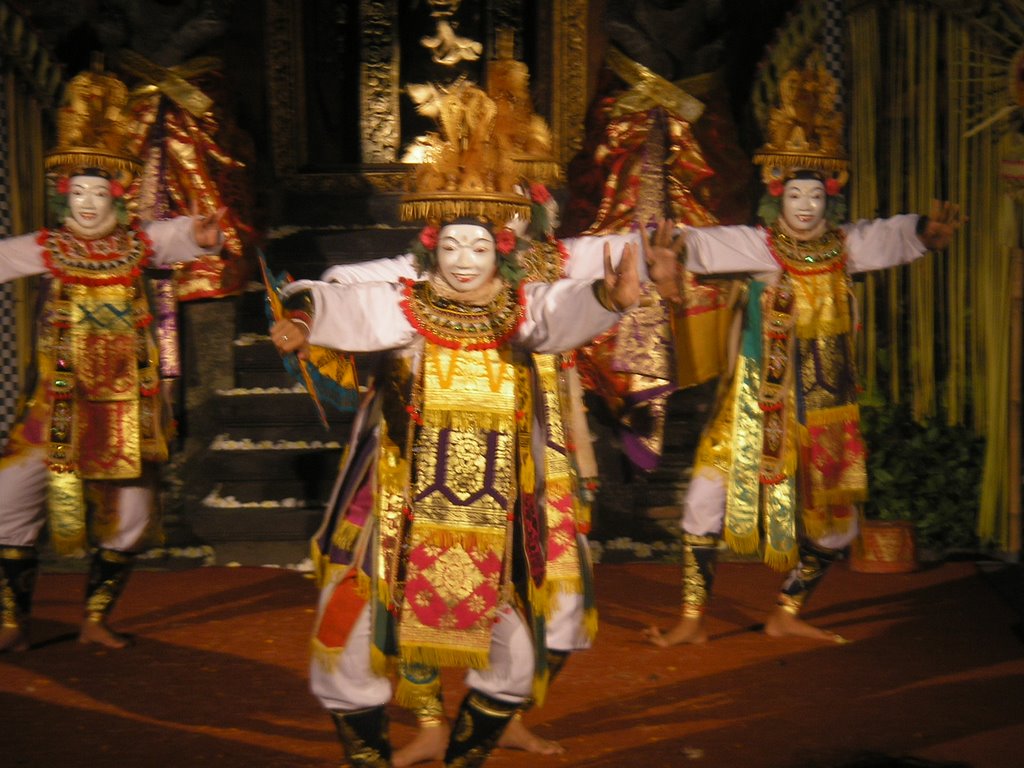
(Right) After the speeches, there was an excellent dance performance.


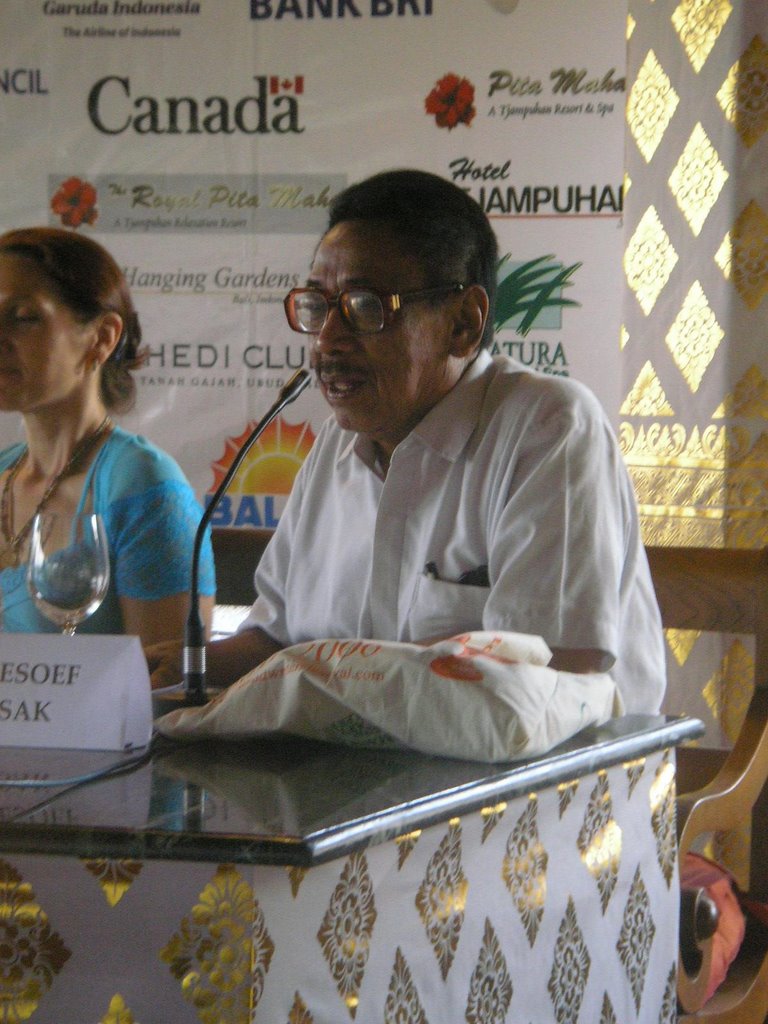
(Left) A tribute to Pramoedya was held at the Lotus Stage, Puri Saraswati. This was the first tribute for Pak Pram held since his death last year. There were film excerpts, readings and a keynote address by Goenawan Mohamad. There was a pretty big crowd crammed into a very small area, most standing and we happened to be at the back. We had to leave before the end but I heard that it got pretty emotional when Pramoedya's editor and publisher Joesoef Isak got to the concluding remarks.

Postscript:

This in Sunday's Jakarta Post :
Malaysia editor and writer Dina Zaman was one of the first to take her seat and enjoy the ambiance of gurgling water and an amphibian orchestra croaking and chirping from among the lotus fronds surrounding the stage.
Poetic, huh? But it doesn't mention the wonderful Sharon Bakar sitting next to her! We were only early because we got the time wrong, and then wandered off again, got delayed by a restaurant order that took an age to come and came back too late to get a seat.

Desa Kala Patra


Timing is everything. It's the day before the festival. Dina and I arrive at Denpasar airport, are garlanded with fragrant leis of frangipani and transported to Indus restaurant, which will be the main venue for the event.

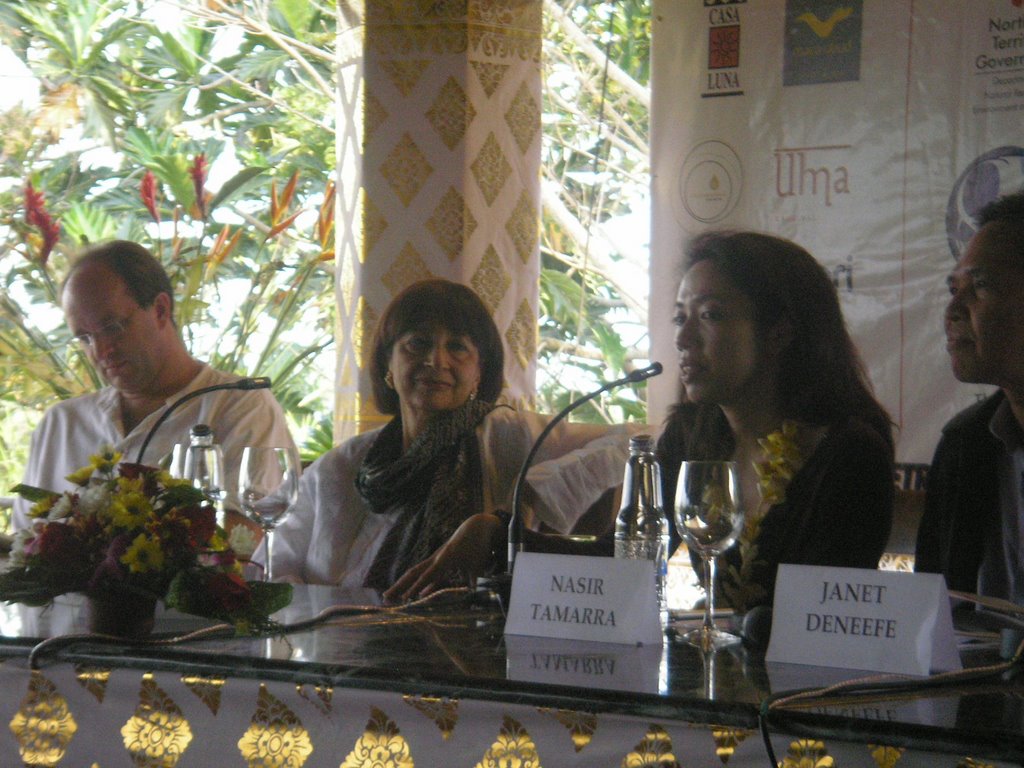
We meet the conference organisers; Janet de Neefe, owner of Indus and Casa Luna and author of memoir/cookbook Fragrant Rice, and Finley Smith whom we were in close e-mail contact with in the run-up to the festival. They both look amazingly cool considering all that is on their shoulders. We're just in time for the press conference, which we hadn't planned to attend.

And then Dina gets herself coopted onto the panel facing the journalist in the press conference by Nasir Tamara (Senior Expert at the United Nations Support Facility for Indonesian Recovery (UNSFIR) in Jakarta) who is the moderator. It's helpful to have a second speaker of Bahasa Indonesia up there to help field and interpret the questions and responses. (So there's our Dina sitting next to Madhur Jaffrey and William Darymple in the picture.)

We hear how the Ubud Readers' and Writers' festival was created after the first Bali bombing in 2002 to encourage healing and economic recovery. Last year there was a second bombing just a week before the festival. It seemed even more important that the event should continue. The 2006 theme for the festival was Desa-Kala-Patra a Balinese/Hindu term that has been translated as Place-Time-Identity.

Afterwards we have a star-struck conversation with the writers. William Dalrymple wants to know about the political situation in Malaysia ("Well ummm ... there's UMNO ... and there's ...."), and I get a chance to tell Madhur Jaffrey that's she's been living in my kitchen for many years, to which she graciously replies "Well, I'm sure I'm very happy there." (I don't tell her that she's covered in splashes and stains and her pages are stuck together and scribbled on.)

It is also such a privilege to meet Joesoef Isak who was the publisher of the great Pramoedya Ananta Toer's books. Without him, quite simply, none of Pramoedya's books would have been circulated. The books remain officially banned, although available in the bookshops. (And how sad I am that we did not get more of a chance to hear Pak Joesoef's story at the festival ...).

We get swept along to a wonderful many coursed dinner where we meet more writers and lovers of books, and William Darymple, Anita Desai and famous Indonesian poet Sitok Srengenge read for us. Bliss.

Timing is everything. Desa - Kala - Patra.