Showing posts with label pramoedya. Show all posts

Saturday, August 08, 2009

Johan Jaafar on Censorship

Censorship comes in many forms. Some of the books mentioned were not banned wholesale by governments, but there are Little Napoleons out there trying to show their power. It took someone with an axe to grind to initiate such an intellectual calamity. ... Books are supposed to represent the best of the nation's intellectual tradition. But, sadly, books are banned and burnt for challenging prevailing assumptions or deemed detrimental to the ruling elite. Worse, they are suppressed for being politically or religiously incorrect. Or for being different. Books are supposed to nourish the mind. Books help to inculcate good values in society, encourage healthy debate and enlarge the realm of learning. Banning books is not an acceptable method to suppress freedom of expression.
Johan Jaafar dedicates his column in today's New Straits Times to the topic of banned books - a timely topic - though one wishes he had had gone a stage further and point a finger at Malaysia's Little Napoleans.

Something I didn't know and am frankly quite shocked by (especially as I've been unhappy about Pak Pram's work being banned in his home country) :
Closer to home, the late Pramoedya Ananta Toer, one of the best writers Indonesia has ever produced, was involved in the Lembaga Kebudayaan Rakyat, better known as Lekra. It was controlled by Partai Komunis Indonesia and denounced works that were anti-rakyat or "irrelevant to the struggle". ... Writers were labelled, condemned and their books became bonfires. Sadly, Pramoedya's chequered past in his involvement with Lekra caught up with him. Prominent Indonesian writers protested when he was conferred the Magsaysay Award for Literature. Their argument: he stifled creativity and suppressed literary works.
Anyone know any more about this?
Wednesday, December 24, 2008

Why Indonesian Authors Fail on the World Stage

Why Aren’t More Indonesian Literary Works Being Published Abroad? asks publisher Richard Oh in the Jakarta Globe [via]. He notes that no Indonesian author since Pramoedya Ananta Toer has enjoyed widespread international success, although the country has many fine writers. He gives several reasons for this lacklustre performance on the world stage, but largely points the finger of blame at the authors themselves :
Indonesian authors can be intractable when it comes to interacting with foreign interests. Some remain stalwart about not letting editors circumcise their texts. Apparently they are unaware that Hemingway had a dedicated editor, Maxwell Perkins, who corrected his unruly spelling, or that James Wood, the literary critic, had an editor who is constantly telling him off. ... Communications with some of these writers – whether because of their inability to grasp other languages, or plain disinterest – can brook misunderstandings. ... There are ... also no genuine efforts from the writers themselves to have their works translated. There’s a sense that their work is done, let others worry about the rest. None of these writers, as far as I know, has a literary agent — the ultimate intermediary, who is familiar with the mysterious inner workings of the publishing world. ... I suspect they do not see the need for one, because here a manuscript is either accepted or rejected through the mail. Besides, it is difficult for an impoverished writer to conceive the idea of an agent taking a cut from their meager earnings.
He does, though, see a younger generation of writers as being less complacent.

Tuesday, November 27, 2007

Meeting Max


My literary Saturday wouldn't have been complete without at least meeting Max Lane over at Silverfish, even if I missed his talk because we were still clearing up at Seksan's, just down the road.

But he was still signing copies of the freshly launched Arok of Java and I drew up a chair and had a really nice chat to him.

Max translated the works of the great Pramoedya Ananta Toer. I've read This Earth of Mankind and A Child of All Nations (the first two parts of The Buru Quartet) and can vouch the for the translations being a pleasure to read.

Deepika interviewed Max in Singapore a few days ago and fills in some of the big gaps I've left here. Go read.

Thursday, November 22, 2007

Literary Saturday in Bangsar

Here, for you to admire, is the cover of the US edition of The Gift of Rain to be published by Weinstein Books and due for release on 6th May.

The book has been released in Australia and got an excellent review by Lorien Kaye in the Age ("a masterful achievement ...").*

You can meet Tan Twan Eng this Saturday at MPH's Breakfast Club (11a.m. Bangsar Village 2) and get your copy of the book signed. Eric tells me that there is even a lucky dip so that one lucky reader can get a free signed copy! If that's not enough, you can have all the curry puffs you can eat!

You can have a really literary day in Bangsar on Sat. After breakfast club and a long gourmet lunch in one or another of the delectable eateries in the area, amble over the road to "Readings", and after that to Silverfish to listen to Max Lane who was the translator for Pramoedya's books. Lane will be launching his translation of Pramoedya's Arok of Java.

Nothing literary happens in KL?

(*Sadly the review is not online but I can forward the PDF to anyone who wants to read it.)

Thursday, October 05, 2006

Opening

Some photos from the official opening ceremony of the festival held at the Royal Palace, Ubud. (Right) The gateway.


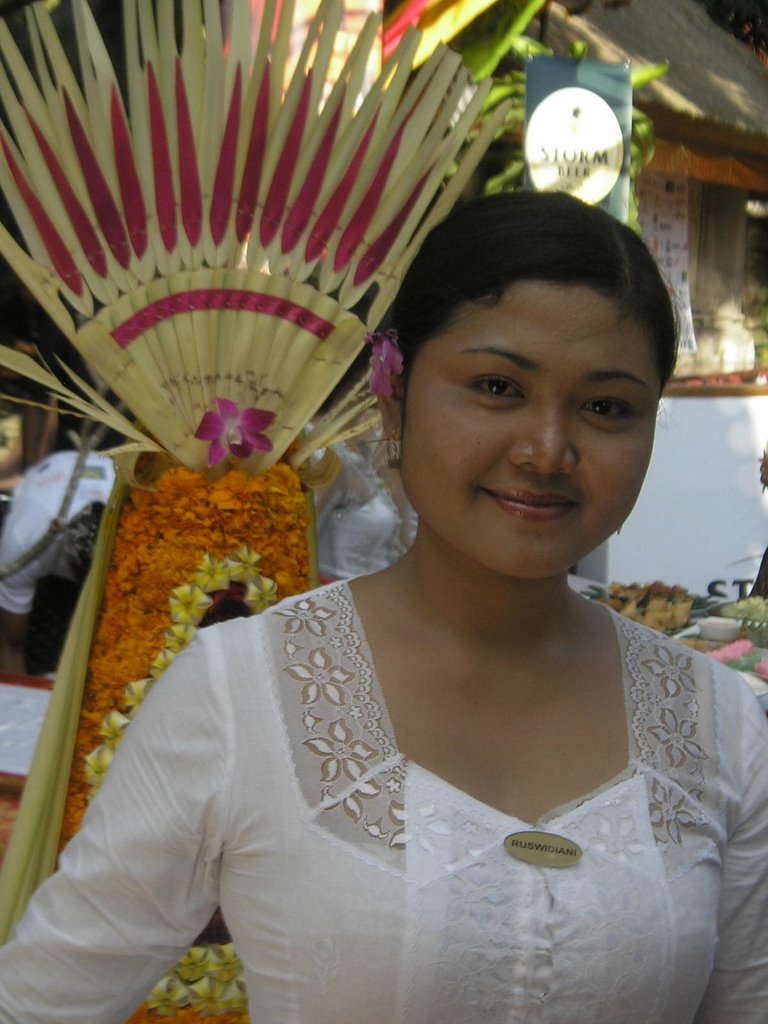
(Left) Roswidiana, greeting guests. She works at Indus and also met us at the airport.


(Right) The guests arrive. Anita Desai chats to Ziauddin Sardar.


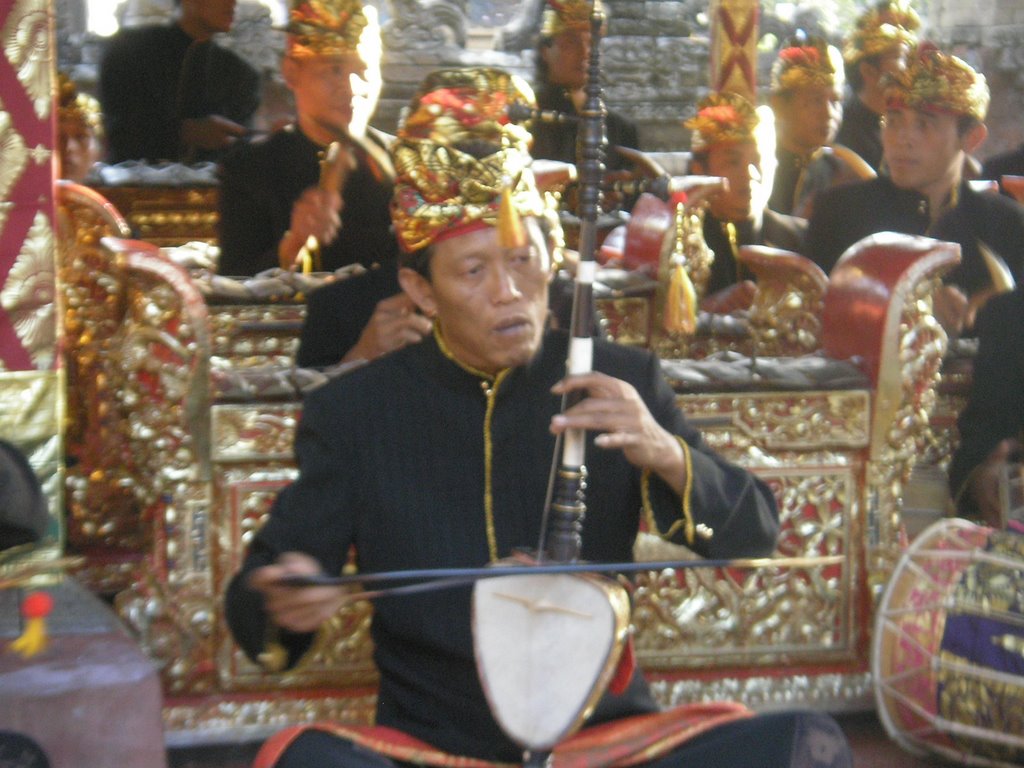
(Left) Gamelan - of course. There was a really magical moment when the orchestra launched in Ravel's Bolero!


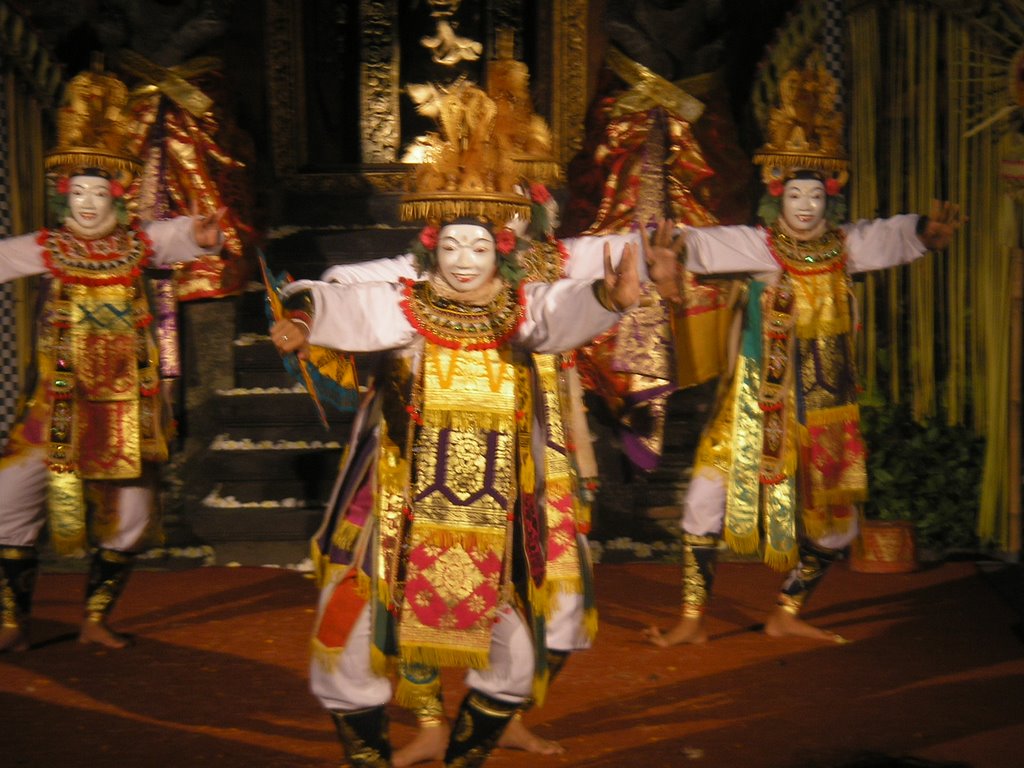
(Right) After the speeches, there was an excellent dance performance.


(Left) A tribute to Pramoedya was held at the Lotus Stage, Puri Saraswati. This was the first tribute for Pak Pram held since his death last year. There were film excerpts, readings and a keynote address by Goenawan Mohamad. There was a pretty big crowd crammed into a very small area, most standing and we happened to be at the back. We had to leave before the end but I heard that it got pretty emotional when Pramoedya's editor and publisher Joesoef Isak got to the concluding remarks.

Postscript:

This in Sunday's Jakarta Post :
Malaysia editor and writer Dina Zaman was one of the first to take her seat and enjoy the ambiance of gurgling water and an amphibian orchestra croaking and chirping from among the lotus fronds surrounding the stage.
Poetic, huh? But it doesn't mention the wonderful Sharon Bakar sitting next to her! We were only early because we got the time wrong, and then wandered off again, got delayed by a restaurant order that took an age to come and came back too late to get a seat.

Desa Kala Patra


Timing is everything. It's the day before the festival. Dina and I arrive at Denpasar airport, are garlanded with fragrant leis of frangipani and transported to Indus restaurant, which will be the main venue for the event.

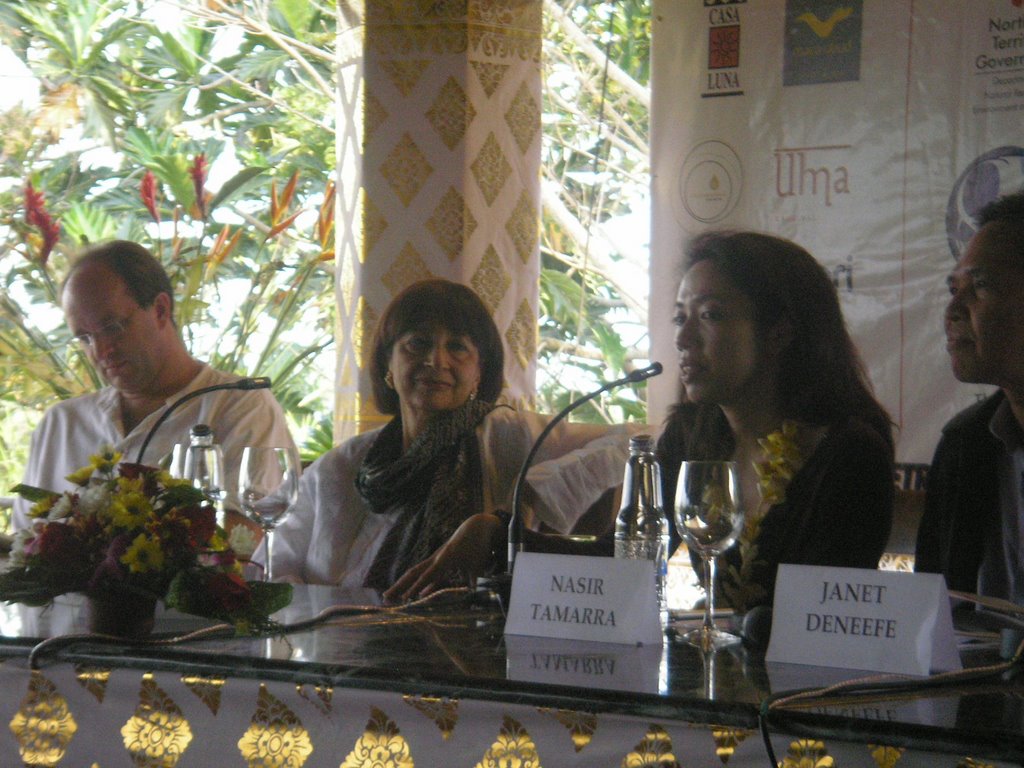
We meet the conference organisers; Janet de Neefe, owner of Indus and Casa Luna and author of memoir/cookbook Fragrant Rice, and Finley Smith whom we were in close e-mail contact with in the run-up to the festival. They both look amazingly cool considering all that is on their shoulders. We're just in time for the press conference, which we hadn't planned to attend.

And then Dina gets herself coopted onto the panel facing the journalist in the press conference by Nasir Tamara (Senior Expert at the United Nations Support Facility for Indonesian Recovery (UNSFIR) in Jakarta) who is the moderator. It's helpful to have a second speaker of Bahasa Indonesia up there to help field and interpret the questions and responses. (So there's our Dina sitting next to Madhur Jaffrey and William Darymple in the picture.)

We hear how the Ubud Readers' and Writers' festival was created after the first Bali bombing in 2002 to encourage healing and economic recovery. Last year there was a second bombing just a week before the festival. It seemed even more important that the event should continue. The 2006 theme for the festival was Desa-Kala-Patra a Balinese/Hindu term that has been translated as Place-Time-Identity.

Afterwards we have a star-struck conversation with the writers. William Dalrymple wants to know about the political situation in Malaysia ("Well ummm ... there's UMNO ... and there's ...."), and I get a chance to tell Madhur Jaffrey that's she's been living in my kitchen for many years, to which she graciously replies "Well, I'm sure I'm very happy there." (I don't tell her that she's covered in splashes and stains and her pages are stuck together and scribbled on.)

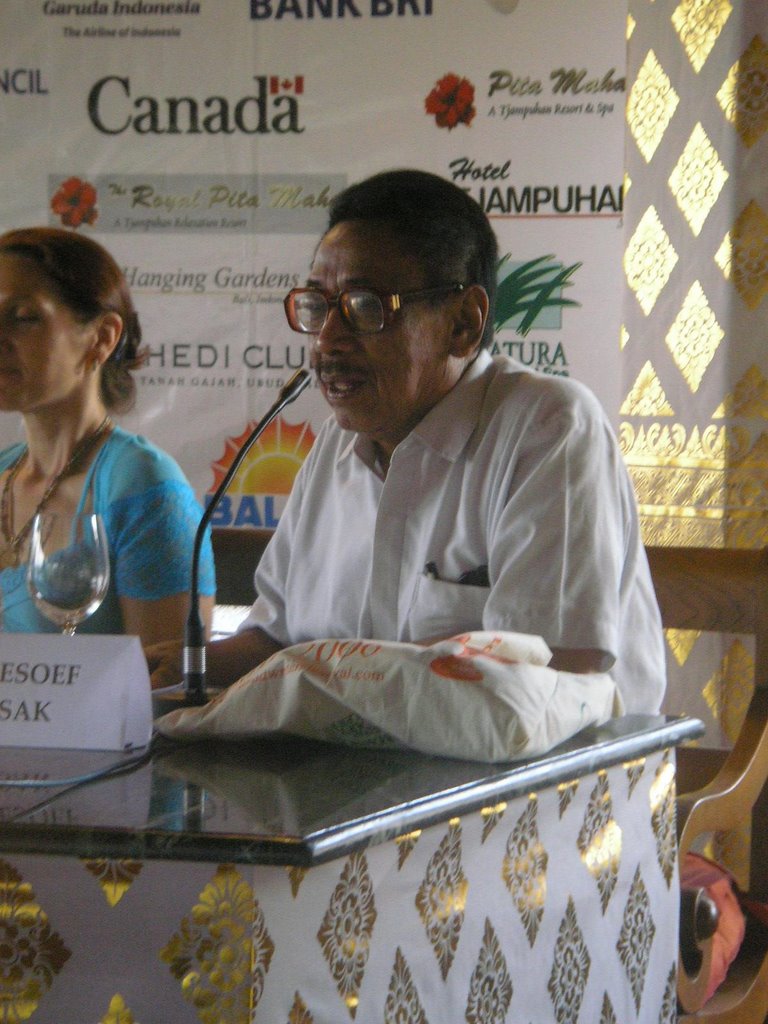
It is also such a privilege to meet Joesoef Isak who was the publisher of the great Pramoedya Ananta Toer's books. Without him, quite simply, none of Pramoedya's books would have been circulated. The books remain officially banned, although available in the bookshops. (And how sad I am that we did not get more of a chance to hear Pak Joesoef's story at the festival ...).

We get swept along to a wonderful many coursed dinner where we meet more writers and lovers of books, and William Darymple, Anita Desai and famous Indonesian poet Sitok Srengenge read for us. Bliss.

Timing is everything. Desa - Kala - Patra.

Sunday, May 07, 2006

Star Turn

Starmag is looking for book reviewers - and that could mean you!:
Do you have a brilliant read that you want others to try? Write a review of not more than 500 words and send it to starmag@thestar.com.my. Published reviews will be paid.
There is for sure a shortage of good reviewers in Malaysia, and those of you who drop by the blog are pretty passionate about books, so why not give this a go?

My personal tips:
  • Aiyoh - don't just regurgitate the plot! If we're interested, we'll read it anyway. If not, you're wasting your breath.
  • Don't read other reviews of the book until you have your own opinion firmly formed. What matters is what you think of the book, even if other reviewers have a very different opinion.
  • Of course, be prepared to support your opinion with examples from the book.
  • Be fair!
  • Important this - Don't gobbledegook over the heads of readers, no matter how brilliant you are.
  • Stick to the word limit, or you'll get cruelly chopped.
And if you want to know what good reviews look like, read the book pages of the newspapers listed in the sidebar of this blog.

Today's copy carries a review of The Impressionist by Hari Kunzru. Kee Thuan Chye liked it less well than I did, but it's a nicely written piece.

What tickled me was that the book is referred to (under the heading) as "an obscure gem"!

Elsewhere in Starmag is the news that travel writer/ novelist Paul Theroux (left) was in town, travelling the route he took 33 years ago (when writing The Great Railway Bazaar?) Y.S. Lim interviews him, but the questions, for this fan of his books, are just too vague and general, and elicit uncharacteristically polite and diplomatic responses! (C'mon, Theroux, grouch a bit and let us know it's really you!)

There's a nice piece on Pramoedya by Anu Nathan who points out, quite rightly, that while this great writer was not well known in Malaysia and Indonesia, she was amazed to meet German and Dutch backpackers in Indonesia:
... who not only knew who Pramoedya was but were also toting around well-thumbed copies of Child of all Nations.
It's an interesting irony. And a deeply shaming one.

This Sunday morning, nursing my first cup of tea, am aware at how big a hole in my life the absence of the Malay Mail has created. (Sad life, hey!) I miss all the murders and the scandals and the gossip gleaned from Britain's Daily Mail. It will be back on the newstands soon, spruced up, reformulated and designed to appeal to a younger set. I hope it will still be the only afternoon newspaper in the world you get to read over breakfast!

Monday, May 01, 2006

The Passing of Pak Pram

The great Indonesian writer Pramoedya Ananta Toer passed away 30th April.

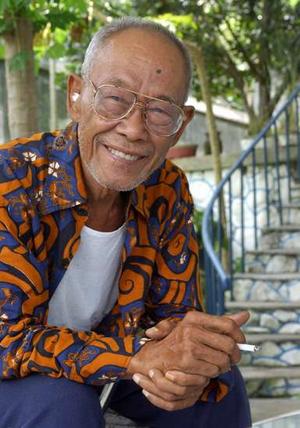
Born in Central Java in 1925, Pak Pram (as he is affectionately known) spent much of his life in prison under successive regimes. The Dutch jailed him in 1947 for being "anti-colonialist.'' And under the Suharto regime he spent 14 years without trial on the desolate prison island of Buru , accused of sympathizing with Chinese communists.

It was in the penal colony that he conceived his most famous work: what came to be known as The Buru Quartet about Indonesia' struggle for independence from the Dutch. His writing was smuggled out on scraps of paper, but when he was later denied writing materials, he told the stories to his fellow prisoners, committing them to memory by frequent repetition, so that he was able to write them down after his release. The novels were published in 1979.

(I have read the first two parts This Earth of Mankind and A Child of All Nations and found them intriguing, especially as my knowledge of Indonesia's past was extremely sketchy. Pramoedya also tells one of literature's great love stories when student Minke marries Annelies, the mixed-blood daughter of a wealthy concubine. There is for sure a C19th feel about the writing and I found myself reminded of the writing of Dostoevsky and Dickens.)

As Raman tells it in an obit in his "Litmag", we had plans to invite Pramoedya to the literary festival, and sent Lorna Tee to Java to make contact with him and other Indonesian writers. Lorna found him a most gracious host, but said it was a little difficult to talk to him as he was almost deaf (the result of a beating from a soldier whilst on Buru). He was of course too sick to make the journey to Malaysia, but how we would have loved to have him!

He was nominated for the Nobel Prize for Literature several times, and would have fully deserved the award.