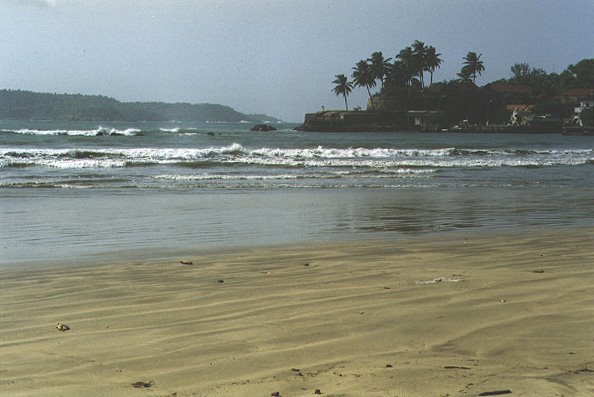
Of course, there's no immediate way that fiction or poetry can be of constructive use in a bloody conflict whose human cost remains concealed. But the fact that most of us can't read the Sinhalese novelists does point to one very relevant literary exercise. A key failing of the otherwise world-class Sri Lankan education system is that while many islanders read at least some English, very few Sinhalese can read Tamil, and vice versa. This will be a major obstacle to any peaceful integration of the island for all sorts of reasons, and allowing Sinhalese and Tamil literature to promote understanding across the ethnic divide is perhaps the least important of them. But putting effort into translation projects would be a small but tangible step in the right direction ...Lindesay Irvine on The Guardian blog writes about authors celebrating freedom of expression at the Galle Literary Festival in Sri Lanka, and notes the great need for translation of locally written fiction to transcend ethnic boundaries.
Ajith P. Perera [found via The Literary Saloon] refers to the event as :
Colombo elite’s annual intellectual masturbationand rather cynically asks what objectives the festival actually serves :
A section of Colombo elite might take a long holiday, eat continental breakfasts, drink lots of expensive wines, exchange yarns about their kids, buy few ornamentals, gain few pounds, may even boost the condom sales of nearby pharmacies and disperse. So much for the literature.He says he sees the best creative writing - particularly poetry - on the blogs. But bloggers were not a group represented at the festival.
The tragedy is large section of creative writers never benefit from either of these festivals. They become untouchables at state festival because they do not appease Talibans. State shows the rebels the door. ... They have no place even at Galle because they do not write in English.
Maura O'Connor of The Sunday Times of Sri Lanka [also found via!] says that:.
.. despite all the fun to be had at the festival, there was a strong sense that the event had yet to seriously deal with the reputation and criticism it garnered in previous years for rather unabashed elitism.These are the challenges that the organisers of any literary festival in this part of the world (or indeed in any part of the developing world) have to face up to. The Ubud Festival I think is managing to keep on right side of the line.
While the programme touted intimate gourmet dinners in Galle Fort mansions and the opportunity to rub shoulders with literary hotshots, there was little in the way of events that allowed for the discussion of topics such as the current ethnic conflict, politics, education, media responsibility, or development. This is strange because one of the festival’s espoused objectives is to “encourage debate on topical issues.”