One of the sessions I enjoyed most in the
Ubud Reader's and Writers' Festival was was
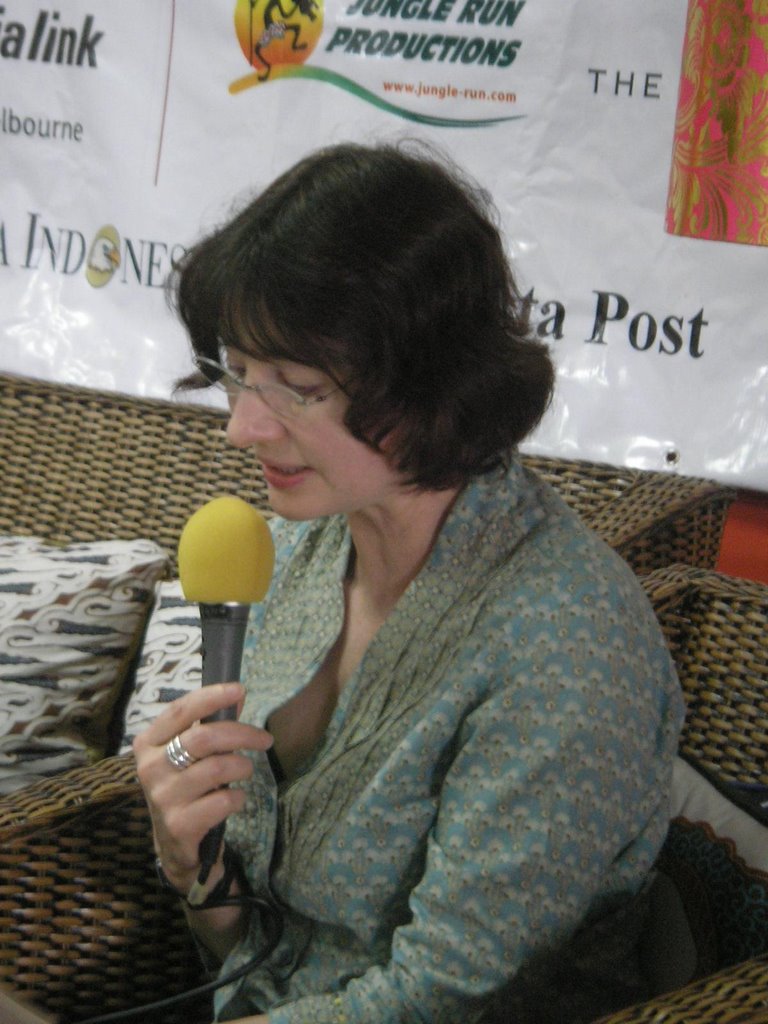
Weaving Words featuring Shauna Singh Baldwin and Gail Jones, moderated (extremely well) by Irina Dunn (executive direcor of the NSW Writers' Centre).
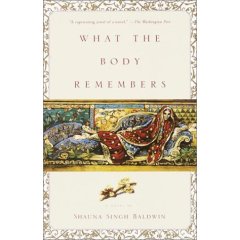
Canadian writer Shauna is best know as the author of
What the Body Remembers a story of two women in a polygamous marriage in occupied India, has written a second novel
The Tiger Claw, collections of short fiction and
Foreign Visitor's Survival Guide to America. Reviews, interviews and information about her books can be found
on her website.

Australian novelist
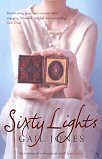
Gail Jones is the author of
Sixty Lights, which was longlisted for the 2004 Booker prize.
The session gave intriguing insights into what started these authors writing, their work processes and their attitude to revision. Both also read from their work.
Here are some notes on their responses:

Gail Jones said that she came from a working class background in rural Australia and was interested in the narrative she met in cinema (a particular favourite was
Dr. Zhivago) - which was
"melodramatic, hyperbolic, and full of vivid technicolour imagery".
It wasn't until her teens that she read her first novel:
Tess of the D'Ubervilles in her teens. She developed a love for Russian literature, particularly for
Chekov's short stories, and for
Dostoesvsky's novels for their
"sense of risk and vulnerability to the larger forces of history". She was also influenced by Australian novelist
Patrick White and she says that it distresses her that he's not so well regarded now.

She had, she says, no faith in herself as a writer to begin with and believes that it takes women longer to believe that they might have a public voice.
She writes longhand because she believes that the body needs to be engaged in writing - it's almost metaphysical. She says the keyboard has a a fracturing effect on her and finds reading on screen
"very counter intuitive". She also says that she travels a lot and loves to be able to pull out her (paper) notebook at any time.
She tries to write even the first draft as well as she can, which saves time writing revisions later and feels rhythm is important as it pushes one sentence to another. She describes her work as
"highly wrought" and says she adore metaphor, the power of an image and the poetics of a text.
Plot is less important to her, in fact, she began
Sixty Lights with no plot in mind. She liked the sound of the title and decided to bring together sixty illuminated moments which give the novel its structure. Writing is for her a linear process and she says she doesn't often show anyone her work.

Shauna Singh Baldwin says that she was first introduced to the oral tradition: the telling of the
Ramayana and
Mahabharata, and became particularly attuned to the rhythms. She did not assume that she could write, but saw so much beauty around her that she felt compelled to keep a journal, trying to capture images before the moment was lost.
Her grandfather gave her HG Wells at 10, neither he nor she giving a second-thought to the fact that is was an adult novel. She didn't read Indian novels and the first stories she remembers were about red-heads and blondes. She said that she learned later that UK writers were so widely available in India when she was growing up because their work was out of copyright (and therefore cheap) and that's British writers came to influence a generation!
She remembers being told at school that Indians could be writers, but not authors. But then she began to discover the wealth of Indian literature. Tagore was an early influence, and then Rushdie opened the door for Indian writing in English, using the language for the first time as an Indian language in fiction. (Anita Desai said exactly the same thing in another session.)

She became a technical writer and only began writing stories when doing a radio show for new immigrants. One day when she found herself running out of material she read some of her stories on air. They were so well received that she continued to broadcast her work and the final collection was collected in
English Lessons and Other Stories.
Because she was a journalist from way back and says the computer has always been part and parcel of her thinking processes. She uses systems thinking and finds that flow charting and time lines and document maps on
Excel help to her plan her writing.
She is now writing historical fiction. Metre and rythm are particularly important to her when she writes and reflect the voices of those she's writing about. In the book she's working on, the rhythm of the words reflects the rhythms she finds in Koran, as she is writing about a Moslem woman. She says that her starting point for fiction is a single image or a voice. She says:
I've done a lot of work with the kind of people I write about, I feel I have a responsibility when other people's words enter the text. ... I don't think about characters as characters. I think about them as people.
And she says she tries to include a social element to her work
"something that might help someone else". She does not write in a linear way at all, but in a jigsaw fashion
"which is horrible to edit", using the computer to cut and paste text,
and
throwing in different images.
She says she writes as if for
"the people you don't live with on a daily basis but who you love" and keeps in mind her cousins scattered around the globe. She says that she constantly edits and rewrites and also does
"beta testing" (I love the way she keeps employing techie terms - when she's such a lyrical writer!) with a group of readers scross the world who give her useful feedback on what she has written at final draft stage. She refuses to have a glossary of Indian terms in her books - and this is even written into her contract.
Her next book is a collection of short stories to be entitled
The Distance Between Us 10 short stories each in a different cultural voice. And she says that she has started the research for a novel which might take a very long time as it moves back and forward between India and Canada.