Showing posts with label james lasdun. Show all posts

Friday, April 10, 2009

The Short Story is in Good Health

A. O Scott in The New York Times speaks out against the habit of undervaluing the short story in American letters and points out that :
The great American writers of the 19th century, whose novels are now staples of the syllabus, all excelled in the short form. Herman Melville’s “Piazza Tales” are as lively and strange as “Moby-Dick”; Nathaniel Hawthorne’s tales and sketches are pithier than “The Scarlet Letter”; Henry James’s stories, supernatural and otherwise, show a gift for concision along with the master’s expected psychological acuity. And the first great American fiction writer, Edgar Allan Poe, secured his immortality by packing more sensation into a few pages than most of his contemporaries could manage in a volume.
Furthermore, the art is still alive and well :
The death of the novel is yesterday’s news. The death of print may be tomorrow’s headline. But the great American short story is still being written, and awaits its readers.
James Lasdun also writes about the neglect of the short story :
Of the literary arts the short story has always been the least honoured, trailing into the House of Fame a humble fourth after novels, plays and poetry. Between Chekhov and Cheever there can't have been more than a dozen major reputations founded solely or even largely on this unassuming form. You might have thought that in our own attention-deficient age, a narrative art based on speed and brevity would have become the main attraction, but outside the creative writing workshop, where its small scale makes it convenient for study (a dismal basis for survival), that hasn't been the case. Lack of encouragement may be the cause, or it may be something inherently skittish about whichever muse presides over this delicate art: a reluctance to settle anywhere long enough to generate a heavy-duty literary industry. It may be the relative newness of the form (if you accept Turgenev's claim that "we all come out from under Gogol's Overcoat", you can date its birth precisely to 1842), or it may be that people regard it as somehow highbrow or artsy; an insider sport for practitioners and aficionados only.
But he too sees things changing and highlights some of this Spring's exciting debuts from across the globe which he sees as indicative of a growing confidence in the form.

Thursday, June 28, 2007

James Tait Black Shortlists

The shortlists for the James Tait Black, Britain's oldest literary award have been announced. The contenders for the fiction prize are:
  • The View from Castle Rock by Alice Munro
  • The Night Watch by Sarah Waters
  • The Road by Cormac McCarthy
  • Seven Lies by James Lasdun
  • Half of a Yellow Sun by Chimamanda Ngozi Adichie
  • Electricity by Ray Robinson
There are some very strong contenders: Orange winner Chimamanda Ngozi Adichie, as well as Pulitzer winner Cormac McCarthy and Booker shortlisted Sarah Walters.

But the shortlist also spotlights other excellent works which have slipped a little more below the radar (well my radar at least!): The View from Castle Rock is a collection of stories by Canadian author Alice Munro: in the first part of the book they are based on material Munro uncovered when researching her own family history in Scotland, and in the second, they are based on more autobiographical material. (I've much enjoyed some of Munro's earlier stories - she has to be one of the best short-fiction writers alive.)

Dina will be very happy to see her friend and former coursemate Ray Robinson, on the list! (The only debut novelist on it.) Electricity, written as part of his PhD in creative writing features a protagonist who is epileptic but refuses the label. (On the Lancaster University website, Robinson describes his research and talks about working on his writing in an academic environment.)

Seven Lies is James Lasdun's second novel, and is a thriller set in Berlin and New York. The blurb on the award website describes it as:
... a page-turning study of betrayal, guilt and shame with just enough allegory about it to keep America’s National Security State in unsettling focus.
(I can see my friend Kaykay getting all excited about this one!)

You can read more about all the shortlisted fiction, as well as the books listed for the The James Tait Black award for biography here, and in the Guardian.

Monday, May 22, 2006

A Shot for the Shorts

Picador is about to do for books what Top Shop did for high-street fashion ...
announced one online fashion magazine talking about a new series of twelve tiny pocket books each containing a short story or two and priced just £1 each (RM6+), writes Rachel Cooke in the Observer.

In doing so, the publishers hope to promote short fiction, declared before now to be a dying breed in Britain and difficult to sell to the reading public. Picador will, of course, be also promoting their writers by giving readers a tasty snack that might whet their appetite for the main dish, in much the same way Penguin have done with 70's.

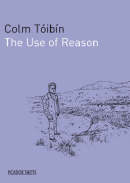
The books include short works by big names such as James Salter, Colm Toibin and Tim Winton. ... And I do so hope they find their way into the bookshops here soon. The selfish reason is that I am so totally consumed by bookgreed: I love short fiction and it's a thrill to discover more great writers of the form. I also think that little books like these would lure in a lot of Malaysian readers who might feel daunted by longer works of "quality" fiction and stick to the safer waters of more popular stuff. (But "Would Malaysians welcome such a price of admission for a half-hour or so read?" asks Ted on his blog. Valid point.)

Much has been said on this blog already about the peril short fiction is in in Britain (though not in America ... or even here in Malaysia.) Cooke reminds us:
... it is more difficult than at any time in the last 100 years to make money from short stories and this may eventually have serious consequences for the form. It is not just that collections don't sell; individual stories have nowhere to go, since there are no longer any literary magazines to publish them.
Perhaps the most effective form of rescue has for the short story is to throw wads of prize money at it.

The National Short Story competition, open only to already published writers in the UK a awards a whacking £15,000 (RM100,00-ish) to the winner. This year's prize went to James Lasdun for his story Anxious Man.

And then there's the Frank O'Connor International Short Story Prize award of 35,000 euros (the biggest prize for a collection of short fiction anywhere in the world!), won in 2005 by Yiyun Li for A Thousand Years of Good Prayers. (Still sitting on my to-be-read shelf.)