 The Guardian gives you a very special gift - six specially commissioned short stories for Summer reading from some of the best writers around; Jeanette Winterson, Nick Hornby, Rose Tremain, Yiyun Li, Jay McInerney, AM Homes. Enjoy!!
Showing posts with label yiyun li. Show all posts
Showing posts with label yiyun li. Show all posts
Monday, August 13, 2007
Summer Shorts
The Guardian gives you a very special gift - six specially commissioned short stories for Summer reading from some of the best writers around; Jeanette Winterson, Nick Hornby, Rose Tremain, Yiyun Li, Jay McInerney, AM Homes. Enjoy!!

Friday, April 06, 2007
Murder and Obsession in Sri Hartamas
 The Black Dahlia was a book club choice proposed by Kaykay the (one and only) bloke in our group who was desperate for us to tackle a more "masculine" read.
He's written a hilarious account of our meeting and the various reactions to the book as a coroners report and in the style of Ellroy!
That's the great thing about belonging to such a group: it forces you to break out of your comfort zone and see what else is out there. Perhaps I wouldn't have picked up Ellroy left to my own book browsing instincts, but am glad that I've now made his acquaintance.
The novel is based on a real murder case which is still unsolved to this day. (In the book? Well you'll just have to read it ... or see the film.)
Ellroy's own mother, Geneva (Jean) Hillicker was murdered in 1958 when he was a child, and when the Black Dahlia case hit the newspapers eleven years later, Ellroy fused the two slaughtered women in his mind in what he describes as the central myth of his life. When the film came out, Ellroy wrote an afterword to his book which you can also read online here at The Virginia Quarterly Review.
I didn't find the book an easy read at first and I must confess I skipped to the murder scene, reassured myself that this was a book I might indeed enjoy, and only then started reading again from the beginning. I still feel the novel takes far too long to get started, and while I appreciate that Ellroy spends time developing the main characters - Dwight 'Bucky' Bleichert (from whose point of view the story is told), Sgt. Leland 'Lee' Blanchard and Lee's girlfriend Kay Lake - the relationships between them weren't really developed. (I'd anticipated, for example that there would be a complicated love triangle and lots of tension between the guys - but Lee disappears completely halfway through the book!)
At the core of the novel is dark sexual obsession. Both Lee and Bucky become slowly consumed by their feelings for the dead woman - which go well beyond simply wanting to solve the murder case. Madeleine Sprague, the femme fatale of the novel, is the most incredible creation: obsessed by the Dahlia herself, she knows how to play on the obsession of others. His portrayal of the female characters in the book allows Ellroy to explore the complexity of women's sexual psychology convincingly. (Angel or demon? Sorry, women are both.)
All the characters (even those in walk-on parts) are sharply realised. No-one is likeable, everyone (even Bucky, with whom we have the most sympathy) corrupt. The cops brutal (sadistic even) in their methods. (There is one truly awful interrogation scene when I wanted to look away ... but couldn't.) The atmosphere of the novel is dark and cloying, and you feel that you might really have stepped back into 1940's Los Angeles. I liked Ellroy's terse telegraphic style, which reminded me of Raymond Chandler, and the use of the slang of the time gives an authenticity to the writing (although the use of a glossary is recommended!).
Would I recommend it? Yes. I still think it's more of a guy's read though, but anyone who enjoys well-turned crime fiction should enjoy it. I am looking forward to seeing the film.
Out last book club read discussed at out meeting earlier this week was One Thousand Years of Good Prayers by Yiyun Li which I wrote about here. I'm used to having my choices thrown back at me as being too literary, but those who turned up were unanimous in their praise for the book. "Loved it," was the verdict, and "How on earth did she get in the heads of so many different characters?" the question we carried away with us.
(Note: For those who don't know KL, Sri Hartamas is a nice middle-class residential area in the city, and it's where our Black Dahlia meeting took place in Shashi's house.)
Friday, March 09, 2007
And The Next Big (American) Writer Is ...
 The guys at Granta magazine bring their crystal balls out of the cupboard every ten years to predict the most important writers of the future. They've done it with British writers with a great degree of success: a glance at the lists for 1983, 1993, 2003 reads like a Who's Who of the British literary scene.
And now, for the second time they are doing the same with American writers, the Guardian reports.
They didn't do a bad job last time with Jeffrey Eugenides, Jonathan Franzen, Lorrie Moore and David Guterson making the list. But most of the writers, I still haven't heard of, despite a more than average ear to the ground. (It's probably something to do with my Britlit bias: apologies to my American friends.)
These then are the chosen ones, and if you want to read more about them, there's a biodata of each on the Granta website.
Daniel AlarcónHow many have you heard of? If you said "All of them", sorry, you're bluffing. Seven have not been published yet and make their debut in the latest edition of the magazine.
Kevin Brockmeier
Judy Budnitz
Christopher Coake
Anthony Doerr
Jonathan Safran Foer
Nell Freudenberger
Olga Grushin
Dara Horn
Gabe Hudson
Uzodinma Iweala
Nicole Krauss
Rattawut Lapcharoensap
Yiyun Li
Maile Meloy
ZZ Packer
Jess Row
Karen Russell
Akhil Sharma
Gary Shteyngart
John Wray
A.L.Kennedy (herself Granta listed twice) on the Guardian blog admits she's only heard of one them.
I feel nicely smug because I've heard of Jonathan Safran Foer, have bought Uzodinma Iweala's novel, and have read (and loved!) Yiyun Li and Rattawat Lapcharoensap. (Come to think of it, it seems that some good writers from elsewhere have been conveniently appropriated. Poor Yiyun Li probably doesn't even have her green card yet!!)
The age limit for "young writers" has now apparently been lowered from 40 to 35. Says Granta editor Ian Jack:
People seem to be writing (and publishing) fiction sooner ... they have, at least in theory, a head start on their predecessors and should be getting better, quicker.In the introduction to the current issue of the magazine which brings together samples of the writing, Ian Jack points to a changes in focus: writers' interest in social class has "ebbed" and in its place is "a concern with death, uncertainty and the outside world". He also observes that nearly all of the writers on the list have attended creative writing courses.
But won't be all sunshine and roses for listed writers from hereonin if Kennedy's own experience is anything to go by. She described the dubious pleasures of:
... touring the country for readings, largely to tiny audiences, and sitting in a cupboard with my fellow authors to sign so many copies of Granta that by the end of it all, my signature was so permanently mangled I had to notify my bank. And it meant I attended a party at the Saatchi gallery and got to see the Blood Head and Patrick Stewart.But come to think of it, the first time I heard of A.L.Kennedy was on a Granta list, and I have, since, bought her books.
I think I will make my predictions about the most promising young Malaysian writers, but hey, I'm going to seal up the paper and bury it in a time-capsule ... and blog about it ten years hence!
Thursday, December 07, 2006
Yiyun's Story
 I'm cheering because Yiyun Li has won the Guardian First Book Award for A Thousand Years of Good Prayers. The prize is only the latest in a long list of awards the book has received - and deservedly so in my opinion. (Here's an extract from the first story in the book.)
Aida Edemariam interviews the writer in the Guardian - and her story is quite amazing: five years ago she struggling to learn to write in English in a US adult education class!
And I like the point she makes about not wanting to create an "exotic Asia" in her stories.
I think that happens, and I'm aware of it. But I don't buy it. I don't write for that reason. I'm not going to satisfy people's curiosity about exotic China, or exotic Asians. If I write a story, I write a story. I have to make sure it's a good story, and that I don't take any short cuts because it's about China. I feel I have a lot of Chinese stories I need to tell.And I for one am looking forward to reading them.
Sarah Crown on the Guardian blog is rejoicing too:
For most of the second half of the 20th-century, short stories languished in literary no man's land - not long enough to qualify as "proper" novels, too long to pack poetry's punch. In recent years, however, they have enjoyed a much documented renaissance. It seems to me, when I look back over books that have come out over the last couple of years, that those which linger in my mind and that I've recommended again and again to friends have almost all been short story collections.
Thursday, August 24, 2006
Good Prayers, Great Stories
 A Thousand Years of Good Prayers is Yiyun Li's highly acclaimed short story collection which won the inaugeral Frank O'Connor Short Story Award among others.
If proof were ever needed that US MFA programmes don't necessarily churn out writing clones, Li amply provides it. (She attended the famous Iowa Writer's Workshop). Her writing is fresh, lyrical - yet at times deeply disturbing. The short stories did precisely what short stories should do: illuminate small lives in telling snapshots, walk around in your head long after the few pages that contained them are read, shake you up.
It wasn't the best holiday reading - the collection made me feel weighted with melancholy for all the tangled lives Li depicts and the necessary makeshift compromises her characters are forced to make. I found it hard to snap out of the little worlds Li creates.
Most of the stories take place in a rural and small town China struggling with economic change and the move to a more free-market econonomy.
All human messiness is here. In Love in the Marketplace a schoolteacher obsessed with the film Casablanca, is the victim of a broken promise. A stranger who arrives in the market place offering to slash his arm with a knife for money is the only person who seems able to honour his word.
Extra is a hugely compassionate story about a middle-aged woman made redundant from her garment factory job. There's no way Granny Lin can survive on her dwindling savings and she reluctantly accepts a marriage of convenience to a sick old man. When he dies, she takes a job as a cleaner in a private school where she befriends a lonely little boy as much a reject as she is. Through both encounters, her eyes are opened for the first time in her life to the possibility and nature of love.
The Prince of Nebraska is the story of a complicated love triangle. Sasha, pregnant and on her way to an abortion clinic in Chicago seeks Boshen's help. Both of them are involved with the enigmatic Yang, a disgraced Chinese Opera singer. An unusual compromise is worked out between them for a love that does not fit neatly into the box of a conventional relationship.
But my favourite story - simply because I've come across a story narrated in this way before - was Persimmons. The slaying of local government officials puts a whole village under the curse of drought. The truth of what actually happened emerges gradually. Li writes the story in the first-person plural ("we") voice, as the whole doomed village speaks in one voice.
Would I recommend it?
I'd say it was a must-read, especially if you enjoy short-fiction or write it yourself. It deserved all the awards it received and is the best book I've read so far this year. (Sorry for gushing!)
If you want to read more about the author or the book, Yiyun Li has a website.
Monday, May 22, 2006
A Shot for the Shorts
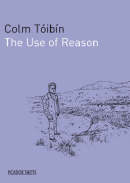

Picador is about to do for books what Top Shop did for high-street fashion ...announced one online fashion magazine talking about a new series of twelve tiny pocket books each containing a short story or two and priced just £1 each (RM6+), writes Rachel Cooke in the Observer.
In doing so, the publishers hope to promote short fiction, declared before now to be a dying breed in Britain and difficult to sell to the reading public. Picador will, of course, be also promoting their writers by giving readers a tasty snack that might whet their appetite for the main dish, in much the same way Penguin have done with 70's.
The books include short works by big names such as James Salter, Colm Toibin and Tim Winton. ... And I do so hope they find their way into the bookshops here soon. The selfish reason is that I am so totally consumed by bookgreed: I love short fiction and it's a thrill to discover more great writers of the form. I also think that little books like these would lure in a lot of Malaysian readers who might feel daunted by longer works of "quality" fiction and stick to the safer waters of more popular stuff. (But "Would Malaysians welcome such a price of admission for a half-hour or so read?" asks Ted on his blog. Valid point.)
Much has been said on this blog already about the peril short fiction is in in Britain (though not in America ... or even here in Malaysia.) Cooke reminds us:... it is more difficult than at any time in the last 100 years to make money from short stories and this may eventually have serious consequences for the form. It is not just that collections don't sell; individual stories have nowhere to go, since there are no longer any literary magazines to publish them.Perhaps the most effective form of rescue has for the short story is to throw wads of prize money at it.
The National Short Story competition, open only to already published writers in the UK a awards a whacking £15,000 (RM100,00-ish) to the winner. This year's prize went to James Lasdun for his story Anxious Man.
And then there's the Frank O'Connor International Short Story Prize award of 35,000 euros (the biggest prize for a collection of short fiction anywhere in the world!), won in 2005 by Yiyun Li for A Thousand Years of Good Prayers. (Still sitting on my to-be-read shelf.)
Subscribe to:
Posts (Atom)