Showing posts with label crime fiction. Show all posts

Saturday, June 26, 2010

When Literature Turns to Crime

The feeling is there is a very clear line of demarcation between the two things. With crime, romance, science fiction, we are considered to be writers within a formulaic genre, whereas literary writers are considered to be 'moving freely', as it were. ...  There has always been a feeling that literary fiction is improving, that you come away from reading it and you're a better person for it. No one ever said that about reading a crime novel – although maybe you come away feeling happier.

Australia's top literary award, the Miles Franklin award has this year gone to crime writer, Peter Temple whose novel Truth is :
... a story about murder, deceit, police corruption and politics set amid the Black Saturday bushfires in Victoria.
Could Britain's top literary prize, the Man Booker prize ever go to a crime novel? asks Alison Flood in The Guardian. She talks, among others to critic John Sutherland (who feels it is unlikely) and crime novelist Ian Rankin (who feels that attitudes to crime fiction are changing.)
 
Temple says in the article that writing crime was just :
... an excuse to write. ... It gives a sense of urgency, of narrative drive. My characters have a reason to get up in the morning. Ian McEwan, who I think is wonderful, his characters do not really have an urgent reason to get up in the morning ... 
 And he feels that:
There is only one judgment for the value of a book, and that is what sort of emotional response it elicits in the reader. That's down to the quality of the writing.
It will certainly be interesting to see what happens when Temple's novel is submitted for the Booker this year!

Tuesday, April 27, 2010

A Thoroughly Chaotic Writer of Neatly Plotted Stories

Her less-than-refined writerly day began with finding her notebook, which surely she'd left right there. Then, having found a notebook (not the one she'd used yesterday), and staring in stunned amazement at the illegible chicken scratchings therein, she would finally settle down to jab at elusive characters and oil creaky plots. ... Christie's promiscuous note-taking meant that any one novel or play might be distributed over multiple notebooks and many, many years.
I thought I was a chaotic writer but didn't expect the same to be true of such a neat plotter as Agatha Christie!  In Slate magazine Christine Kenneally, a great fan of Christie's work, pours over Agatha Christie's Secret Notebooks : Fifty years of Mysteries in the Making. She finds that :
The contents of the notebooks are as multi-dimensional as their Escher-like structure. They include fully worked-out scenes, historical background, lists of character names, rough maps of imaginary places, stage settings, an idle rebus (the numeral three, a crossed-out eye, and a mouse), and plot ideas that will be recognizable to any Christie fan: "Poirot asks to go down to country—finds a house and various fantastic details," "Saves her life several times," "Inquire enquire—both in same letter." What's more, in between ominous scraps like "Stabbed through eye with hatpin" and "influenza depression virus—Stolen? Cabinet Minister?" are grocery lists: "Newspapers, toilet paper, salt, pepper …" There was no clean line between Christie's work life and her family life. She created household ledgers, and scribbled notes to self. ("All away weekend—can we go Thursday Nan.") Even Christie's second husband, the archeologist Sir Max Mallowan, used her notebooks. He jotted down calculations. Christie's daughter Rosalind practiced penmanship, and the whole family kept track of their bridge scores alongside notes like, "Possibilities of poison … cyanide in strawberry … coniine—in capsule?"
Most surprising of all, it seems that Christie did not always know who the killer was when she started writing her crime novels, but allowed herself the space to try out different possibilities. I always thought that an outline of the plot had to come first when writing this particular genre (I know that this is how Elizabeth George works, for example.)

John Curran's book also includes two previously unpublished Poirot stories and sounds like a must-buy for anyone who loves Christie's books.  I'm fascinated by the creative process, love to study writer's notebooks, and will add this to my wishlist.

Monday, October 19, 2009

Inspector Singh in Cambodia ... and then India!

Congrats once again to the highly prolific Shamini Flint who now has a further two book deal with Little Brown, bringing the number of Asian adventures featuring Inspector Singh to five!
Singh has already annoyed the other policemen in Malaysia , Bali and Singapore . Now our favourite inspector will be flying off to the killing fields of Cambodia ...
reads the publicity info I received today :
Inspector Singh is in Cambodia – wishing he wasn't. He's been sent as an observer to the international war crimes tribunal in Phnom Penh, the latest effort by his superiors to ensure that he is anywhere except in Singapore. But for the first time the fat Sikh inspector is on the verge of losing his appetite when a key member of the tribunal is murdered in cold blood. The authorities are determined to write off the incident as a random act of violence, but Singh thinks otherwise. It isn't long before he finds himself caught up in one of the most terrible murder investigations he’s witnessed – the roots of which lie in the Cambodian killing fields… And in Book 5 he’ll be whizzing off to India ... The Guardian says about this series that ‘It’s impossible to not warm to the sweating, dishevelled, wheezing Inspector Singh’ and the Daily Record that Singh is ‘An unconventional new crime hero who has the potential to be as compelling (and successful) as McCall Smith’s Precious Ramotswe.‘
Meanwhile the second volume of the series, A Bali Conspiracy So Foul, is hitting the stores here. It was launched at the Ubud writers' and Readers Festival, and will have another launch at the Singapore Writers Festival. Volume 3, Inspector Singh Investigates: A Singapore School of Villainy, is due out next February. Worth reading - Adrian Turpin in The Financial Times considers Shamini's first novel alongside other writing he feels are in the mould of Alexander McCall Smiths novels featuring Precious Rabotswe.

Friday, October 02, 2009

Crime Pays for Shamini

... crime fiction is a great prism through which to explore the tensions within modern Asian society because it is inevitably about conflict—and the starting point is, of course, murder. The genre allows for the interaction between people of different social stratas, race and religion to be explored at length. I find the idea of reflecting contemporary Asian society in crime writing exhilarating. From racial and religious divides in Malaysia (Inspector Singh Investigates: A Most Peculiar Malaysian Murder), terrorism and social dysfunction in Bali (Inspector Singh Investigates: A Bali Conspiracy Most Foul, due in September 2009), to greed and exploitation in Singapore (Inspector Singh Investigates: A Singapore School of Villainy, due in February 2010), there are the plots for a dozen novels in any Asian country. I certainly hope that more Asian writers will turn to crime fiction writing!
In an essay up on Eric's blog and written for the Singapore Writers Festival version of MPH's Quill magazine, Sharmini Flint asks why there is no real crime writing tradition in Asia ... and why the region actually lends itself to the genre.‘

Tuesday, April 21, 2009

Inspector Singh Invades the UK

Shamini Flint has the happiest of happy news to impart.

Not only is Inspector Singh Investigates: A Most Peculiar Malaysian Murder out this Thursday in the UK, and available in Waterstones (for £6.99) , it has also been selected to be the Daily Telegraph Recommended Book of the Week! This means that it can be bought for just £2.99 with the paper at 750 Tesco stores!

Shamini has asked her friends to pass on the word to all those living in the UK to rush out and buy dozens. She promises to remember you all when she's famous.

Biggest congrats!

Wednesday, December 24, 2008

See - It Can Happen!


If there's a lesson to all this, it's that there are as many paths to publication as there are published writers. Everyone who has managed to reach the summit all writers aspire to can tell a different story of how they made the ascent. For me, it started with the encouragement of a friend when I was ready to give up, and ended with a chance encounter on a crime fiction website. And that's the final lesson for anyone who writes: don't give up. Life can turn on a pinhead, sometimes for better, sometimes for worse, but you never know when that twist is coming.
After all the depressing publishing news of the last few weeks, here's a story to warm the cockles of your heart and provide the wannabes among you with the inspiration necessary to keep going.

Stuart Neville, a writer from Northern Ireland, describes on his website how he got discovered by a new York literary agent, and signed up for a major book deal. [via Reading Copy].

His first novel, The Twelve, a crime thriller set in Belfast, will be published in the UK and the USA and translated into Japanese, French and Spanish. It has won praise from best-selling Irish author, John Connolly who calls it :
... not only one of the finest thriller debuts of the last ten years, but also one of the best Irish novels, in any genre, of recent times.
Let's wish the author all the best.

Wednesday, June 11, 2008

A Fair Cop

A new police car - with an advert for crime writer Peter James - will soon be patrolling the streets of Sussex, UK.

The Hyundai Getz was sponsored by his publisher, Pan Macmillan, and James and whose Roy Grace novels are set in Brighton.

James has developed a close relationship with the Sussex Police while researching his books and regularly goes out on patrol with them, visits crime scenes and attends post-mortems, so this is an appropriate way of giving something back.

The launch party for his latest novel, Dead Man's Footsteps, sounds fun too, it :
... will be themed around a scene of crime, complete with tape, tent and waiters in sterile white "scene of crime officer" suits.

Sunday, February 24, 2008

50 Best Crime Novels

The Sunday Telegraph has a list of the top 50 authors of crime fiction selected by their staff. It also comes with reading suggestions which I've listed below :
GK Chesterton - The Complete Father Brown (1986)
Arthur Conan Doyle - The Hound of the Baskervilles (1902)
Edgar Allan Poe - The Murders in the Rue Morgue (1841)
Ed McBain - King's Ransom (2003)
Kyril Bonfiglioli - The Mortdecai Trilogy (1991)
James Ellroy - The Black Dahlia (1987)
Janwillem van der Wetering - Outsider in Amsterdam (1975)
Carl Hiaasen - Double Whammy (1987)
Dashiell Hammett - The Maltese Falcon (1930)
Dan Kavanagh - The Duffy Omnibus (1991)
Margery Allingham - The Tiger in the Smoke (1952)
Charles Dickens - Bleak House (1852-3)
Georges Simenon - The Yellow Dog (1931)
Agatha Christie - Peril at End House (1932)
Wilkie Collins - The Moonstone (1868)
Jonathan Latimer - The Fifth Grave (1941)
Ruth Rendell - The Water's Lovely (2006)
Ngaio Marsh - Vintage Murder (1937)
Benjamin Black (a.k.a. John Banville!) - Christine Falls (2006)
John Dickson Carr - The Hollow Man (1935)
Michael Innes - The Weight of the Evidence (1943)
Raymond Chandler - Farewell, My Lovely (1940)
Friedrich Dürrenmatt - The Pledge (1958)
Michael Gilbert - Even Murderers Take Holidays and other Mysteries (2007)
Donald Westlake 1933 - What's So Funny? (2007)
Colin Bateman - Wild About Harry (2001)
Frances Fyfield - The Art of Drowning (2006)
Reginald Hill - Good Morning Midnight (2004)
Andrea Camilleri - The Patience of the Spider (2007)
Henning Mankell - Sidetracked (1999)
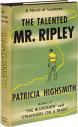
Patricia Highsmith - The Talented Mr Ripley (1955)
James Lee Burke - Black Cherry Blues (1989)
Jim Thompson - The Getaway (1959)
Walter Mosley - Devil in a Blue Dress (1991)
Denise Mina - Garnethill (1999)
Steig Larsson - The Girl with the Dragon Tattoo (2008)
Ronald Knox - The Viaduct Murder (1925)
EC Bentley - Trent's Last Case (1913)
Lawrence Block - All the Flowers Are Dying (2005)
Edmund Crispin - Holy Disorders (1945)
William McIlvanney - Laidlaw (1977)
George V Higgins - The Rat on Fire (1981)
Dorothy L Sayers - Five Red Herrings (1931)
Anthony Boucher - The Case of the Baker Street Irregulars (1940)
Mickey Spillane - I, the Jury (1947)
James Grady - Six Days of the Condor (1974)
George Pelecanos - The Big Blowdown (1996)
Robert Crais - The Watchman (2007)
John Lawton - Black Out (1995)
Elmore Leonard - Maximum Bob (1991)
There's much more about each author on the website, and you can post your thoughts about the listed authors here . Crime novelist Robert B. Parker is interviewed.

(My total from this list is a pathetic 7 which I've now highlighted in bold. Time to get into some more crime fiction methinks now my appetite is whetted.)

Tuesday, December 18, 2007

Death at the Flip of a Coin

He did close his eyes. He closed his eyes and he turned his head and he raised one hand to fend away what could not be fended away. Chigurh shot him in the face. everything that Wells had ever known or thought or loved drained slowly down the wall behind him. His mother's face, his First Communion, women he had known. the faces of men as they died on their knees before him. The body of a child dead in a road-side ravine in another country. He lay headless on the bed with his arms outflung, most of this right hand missing. Chigurh rose and picked the empty casing off the rug and blew into it and put it in his pocket and looked at this watch. The new day was still a minute away.
I actually didn't mean to read Cormac McCarthy's No Country for Old Men next, especially not as I have half a dozen other books on the go. But I bought it in Singapore and then thought I'd just glance through a page or two when I was at the airport.

And then the damn thing wouldn't let go of me.

It was all very well for Kaykay to laugh at me the other night about the book being so not "my thing", being very much a blokes book, being a modern day western, being so unremittingly violent and all that.

But this book is excellent.

Any synopsis of the plot is going to make the book look like pulp fiction. But what makes the book absolutely remarkable is the terse, spare writing, the crisp dialogue and the way that each page crackles with tension. It's so cinematographic that I can't think that the Coen brothers had to do too much work to bring it to the screen. (Although they seem to have done a pretty good job!) :


Then there's the depth of characterisation, and the deeper questions about free will versus determinism, and the nature of good and evil.

Anton Moss, a welder and ex-Vietnam vet, is out hunting antelope in the arid scrub near Rio Grande when he stumbles into the aftermath of a gun battle in which the members of a drug convey have been slaughtered. And then he finds a suitcase with a cool $2.4 million inside.

Soon he is a fugitive fleeing from the hired gun, sent to retrieve the money, an icy-cold psychopath called Anton Chigurh (the name rhymes with "Sugar" ironically) who has a perverted sense of moral justice, a real angel of death who models himself on God. Chigurh decides the fate of his victims with a flick of a coin and calmly dispatches them with a stungun of the sort used in slaughter houses.

And then there's Bell, a small town sheriff struggling to do the duty he is entrusted with in a world that seems to be changing steadily for the worse. He is also doing his best to track Moss down before it's too late. The narrative of the novel alternates between omniscience and chapters where Bell is given free-reign to talk about his own history and philosophy of life in monologues that read like something from Studs Terkal's classic oral histories. Bell is a good man but he doesn't really have his finger on why the world is going to hell in a hand basket, even though he can see that it is.

To complicate matters, a special forces agent employed by a powerful cartel is also hot on Moss' trail. (This is the guy who meets his sticky end in the extract above!) And there's Moss' young wife, who also needs to do a runner with her dying mother to avoid being picked off by Chigurh.

Although The Road was probably the most powerful novel I've read this year, I think this novel is far better from the technical point of view. And although McCarthy's use of punctuation is every bit as eccentric here, it seems to fit with the way the Texan dialect is written and doesn't grate as it does in The Road. (I did though sometimes get lost in dialogues, since there is no indication of who is speaking.) And thankfully, there are fewer choppy sentence fragments of the kind that had me gritting my teeth.

I guess I'll be reading backwards through some of those earlier novels now.

A very good review of the book on the Citypaper website.

Friday, October 19, 2007

Horror Novelist Boils Girlfriend's Flesh

Just in case we're getting a bit too serious and literary here, Zona Marie in Sydney sent me this nicely tabloid snippet from the Sydney Morning Herald about a Mexican horror novelist who - boiled his girlfriend!

When police raided the home of Jose Luis Calva they also found:
... his girlfriend's torso in his closet, a leg in the refrigerator and bones in a cereal box
and the draft of a novel called Cannibalistic Instincts.

Again, I would like to warn wanna-be writers who read this blog, not to go take their research too far. (Remember our other author/cannibal? Remember this author who got caught because he fictionalised a murder? )

I know, I know. It really isn't funny. Just seeing how low this blog can sink.

Postscript (14/12/07)

Today I read that he hung himself with a belt while in prison. It truly is a tragic story.

(The gory picture from the SMH shows him with injuries he sustained when he tried to run away from police.)

Friday, October 05, 2007

Crime Does Pay!

Another panel discussion I enjoyed very much at the recent Ubud Writers' and Readers' Festival was the one on crime fiction which featured Marele Day, Kathy Reichs, and Nury Vittachi.

Marele Day, the author of four award-winning crime novels featuring the first Australian PI, Claudia Valentine, says we enjoy reading crime fiction because it enables us to travel to places we wouldn't normally venture into and we feel comforted while we read about danger.

With crime, she says, there's also the pleasure of the narrative. It has a well constructed plot, the stakes are high for the characters and we have characters we care about. The author plays with what we expect, and we like to be teased. She actually reckons it wouldn't be at all a bad thing for all writers to try a crime novel to hone their skills!

It was the she says that the story telling aspect, she says, that drew her to crime fiction in the first place, and she decided to set the novels in the part of Sydney where she lived and to write in the noire style she liked in the work of other crime writers.

Nury Vittachi reckons that science has tried to murder the detective novel and the fun part of solving crime has disappeared into the laboratory. (Which is true really, if you think about it!) So he is making a conscious attempt to put back the fun element in his crime novels. The protagonist of his five novels is feng-shui master C.F. Wong.

When crimes are committed in Hong Kong, the feng shui master is sent for to find out why the balance of harmony is out of kilter. What would happen, Nury found himself wondering, if the feng-shui master was faster than the detective?

Most crime fiction has a western setting, he says, and he wanted to spread the message about a new world by setting his fiction in Asia. One of the underlying themes of the books is the problems that east and west have in communicating with each other, and he plays on the use of English to illustrate this. But, the message is, if they do learn to understand each other, they can solve the world's problems.

Kathy Reichs is a professor of forensic anthropology, and took to writing crime fiction to earn a little side money! She draws on real life cases for her material, and the main character of her novels is Temperance Brennan who is like Reichs herself, a forensic anthropologist. (Temperance works in the lab at night and writes about a character called Kathy Reichs in the daytime!).

Reichs is also an adviser for the Fox TV series, Bones, and says she helps them to keep the science honest. (She has a friend who is adviser for Silent Witness, my favourite TV programme.)

(Nury has a great blog post on having lunch with Kathy Reichs.)

I'm actually wondering why I am so sniffy about crime fiction on the page, but love it on the telly. After this session, that might be set to change!

Friday, August 10, 2007

When Crime Fiction Imitates Life

Goodness me. Don't be too diligent about thoroughly researching your novel if you are writing crime fiction.

Kate Connolly in the Guardian reveals that Polish writer Krystian Bala is on trial for murder after writing a crime novel called Amok (I wonder if this is the Malay word?) in which the facts were just a little too similar to a real life killing. It doesn't help matters, I suppose, that the victim happened to be a friend of the author's ex-wife.

But is Mr. Bala really the murderer?


Postscript (21/0/07):

Kristian Bala has been sentenced to 25 years for murder.

Saturday, July 21, 2007

A Thrilling Challenge

Helen Brown in The Telegraph looks at the explosion of interest in the West in literature from China and lists some good reads.

However, literary agent Toby Eady sees the linguistic problem as the most serious barrier to Chinese fiction reaching the West :
How do we cross into Chinese as a language and as a way of thinking? There is but one way and that is literacy, an understanding of China through its history rather than a Western view of China's history. Good translation takes a long time, and cooperation between the author and translator. Few publishers have that time.

Friday, April 06, 2007

Murder and Obsession in Sri Hartamas

The Black Dahlia was a book club choice proposed by Kaykay the (one and only) bloke in our group who was desperate for us to tackle a more "masculine" read.
He's written a hilarious account of our meeting and the various reactions to the book as a coroners report and in the style of Ellroy!

That's the great thing about belonging to such a group: it forces you to break out of your comfort zone and see what else is out there. Perhaps I wouldn't have picked up Ellroy left to my own book browsing instincts, but am glad that I've now made his acquaintance.

The novel is based on a real murder case which is still unsolved to this day. (In the book? Well you'll just have to read it ... or see the film.)

Ellroy's own mother, Geneva (Jean) Hillicker was murdered in 1958 when he was a child, and when the Black Dahlia case hit the newspapers eleven years later, Ellroy fused the two slaughtered women in his mind in what he describes as the central myth of his life. When the film came out, Ellroy wrote an afterword to his book which you can also read online here at The Virginia Quarterly Review.

I didn't find the book an easy read at first and I must confess I skipped to the murder scene, reassured myself that this was a book I might indeed enjoy, and only then started reading again from the beginning. I still feel the novel takes far too long to get started, and while I appreciate that Ellroy spends time developing the main characters - Dwight 'Bucky' Bleichert (from whose point of view the story is told), Sgt. Leland 'Lee' Blanchard and Lee's girlfriend Kay Lake - the relationships between them weren't really developed. (I'd anticipated, for example that there would be a complicated love triangle and lots of tension between the guys - but Lee disappears completely halfway through the book!)

At the core of the novel is dark sexual obsession. Both Lee and Bucky become slowly consumed by their feelings for the dead woman - which go well beyond simply wanting to solve the murder case. Madeleine Sprague, the femme fatale of the novel, is the most incredible creation: obsessed by the Dahlia herself, she knows how to play on the obsession of others. His portrayal of the female characters in the book allows Ellroy to explore the complexity of women's sexual psychology convincingly. (Angel or demon? Sorry, women are both.)

All the characters (even those in walk-on parts) are sharply realised. No-one is likeable, everyone (even Bucky, with whom we have the most sympathy) corrupt. The cops brutal (sadistic even) in their methods. (There is one truly awful interrogation scene when I wanted to look away ... but couldn't.) The atmosphere of the novel is dark and cloying, and you feel that you might really have stepped back into 1940's Los Angeles. I liked Ellroy's terse telegraphic style, which reminded me of Raymond Chandler, and the use of the slang of the time gives an authenticity to the writing (although the use of a glossary is recommended!).

Would I recommend it? Yes. I still think it's more of a guy's read though, but anyone who enjoys well-turned crime fiction should enjoy it. I am looking forward to seeing the film.

Out last book club read discussed at out meeting earlier this week was One Thousand Years of Good Prayers by Yiyun Li which I wrote about here. I'm used to having my choices thrown back at me as being too literary, but those who turned up were unanimous in their praise for the book. "Loved it," was the verdict, and "How on earth did she get in the heads of so many different characters?" the question we carried away with us.

(Note: For those who don't know KL, Sri Hartamas is a nice middle-class residential area in the city, and it's where our Black Dahlia meeting took place in Shashi's house.)

Friday, November 10, 2006

Fictional Forensics

Forget those CSI scenarios. Crime clear-up rates in fiction are unrealistically high, writes Liz Porter in the Age, pondering how much more complex criminal investigation turns out to be in the real world:
... readers expect a comforting restoration of order at the end of every novel - and they usually get it.
Lists of suspects are shorter, forensic testing simpler and the detectives involved enjoy much more dramatic lives than their real life counterparts. Porter says:
Work on a "true crime" book, you might think, would offer a writer the opportunity to ditch these fantasies and embrace the dreary essentials of "real life". But true-crime writers still have to entertain readers. They therefore find themselves drawn to transgressions that most resemble the material of crime fiction - stories featuring "hearts full of passion, jealousy and hate" ... Real life does throw up such narratives, but only occasionally. Murder stories are more commonly either banal and sad or so bizarre and dysfunctional as to appear entirely unbelievable.
And really she should know: her new book Written on the Skin is a behind-the-scenes look at the forensics of police detective work, which this review from New Scientist describes as:
A bedtime book only if your intellectual curiosity can override your dismay and discomfort.
If fiction's still more your thing, this list at Award Annals is a good starting point.

Monday, December 19, 2005

Neurological Opiates and Agatha Christie

If you find Agatha Christie unputdownable, there could be a medical reason for it.

A neurolinguistic study of her novels by more than scientists at three universities in the UK (and here I resist the tempatation to ask, didn't they have anything better to do?) concluded that Christie's language patterns stimulate higher than usual activity in the brain, the BBC reports. Common phrases used by Christie act as a trigger to raise levels of serotonin and endorphins, the chemical messengers in the brain that induce pleasure and satisfaction.

It seems that perfectly mundance phrases (bordering on the cliched!) such as "can you keep an eye on this", "more or less", "a day or two" and "something like that", coupled with a limited vocabulary that doesn't distract readers from the plot and the use of dashes to create "a faster-paced, unreflective narrative" do the trick.

Okay dear fictionaters, now you have the formula, go run with it!

Tuesday, November 29, 2005

Mistaken Identity

Kumar sent me this story which he'd picked up from crime writer John Connolly's website.

I just have to put myself in the shoes of the poor interviewer!
The interview began reasonably well. I was promoting my third book, The Killing Kind, in the Far East and the journalist conducting the interview seemed unusually excited at the prospect of speaking to me. (Actually, any degree of excitement at meeting me is pretty unusual. Even vague disinterest sets my pulse racing a little.)

Niceties exchanged, she began asking her questions, and the interview immediately took a turn down a conversational dark alley.

Journalist: 'You've lived a very interesting life.'

Me (wondering just how boring someone's life would have to be to find mine even remotely interesting): 'Well, I'm not sure about that . . .

Journalist: 'You're being too modest.'

Me (with 99 per cent certainty): 'Er, no I don't think so.'

Journalist: 'I mean, you've saved lives. People would be dead if it wasn't for you.'

Me (wondering if, when I'm napping, I somehow sleepwalk and rescue women from burning buildings, like a kind of somnambulist Superman): 'Look, I - '

Journalist: 'And now Martin Scorsese is making a film of your life.'

Me (briefly entering a fantasy world in which Martin Scorsese does make a film of my life, and it's even duller than his Tibetan movie 'Kundun'): 'I'm not sure that he is, and - '

Journalist: 'Tell me, you must miss driving an ambulance in New York.'

Me (as the light dawns): 'Um, I think you're confusing me with Joe Connelly, the guy who wrote Bringing Out the Dead. I've never even been in an ambulance.'

Journalist (unable to conceal her disappointment): 'Oh. So what do you write...?' "

Tuesday, October 18, 2005

It's A Crime!

If Dickens were alive today he would be writing genre fiction or churning out soaps for TV.
Discuss with reference to at least five episodes of CSI London.

Okay, okay I'm being completely fascetious. I'm as guilty as anyone. of not taking genre fiction as seriously as that which we dub *"literary fiction" a.k.a. the real stuff, the hardcore.

The Guardian yesterday quite rightly rapped my pretentious knuckles:
What is it, when Man Booker juries meet, that makes genres "inferior"? ... Why is crime writing, with its "very conscious structure" and ability to raise "big moral issues" outside the box of introversion, such a poor relation of "literary fiction"?
Truth is, a "very conscious structure" to me reeks of predictability and formulaic writing.

Give me genre fiction that subverts the genre and I will be thrilled. Just as I'm thrilled to read the "literary" novel which breaks new ground.

Give me an elegantly turned plot, language that's so rich I want to drink it, characters I can care about, deeper issues to keep me awake at night just wondering, wondering. And I won't care what kind of fiction you call it.

There are crime writers who manage it. Patricia Highsmith's The Talented Mr. Ripley, for example, caught me completely off balance - how does she get the reader to side with the truly despicable Ripley? Yet we do. And in the process are forced to confront our own definitions of "moral behaviour".

Yet I really don't think it's true to say there is no genre fiction on Booker shortlists - it's just that the kind of authors who make it that far tend to play with the narrow definitions of genre. Is Margaret Atwood's The Blind Assassin science fiction or detective story? Both and more.

Atwood has also written some of the best "speculative" fiction (i.e. sci-fi that could happen) - the chilling Oryx and Crake (nightmares free of charge) and The Handmaid's Tale (so prophetic in it's vision of the religious extremism sweeping America).

Cloud Atlas by David Mitchell on last year's shortlist wraps a story within a story within a story and incorporates several genres - thriller, fantasy, comedy ... and each one superb.

Julian Barnes Arthur and George is a historical novel which is also centres on the solving of a crime.

Susanna Clarke's Jonathan Strange and Mr. Norrell was not only shortlisted for the Booker but also also bagged the Hugo award for science ficition writing and the Mythopoetic award for fantasy.

In the end it isn't so much a choice between Literary fiction and genre, as between the straightforward and fomulaic and the multilayered and surprising.

I know which I'd rather have!

(*By the way, hadn't really realised until Tash's talk at Silverfish that American fiction does not recognise such artificial distinctions.)


Postscript:

Even deep-end litfic types dabble in genre. The Elegant Variation has the news that Banville is headed in that direction next.

Tuesday, December 07, 2004

Ruth Rendell

Article from salon.com about Ruth Rendell.

Have never been hooked on crime fiction but have enjoyed some of her books. Best of all though, are her short stories I think. In fact she wrote one short story which would be in my anthology of best-ever short stories. I don't have my copy of the collected short stories any more having lent it to a friend (who apparently misunderstand the word "lent" for "gave" as friends unfortuantely tend to do). But it was a murder story in four pages or so - in the form of a dialogue between a husband and wife about mosquito bites and nicotine patches. In that conversation you could work out exactly how the wife was murdering the husband and that the husband didn't have a clue about the fact that she was doing so! My jaw dropped in awe and I had to read it several times.