Showing posts with label fictionandfriends. Show all posts

Saturday, March 28, 2009

Totalitarian Reads Part 2

Self-nominated minute-taker KayKay put a lovely write up of our book club discussion of Tom Rob Smith's Child 44 on our e-group, and I hope I don't mind if I share it with all of you. (He also reviewed the novel for The Star.) :
As I sit and write this, buoyed by generous lashings of wine and sated with multiple helpings of string hoppers with delicious "sodhi" and chicken curry, I keep thinking if a thriller is an apt choice for a book club discussion. After all, as a genre, it is severely restrictive in the sense of what it needs to accomplish. It MUST thrill, pure and simple. Fancy wordplay, fleshed out characters and atmospherics, those tropes favoured for lengthy dissertations, are in a thriller, purely secondary to it's ability to keep the readers hooked to a plot that, out of necessity, must be breathlessly exciting, pacy and preferably twisty with multiple reversals before a riveting denouement that ties up all loose ends.

Looking at my jottings of the various opinions put forth in our as usual febrile discussions of Tom Rob Smith's Child 44, one common factor that stands out is that it's not an especially well written book, making it's inclusion in a Booker Long-List that much more puzzling. As writers like James Lee Burke, John Connolly and Thomas Harris ably demonstrate, good writing needn't be concomitant to an engaging plot. So why this book over other far superior ones made the Booker long list cut?

As Sham (in her book club swan song) pointed out in a summation reeking of contempt, lots of things happen in this book, and she longed for it to happen in a better written one. Ditto Uma and Jessica who felt the writing was contrived.

As someone who devours thrillers (I average one every fortnight) it now comes to a point where unless a skilled hand is behind the telling, I can usually see a twist coming a mile off, as I did here, echoed by Diana (our new member) who didn't find it engrossing in the least and found the ending a little too pat.

Sharon took issue with the multiple points of view on display in this book while Alina felt the violence very dark and gratuitous (although I must interject here and say this is pretty much de rigueur for most thrillers being written today) and the book's tone hollow while finding Smith's depiction of an oppressive regime anything but compelling.

In addition to being a lovely host, thanks to Alison for pointing out the "gay" sub-text in Child 44 (Vasily's obsession with Leo, persecution of homosexuals etc), something my all but dormant "Gay"dar would never have picked up (I frequently pause in typing this to slap my forehead).

Taj and Alice probably encapsulate my thoughts best in finding the book a thoroughly entertaining read with nary a wasted word. It has a gruesome beginning, engrossing middle and a twisty end with doors left wide open for a sequel.

I pride myself on soundbites, but it's Sharon who delivered the best one for the night; after the constipation of overtly literate books, this au fait airport thriller debut from Tom Rob Smith is a perfect laxative:-)
I am actually missing Child 44 now I've finished it. It was such a lovely easy romp of a read - just what I need at the moment - and the dramatic tension never flags. It should emphatically not have been Booker longlisted even, because it really isn't literary fiction. (Though if it hadn't been nominated, would I have read it?)

But I did very much enjoy it as a thriller, and was even able to forgive the improbable workings of the plot. It would be the ideal read for a very long flight, and I expect to see a really good film made from it soon. (KayKay says Ridley Scott is on the case.)

Here's Tim Rob Smith reading from and talking about the book :


Incidentally, the next read the group has decided on (The Brief Wondrous Life of Oscar Wao) also takes place - at least partly, under a very oppressive regime, in a climate of fear - this time in The Dominican Republic so there is still no escaping this accidental theme that seems to have wrapped itself around us.

Wednesday, December 10, 2008

Battles Among the Books

... it’s a nice, high-minded idea to join a book group, a way to make friends and read books that might otherwise sit untouched. But what happens when you wind up hating all the literary selections — or the other members? Breaking up isn’t so hard to do when it means freedom from inane critical commentary, political maneuvering, hurt feelings, bad chick lit and even worse chardonnay.
Book groups are a really fun way of sharing the pleasure books with others and in the process making new friends, but yes, they can also be something of a soap opera. In the New York Times Joanne Kaufman looks at the downside.

Our book club has been going for 7 years now and we've mostly, yes, got along very well (though we have had our moments - the worst over whether to eject a new member who made us all feel uncomfortable.)

Maybe it is true that groups composed of total strangers (which ours was in the beginning) work the best because the focus is mainly on the book? Or maybe we've just been very lucky?

Wednesday, May 21, 2008

A Window on Biafra

Chimamanda Ngozi Adichie's Half of a Yellow Sun, got a thumbs up from every member of our book club at our meeting last night. The novel was discussed up and down and inside out after a lovely supper cooked by Shashi (though it did seem a little wrong to be discussing a book in which the characters are literally starving to death, with comfortable full tums.)

I think the novel profoundly affected all of us.

Renata and I who had grown up in Britain, remember the shocking footage of the war in Biafra shown on the television news, and especially the images of starving children with bloated bellies. It was the first time ever that such a thing had been shown. (Ethiopia ... Darfur ... haven't we just got so blase about the images of starvation since then?) Our Malaysian friends, and Naho in Japan who joined in our conversation via Skype (ah the miracles of modern technology!) had not heard of the war at all, or only heard it mentioned in the vaguest terms and so were grateful to learn about it.

I lived in Nigeria in the early '80's and can attest to the fact that the war was not a topic of conversation.*

I was living in the North of the country, so far away geographically from what was then Biafra, so perhaps that was part of the reason. One of my closest friends there was an Igbo - a physics graduate from Nsukka called Frederick, who was posted to my school as a "Youth Corper" - and a handful of the girls I taught were too, so I learned much about the culture of the Igbo from them. But I can remember only one person really talking about the Biafran war with me - a taxi driver who had been a soldier with the Nigerian forces during the conflict and who had returned home badly wounded.

Adichie gives the conflict a very human face by taking her time to create a cast of characters we really care about - especially the twin sisters Olanna and Kainene, and the houseboy Ugwu who comes to lives with Odenigbo, (an intellectual of revolutionary persuasion) and Olanna's love interest. (The group felt that Adichie had probably struggled much harder with the wimpy British journalist, Richard, Kainene's lover, who decides to throw his lot in with the Igbo people .) There are a number of very well realised minor characters including the twins' wealthy parents, and Richard's comic houseboy Harrison, who delights in concocting British dishes.

The main events are seen from the vantage point of these Olanna, Richard and Ugwu in turn.

"Unputdownable" was a word that was used rather a lot, last night. As I said before, I was a bit thrown initially by what I felt were strong similarities (probably imagined?) to Romesh Gunasekera's Reef, but was quickly drawn into the book by all the human drama - love, infidelity, sisterly rivalry, family tensions, black magic. Then, when the war came, for me the physical book in my hands melted and became an open door. I wasn't watching Biafra in black and white news broadcasts - I was there. Yes, there were of course harrowing scenes, but it is the story of day to day survival in the face of starvation that Adichie portrays so well.

You can read an excerpt from the novel here, and do check out Adichie's website. You might also like to revisit Janet Tay's excellent review of the novel from Starmag.

I was wondering how the novel (first published in the US) would be received in Africa, and was very moved by the comments left by Nigerians invited to tell their own Biafra story, particularly those who mention that reading the novel gave them their first opportunity to talk about their own experiences or to find out from their parents what really happened. This is an episode in Nigeria's past that very much needed to be written about and Adichie makes that history highly accessible.

(*It isn't in the school textbooks either.)

Thursday, April 03, 2008

Marquez's Tapestry

Verbose, overtly descriptive with meagre smatterings of dialogue, irritating flashes forwards and backwards through time, an annoying amount of foreshadowing, inhumanly long paragraphs leading to chapters of unholy length and what is surely the death blow for a love story: Unlikeable Romantic Leads (She's Cold, He's Creepy)-By all accounts, this reader should have hated Love In The Time Of Cholera.

But surely, slowly and insidiously, Marquez worked his magic, reeling me in when I had no idea of being hooked, an Omniscient narrator not so much creating a world, but convincing me that one exists and inviting me to partake of it's peoples' lives and loves as they live through a change of century, civil wars, modernisation and the titular epidemic.
Our last book club read was Gabriel Garcia Marquez's Love in The Time of Cholera, and I'd like to point you in the direction of this review on our member KayKay's blog.

I think I have a problem with Marquez. I can acknowledge that he's a wonderful writer and find a delight in the humour, colour and detail. But when I read him I feel as if I have been sucked into a huge and overcoloured tapestry where we are expected to appreciate each stitch. The prose is so cloying he gives me a headache. This isn't my thing. I run screaming for simpler, more straightforward prose.

But KayKay - a lover of the fast-paced thriller - constantly surprises me in his responses. And this is the great thing about book clubs - you let yourself be surprised by books that you would perhaps not have chosen yourself.

Of course the film of the book is now out :

Monday, March 10, 2008

Abduction Fiction

Some of my most recent reads seem to have the theme of abducted children running through them, which seems pretty topical. (Another is Peter Carey's His Illegal Self which I also plan to share my thoughts on anon.)

Our book club chose Vladimir Nabokov's Lolita as our month's shared read, and I was very happy to re-encounter this old friend of my own adolescence. But I definitely appreciated it far more several (!) decades on.

I particularly love what Preeta calls "voicy" novels, in which we hear the voice of the main character, especially when he or she is not telling us the truth, and sometimes not even aware of their own self-deception.

Humbert Humbert, we learn right from the first page, is a murderer and the paedophile abductor of twelve-year old Dolores Haze alias :
Lolita, light of my life, fire of my loins. My sin, my soul. Lo-lee-ta: the tip of the tongue taking a trip of three steps down the palate to tap, at three, on the teeth. Lo. Lee. Ta. She was Lo, plain Lo, in the morning, standing four feet ten in one sock. She was Lola in slacks. She was Dolly at school. She was Dolores on the dotted line. But in my arms she was always Lolita.
The novel is his confession, written later in prison, and it is a meticulous study of obsession. And right from the start it puts the reader in a very uncomfortable position: while we know that what Humbert is doing is morally repugnant, while we are horrified by the chilling tyranny he exerts over his stepdaughter, we are disarmed by his honesty, seduced by the sensuality of the writing, and drawn into collusion with him in this most perverse of love stories. It's a very strange and unsettling sensation.

It's hard to imagine too that the book was written 50 years ago, because it seems so contemporary ... and thanks to the internet perhaps we are more aware of paedophilia now than we were back then.

I felt terribly sorry for Lolita, for although she is no innocent (having gleefully lost her virginity at a summer camp, and knowingly strung our narrator along), HH finally faces towards the end of the book the extent to which he has damaged his step-daughter. Having escaped HH's clutches, she eventually marries a war-veteran and, little more than a child herself, dies in childbirth. Perhaps the most heartbreaking part of all is where HH recalls Lolita talking to a friend about death, and realising that the nature of their relationship utterly precluded being able to reach her on a deeper level.

Lolita is also an early example of the genre referred to as a road novel, and I loved the way the essence of the whole journey criss-crossing small-town America moving is so skilfully distilled into a series of vignettes.

Is Lolita porn? Well, it was certainly seen that way when Nabokov first approached American publishers, five of whom rejected it, fearing that they'd be prosecuted on obscenity charges. The language of the book though is never sexually explicit, and all the more potent and sensual for that.

This is the climax (pun of course intended) of one of the most shocking scenes :
She was musical and apple-sweet. Her legs twitched a little as they lay across my live lap; I stroked them; there she lolled on in the right-hand corner, almost asprawl, Lola, the bobby-soxer, devouring her immemorial fruit, singing through its juice, losing her slipper, rubbing the heel of her slipperless foot in its sloppy anklet, against the pile of old magazines heaped on my left on the sofa—and every movement she made, every shuffle and ripple, helped me to conceal and improve the secret system of tactile correspondence between beast and beauty—between my gagged, bursting beast and the beauty of her dimpled body in its innocent cotton frock …
What dazzling, what shameless writing!

Stephen Metcalf in Slate magazine (asking the question Is Lolita Still Shocking?) says :
Lolita is a disgusting book. Furthermore, the day will never come when it is not a disgusting book.
and certainly it changes the reader's inner landscape. Not so long ago Woolworth's stores across the UK were forced by furious parents to withdrawn the sale of beds named Lolita which had been designed for six-year-old girls.

(And Muntaj in our book club - a more respectable pillar of society you could not hope to find - said that the book had severely messed with her head and even when in the supermarket found herself weighing up which young girls HH might consider "nymphets"!)

If you haven't read Lolita yet (hey, where were you hiding?) but are considering picking it up, I'd recommend the Penguin Classics annotated version which seemed to be very helpful when I glanced at a friend's copy (especially as HH throws in a lot of words and phrases in French).

I really enjoyed the radio programmes about the book on NPR, and you can listen to the lovely Jeremy Irons reading the opening of the novel.
Lo. Lee. Ta.

Tuesday, June 12, 2007

Fiction Sushi

Our Japanese friend Naho is leaving Malaysia. She's been a member of our book club for several months, and we're going to miss her. But by way of a send-off, we decided that for last night's meeting we should go Japanese.

That meant that supper had to be Japanese too! Muntaz put together black pepper udon, garlic rice, miso soup, tempura vegetables and a big platter of sushi. Everyone who came brought more and more sushi. I cooked salmon with vegetables baked with sake and shoyu (from a recipe book Mercy gave me a few birthdays back). Naho made a rice dish which she said was another type of sushi. We ate and ate until we weren't sure if this was a group for discussing books or a group simply for eating!!

But then it was down to business. Since we'd found it hard to get multiple copies of any one Japanese novel without a few weeks wait, we had decided to do things differently. We could each choose any novel by a Japanese author to discuss. Our discussion gave us an idea of the range and diversity of Japanese fiction from traditional classics to contemporary popular fare.

Muntaj, Shashi and Naho had all gone for Snakes and Earrings, Hitomi Kanahera's award winning debut novel. The nineteen year old protagonist is into body-piercing, sado-masochistic sex, and appears to have no purpose in life. "Aren't the parents worried?" as Muntaj. Apart from parental concerns, all three readers felt the book was well-written and well-translated.

Alison had read Yukio Mishima's Forbidden Colours, which she described as a thought-provoking, semi-autobiographical novel about how we all become fools in the face of beauty. Sham had read Mishima's After the Banquet which she described as "more political".

Of course, no discussion of Mishima could be complete without getting on to his gruesome, politically motivated suicide, which Naho said had made her unwilling to read his books. And then of course conversation wandered onto the subject of Japanese suicides in general (30,000 last year).

Out by Natsuo Kirino met with Kaykay's approval, being sufficiently "dark and macabre" for his taste. But, he added, there isn't a single male with a redeeming feature in sight! Out won Japan's grand prix for crime fiction and was a finalist for the Edgar Award in 1997.

Uma also went for popular fiction and chose Strangers by Taichi Yamada, a ghost story with "a great plot" but which read rather like a screenplay.

Renata had Kuniko Mukoda's The Name of the Flower, a collection of short stories a which she said was "short, concise, but told you a lot about Japanese women's lives" while Joanne had enjoyed Banana Yoshimoto's Goodbye Tsugumi.

Animah, a long-time fan of Japanese fiction, said that is she had to pick a favourite it would be The Makioka Sisters by Junichiro Tanazaki, a book about four sisters in which, she said "nothing happens, but I couldn't but it down because the characters were so real".

And my choice? Thousand Cranes by Yasunari Kawabata, chosen simply because it has been sitting on my TBR shelf for years and might never be read! I found the novella intriguing - centered on the tea ceremony, it is a passionate story about a young man who finds himself caught between his late father's ex-mistresses. One is scheming and evil, the other (20 years older) becomes his own lover. I enjoyed the way that there is a polite surface to all the interactions, with so much smouldering beneath and a great deal more implied. Naho has read it in Japanese and reckons that it must have been a difficult book to translate. Nevertheless, the prose is elegant and restrained, and some of the descriptions reminded me of haiku. (Sham read The Master of Go by the same author, but did not find it as accessible as her other choice.)

So all of us went away with a list of other Japanese novels we now know we'd love to read and a wider knowledge of just what's out there. And this very different way of conducting our monthly meeting turned out very well for us, and I think will have another themed evening sometime.

Incidentally, I've had a few emails from people asking if they can join our group. We actually have an optimum number of members and the group dynamics are just right. (It's taken us quite a while to get to this point.) But I would say to you, go ahead and form a group of your own because it is a great way of making friends and motivates you to read books you normally wouldn't have touched. Perhaps I should write a bit more about the hows of forming such a group in another post?

Tuesday, May 15, 2007

American Gods in Ampang

Last night, I courageously mastered the Middle Ringroad (for the first time!) to drive to Animah's house in Ampang near the zoo for our monthly book club meeting and brought a ratatouille as an offering. Would have arrived on time too if I hadn't somehow been sucked into the boondocks of Melawati.

Our book this month, Neil Gaiman's American Gods.

I must say, I very much liked the central conceit of the book - immigrants from all over the world came to America bringing their gods with them. Now most of these gods are fading away through lack of interest, and because America has created a new set of gods who draw their power from wired technology.

I felt that I was reading the book on behalf of a much younger self (15? 16?) who was still into superhero comics, read science fiction and fantasy and would have loved Gaiman's magic. It isn't so much that the desire for magic fades as you get older, but that as a reader you get a great deal more demanding. And while I found American Gods and enjoyable, light read to consume over lunch, I was resentful that it was taking time away from "meatier" reads that would have tickled the grey matter a bit more, and thus been more satisfying.

The central character, Shadow, is released from prison early after his wife is killed in a car crash and offered a job by the mysterious Wednesday, who as we learn later, is actually an incarnation of the Norse god Odin. There's an epic battle brewing between the old gods and the new, and Shadow and Wednesday begin a road-trip through the heart of America to rally the troops in preparation for it.

Gaiman himself says about the writing of the book:
I didn't really know what kind of book I wanted to write until, in the summer of 1998, I found myself in Reykjavik, in Iceland. And it was then that fragments of plot, an unwieldy assortment of characters, and something faintly resembling a structure, came together in my head. Either way, the book came into focus. It would be a thriller, and a murder mystery, and a romance, and a road trip. It would be about the immigrant experience, about what people believed in when they came to America. And about what happened to the things that they believed.
In our discussion last night it soon became apparent that none of us felt that the plot of the novel hangs together convincingly. You never really get a handle on the "badies" and the final battle, the climax of the book, turns out to be a damp squib rather than the anticipated firework display.

But there are some excellent episodes in the novel, and much of the talk last night was about our favourite bits. All of us enjoyed Gaiman's journey into the soul of America, and particularly the Lakeville subplot (very Twin Peaks!) where Shadow discovers the perfect small town, without crime or unemployment ... but why is it that young girls keep disappearing?

The night visits from Shadow's dead wife Laura were both chilling and darkly funny. The part where Zorya Poluchnaya (the strange sister who spends most of her life asleep) reaches into the night sky to pluck the moon and offer it as a coin to Shadow is truly moving.

I know that I won't be able to ever watch reruns of The Lucy Show without being afraid that Lucy will talk out of the TV set to me!

I loved the way that gods take human form and are forced into the seamier side of American life - the Queen of Sheeba is a prostitute, Egyptian gods Thoth and Anubis become undertakers, Bast the cat becomes a woman in Shadow's dream and seduces him (but the rough tongue is a dead giveaway!) ... and my very favourite story is that of the gay djinn taxi-driver!

The book evoked some pretty mixed reactions from the group, although most did enjoy it. (Thumb voting - 7 thumbs up, 3 thumbs down, 1 abstention.)

Would I recommend it? (Do I need to? Gaiman has an awful lot of fans, y'know!) Yes, but it will probably appeal to younger readers rather more than to cynical old fogeys like us. The style is very simple (though entirely effective) so it would be a good book to bridge the Harry Potter to more adult stuff divide for readers who haven't managed to move beyond yet.

I'm looking forward now to reading some of Gaiman's short stories.

Friday, April 06, 2007

Murder and Obsession in Sri Hartamas

The Black Dahlia was a book club choice proposed by Kaykay the (one and only) bloke in our group who was desperate for us to tackle a more "masculine" read.
He's written a hilarious account of our meeting and the various reactions to the book as a coroners report and in the style of Ellroy!

That's the great thing about belonging to such a group: it forces you to break out of your comfort zone and see what else is out there. Perhaps I wouldn't have picked up Ellroy left to my own book browsing instincts, but am glad that I've now made his acquaintance.

The novel is based on a real murder case which is still unsolved to this day. (In the book? Well you'll just have to read it ... or see the film.)

Ellroy's own mother, Geneva (Jean) Hillicker was murdered in 1958 when he was a child, and when the Black Dahlia case hit the newspapers eleven years later, Ellroy fused the two slaughtered women in his mind in what he describes as the central myth of his life. When the film came out, Ellroy wrote an afterword to his book which you can also read online here at The Virginia Quarterly Review.

I didn't find the book an easy read at first and I must confess I skipped to the murder scene, reassured myself that this was a book I might indeed enjoy, and only then started reading again from the beginning. I still feel the novel takes far too long to get started, and while I appreciate that Ellroy spends time developing the main characters - Dwight 'Bucky' Bleichert (from whose point of view the story is told), Sgt. Leland 'Lee' Blanchard and Lee's girlfriend Kay Lake - the relationships between them weren't really developed. (I'd anticipated, for example that there would be a complicated love triangle and lots of tension between the guys - but Lee disappears completely halfway through the book!)

At the core of the novel is dark sexual obsession. Both Lee and Bucky become slowly consumed by their feelings for the dead woman - which go well beyond simply wanting to solve the murder case. Madeleine Sprague, the femme fatale of the novel, is the most incredible creation: obsessed by the Dahlia herself, she knows how to play on the obsession of others. His portrayal of the female characters in the book allows Ellroy to explore the complexity of women's sexual psychology convincingly. (Angel or demon? Sorry, women are both.)

All the characters (even those in walk-on parts) are sharply realised. No-one is likeable, everyone (even Bucky, with whom we have the most sympathy) corrupt. The cops brutal (sadistic even) in their methods. (There is one truly awful interrogation scene when I wanted to look away ... but couldn't.) The atmosphere of the novel is dark and cloying, and you feel that you might really have stepped back into 1940's Los Angeles. I liked Ellroy's terse telegraphic style, which reminded me of Raymond Chandler, and the use of the slang of the time gives an authenticity to the writing (although the use of a glossary is recommended!).

Would I recommend it? Yes. I still think it's more of a guy's read though, but anyone who enjoys well-turned crime fiction should enjoy it. I am looking forward to seeing the film.

Out last book club read discussed at out meeting earlier this week was One Thousand Years of Good Prayers by Yiyun Li which I wrote about here. I'm used to having my choices thrown back at me as being too literary, but those who turned up were unanimous in their praise for the book. "Loved it," was the verdict, and "How on earth did she get in the heads of so many different characters?" the question we carried away with us.

(Note: For those who don't know KL, Sri Hartamas is a nice middle-class residential area in the city, and it's where our Black Dahlia meeting took place in Shashi's house.)

Wednesday, December 13, 2006

Pot Luck Books

We had our book club Christmas party last night, at my house. Pot luck festive stuff.

We voted for the book folks had enjoyed most this year, and Angela's Ashes emerged winner. Everyone had brought a book as a gift and stuck it under the Christmas tree (real one - from IKEA!) and then we drew for who got which book. I gave Theft, got Jude the Obscure which I've already read three times, so gave that away too! There were one or two pretty strange choices though ...

It's been a good year. The group is thriving, probably up to maximum numbers (we regularly get 15 people at meetings, though the membership is much higher), and this year we've read 11 books and enjoyed - if not the books themselves - then the chance to vent about them!

Our most recent reads were The Inheritance of Loss, which evoked very mixed feelings (half the group enjoyed it, a quarter thought it was "okayish", and the rest hated it vehemently and were disturbingly vociferous!) and Tourism which everyone really enjoyed. (I thought it would shock some, but not at all.)

If reading about a book club makes you green as a Christmas tree with envy, why not set one up? A few friends, a few books, and that's more or less all you need for ongoing entertainment throughout the year.

Friday, September 22, 2006

Clan of the Book Lovers

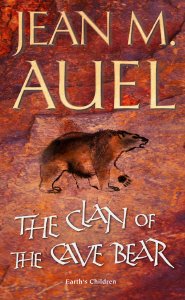
We met last night at Muntaj's house to discuss Jean Auel's The Clan of the Cave Bear and enjoy a nasi lemak supper.

It wasn't a book I'd wanted to read. Couldn't understand why I had such an adverse reaction to the title, only later realised it was probably because of the film poster of Daryl Hannah looking like Ozzy Osbourne.

The book tells the story of Ayla, a cro-magnon woman raised by a group of Neanderthals. Tall, blonde blue-eyed woman springs to the rescue of little ignorant brown people. A racist undertone, and a feminist agenda.

Most of the group enjoyed the book, Jessica (who lead the session) so much so that she's now gone tearing on to the sequels (bought in Times warehouse sale!).

There's no denying that Auel's book is a labour of love, and impressively researched. It is a bold and often fascinating attempt to reconstruct what life might have been like in prehistoric times. Most of us confessed to suffering from information overload at times, and many eyes skipped over yet another description of a herbal remedy. Some of us were bothered by not knowing where verifiable fact ended and fantasy began, and said we'd have rather read an authoritative non-fiction account of the Pleistocene period when different species of human beings co-existed. However, the book has definitely stirred the desire to know more in all of us.

New member Zen had us all laughing when she described Ayla as a Mary Sue - a term which originated in criticism of fan fiction to describe a character portrayed in an idealized way and lacking obvious flaws. Such characters project the wish fulfillment fantasies of the author.

Kumar, master of the soundbite, called the book "the world's oldest sexual harrassment case" and likened the novel to a film where thousands have been spent on special effects, but only a couple of dollars on the plot. We agreed with him that the story was predictable and terribly cliched.

I read halfway and found it a very easy breezy read. I know that a much younger self (14? 15?) would have enjoyed it very much and would have devoured the Earth 's Children series.

But Booksnob-self now kicks in and the thought of the Booker shortlisted titles sitting on my to-be-read shelf is pawing at my heart so I won't be reading on. (But I'm glad Jessica summarised the story of this book and the next for us!)

Started reading Kiran Desai's The Inheritance of Loss (for review) and am so relieved, after Auel, to be back reading beautiful writing.

Tuesday, August 22, 2006

Holiday Reading for a Small Island

My holiday reading for my small island in the sun was ... Small Island by Andrea Levy.

Years ago, I remember a friend from the British Virgin Islands telling me about "island mentality" - how your whole world view is governed by the geography of the place where you grew up and how islanders have a naturally limited world view. The smaller the island, the smaller the mindset.

Which island is Levy writing about? There's Jamaica, geographically small, a far-flung outpost of the British Isles which nevertheless sends soldiers to fight for "the mother-country" in World War Two, and later provides an army of workers to fill the menial posts the British themselves eschew.

Then there's Britain, larger, but still an island. (As someone remarks in the book, everywhere else is overseas from Britain.) And the inhabitants defintely demonstrate a smallness of mind and a deeply entrenched prejudice against those with a different skin colour.

Small Island is the story of four characters: Gilbert who leaves Jamaica to join the RAF when war breaks out and finds himself stationed in Britain; Hortense, a prim and proper school teacher, a dyed-blue anglophile who marries Gilbert simply to fulfil her fantasy of living in Britain; their landlady, Queenie, a kindly and gregarious Englishwoman who escapes the drudgery of being a butcher's daughter to find herself married to a a dull banker; Bernard, her husband, who finds himself framed and disgraced in the war in India. Much of the joy of the book is the interplay of voices, as each character steps forward to tell their own story in an interweaving of past and (1948) present. (Read an extract here.)

I fell in love with Gilbert who speaks in a Jamaican patois (that reminded me of the West indian kids I used to teach) and read the parts of the book he narrated with a big smile on my face (especially the account of his cousin losing the bees that were supposed to net them a fortune). And there is gentle comedy in the growing love between Gilbert and Hortense that absolutely delights.

The novel was up for discussion at our reading group meeting a few nights ago, and of course, I couldn't attend because I was too busy having fun in Langkawi. Muntaj, who coordinates the group sent me an SMS: "We need you here to defend your race!" There's no defense that I can make when confronted with the kind of prejudice the book depicts - I think Levy probably got got it exactly right.

Would I recommend it?

Definitely. A very enjoyable read.

Tuesday, July 11, 2006

Tractors R Us

Our reading group met last night to consider A Short History of Tractors in Ukrainian. Muntaj made us a delicious supper of string hoppers and chicken curry and brinjal and a coconut gravy called sothy. (Thank goodness we don't theme the food to go with the book as some reading groups apparently do: we'd have been eating boil-in-the-bag food!)

Sham led the session, telling us all she had uncovered about Marina Lewycka (I think she took her material from this interview on Three Monkeys). Then the discussion was thrown to the floor. The verdict? Most had really enjoyed the book and found parts of it hilarious. (Myself among them.) The rivalry between the sisters, the difficulties of dealing with elderly parents ... we could all identify with these. We were impressed by the way Lewycka is able to explore serious issues (immigration, aging, abuse) in a book that was so entertaining.

Our little group continues to thrive. We don't get everyone at every meeting but generally 10-12 people turn up which is just about right. (Our numbers swelled to 17 when we did The da Vinci Code and really that felt too many.) We're in our sixth year now, which is some achievement. We did think that we were the longest running reading group in Malaysia, until I discovered that the group Glenda belongs to has been going for 30 years!!!

We've lost Krishna though. Our one and only bloke has changed jobs and has to work nights now. We did have a brief "Oh now he isn't here we can say what we like about him" moment. but our hearts weren't in it, and we missed his wit and wisdom. Sandra, one of our founder members is moving to be with her husband in Langkawi and we'll miss her presence very much indeed. But we have some great new members ...

Tuesday, June 20, 2006

High as Kites

Ugggh! It can't be after 10 a.m. already, can it? I don't know what Sham put in the (delicious!) chocolate mousse last night, but I've only just crawled out of bed feeling like yesterday's left-overs reheated.

(This after two different people told me yesterday "I don't know how you get up so early to post on your blog, day after day"! Sorry to sully my unblemished record. )

Maybe it was brain-burn-out brought on by all the intellectual discussion generated by our reading group meeting last night when Fiction&Friends met to discuss our book of the month at Sham's house - The Kite Runner by Khaled Hosseini.

For those of you who don't know the book, it is the story of two motherless boys (Amir, the son of a wealthy buisness man in Kabul, and Hassan who is the son of their Hazara servant ) who grow up as inseperable friends. Then an act of violence, which Amir makes no attempt to stop, shatters the friendship. Amir's cowardice continues to haunts him, even after he has fled to America, married, and built a successful career as a writer. He is finally given the opportunity to confront the demons of his past in a perilous journey into war-torn Afganistan.

Extremely readable, the book got a firm thumbs up from everyone. Most had had an emotional journey through it, and used up plenty of tissues. (Though not cynical old me.) We loved the setting, which showed us prewar Kabul and gave us cultural insights into a country most of us know only from news bulletins.

(If you've enjoyed the book, you might like to read Khaled Hosseini's fascinating account of his real-life journey back to Kabul to find his father's house after the book was written, only to find how much art imitiates life.)

The dramatic "sin and redemption" theme, the almost stock-villain Aseef, and the obvious contrivance of the plot twists were explained neatly by my reading group buddies. "It's just like a Hindi movie," they all agreed, and being Bollywood fans loved the book even more for that.

Krishna provided the biggest laugh of the evening when he started talking about the events in "the third-half of the book" and couldn't see why we were all falling about. He should have been born blonde.

Wednesday, May 24, 2006

House of Supper and Fiction

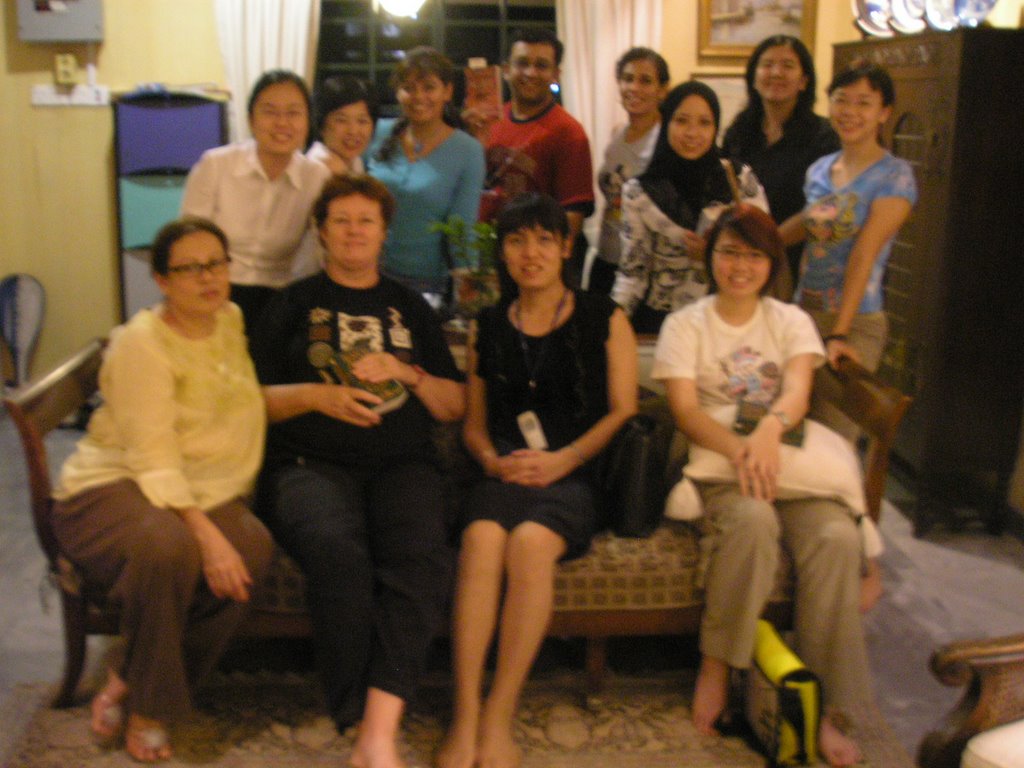
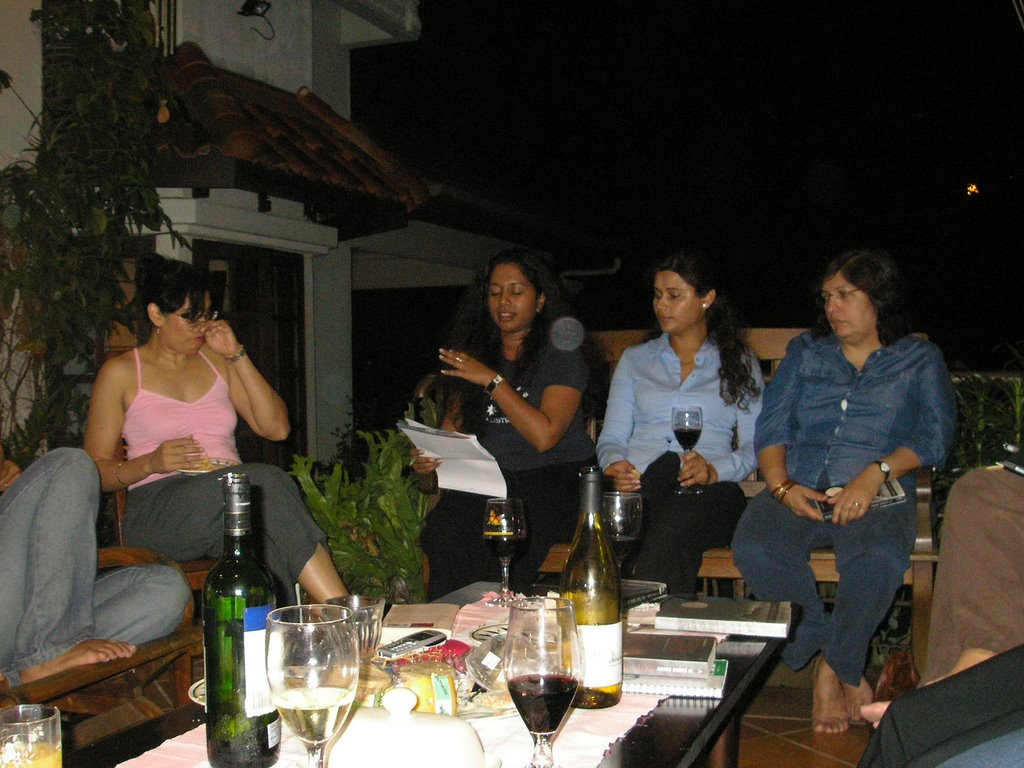
Our reading group, Fiction and Friends, met for supper and booktalk at my house last night. Sarab's choice (which we'd sidelined for several months saying that we didn't want to read "something depressing") turned out to be a real page turner, tightly plotted, and populated with strong characters.

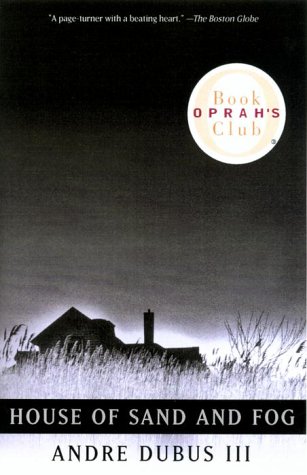
The House of Sand and Fog by Andre Dubus III, is told through alternating first person accounts by the book's main protagonists; Behrani, a former colonel in the Iranian military under the Shah who has been forced to flee by the revolution, and Kathy Nicolo, a self-destructive and confused young woman who is evicted from her house after a bureaucratic mix-up over unpaid taxes.

Behrani buys the house at auction, seeing it as a way of climbing the first rung of the property ladder in America and ensuring economic security for his family. The homeless Kathy falls into a destructive relationship with Lester, the cop who evicted her, spirals into emotional chaos. The struggle over the ownership of the house moves from legal niceities to physical tussle and a chain of events is set in motion which lead inevitably to tragedy.

The whole group gave a thumbs-up to the book, but the discussion was very interesting. I thought both of the main protagonists very strongly drawn and sympathetic, but the rest of them were so passionately on the side of Behrani, (the dignified immigrant, keeping up a front to ensure that his daughter marries well - wasn't this how any Asian father would behave?) that they tended to villify Kathy ("cheap white trash"!). Of course, I felt I honour-bound to defend her, and it made for a lively debate.

But if I had a problem with the book it was that, (like all too many contemporary American novels in my opinion) it felt like it was written with one eye on Hollywood. (And indeed, it has been filmed, apparently very successfully)

Wednesday, February 22, 2006

Magical Realism and String Hoppers

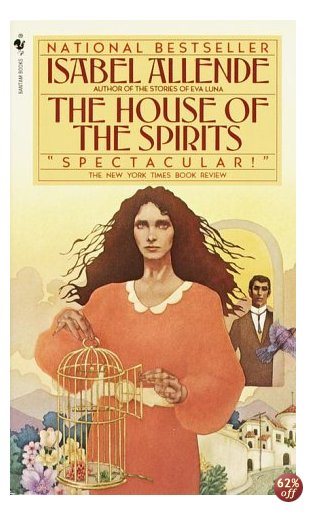
Our book club met last night at Muntaj's house to consider The House of the Spirits by Isabel Allende. I hadn't felt like rereading the novel and my recollection of it was somewhat hazy.

(What remains with you after you read a book? An atmosphere, a vague impression, a memory of how you felt, a web of associations to do with where you were, and who you were with, and the room you sat in when you were reading it? Meanwhile, the story itself quietly slips further and further away ...)

But it was such a pleasure to see the reactions of most of the others, meeting both the novel and Allende's writing for the first time.

There was much laughter over favourite episodes, some had found it 'spooky' in parts since the dead walk around quite comfortably with the living, and Clara emerged as the favourite character. Comparisons were drawn with One Hundred Years of Solitude which we read last year, and overall the Marquez was preferred. 'Magical realism' has taken up residence in everyone's vocabulary now.

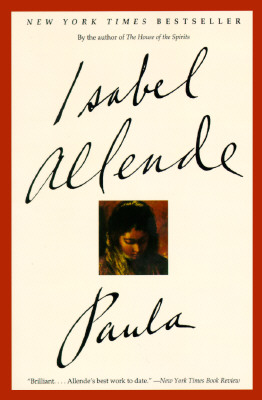
My own feelings about this novel are now very much coloured by having read Paula, Allende's extended letter to her daughter lying in a coma. This book revisits much of the same family history, but also tells Allende's own story. And goodness, this lady has certainly lived a life. You feel so much for this mother, grieving her daughter's slow death in a Spanish hospital, and coping with that pain by telling stories.

Sandra did a great job of leading the discussion and had put a lot of effort into her research, and Muntaj had cooked some delicious curries to go with string hoppers for supper. Many thanks!

Related Posts

On Allende:

Where Do little Stories Come From, Mummy? (23/7/05)

On Our Book Club:

Fiction & Friends (9/11/04)
What Book Lovers Look Like (16/2/05)
From Clouds to Kofta and Kulfi (2/3/05)
Time Travelling (31/5/05)
The Harmony Silk Factory Tour of Perak (21/6/05)
The Buzz on the Bee Book (29/8/05)
Kunzru Makes an Impression (17/10/05)
Ouch! Let Me Go! (17/11/05)
Malgudi Revisited (6/12/05)

Thursday, November 17, 2005

Ouch! Let Me Go!

Warning: if you belong to a book club, never ever ever be absent on the night when everyone is discussing the book that YOU chose to inflict on them. Your reputation will be in tatters.

It happened when Sham's choice The Secret life Of Bees came up. It happened Tuesday night when it was the groups turn to discuss my choice Never Let Me Go by Kazuo Ishiguro which I had thoroughly enjoyed ... and Fiction&Friends ... apparently did not greatly care for.

The following work of fiction was posted on our e-group by our (up that that point) solitary male, our thorn among roses, Krishna Kumar:
In the dimly lit, smoky lounge, 2 women clinked their margarita glasses as jazz music played softly in the background.

"Cheers,darling!" said Sharon.

"To another successful mission accomplished," said Sham, her petite companion.

"Can't wait to hear what they thought of the book."

"Must be ripping it to shreds by now."

"And ripping into me, I shouldn't wonder. Told Krishna I have a do at the British Council. Wonder if he bought it."

"Oh! I'm sure he did. He thinks I'm in Kuantan. A bit gullible that one."

"What is taking that woman so long?" said Sharon with mild irritation.

"Relax. You know.We could have just gone for the book meet and spared ourselves all this suspense."

"Don't you start! Whose brilliant idea was this in the first place? 'Oh Sharon! Let's recommend a book we're sure everyone will hate then not show up but send a spy who reports back everything that was said!' Whose devious brain did this spring from?You started it with the Bee book and I thought I'd get into the act for fun."

"Guilty!" admitted Sham with a sheepish grin.

"Oh! There she is!" said Sharon as Sham turned to see the attractive woman with a traffic-stopping figure* enter the bar, scan the room and then head straight for their table.

"Must have got them fixed," thought Sham glancing at her breasts which were just a tad big in relation to the rest of her.

Hot Babe kissed Sharon and Sham, pulled up a chair and fixed the 2 women with a mega wattage grin. The wattage did not dim when she turned to the waiter and ordered her drink,ensuring its arrival in half the time it would normally take getting to the other patrons.

"Ok girl spill it! We've waited long enough!" said Sharon.

"Aww! Can't I have my drink first?" said Hot Babe who had a voice made to induce erections, but for obvious reasons, had no effect on the impatient women.

"No! You can bloody well start while the waiter with a partial hard-on brings your bloody drink and hope he doesn't drool into it!" said Sharon, visibly annoyed now.

"Chill,sweetie. Ok, here goes. For starters, as you suspected, most of them thought the book sucked."

"HaHa!As expected!" said Sharon triumphantly as she and Sham toasted for the second time joined by Hot Babe a second later, her glass of Long Island Drool clinking the margaritas pleasantly.

"How close were you?"asked Sham.

"At the next table enough to hear most everything," said the babe and then proceeded to pull a notebook from her handbag and started reading:

"Well,Sandra did a good job leading although it was a bit of a chore getting this group to pipe down. Very loud and boisterous with frequent interruptions,especially from the guy."

"Oh, Krishna?" asked Sharon.

"Yeah,pompous windbag who's obviously got an ongoing love affair with the sound of his voice. Sandra had to tell him to shut up at one point."

"Told you we should have kicked him out,Sharon," said Sham.

"He's the only guy we have, darling. And the only one who shows up regularly."

"Well, you may have an alternative. Joanne showed up with her husband.Pleasant, erudite and well spoken chap."

"You're digressing darling, get on with it," said Sharon.

"Sorry,well anyway, Sandra gave some background on Kazuo Ishiguro, his previous books, how they've all been nominated or won some prize or the other but having finished the book she wonders what the fuss is all about. She made an interesting point: There's a seed for a very gripping tale in this book which never comes to fruition. Windbag added that in the hands of a better writer,this tale of students in a boarding school who find out they are clones bred for the purpose of harvesting their organs could have been so much more riveting.Both Muntaj and Sandra agreed that the pace was excruciatingly slow. A major gripe for a lot of people especially
Sandra, Jessica, Uma and Krishna was the passivity of these people. Why doesn't anyone rebel against their fate? Why are they so accepting of the fact that their very purpose of existence was to donate their organs and then die?There followed some comparisons then to the movie "The Island" where a group clones bred in isolation discover their true purpose and 2 of them rebel against the system and how that was a more natural thing given the strong survival instinct inherent in most people."

"The Island huh? That must have come from Krishna.Typical of him to compare a literary work to a brainless Hollywood Blockbuster!" scoffed Sharon.

"Anyway, an interesting insight was given by Joanne and husband,both of whom loved the book: It's a type of Post Modern fiction that doesn't confirm to the linear style of storytelling with a beginning, middle and end.It's a mood piece meant to evoke a feeling, a feeling of helplessness on the part of the reader which could then prompt said reader to question the unsavoury things in his or her own lives which they accept: Bad jobs,relationships,traffic jams, corruption, police brutality, things we know are implicitly wrong but still accept with a passive air of resignation."

"Interesting! Must ask him to come for future meets".

"And then Jessica and Krishna argued that we WILL rebel if there is a direct threat to our own existence, we would fight if we knew our lives or the lives of our loved ones were at stake. As long as things like corruption and bad jobs don't threaten our lives,we'll put up with it. Animah then countered with a point that there ARE people who put up with threats to their lives like illegal immigrants who are frequently harassed and extorted but don't fight back out of fear that they will be deported or killed in a foreign land whose laws they know little about."

"What else?" asked Sham.

"Let's see," said Hot babe turning her pages and scanning them," The characters left most of them cold except Fiona who identified with the narrator and Joanne's husband who could relate to the boarding school environment,having been in one himself ... Animah made a point that she assumed the writing was simplistic, almost childlike as Ishiguro wanted to show the naivety of the narrator, her innocence but expected the writing to mature as the protagonists discover their true fate but somehow the prose never rises above its basic simplicity. Joanne countered the argument that the writing was simplistic by saying that it was a deliberate attempt by Ishiguro to write about something that was truly appalling in a matter-of-fact way, thereby making it even more chilling. Alina was still half way through but likes it so far."

"This lot may put her off finishing it" mused Sharon.

"Sarab and Uma didn't like it as well, wondering what the fuss was about. But Uma said this was still better than the Secret Life Of Bees."

A visible sigh from Sham at this point.

"Oh! One last thing, everyone unanimously agrees you owe a round of margaritas to all, Sharon, as the book didn't walk away with the Booker as you predicted. And Sandra reckons the margaritas better come in jugs on account of the book itself and its failure to engage her in any way," Hot Babe said, getting up.

"Thanks darling, fancy coming to our next reading?" asked Sharon.

Turning on the mega watt smile yet again, Hot Babe replied,"Sorry darling too busy to sit around yakking about books," blew both the ladies a kiss and sailed out of the bar. "Yes, being a tart is a full time occupation," retorted Sharon to the retreating form.

Sham, with a wicked gleam in her eye asked, "So,what do you think girl? Should we pull this stunt again?"

"Let's discuss this over another round of margaritas darling."
*Hot Babe to be played in the film version by Ms. Fishlips Jolie, no doubt.

Tuesday, September 13, 2005

Tickled by Sperm Stealers

Last night our book club met to discuss Roald Dahl's My Uncle Oswald. It's not often that our book of the month is such an enjoyable romp, an effortless breeze, as this fable tale for grown ups about a scam to steal sperm from the greatest minds of the early C20th.
Image hosted by Photobucket.com
It lead us to chat about sperm banks and genetics and how cows are artificially inseminated (thanks Gene Girl for the scientific imput and for raising the tone of the discussion) and whether Oswald's scenario was every woman's fantasy as well as every man's (thanks Jessica and Kumar for lowering it again).

"Well, wouldn't you do Einstein if you had the chance?" was put to the vote and proved that women will try to optimize the biological advantages for their offspring.

I told them about a very good book I'd read on the subject: Sperm Wars by Robin Baker.

Among the fun stuff Baker says: 10 per cent of children are not fathered by their "fathers", less than 1 per cent off a man's sperm is capable of fertilizing anything - the rest is there to fight off other men's sperm, "smart" vaginal mucus encourages some sperm but blocks others, and a woman is far more likely to conceive through a casual fling than through sex with her regular partner.
Image hosted by Photobucket.com
See? And you thought we bookish types were boring!

Our book club is now at optimum size - we have around 10-12 keen people turn up usually and we're all comfortable with each other.

Fiona Wan joined us a few months ago to see how such a group works and has now set up her own group which has its first meeting tomorrow night. She's looking for members, so if you live in the KL area and have always wanted to talk books and make new friends along the way, contact her at fwmching@gmail.com or through her Yahoo group.

Tuesday, August 09, 2005

The Buzz on the Bee Book

Last night wonderful food and booktalk at Jessica's. Gene Girl's choice under scrutiny this month: The Secret Life of Bees by Sue Monk Kidd. (Though Gene Girl herself was missing in action.)

The synopsis from Monk Kidd's website:
In this New York Times bestseller, a young girl's search for the truth about her mother leads her to three beekeeping sisters who take her into their mesmerizing world of bees and honey and of a mysterious Black Madonna. A novel about mothers and daughters and the women in our lives who become our true mothers. A story about the divine power of women and the transforming power of love.

As sweet and sticky as the book it describes!

The group was pretty much divided between the yes-I-enjoyed-its and the no-I-couldn't-stand-its. Our only guy, Kumar, hated it - described it as "oestrogen-soaked" and said it "bored the crap" out of him. (Kumar is fast becoming master of the soundbite.)

I found it a nice, relaxing read to begin with, though thought the humour a little forced. I like the characters, particularly 'The Calendar Sisters' who take Lily in. But the book sags horribly towards the end and I found myself skimming the last third just to get to the end quickly. (As someone said last night "I wanted the Klu Klux Klan and some lynching.") I also found the feminine solidarity theme utterly cloying.

This is Hallmark Channel stuff. (Can just see Oprah and Whoopie Goldberg playing leading parts.) It drips honey and niceness and feel-goodness, but never gives us a convincing account of the inner life of its protagonist.

I think the book might appeal rather more to teenagers, although a much better read would be Carson Mc Cullers' The Heart is a Lonely Hunter.

Tuesday, June 21, 2005

The Harmony Silk Factory Tour of Perak

Our book club, Fiction&Friends, would like to point out a factual inaccuracy on page 13 of The Harmony Silk Factory:

"In 1947, my father installed the first flush cistern and septic tank north of Kuala Lumpur ..."

Jessica is aggrieved because the first flush toilet was in fact installed in her family house in Taiping in 1938. The house was the first one to be built of concrete in the town, and it was commandeered by the Japanese during the war.

Jessica is prepared to open up the toilet for public viewing ... for a fee.

This leads us to discuss the possibility of getting in ahead of Tourism Malaysia and organising our own Harmony Silk Factory Tour of Perak.

After all, something similar has been done in Britain with writers from the Brontes to the Bard.

The tour could take in all the places mentioned in the book and include, not only a visit to Jessica's family throne, but also a romp through the Cameron Highlands (and make it back to Kampar on foot in time for tea),

... a ride on a specially restored tin dredge (with costumed Mat Salleh bosses to shout at everyone) ...


... a now-you-see-it-now you-don't drive through the forest to Kellie's castle with twin sisters hawking fruit by the roadside ...


... and of course an optional boat trip out to the islands ...


... in a highly unseaworthy boat with self-assembly engine and no crew. (For this part of the trip, tourists would have to sign an indemnity clause covering both physical and psychological damage.) Accomodation would be provided in rest houses along the way (bathtowels and pontianak provided).

Think about it - the possibilities are endless!

Seriously, though, we had a really good evening discussing the book. There are many books which we enjoy reading, but which don't lend themselves to a deeper level of scrutiny. The many twists and turns and ambiguities of plot and different viewpoints of The Harmony Silk Factory provided us with one of the liveliest book debates in our three year history.

And how nice it is to read a book in which we recognise Malaysia.

Tuesday, May 31, 2005

Time Travelling

Arrived late at Animah's. ("Sorry I was time travelling.") The others already tucking into delicious Yong Tau Foo. (I'm sure that if Animah ever wanted to stop being a lawyer she could always set up a very profitable stall somewhere.)

It was a most enjoyable evening of friendship, booktalk and conversation. The Time Traveler's Wife was very much enjoyed by the group, even Kumar, the only guy in the group who said he is a real sucker for a romance! Well, well.

Our resident geneticist, Sham, who was leading the discussion anyway, rubbished the science but gave us a talk on genes anyway just to show she knows her chromosomes. We decided that Niffenegger should have used theories of physics rather than biology to convince us that time travel was possible (we have a vacancy for a resident quantum physicist!) ... but suspension of disbelief is the main thing anyway, this is fantasy.

Interesting point raised: if the gender roles in the book had been reversed i.e. the woman was the time traveller, would the book still have worked? Would a husband have waited so faithfully for his time-travelling wife?

Also, if your husband slipped back in time to make love to your 18 year old self with a perfect body, would your thirty-something self get jealous?

Also, how could Brad Pitt and Jennifer Aniston possibly play the leads in the film. (Kumar votes for Angelina Jolie ... but then he always suggests her for every film role.)

Our evening ended (as usual) with Jessica's tales of the haunted houses of Bangsar, complete with tales of bodies in suitcases, bodies in drains. She's such a good story teller, although of course embroiders for effect. I think she could make a killing (no pun intended) if she started Ghost Tours of Bangsar much like the ones we have in London. She certainly knows all the local haunts!