The feeling is there is a very clear line of demarcation between the two things. With crime, romance, science fiction, we are considered to be writers within a formulaic genre, whereas literary writers are considered to be 'moving freely', as it were. ... There has always been a feeling that literary fiction is improving, that you come away from reading it and you're a better person for it. No one ever said that about reading a crime novel – although maybe you come away feeling happier.
... a story about murder, deceit, police corruption and politics set amid the Black Saturday bushfires in Victoria.
Could Britain's top literary prize, the Man Booker prize ever go to a crime novel? asks Alison Flood in The Guardian. She talks, among others to critic John Sutherland (who feels it is unlikely) and crime novelist Ian Rankin (who feels that attitudes to crime fiction are changing.)
Temple says in the article that writing crime was just :
... an excuse to write. ... It gives a sense of urgency, of narrative drive. My characters have a reason to get up in the morning. Ian McEwan, who I think is wonderful, his characters do not really have an urgent reason to get up in the morning ...
And he feels that:
There is only one judgment for the value of a book, and that is what sort of emotional response it elicits in the reader. That's down to the quality of the writing.
It will certainly be interesting to see what happens when Temple's novel is submitted for the Booker this year!
When entry criteria for the prize changed in 1971, books published the previous year were ineligible. Peter Straus, honorary archivist to the Booker Prize Foundation comments :
I noticed that when Robertson Davies's Fifth Business was first published it carried encomiums from Saul Bellow and John Fowles both of whom judged the 1971 Booker Prize. However judges for 1971 said it had not been considered or submitted. This led to an investigation which concluded that a year had been excluded. I am delighted that, even in a Darwinian way, this year, with so many extraordinary novels, can now be covered by the Man Booker Prize.
But now a team comprising newsreader Katie Derham, poet and novelist Tobias Hill and Observer journalist Rachel Cooke (pictured above ... and all born around 1970) have put together a longlist of 21 titles :
Brian Aldiss - The Hand Reared Boy
Paul Bailey - Trespasses
H.E.Bates - A Little Of What You Fancy
Nina Bawden - The Birds On The Trees
Melvyn Bragg - A Place In England
Christy Brown - Down All The Days
Len Deighton - Bomber
J.G.Farrell - Troubles
Elaine Feinstein - The Circle
Shirley Hazzard - The Bay Of Noon
Reginald Hill - A Clubbable Woman
Susan Hill - I'm The King Of The Castle
Francis King - A Domestic Animal
David Lodge - Out Of The Shelter
Iris Murdoch - A Fairly Honourable Defeat
Shiva Naipaul - Fireflies
Patrick O'Brian - Master and Commander
Mary Renault - Fire From Heaven
Ruth Rendell - A Guilty Thing Surprised
Muriel Spark - The Driver's Seat
Patrick White - The Vivisector
The past also looks different once formerly low-ranking kinds of writing rise in our esteem. JG Farrell would go to win with Booker in 1973 (for The Siege of Krishnapur), but in general his brand of richly researched and densely plotted historical fiction would not see its critical stock inch up until well into the next decade. As for the presence of Mary Renault on this shortlist, it indicates a fairly recent willingness to celebrate high-quality bestsellers for literary as well as commercial reasons. Yet change can still be slow. A contemporary equivalent of her much-admired tale of the young Alexander the Great would still struggle to make a Man Booker shortlist today.
Literary fiction he says, usually turns out to be historical novels (and that is certainly true of most of the books on this year's shortlist) :
In his original piece published in New Scientist (and very well worth reading) he says :
... these novels are not about now in the way science fiction is. Thus it seems to me that three or four of the last 10 Booker prizes should have gone to science fiction novels the juries hadn't read. Should I name names? Why not: Air by Geoff Ryman should have won in 2005, Life by Gwyneth Jones in 2004, and Signs of Life by M. John Harrison in 1997. Indeed this year the prize should probably go to a science fiction comedy called Yellow Blue Tibia, by Adam Roberts.
And he throws down this challenge to the magazine's readers (I reckon its one we could all take up) :
Read science fiction, read historical fiction, make your own judgement, and then talk about it. Try this as a kind of experiment: read 30 writers new to you. It's a big project, but what a lot of good reading would come of it. And New Scientist readers will be quickest of all to see that the literature that best expresses our time, that speaks to our time, is science fiction. How could it be otherwise? Our world is a science fiction. ... This is important, because you need the literature of your time. You can't get the meaning of our life in 2009 from historical fiction, nor from science alone. Novels serve us, and are treasured, because we want meaning, and fiction is where meaning is created. Scientifically minded people could perhaps conceptualise novels as case studies or thought experiments, both finer grained and wider ranging in their approach to meaning than cruder genres such as religion, psychology or common sense. A literary life is an ongoing moral education, a complete geography of the human world.
Incidentally, New Scientist also announced a Sci-Fi flash fiction competition, and nowhere in the rules does it say that it isn't open to international readers - so go for it.
iScience-fiction writer Chris Beckett has won The Edge Hill Prize, awarded annually for a single author short story collection by Edge Hill University. Others on the shortlist included Booker winner Anne Enright and Whitbread winner Ali Smith.
You can read an extract from Beckett's collection, The Turing Testhere.
Beckett says he was still pinching himself at the win, and added :
I ... thought that being a science fiction writer could count against me: a lot of people don't like it, or look at it in some way as less than literary fiction. It's a little blow for the genre, as well as for me – it might persuade a few people that maybe it's worth looking at.
Judge James Walton said that Beckett's entry had been the most enjoyable and impressive read:
It was Beckett who seemed to us to have written the most imaginative and endlessly inventive stories, fizzing with ideas and complete with strong characters and big contemporary themes. We also appreciated the sheer zest of his storytelling and the obvious pleasure he had taken in creating his fiction.
Self-nominated minute-taker KayKay put a lovely write up of our book club discussion of Tom Rob Smith's Child 44 on our e-group, and I hope I don't mind if I share it with all of you. (He also reviewed the novel for The Star.) :
As I sit and write this, buoyed by generous lashings of wine and sated with multiple helpings of string hoppers with delicious "sodhi" and chicken curry, I keep thinking if a thriller is an apt choice for a book club discussion. After all, as a genre, it is severely restrictive in the sense of what it needs to accomplish. It MUST thrill, pure and simple. Fancy wordplay, fleshed out characters and atmospherics, those tropes favoured for lengthy dissertations, are in a thriller, purely secondary to it's ability to keep the readers hooked to a plot that, out of necessity, must be breathlessly exciting, pacy and preferably twisty with multiple reversals before a riveting denouement that ties up all loose ends.
Looking at my jottings of the various opinions put forth in our as usual febrile discussions of Tom Rob Smith's Child 44, one common factor that stands out is that it's not an especially well written book, making it's inclusion in a Booker Long-List that much more puzzling. As writers like James Lee Burke, John Connolly and Thomas Harris ably demonstrate, good writing needn't be concomitant to an engaging plot. So why this book over other far superior ones made the Booker long list cut?
As Sham (in her book club swan song) pointed out in a summation reeking of contempt, lots of things happen in this book, and she longed for it to happen in a better written one. Ditto Uma and Jessica who felt the writing was contrived.
As someone who devours thrillers (I average one every fortnight) it now comes to a point where unless a skilled hand is behind the telling, I can usually see a twist coming a mile off, as I did here, echoed by Diana (our new member) who didn't find it engrossing in the least and found the ending a little too pat.
Sharon took issue with the multiple points of view on display in this book while Alina felt the violence very dark and gratuitous (although I must interject here and say this is pretty much de rigueur for most thrillers being written today) and the book's tone hollow while finding Smith's depiction of an oppressive regime anything but compelling.
In addition to being a lovely host, thanks to Alison for pointing out the "gay" sub-text in Child 44 (Vasily's obsession with Leo, persecution of homosexuals etc), something my all but dormant "Gay"dar would never have picked up (I frequently pause in typing this to slap my forehead).
Taj and Alice probably encapsulate my thoughts best in finding the book a thoroughly entertaining read with nary a wasted word. It has a gruesome beginning, engrossing middle and a twisty end with doors left wide open for a sequel.
I pride myself on soundbites, but it's Sharon who delivered the best one for the night; after the constipation of overtly literate books, this au fait airport thriller debut from Tom Rob Smith is a perfect laxative:-)
I am actually missing Child 44 now I've finished it. It was such a lovely easy romp of a read - just what I need at the moment - and the dramatic tension never flags. It should emphatically not have been Booker longlisted even, because it really isn't literary fiction. (Though if it hadn't been nominated, would I have read it?)
But I did very much enjoy it as a thriller, and was even able to forgive the improbable workings of the plot. It would be the ideal read for a very long flight, and I expect to see a really good film made from it soon. (KayKay says Ridley Scott is on the case.)
Here's Tim Rob Smith reading from and talking about the book :
Incidentally, the next read the group has decided on (The Brief Wondrous Life of Oscar Wao) also takes place - at least partly, under a very oppressive regime, in a climate of fear - this time in The Dominican Republic so there is still no escaping this accidental theme that seems to have wrapped itself around us.
The post-mortemising of the Man Booker longlist has been playing out on the book pages and on the Booker bulletin boards, and these are so far the biggest controversies.
"So what?" is my response, all that matters is that it measures up in terms of the quality of writing.
I wouldn't say this is the first thriller on the Booker longlist, as Brian Moore's 1990 shortlisted Lies of Silence fits the bill very nicely ... except that it wasn't called a thriller, because to call it a thriller would be to pander to the masses who aren't up to litfic.
I argued against such snobbish pigeon-holing here and I'm already grateful to Child 44 for widening the conversation.
In the Telegraph Andrew McKie goes along to the Arthur C Clark Awards, and takes a shot at those who turn their literary noses up at the genre. :
Most people who read fiction do not read any science fiction: or so they will tell you. Yet when I express surprise that they have never read Nineteen Eighty-Four or Brave New World or Frankenstein or A Clockwork Orange, they concede that yes, of course they have read those. The unspoken assumption is that these books have ceased to be science fiction by dint of being, well, good.
This distaste for an entire genre is remarkably common, and clearly strongly embedded in a lot of readers; yet one does not encounter any of the same antipathy towards, for example, crime fiction. All the same, you may find that you have read a lot more science fiction than you think during the past few years.
The Time Traveller's Wife by Audrey Niffenegger, The Book of Dave by Will Self, Cloud Atlas by David Mitchell, Never Let Me Go by Kazuo Ishiguro: these are all SF books. The last was shortlisted for the Clarke award in 2006 (won in the end by Geoff Ryman's magnificent Air, a science fiction book that could easily be enjoyed by anyone who doesn't like science fiction) and also for the Man Booker.
and he declares himself :
... on the side of the SF writers and readers; unlike the readers of "literary" fiction they at least understand that the fact that there is a spaceship in a book does not prevent it from being well written.
One author he strongly recommends is last year's winner of the award M John Harrison, whom he describes as one of the best British novelists and says it is a disgrace that he has never been shortlisted for the Man Booker or the Costa. This must, I think, be checked out by this litsnob.
The shortlist for the Arthur C. Clarke award for science fiction has just been announced and the finalists are:
The Red Men - Matthew de Abaitua The H-Bomb Girl - Stephen Baxter The Carhullan Army - Sarah Hall The Raw Shark Texts - Steven Hall The Execution Channel - Ken MacLeod Black Man- Richard Morgan
Tom Hunter, administrator for the award points to the great diversity of the selection :
Featuring visions as diverse as a dystopian Cumbria and a future Hackney, time-travel adventures in 1960’s Liverpool and an alternate world British Isles in the throes of terrorist attack, through to tech-noir thrillers and a trawl through subconscious worlds where memories fall prey to metaphysical sharks, the Clarke Award has never been so close to home and relevant to the British literary scene.
Any collapsing of imposed literary boundaries heartens me and the possibility that writers might be freer to exercise imaginative versatility is tremendously exciting.
I've heard so much about The Raw Shark Texts, described by Lindesay Irvine as :
... an exuberant fantasy about a man whose memory is being eaten by a psychic shark ...
and it's on my must read list along with Sarah Hall's. (It also appeared time and again on lists of books of the year in 2007, I recall.)
Stephen Hall says of his novel :
The book has been described as a thriller, a romance, metaphysical adventure, part of the new horror revival, slipstream, fantasy, postmodern psychological mash-up, and science fiction too ... I'm happy with all those descriptions because I've always felt that it isn't a writer's job to tell a reader how to read. If a reader decides my book is science fiction, then it is. That works for me I'm glad it worked for the judges and, who knows, it might even get me one step closer to writing that episode of Doctor Who*...
Of the other titles, Irvine says that they are more mainstream sci-fi :
Matthew de Abuitua's The Red Men follows an uneasy employee of a giant corporation manufacturing androids as part of increasingly authoritarian operations. Ken MacLeod's The Execution Channel places an IT man working undercover for the French in a Britain dominated by American power while Richard Morgan has described his novel Black Man as a "detective(ish) novel" looking at the social fallout from genetic engineering.
(* Oh I do love Doctor Who too, and am very proud that I have been a fan since the very first episode back in ... gulp ... 1963! And I can't beleive how glitzy and exciting and funny the more recent episodes are ...)
But I love this definition that she takes from David Lubar :
If you’re ever in doubt about whether a story is literary, there’s a simple test. Look in a mirror immediately after reading the last sentence. If your eyebrows are closer together than normal, the answer is yes.
She says that she herself does not much care for the label:
Personally, I dislike the term literary as I feel it’s much too broad and doesn’t do justice to the variety of voices involved in telling the stories that fall into the category. Those who say they enjoy books that are literary will agree that they are distinguished by their high quality of writing – writing that is evocative and provocative, original and daring. It is certainly not formulaic. And this means that it’s virtually impossible to predict the kind of story told by an author who is dubbed literary.
It's really just a term of convenience, isn't it? Herding buffaloes into a pen and books onto an appropriate shelf in the shop. And as someone pointed out long ago on this blog, there is far less segregation of books in American publishing. (I think we Brits like to hold on to our various snobberies for as long as possible. Class distinctions don't hold true anymore, so let's transfer our sniffiness to books.)
For me it’s a question of a satisfying read. I can no longer enjoy something simple and formulaic. I want to be both entertained and surprised. I want to read something that touches my heart so much that I can never forget the experience. I want to be in the company of someone more intelligent than I am, who can show me new things about the world and make me see things in a different way. I want to believe fully in the characters I read about, care about them, and enter into their world. I want to be delighted by the language to the extent that I find myself rereading passages for pure pleasure.
Call that what you like.
Anyway, the wisest and most wonderful people in the Malaysian literary universe (including - ahem - myself) come up with lists of favourite literary books.
And always there's the compulsion to compare your own reading against the lists of others.
Mine looks more low-brow than the others. Damn.
Should have nicked a few titles from Preeta's list - I love Midnight's Children and think it changed the landscape for many later authors, Michael Ondaatje's The English Patient is a novel I really love too and have read twice with a hunger now to read it again. And Preeta shares my love for Peter Carey - great!
Spot on, the way Tan Twan Eng describes Ian McEwan's writing:
... his diamond-hard prose buffed to a shine. Like swallowing a cold drink too quickly and feeling the pain hit the centre of your forehead.
Oh yes. (I'm reading Atonement at the moment and it is so beautifully evocative that I feel sad at leaving one page behind to move onto the next. But I have the sicky feeling of dread as I always do with McEwan, knowing as always in his books that the unthinkable is just about to happen ...) I'd go with Janet Tay's enthusiasm for Coetzee (but - note to self - need to do some urgent catching up on his more recent titles), and Bernice's choice of Fugitive Pieces by Anne Michaels, and Jennifer Gabriel's love of Jeffrey Eugenides' Middlesex. (I knew there had to be a real serious bookaholic in charge of Kinokuniya's excellent literature section!)
Amir's list reminds me that it's time to reread Nabokov's Lolita, as well as catch up on some of his short stories, and that belatedly I'd better start reading Flaubert and James Baldwin.
Too many books. Too little time. Whatever label you want to stick on 'em, why not go just for the best?
Whether you end up writing literary fiction or more low-brow stuff might depend of the level of pollution in the air that you breathe!
Author Joan Brady, who won the Whitbread (now Costa) Prize in 1993 with her book The Theory of War, has just received an out-of-court settlement of more than £100,000 after she claimed to have become so intoxicated by fumes from a nearby shoe factory that she was unable to concentrate on writing her highbrow novel, Cool Wind from the Future, and instead wrote a brutal crime story, Bleedout, which she says she found easier.
Should we expect a glut of popular fiction, then, if the haze comes back?
I really would have been in a wheelchair if I hadn't done something ... I started to go numb in my legs. I could stick needles into my shins and feel nothing. I couldn't drive because my legs were so numb. I was terrified.
She was diagnosed with toxic peripheral neuropathy. most probably from the fumes in the glue.
What surprises me most in this case is that it happened not in some big industrial city but in Totnes, an idyllic little town in South Devon where I've even dreamt of settling myself ...
Rowling's reported wealth would rise this year to £545m, but the reality of literary life was rubbed in when, last March, a survey of some 25,000 authors revealed that the typical British writer earned only about £4,000 a year (significantly less than the £6,300 reported in 2001). Blogging and the internet might have liberated the writer from the garret, but it seems that you still cannot take the garret out of the writer.
He also slips in this, which will no doubt delight many of you:
From some points of view, 'literary fiction' is becoming as much a genre as science fiction.
And I was always snobbish enough to think that it was at the burning sun centre of the universe with everything else in orbit, dreaming of becoming it!
He did close his eyes. He closed his eyes and he turned his head and he raised one hand to fend away what could not be fended away. Chigurh shot him in the face. everything that Wells had ever known or thought or loved drained slowly down the wall behind him. His mother's face, his First Communion, women he had known. the faces of men as they died on their knees before him. The body of a child dead in a road-side ravine in another country. He lay headless on the bed with his arms outflung, most of this right hand missing. Chigurh rose and picked the empty casing off the rug and blew into it and put it in his pocket and looked at this watch. The new day was still a minute away.
I actually didn't mean to read Cormac McCarthy's No Country for Old Men next, especially not as I have half a dozen other books on the go. But I bought it in Singapore and then thought I'd just glance through a page or two when I was at the airport.
And then the damn thing wouldn't let go of me.
It was all very well for Kaykay to laugh at me the other night about the book being so not "my thing", being very much a blokes book, being a modern day western, being so unremittingly violent and all that.
But this book is excellent.
Any synopsis of the plot is going to make the book look like pulp fiction. But what makes the book absolutely remarkable is the terse, spare writing, the crisp dialogue and the way that each page crackles with tension. It's so cinematographic that I can't think that the Coen brothers had to do too much work to bring it to the screen. (Although they seem to have done a pretty good job!) :
Then there's the depth of characterisation, and the deeper questions about free will versus determinism, and the nature of good and evil.
Anton Moss, a welder and ex-Vietnam vet, is out hunting antelope in the arid scrub near Rio Grande when he stumbles into the aftermath of a gun battle in which the members of a drug convey have been slaughtered. And then he finds a suitcase with a cool $2.4 million inside.
Soon he is a fugitive fleeing from the hired gun, sent to retrieve the money, an icy-cold psychopath called Anton Chigurh (the name rhymes with "Sugar" ironically) who has a perverted sense of moral justice, a real angel of death who models himself on God. Chigurh decides the fate of his victims with a flick of a coin and calmly dispatches them with a stungun of the sort used in slaughter houses.
And then there's Bell, a small town sheriff struggling to do the duty he is entrusted with in a world that seems to be changing steadily for the worse. He is also doing his best to track Moss down before it's too late. The narrative of the novel alternates between omniscience and chapters where Bell is given free-reign to talk about his own history and philosophy of life in monologues that read like something from Studs Terkal's classic oral histories. Bell is a good man but he doesn't really have his finger on why the world is going to hell in a hand basket, even though he can see that it is.
To complicate matters, a special forces agent employed by a powerful cartel is also hot on Moss' trail. (This is the guy who meets his sticky end in the extract above!) And there's Moss' young wife, who also needs to do a runner with her dying mother to avoid being picked off by Chigurh.
Although The Roadwas probably the most powerful novel I've read this year, I think this novel is far better from the technical point of view. And although McCarthy's use of punctuation is every bit as eccentric here, it seems to fit with the way the Texan dialect is written and doesn't grate as it does in The Road. (I did though sometimes get lost in dialogues, since there is no indication of who is speaking.) And thankfully, there are fewer choppy sentence fragments of the kind that had me gritting my teeth.
I guess I'll be reading backwards through some of those earlier novels now.
I don't usually link book reviews until I've read a book and made up my own mind about it, but I really enjoyed Ursula Le Guin's review of Jeanette Winterson's The Stone Gods , particularly as it talks about the interface between genre and literary fiction:
It's odd to find characters in a science-fiction novel repeatedly announcing that they hate science fiction. I can only suppose that Jeanette Winterson is trying to keep her credits as a "literary" writer even as she openly commits genre. Surely she's noticed that everybody is writing science fiction now? Formerly deep-dyed realists are producing novels so full of the tropes and fixtures and plotlines of science fiction that only the snarling tricephalic dogs who guard the Canon of Literature can tell the difference. I certainly can't. Why bother? I am bothered, though, by the curious ingratitude of authors who exploit a common fund of imagery while pretending to have nothing to do with the fellow-authors who created it and left it open to all who want to use it. A little return generosity would hardly come amiss.
Expect the literary types to acknowledge a debt to genre writers? Dream on!
Was amused (because I'd never given the matter much thought) to read about:
... the device known to science-fiction writers as "As you know, captain . . ." These are the scenes where one character explains to another character all about something the other character obviously knows. Realistic fiction, dealing with the familiar, seldom needs such a device, but imaginative fiction often has to explain what a hobbit or a light year or a limbic pathway is. And so we get dialogue beginning: "Oh, Spike, you know the theory," followed by a lecture on the theory. But even in the lectures Winterson's tone is lively.
Le Guin clearly approves of this literary author's foray into sci-fi!
Iain Banks's new book... is variously described. An invitation to the related `The Herald Sunday Herald Book Series' event calls it `his first literary novel in almost five years' -- as distinct from illiterary novels like The Algebraist (2004)? ... Private Eye's phrasing is `Banks's first "proper" novel (as opposed to the sci-fi stuff he turns out under the name of Iain M. Banks) for five years.' ... And Radio 4's Saturday Review, after acknowledging this author's habit of alternating the `terrestrial' and the `intergalactic', went on to say: `The Steep Approach to Garbadale is his first novel for five years ...'
Glenda has her own interesting tale of prejudice closer to home:
When I first had books published in Australia, they were unavailable in Malaysia, because I couldn't interest the publisher's distributor in supplying them to book shops here - Australian books, he said, were too expensive for the Malaysian market.
But I was being well-reviewed in Malaysian newspapers, so I approached a bookshop in Bangsar. I also wanted a bookshop I could send people to when they asked where to buy copies. I offered the proprietor a win-win solution. I was willing to supply the books, and he didn't have to pay me until they were sold. He refused the offer, and told me that he didn't stock non-literary works and the kind of people who read 'those' kind of books (i.e. trashy fantasy?) didn't come into his shop anyway.
While saying goodbye to him, a customer caught sight of the sample book I had brought along, started talking to me - and bought the book from me, right there in the shop where 'people who read those kind of books' weren't supposed to shop, right under the nose of the proprietor.
The next time I was in that bookshop, I saw he had copies of Harry Potter all over the place.
I believe it was Oscar Wilde who said "There are only good books and bad books."
Go and grab a book in a genre you don't normally read, today!
If Dickens were alive today he would be writing genre fiction or churning out soaps for TV.
Discuss with reference to at least five episodes of CSI London.
Okay, okay I'm being completely fascetious. I'm as guilty as anyone. of not taking genre fiction as seriously as that which we dub *"literary fiction" a.k.a. the real stuff, the hardcore.
What is it, when Man Booker juries meet, that makes genres "inferior"? ... Why is crime writing, with its "very conscious structure" and ability to raise "big moral issues" outside the box of introversion, such a poor relation of "literary fiction"?
Truth is, a "very conscious structure" to me reeks of predictability and formulaic writing.
Give me genre fiction that subverts the genre and I will be thrilled. Just as I'm thrilled to read the "literary" novel which breaks new ground.
Give me an elegantly turned plot, language that's so rich I want to drink it, characters I can care about, deeper issues to keep me awake at night just wondering, wondering. And I won't care what kind of fiction you call it.
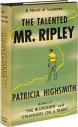
There are crime writers who manage it. Patricia Highsmith's The Talented Mr. Ripley, for example, caught me completely off balance - how does she get the reader to side with the truly despicable Ripley? Yet we do. And in the process are forced to confront our own definitions of "moral behaviour".
Yet I really don't think it's true to say there is no genre fiction on Booker shortlists - it's just that the kind of authors who make it that far tend to play with the narrow definitions of genre. Is Margaret Atwood's The Blind Assassin science fiction or detective story? Both and more.
Atwood has also written some of the best "speculative" fiction (i.e. sci-fi that could happen) - the chilling Oryx and Crake (nightmares free of charge) and The Handmaid's Tale (so prophetic in it's vision of the religious extremism sweeping America).
Cloud Atlas by David Mitchell on last year's shortlist wraps a story within a story within a story and incorporates several genres - thriller, fantasy, comedy ... and each one superb.
Julian Barnes Arthur and George is a historical novel which is also centres on the solving of a crime.
In the end it isn't so much a choice between Literary fiction and genre, as between the straightforward and fomulaic and the multilayered and surprising.
I know which I'd rather have!
(*By the way, hadn't really realised until Tash's talk at Silverfish that American fiction does not recognise such artificial distinctions.)
Postscript:
Even deep-end litfic types dabble in genre. The Elegant Variation has the news that Banville is headed in that direction next.