Showing posts with label japanese authors. Show all posts

Monday, August 04, 2008

Murakami the Runner

A notable difference between Murakami and the other athlete-writers or writer-athletes, though, is that, for the Japanese novelist, pounding the pavement is more than something he does to fill the hours when he’s not busy pounding the keyboard. He considers it essential to his writing career, partly because it has given him the health and endurance to complete novel after novel, but in more subtle and far-reaching ways as well. Murakami fans (who number in their millions) will already be well aware of this connection between writing and running. He has written plenty of articles about it over the last two decades, and has been profiled in glossy magazines for runners, who seem to be tickled by the idea that such a celebrated author should share their world of cramps and aching knees. ... Running, Murakami explains, was a vocation that came to him not very long after his relatively late start as a writer.
Kevin Jackson in The Times looks at :
...a cult writer’s obsession with pounding the pavement when he’s not pounding the keyboard.
Murakami's new book is What I Talk About When I Talk About Running.

Tuesday, July 01, 2008

Unscary Translations

We're less afraid of tackling translated fiction these days, says Stuart Evers on The Guardian blog, and attributes this in no small part to the popularity of Japanese author, Haruki Murakami who proved that foreign fiction didn't have to be difficult and inaccessible, and so paved the way for others :
The Murakami effect has obviously benefited other Japanese writers such as Ryu Murakami (no relation), Hitomi Kanehara and Natsuo Kirino, but it's also helped people cast off negative preconceptions. Carlos Ruiz Zafon's Shadows of the Wind was a number-one bestseller, proving sales and translations are not mutually exclusive. This is especially true of crime writing, with more and more foreign novels appearing in translation. Henning Mankell, Jo Nesbo, Anne Elliot, Boris Akunin and the irresistible Fred Vargas deliver unusual and compelling novels and are valued as highly as their English-writing contemporaries.

Tuesday, June 12, 2007

Fiction Sushi

Our Japanese friend Naho is leaving Malaysia. She's been a member of our book club for several months, and we're going to miss her. But by way of a send-off, we decided that for last night's meeting we should go Japanese.

That meant that supper had to be Japanese too! Muntaz put together black pepper udon, garlic rice, miso soup, tempura vegetables and a big platter of sushi. Everyone who came brought more and more sushi. I cooked salmon with vegetables baked with sake and shoyu (from a recipe book Mercy gave me a few birthdays back). Naho made a rice dish which she said was another type of sushi. We ate and ate until we weren't sure if this was a group for discussing books or a group simply for eating!!

But then it was down to business. Since we'd found it hard to get multiple copies of any one Japanese novel without a few weeks wait, we had decided to do things differently. We could each choose any novel by a Japanese author to discuss. Our discussion gave us an idea of the range and diversity of Japanese fiction from traditional classics to contemporary popular fare.

Muntaj, Shashi and Naho had all gone for Snakes and Earrings, Hitomi Kanahera's award winning debut novel. The nineteen year old protagonist is into body-piercing, sado-masochistic sex, and appears to have no purpose in life. "Aren't the parents worried?" as Muntaj. Apart from parental concerns, all three readers felt the book was well-written and well-translated.

Alison had read Yukio Mishima's Forbidden Colours, which she described as a thought-provoking, semi-autobiographical novel about how we all become fools in the face of beauty. Sham had read Mishima's After the Banquet which she described as "more political".

Of course, no discussion of Mishima could be complete without getting on to his gruesome, politically motivated suicide, which Naho said had made her unwilling to read his books. And then of course conversation wandered onto the subject of Japanese suicides in general (30,000 last year).

Out by Natsuo Kirino met with Kaykay's approval, being sufficiently "dark and macabre" for his taste. But, he added, there isn't a single male with a redeeming feature in sight! Out won Japan's grand prix for crime fiction and was a finalist for the Edgar Award in 1997.

Uma also went for popular fiction and chose Strangers by Taichi Yamada, a ghost story with "a great plot" but which read rather like a screenplay.

Renata had Kuniko Mukoda's The Name of the Flower, a collection of short stories a which she said was "short, concise, but told you a lot about Japanese women's lives" while Joanne had enjoyed Banana Yoshimoto's Goodbye Tsugumi.

Animah, a long-time fan of Japanese fiction, said that is she had to pick a favourite it would be The Makioka Sisters by Junichiro Tanazaki, a book about four sisters in which, she said "nothing happens, but I couldn't but it down because the characters were so real".

And my choice? Thousand Cranes by Yasunari Kawabata, chosen simply because it has been sitting on my TBR shelf for years and might never be read! I found the novella intriguing - centered on the tea ceremony, it is a passionate story about a young man who finds himself caught between his late father's ex-mistresses. One is scheming and evil, the other (20 years older) becomes his own lover. I enjoyed the way that there is a polite surface to all the interactions, with so much smouldering beneath and a great deal more implied. Naho has read it in Japanese and reckons that it must have been a difficult book to translate. Nevertheless, the prose is elegant and restrained, and some of the descriptions reminded me of haiku. (Sham read The Master of Go by the same author, but did not find it as accessible as her other choice.)

So all of us went away with a list of other Japanese novels we now know we'd love to read and a wider knowledge of just what's out there. And this very different way of conducting our monthly meeting turned out very well for us, and I think will have another themed evening sometime.

Incidentally, I've had a few emails from people asking if they can join our group. We actually have an optimum number of members and the group dynamics are just right. (It's taken us quite a while to get to this point.) But I would say to you, go ahead and form a group of your own because it is a great way of making friends and motivates you to read books you normally wouldn't have touched. Perhaps I should write a bit more about the hows of forming such a group in another post?

Wednesday, September 27, 2006

Murakami the Magician

If the Japanese literary establishment is still (mysteriously) sniffy about the credentials of Murakami, the amount of recognition his works are winning abroad ought to turn the tide.

His latest novel, Kafka on the Shore was shortlisted for the Independent Foreign Fiction Award back in January. And now his collection of short fiction Blind Willow, Sleeping Woman has taken the Frank O'Connor Short Story Prize (which he shares with his translators).

According to the Guardian:
"Murakami writes with great integrity" said the judges "unafraid of dealing with tough and difficult situations between people who constantly misunderstand each other."

They praised the "terrific sense of magic" of his "truly accomplished voice", his "contemporary ability to create extended monologues of fear" and the way his stories push "deeper and deeper through layers of meaning". "Long after reading his stories, the images and situations he constructs remain unforgettable ... His writing reminds us, ultimately, that the reader comes to published work in search of magic."
Ted is understandably happy, I'm sure, and you can find his review on the Star website.

Thursday, September 07, 2006

My Friendly Guides to Japanese Literature

And talking as we were of Japanese authors ...

The other day Swifty pointed the way to a very interesting piece written by his friend Justin taking issue with Kyoko Mori's list of essential Japanese reads in Salon.com. Justin's alternative list is here.

Now I'm happy to admit areas of ignorance, and Japanese literature is a big one. I resolved to do something about that some time back, but somehow haven't yet got round to it. (More effort needed here, girl!)

Cue a story:

Just after the Litfest I had dinner at House of Sunda with my friends from the Japan Foundation and the guest writer they had brought to the festival, haiku master Kyoji Kobayashi.

The reason for the dinner? It was a hastily arranged affair (organised by Lorna Tee who was working with me) intended in some small way to make amends for Mr. Kobayashi's name being left out of the official programme booklet and the very real hurt and embarassment it had caused. Ouch ouch and ouch again.

Apology is taking responsibility. Hospitality smooths over hurts.

Paul Bailey was also taking a couple of extra days in KL (wanting to recover from jetlag acquired flying from the UK, before he had to fly back to the the UK again!) and was holed up in his room at the Renaissance beavering away on his next novel. I was scared that he was feeling lonely and invited him along as well.

Paul is a great supporter of literature in translation and a jury member for the Independent Foreign Fiction Award, and I was most impressed - and clearly so was Mr. Kobayashi, by how much he knew about Japanese literature.

Dinner at first a little formal but as the wine bottles emptied, Kobayashi who’d hitherto spoken through an interpreter (a beautiful and very gracious lady who has lived in Malaysia for many years) began to launch out into perfectly serviceable English. I asked both writers to write down a list of titles I must read, and then the conversation fairly flowed.

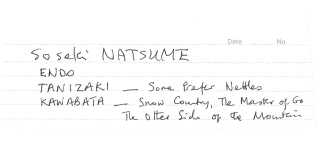
Those are the names and titles Paul finally scribbled down for me in my notebook (picture above) with Kobayashi's approval:
Soseki Natsume
Endo
Tanizaki - Some Prefer Nettles
Kawabata - Snow Country, The Master of Go, The Other Side of the Mountain
To my disappointment the list did not include Haruki Murukami. When I asked how he was regarded in Japan, there was an eloquent silence ...

Tuesday, September 05, 2006

Career Change: Cannibal to Celeb Author

It has no smell and no taste. It melts in my mouth like a perfect piece of tuna. I look in her eyes and say: " You are delicious ."

I cut her body and lift the meat to my mouth again and again. Then I take a photograph of her white corpse with its deep wounds. I have sex with her body. When I hug her she lets out a breath. I'm frightened, she seems alive. I kiss her and tell her I love her. Then I drag her body to the bathroom. By now I am exhausted, but I cut into her hip and put the meat in a roas(t)ing pan. After it is cooked I sit at the table using her underwear as a napkin. They still smell of her body.

Then I turn on the tape of her reading the German poem and eat. There is not enough taste. I use some salt and some mustard and it is delicious , very high quality meat .
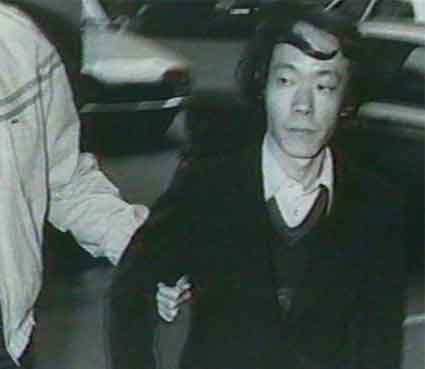
Do you remember the Japanese cannibal who chomped his way through a fellow student at the Sorbonne in Paris, and later returned home to become a best-selling author and celebrity? I had forgotten the strange tale of Issei Sagawa until one of my course participants reminded me of the story last night and the rest started clammering for me to blog it for them today.

Well, not wishing to become a sleezy tabloid blogger, may I direct you here and here if you want another serving?

But I strongly advise that you don't go looking at the crime scene photos.

(You don't listen, do you?)

Friday, April 07, 2006

Mending Japanese Bridges

(Glimpses from behind the lines organising the first KL Litfest, taken from my notebook. This was written August 3, 2004)

The Japanese were hurt.

In the Litfest programme booklet there was a biodata for every invited writer – but not a word about the writer they were sponsoring – Kyoji Kobayashi. (I refused to be involved with the bookletbecause I knew I had to say no to some of the things he was piling on me).

Now I really felt bad for the Japan Foundation guys who had taken so much trouble to find a writer for us and fly him out, and who were also sponsoring a series of films based on Japanese novels. As soon as they realised what had happened, they hurried back to their office and printed off their own fliers with the biodata on.

Raman did apologise verbally for the in his opening speech, but the Japan Foundation guy – Shimadasan, asked for a letter of apology. No problem I told him and relayed the request to raman, but was too busy to follow up on it until after the Litfest had ended.

On the Monday morning, I suddenly remembered about the apology letter. I called up Raman who had decided to stay home for the day rather than open up the shop. He didn’t want to be reminded about the letter. I’ve apologised already, he said impatiently. But what about the letter we promised? Small matter, he said. Not small I argued. I said that I would write it – all he had to do was print it out on headed notepaper and sign it, and then I would come by and pick it up from him and deliver it personally to the Japan Foundation. He said I’m not going to open the shop just for that, so forget about it.

I read up a little about apologies in Japanese culture on the internet – when you apologise it means that you are accepting responsibility for something – and when you apologise in Japanese, the words for apology are exactly the same as those for thanks. So I constructed a letter which I made a letter both of apology and thanks for his sessions especially the haiku workshop from which I learned a lot. I constructed a letter head from the logo on the web page and signed the letter myself.

Before I could drive over to the city centre, Lorna Tee contacted me. She also was feeling very bad about this matter and was very indeed angry when I told her that Raman was refusing to write this letter himself. She had fixed up dinner with the Japan Foundation people as a move to mend bridges, and asked myself and Usha along. I wanted anyway to take the chance to say goodbye to new friends who would soon be leaving. I went back to the hotel and called up Paul Bailey’s room and asked him.

If he wanted to go for dinner and he seemed very pleased that someone had thought about him. (He had decided to stay on for a couple more days after the Litfest because it seemed ridiculous flying out all this way for just three days. He hadn’t spent the time sightseeing though, but had been shut in his room working on his novel.)

I was also so happy to see Ken Wiwa and say good bye to him before he left for the airport to catch his flight back to Canada.

We all met up at the excellent Indonesian restaurant at the top of the Suria shopping centre. Dinner at first a little formal but as the wine bottles emptied, the Japanese opened up a bit more and the writer, who’d always spoken through an interpreter (a beautiful and very gracious lady who has lived in Malaysia for many years) began to launch out into quite passable English. And once we began to talk about Japanese literature (about which Paul was very knowledgeable and I knew next to nothing), the conversation fairly flowed with the others contributing to a booklist of what I had to read. (A list which did not include Haruki Murukami strangely enough, whose books are not really regarded as serious literature in Japan. When I asked how he was regarded in Japan, there was an eloquent silence …)

By the end of the evening the fences were well and truly down. I had a good long chat to Shimadasan who invited me to have coffee with him when I called in to take a look at the Foundation’s library. And Kobayashi was both delightfully loquacious and flirtatious. When I left to take my train, I bowed very deeply to show him the respect he deserves (really getting into this cross-cultural thing!). And I felt very sad to kiss goodbye to Paul, who has become a friend ... Wonder if I will ever hear from him again?