Showing posts with label national short story prize. Show all posts

Thursday, July 17, 2008

Wigfall's Win

Claire Wigfall, the youngest writer on the shortlist and a relative unknown, has won the BBC's National Short Story award with The Numbers, which Lyndsay Irvine in the Guardian calls :
... an eerie tale of life on a remote Scottish island
You can listen to it here.

Wigfall is also the author of The Loudest Sound and Nothing.

Jane Gardam was named as runnerup for The People on Privilege Hill. The other shortlisted stories were Guidelines for Measures to Cope with Disgraceful and Other Events by Richard Beard; Surge by Erin Soros; and The Names by Adam Thorpe.

The award is the world's largest for a short story and worth £15,000, and all the shortlisted stories are to be compiled into a single volume by Short Books.

(Phot0 by D.G. Jones on Flickr.)

Thursday, May 10, 2007

Winners and the Rest


Ever tried. Ever failed. No matter. Try again. Fail again. Fail better.
Robert McCrum quotes "the laureate of literary failure" Samuel Beckett in this Guardian piece about the value of literary prizes and how most literary endeavors are doomed to end in failure ...:

First, there are the countless manuscripts completed, but never published, and the hours of frustrated composition tossed into the wastepaper basket. Then there are the thousands of books published, but not reviewed. These, in turn, are matched by the scores of titles reviewed, but scarcely sold.
So ... erm ... why are you still writing?

McCrum notes that this is the season for the longlists and shortlists for all kinds of awards, and I've been very slipshod missing some of the news, so this is a catch-all catch-up!

Remember I posted the shortlist for the Ondaatje Prize the other day? Well, Hisham Matar walked away with it for In the Country of Men. (Am applauding for a book I love.)

Remember I mentioned the National Short Story Prize? (Of course you do - after all the argument about whether Kureishi's story being pulled by the BBC was censorship or not.) Anyway it was won by Julian Gough with David Almond being named as runner-up.

And I thought you might like to know that Rosie Thomas (right) won the 2007 Romantic Novel of the Year award for Iris and Ruby!

But the pleasantest award surprise has to be that a Malaysian won a Pulitzer Prize!

More award news to come ...

Thursday, April 19, 2007

Sheddings and Beheadings

One of the National Short Story Prize finalists, Hanif Kureishi, is reportedly very angry with the BBC which has cancelled the radio broadcast of his shortlisted story.

Weddings and Beheadings
describes the work of a cameraman who has been forced to take on work filming the executions that have become a feature of recent kidnaps in the Middle East. BBC officials felt that broadcasting it "would not be right" as concern grows for BBC Gaza correspondent Alan Johnson.

Kureishi says:
There are journalists and newspapers in peril all the time around the world. We support them by supporting freedom of speech rather than by censoring ourselves.
I agree.

Incidentally, you can read Kureishi's story on the Prospect Magazine website.

Postscript:

Maureen Freely on the Guardian blog makes the very important point that even nice censorship is censorship and therefore cannot be condoned.
... and the more we condone it, the more we wrap it up in sheepish clothing, the more we convince ourselves that it is the only way to fend off the wolves, the more of it we'll see.
(Photo nicked from the BBC website.)

Monday, April 16, 2007

The Spirit of the Short Story, The Spirit of the Place

It seems to be high season in the realm of the literary awards in the UK and this blogger can hardly keep up!
The finalists for the National Short Story Prize were announced on Friday and include Hanif Kureishi, Julian Gogh, Jackie Kay, Jonathan Falla and David Almond.The award aims to raise the profile of this rather neglected form (in Britain at least). As chair of the judges, Mark Lawson, says: This prize exists partly because many - perhaps even most - publishers and literary editors still regard the novel as the most important form of story-telling and are suspicious of short stories. ... But this year's selection makes very clear that there is no connection at all between word-count and the scale of subject matter or characterisation that can be achieved. You can find out more about the prize (which will be awarded on 23rd April) and read what some of these writers think about the short story on the Story Story website. There are also short stories by leading writers for you to download for free as well as plenty of information about writing the short story.
Also announced was the shortlist for one of the most interesting awards of the year, the Ondaatje Prize (founded by Christopher Ondaatje and awarded by the Royal Society of Literature to the book, in any genre, which best invokes the spirit of a place).
Coleridge biographer Richard Holmes describes what the judges were looking for:
It is much more than a mere physical description of a landscape or cityscape. It is more than an exotic landscape or local colour. ... It is a particular kind of rootedness that may exist in geography, history, memory, or in particular people. We have looked for books that take us on some kind of journey, and favoured those that have that indefinable quality; an accumulated atmosphere; a power to haunt the reader long after the last page is turned.
The selected books include memoir, a novel, biography and exploration of ideas:
Anne Applebaum - Gulag: A History of the Soviet Camps
Jonathan Bate - John Clare
Susan Elderkin - The Voices
Robert Macfarlane- Mountains of the Mind: A History of Fascination
Bryan Magee - Clouds of Glory: A Hoxton Childhood
Louisa Waugh - Hearing Birds Fly: A Year in a Mongolian Village
The prize will be presented on 18 May.
More award news to come!

Monday, May 22, 2006

A Shot for the Shorts

Picador is about to do for books what Top Shop did for high-street fashion ...
announced one online fashion magazine talking about a new series of twelve tiny pocket books each containing a short story or two and priced just £1 each (RM6+), writes Rachel Cooke in the Observer.

In doing so, the publishers hope to promote short fiction, declared before now to be a dying breed in Britain and difficult to sell to the reading public. Picador will, of course, be also promoting their writers by giving readers a tasty snack that might whet their appetite for the main dish, in much the same way Penguin have done with 70's.

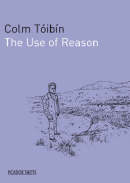
The books include short works by big names such as James Salter, Colm Toibin and Tim Winton. ... And I do so hope they find their way into the bookshops here soon. The selfish reason is that I am so totally consumed by bookgreed: I love short fiction and it's a thrill to discover more great writers of the form. I also think that little books like these would lure in a lot of Malaysian readers who might feel daunted by longer works of "quality" fiction and stick to the safer waters of more popular stuff. (But "Would Malaysians welcome such a price of admission for a half-hour or so read?" asks Ted on his blog. Valid point.)

Much has been said on this blog already about the peril short fiction is in in Britain (though not in America ... or even here in Malaysia.) Cooke reminds us:
... it is more difficult than at any time in the last 100 years to make money from short stories and this may eventually have serious consequences for the form. It is not just that collections don't sell; individual stories have nowhere to go, since there are no longer any literary magazines to publish them.
Perhaps the most effective form of rescue has for the short story is to throw wads of prize money at it.

The National Short Story competition, open only to already published writers in the UK a awards a whacking £15,000 (RM100,00-ish) to the winner. This year's prize went to James Lasdun for his story Anxious Man.

And then there's the Frank O'Connor International Short Story Prize award of 35,000 euros (the biggest prize for a collection of short fiction anywhere in the world!), won in 2005 by Yiyun Li for A Thousand Years of Good Prayers. (Still sitting on my to-be-read shelf.)

Wednesday, August 24, 2005

The Goddess of the Literary Bordello

I blogged before about how the short story was fast becoming an endangered species in Britain.

Now there's news of a new £15,000 National Short Story Prize funded by the National Endowment for Science, Technology and the Arts (Nesta) and supported by BBC Radio 4 and Prospect magazine.

It's hoped that the prize will put the short story
"... back at the heart of the modern literary landscape."

Britain's literary landscape that is.

Elsewhere, the short story is alive and well.

Now isn't this just such a lovely bibliobibulous soundbite from Alex Linklater, deputy editor of Prospect?:
The novel is a capacious old whore: everyone has a go at her, but she rarely emits so much as a groan for their efforts ... The short story, on the other hand, is a nimble goddess: she selects her suitors fastidiously and sings like a dove when they succeed. The British literary bordello is heaving with flabby novels; it's time to give back some love to the story.
You can read Linklater's article here.
Image hosted by Photobucket.com
And the article by Raymond Carver that Linklater refers to can also be found here. If you have any interest in writing short fiction this is compulsory reading - from arguably the greatest master of the genre.