Showing posts with label paul auster. Show all posts

Thursday, February 28, 2008

One Secret Number and Two Wrong Numbers

What is it about Cormac McCarthy and a certain number?

Boyd Tonkin in the Independent ponders the magic of eleven-seven in a beautifully written tribute to the author behind the Oscar :
Sorry, Douglas Adams. The answer is not 42. It is 117. But what was the question? In No Country for Old Men, Cormac McCarthy's soul-chilling killer Anton Chigurh pursues another deadly piece of business to a motel door that bears that number. In The Road, the prior apocalypse whose aftermath the book recounts has taken place at 1.17, precisely, on an unknown date.
Ooops. Tonkin has missed a reference to Chigurh noticing a clock which reads 1.17 on a later page of No Country.

What is it about Paul Auster (right) and a ringing telephone?

Ben Naparstek meets the author in the Age and finds how two wrong numbers gave Auster the inspiration for a novel.

Monday, April 23, 2007

Comparative Literature

Here are a couple of nice things to amuse you this Monday morning.

There are all kinds of wacky facts about books in this PDF downloadable from the New York Times. (Or you can just click on the pic left if you're lazy.)

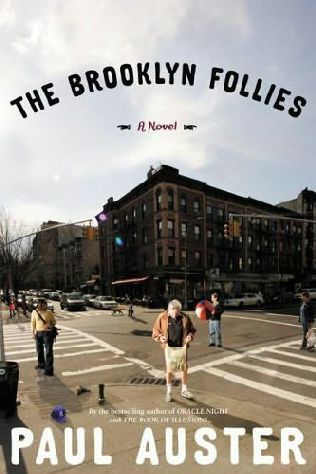
What are the best selling books internationally at the moment? Dan Brown and J.K. Rowling, yes, you'd expect their works on the list. But Paul Auster's Brooklyn Follies is in there too, and I'm also fascinated to learn that while Auster's book sold 70,000 copies in the US in 2006, it sold 165,00 copies in France!

There are also a couple of internationally best selling authors I'd never heard of (and I bet you haven't either) - Ildefonso Falcones de Sierra and Carlos Ruiz Zafon, who both of course write in Spanish.

And the titles of some of the Harry Potter rip-offs around the world made me smile: my favourite is Harry Potter and Leopard-Walk-up-to-Dragon (China)!

Statistic after statistic on the page shows just how much work in translation is one way traffic, with far more American titles being translated into foreign languages than the other way round.

You might also like to take a look at the list of 100 top favourite books compiled by British bookchain, Waterstones and reproduced in the Telegraph. The company asked its 5,000 staff to name their favourite five books written since 1982, the date Waterstones opened its first store.

(And yes, unbelievable as it sounds, the kind of people who work in bookshops in the UK do read, unlike too many of their counterparts here!)

The number of male authors on the list outweighs the number of female authors - this could be because (as my own small scale research bore out too) while women tend to read books by both men and women, men tend to read mostly books by men. (I'd love to know how many of those employees are blokes.)

Still, we do love to compare ourselves against lists and this one provides a very useful starting point for anyone who isn't too sure about what they might like to read.

Anyway, Happy World Book Day! Don't forget to stop off at a bookshop to buy yourself (and your loved one) a gift.

Sunday, January 21, 2007

Folly and Fiction, Fiction and Life


I once had an undergraduate student who refused, adamantly, to read fiction because she said the characters always made such a mess of their lives, either because of the sort of people they were, or because of the poor judgments they made. She had decided that fictional people made poor role models for the kind of life she aspired to lead. But folly is an inescapable part of the human condition, as Paul Auster reminds us in this, his 10th novel, and the sheer mess and unpredictability of life should be fully relished.

Read the rest of my review of Paul Auster's The Brooklyn Follies from today's StarMag here.

(Incidentally, the student I mention here was, very gradually, won over!)

Sunday, December 31, 2006

Little Book of Delight

Read a book in just twenty minutes yesterday over a cup of tea.

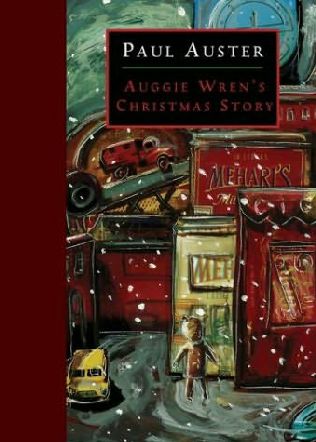
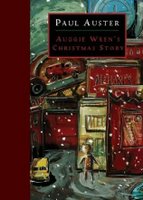
It was Auggie Wren's Christmas, another of Paul Auster's, and it came free with a copy of his new novel Travels in the Scriptorium, but can be bought separately.

Auster was asked by the New York Times to write a Christmas short story for the Op-Ed page.

He went on to write a story about a writer who is asked to write a short story for the New York Times to appear on Christmas morning. Stumped for what to write about, he receives some unexpected help from the tobacconist whose shop he frequents, a colourful character called Auggie Wren.
Wren offers to tell the author the best Christmas story he has ever heard in exchange for lunch. And in the diner he weaves a tale ... which is unsentimental, has no santas or angels, or trees or snow, but even as it overturns all expectations and blurs moral lines, still touches the heart.

Now if you don't feel like running out and buying the book, and would still love this taste of vintage Auster, you can read the whole thing online, here.

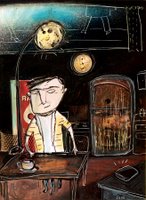
But then, you'd be missing a dimension, because this limited edition print version has funky illustrations by Isol throughout, and is a bit like a kids' book for grown-ups! (Isol's Auggie Wren, right.)
The little story inspired Wayne Wang's 1995 film, Smoke, for which Auster wrote the screenplay and created one of my favourite movie characters . (Blue in the Face features the same cast of characters and was entirely improvised, and filmed on the back of Smoke in just five days.)

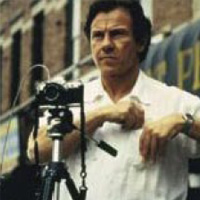
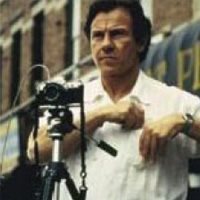
Here's Auggie Wren's monologue from the film script and left, a picture of Harvey Keital in the film role.

And am much tickled reading the cast list, to discover that the book thief was played by Auster's twenty-year old son Daniel! As if it isn't bad enough that Auster keeps wandering inside the frame of his own stories, he wants his family in there too!

Is it too early to start your Christmas shopping for 2007?

Tuesday, December 26, 2006

The Emperor's New Clothes!

I spun out The Brooklyn Follies so that I could finish it yesterday as a Christmas treat. It is a feelgood read and I fell in love with the characters. Auster doesn't need bells and whistles to impress the reader - he's simply a damn good storyteller.

Now am several chapters into The Emperor's Children by Claire Messud. Much hyped. On every best of the year list as you probably noticed.

I am so far completely underwhelmed by what I've read so far. I keep reaching for my editor's pencil to underline sentences where I think the writing is totally shitty! Long winded, with overly convoluted sentences and some strange choice of expression e.g.:
He was a failure at intimacy, if not at sex (he had no shortage of partners; but they were only shortly upon the scene.)
I would have got Messud to rewrite that nasty quasi-Victorianism! Was her editor snoring?

Nevertheless, dear reader, now that I feel better for this sound off, I will get back to it. It surely must improve.

Have also begun Norah Vincent's Self-Made Man: My Year Disguised as a Man which I think I will enjoy much more, and am finishing the last few stories in the latest Silverfish collection so I can pass judgement on the whole thing.

And you? What are you reading?

Thursday, December 21, 2006

You're a Writer, Nathan

"You're wrong, Nathan. After years in the dark you've finally found your true calling. Now that you don't have to write for money anymore, you're doing the work you were set out to do all along."

"Ridiculous. No one becomes a writer at sixty."

The former graduate student and literary scholar cleared his throat and begged to differ with me. There were no rules when it came to writing, he said. Take a close up look at the lives of poets and novelists, and what you wound up with was unalloyed chaos, and infinite jumble of exceptions. That was because writing was a disease, Tom continued, what you might call an infection or an inflamation of the spirit, and therefore it could strike anyone at any time. The young and the old, the strong and the weak, the drunk and the sober, the sane and the insane. Scan the roster of the giants and semi-giants, and you would find writers who embraced every sexual proclivity, every political bent, and every human attribute - from the loftiest idealism to the most insiduous corruption. They were criminals and lawyers, spies and doctors, soldiers and spinsters, travelers and shut-ins. If no-one could be excluded, what prevented an almost sixty year-old ex-life insurance agent from joining their ranks? What law declared that nathan Glass had not been infected with the disease?

I shrugged.

"Joyce wrote three novels," Tom said. "Balzac wrote ninety. Does it make any difference to us now?"

"Not to me," I said.

"Kafka wrote his first story in one night. Stendhal wrote The Charterhouse of Parma in forty-nine days. Melville wrote Moby Dick in sixteen months. Flaubert spent five years on Madam Bovary. Musil worked for eighteen years on The Man Without Qualities and died before he could finish it. Do we care about any of that now?"
From The Brooklyn Follies, Paul Auster

Saturday, November 25, 2006

Astounding Auster

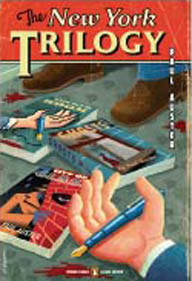
I have to say first that this Penguin Classic Deluxe is the of the prettiest paperback in my library - the pulpish art work by Art Spiegelman (on the cover and before each story) the quality paper with uncut edges, the whole "hand feel" of it made reading even more of a pleasure. This is how all paperbacks should be!

I was new to Auster's work (apart from his film scripts for Smoke and Blue in the Face - both of which I loved) so was blissfully unaware of what to expect before I dove in to The New York Trilogy.

The book contains three novellas initially published separately: City of Glass (1985), Ghosts (1986) and The Locked Room (1986).

And in them Auster takes a familiar genre - the gumshoe detective novel - and completely subverts it into something so surreal that you can never be sure of the ground beneath your feet. Each story is a variation on the same theme and contains a character who is given the task of spying on or tracking down another, and in the process having his own identity slip away from him. Oh ... and characters called Paul Auster appear now and again, fountain-pen in hand, who may or may not be the same Paul Aster who is the author. It's clever and tricksy and disturbing and 'postmodern' (a term I know by feel but couldn't start to explain to save my life). A meditation on the layers and levels of reality created by an author.

I won't tell you the plots of the stories because I don't want to give anything away. (If you insist go here but beware of spoilers.)

I suspect the stories may appeal more to the blokes ... simply because male readers seem to prefer novels of ideas and don't bother as much about emotional connection. (Sweeping statement - tell me I'm wrong someone!) Sometimes I was reminded of Murakami, at other times Poe (especially in The Locked Room).

And strangely enough ... it struck me while reading City of Glass that this would make a great graphic novel. I was quite gobsmacked when Subashini told me in the comments to a previous post that it was already published in graphic form! You can take a look at the art work here.

Having said all this ... I admired the book a lot more than I enjoyed it (if that makes sense to you). It's that damn need to care about the people I'm reading about!

Tuesday, November 21, 2006

A Character By One's Own Name

Now let's see if I've got this right.

A writer creates a character. Let's call him Joe Bloggs. If there is a real person by the name of Joe Bloggs out there, and he feels that the way character Joe Bloggs acts in the book tarnishes his name, he can sue the publisher of the book.

In theory then ... if a writer creates a character with his own name (as Paul Auster does The New York Trilogy for example) ... and that character acts in such a way that he injures the real life reputation of the author ... the author may then sue his own publisher for damages.

Worth trying if you're short of a few bob.

Tuesday, November 07, 2006

Auster's Acceptance

I have spent my life in conversations with people I have never seen, with people I will never know and I hope to continue until the day I stop breathing ... It's the only job I've ever wanted.
American novelist Paul Auster ponders the strangeness of writer's life in his acceptance speech for the Prince of Asturias Prize for Literature which is reproduced in the Guardian.
Surely it is an odd way to spend your life - sitting alone in a room with a pen in your hand, hour after hour, day after day, year after year, struggling to put words on pieces of paper in order to give birth to what does not exist - except in your head. Why on earth would anyone want to do such a thing? The only answer I have ever been able to come up with is: because you have to, because you have no choice.
Postscript:

I enjoyed Greenbottle's post about why he's glad he doesn't have the writing bug.

Related Post:

Orhan's Medicine (28/10/06)