Showing posts with label patricia highsmith. Show all posts

Sunday, December 13, 2009

The Would-be Murderer, the Modest "Amateur", and the Brilliant Single Dad

If she had not become a writer, she would have been a murderer, reckons Joan Schenkar, whose biography The Talented Miss Highsmith : The Secret Life and Serious Art was published this week. Calling her our most Freudian novelist, Schenker explains that :
To her, love and death are closely related. She tends to murder people in her novels where she made love in real life.
In the New York Times piece, we are taken on a walking tour of Highsmith's Greenwich Village, not only her physical neighborhood :
... but also the dark and desperate territory of Highsmith’s psyche ...
Highsmith is best known for Strangers on a Train and The Talented Mr. Ripley, the first filmed by Hitchcock, and the second, which most of you I guess will have seen, by Anthony Minghella.

I'm just an amateur, really I am.

The incredibly modest 91 year old Diana Athill talks to Tim Adams in The Observer about how she still find it hard to consider herself a real writer since she enjoys writing so much, unlike the authors she worked with as a publsiher :
Writing is supposed to be torture isn't it? But I absolutely adore doing it.
Athill's latest book is Life Class, an 800 page compilation of her four books of memoir. (You can see her talking about the book here.)
Dear Daddy, to the world you are JG Ballard, celebrated and legendary author. But to us, your children, you are simply our own very dearest father, our best friend and our inspiration. We miss you so much
In a very touching obituary J. G Ballard's daughter Bea remembers her father who brought her and her siblings up as a single parent.

(Worth noting re. Peter Carey's switch off the TV Nanowrimo advice, Ballard saw TV as a positive influence and loved crime series, in particular CSI.)

Tuesday, October 18, 2005

It's A Crime!

If Dickens were alive today he would be writing genre fiction or churning out soaps for TV.
Discuss with reference to at least five episodes of CSI London.

Okay, okay I'm being completely fascetious. I'm as guilty as anyone. of not taking genre fiction as seriously as that which we dub *"literary fiction" a.k.a. the real stuff, the hardcore.

The Guardian yesterday quite rightly rapped my pretentious knuckles:
What is it, when Man Booker juries meet, that makes genres "inferior"? ... Why is crime writing, with its "very conscious structure" and ability to raise "big moral issues" outside the box of introversion, such a poor relation of "literary fiction"?
Truth is, a "very conscious structure" to me reeks of predictability and formulaic writing.

Give me genre fiction that subverts the genre and I will be thrilled. Just as I'm thrilled to read the "literary" novel which breaks new ground.

Give me an elegantly turned plot, language that's so rich I want to drink it, characters I can care about, deeper issues to keep me awake at night just wondering, wondering. And I won't care what kind of fiction you call it.

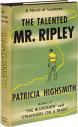
There are crime writers who manage it. Patricia Highsmith's The Talented Mr. Ripley, for example, caught me completely off balance - how does she get the reader to side with the truly despicable Ripley? Yet we do. And in the process are forced to confront our own definitions of "moral behaviour".

Yet I really don't think it's true to say there is no genre fiction on Booker shortlists - it's just that the kind of authors who make it that far tend to play with the narrow definitions of genre. Is Margaret Atwood's The Blind Assassin science fiction or detective story? Both and more.

Atwood has also written some of the best "speculative" fiction (i.e. sci-fi that could happen) - the chilling Oryx and Crake (nightmares free of charge) and The Handmaid's Tale (so prophetic in it's vision of the religious extremism sweeping America).

Cloud Atlas by David Mitchell on last year's shortlist wraps a story within a story within a story and incorporates several genres - thriller, fantasy, comedy ... and each one superb.

Julian Barnes Arthur and George is a historical novel which is also centres on the solving of a crime.

Susanna Clarke's Jonathan Strange and Mr. Norrell was not only shortlisted for the Booker but also also bagged the Hugo award for science ficition writing and the Mythopoetic award for fantasy.

In the end it isn't so much a choice between Literary fiction and genre, as between the straightforward and fomulaic and the multilayered and surprising.

I know which I'd rather have!

(*By the way, hadn't really realised until Tash's talk at Silverfish that American fiction does not recognise such artificial distinctions.)


Postscript:

Even deep-end litfic types dabble in genre. The Elegant Variation has the news that Banville is headed in that direction next.