A few days back I had lunch with David T.K. Wong and Saras at Plaza Mont Kiara, and afterward David took us to visit a second-hand bookshop, Just Haven, which I had not known about before.
The stock wasn't huge, but there were certainly some good titles on the shelves and the prices were fair (around the RM10-12 mark). It's a very welcoming space and Leslie, who runs the place, is extremely helpful. He's also beginning to organise book-related events.
It's funny kiasu-ism kicks in when a book-lover loves books. I'm actually culling my shelves at the moment so that I can donate books to a library Daphne Lee and I are helping to build at Learning Works where I teach my creative writing courses, but how could I resist picking up a battered copy of Margaret Atwood's Wilderness Tips, a short story collection?
I'm so glad I did too because, two stories in, I'm really enjoying it. The first story True Trash set in a summer camp, beautifully parodies the pulp romance novel of the 1950's and does things you don't expect in a short story - including juggling a whole cast of characters.
I began reading Atwood with Robber Bride which I got for free in a branch of Waterstones. (In the late '80's they had the great idea of giving away books with a voucher from their quarterly magazine but created interest in the author's new release.)
I can be excused not having read the earlier works at that time because I'd lived in places where books were hard to come by, but I think I can't be excused for not having completely caught up with now, especially as everything the lady writes gives me such great pleasure. It's good to take this small step.
Showing posts with label margaret atwood. Show all posts
Showing posts with label margaret atwood. Show all posts
Monday, May 31, 2010

Tuesday, March 16, 2010
Margaret Keeps Goal
Here's the amazing Margaret Atwood as we've never seen her before, singing in a musical about ... ice hockey! She plays herself in a cameo role in Score : A Hockey Movie, and you can see some pictures on her blog.
She also appeared on a popular Canadian TV show giving tips about how to keep goal in the game.
It's nice, isn't it, when you favourite authors have talents and passions you never dreamed of!
She also appeared on a popular Canadian TV show giving tips about how to keep goal in the game.
It's nice, isn't it, when you favourite authors have talents and passions you never dreamed of!
Monday, November 23, 2009
A Hooker Unmasks, A Diva Retires, and A Poet Appropriates
Really, my apologies for not being a very good blogger over the last week or two. I'm not sure what's happened to me, but I seem to be more easily distractible than usual. (I just spent 20 minutes getting distracted by this nice blog while looking to see if I had spelt the word right!).
This being the case, I offer you some quick links to stories that have caught my eye over the last week or two and hope you enjoy them :
Margaret Atwood turned 70 and on The Guardian books blog Daragh McManus celebrates the work of a writer whose versatility astounds. (I am currently reading and relishing After the Flood and reckon it needs to be the second book of a trilogy.)
Zadie Smith suffers from what she calls 'novel nausea' and turns to the essay in a piece that is both erudite and refreshing.
Oprah Winfrey announces that her talk show is coming to an end and Bookninja gets very emotional.
Call-girl blogger Belle De Jour (one of the earliest to be successfully "blooked") reveals her real identity after years of speculation in the press - she's Bristol-based researcher named Dr. Brooke Magnanti and she turned to prostitution to finance her education. (As Rowan Pelling at The Telegraph says, the revelation is shocking because it turns on its head what we think we know about the world's oldest trade.)
I stand behind every word with pride ...unearthed her secret way back but - bless him - gave away nothing about:
... the greatest story in the history of blogging, and probably the biggest literary puzzle in the UK this century.British poet laureate Andrew Motion is accused of "shameless burglary” by a military historian for "extracting sexy soundbites" from his work on military psychiatry. The creation of collages of words - often called found poetry - is though a time-homoured technique. Motion's resulting poem for Armistice Day, An Equal Voice, is far better than the usually trite stuff offered up by laureates on official occasions. But still, the argument raises interesting questions about what plagiarism is and what poets can get away with. (Ellen Whyte tagged me with a link to this article on Facebook, feeling properly angry I think.) Apologies to those who have asked me to blog this and that. I am slowly sorting myself out and plan to put up some local book news very soon.
Saturday, August 22, 2009
Another Glimpse into a Dystopian Future
 ... people kept asking me what happened two minutes after Oryx and Crake ended. I returned to this world because ... I didn’t know. So in order to find out what happened, then I had to go back and write another book.
The novel I'm most looking forward to reading this year is undoubtedly Margaret Atwood's The Year of the Flood which is a sister volume to the distopian Oryx and Crake with some overlapping characters. Sinclair McKay interviews the author in The Telegraph and gives us a peep into the concerns of the new book :
Here, through the eyes of two female characters, Toby and Ren, we learn of the days that lead up to a horrible pandemic that ravages humanity – forget coughs and sneezes, here people melt. There is enviro-religion, overweening science, hideous sex clubs, nightmare food, grotesque cosmetic surgery. And there are also bees. ... Behind the novel is fierce environmental concern, as well as a subtler inquiry into what it is that makes us human; central to the story is a sect called God’s Gardeners who read the Bible as a profoundly green text (for instance, convincingly reinterpreting what Genesis says about man’s relationship with the animal kingdom).Atwood's portrayal of the near future in the earlier book, was for me, extremely chilling and thoughts go back to it all the time. I think I shall have to pre-order this, so I get it the moment it hits the shops.
Atwood will be doing staged readings around the world to promote the book and raise money for environmental charities. (But, *sigh*, she isn't coming here.) And she's started a blog to keep us up to date.
Thursday, April 09, 2009
Would You Like A Little Soundtrack With That Novel?
 Might soundtrack recordings to accompany our books be the next big thing?
RCRD LBL and Virgin Books are going to be launching the soundtrack to Tim Molloy’s debut novel How to Break Bad News at a party tonight. The music was conceived by Eric Steuer of Meanest Man Contest and features songs by a number of bands, and you can download it from the website.*
The reasoning behing the move? Says Molloy:
Why put out a soundtrack for a book? Well, why not put out a soundtrack for a book? Movies, TV shows, and video games have them - so why should books get left out in the cold? ... People complain about the Internet pulling people away from books, and this seemed like a perfect way to pull people back. The gorgeous songs on the soundtrack add to the spirit and emotion of the book in ways I'd never imagined. Some people will discover the book through the songs, and some the songs through the book.(The trailer for the book is pretty intruiging too.)
Now if all that sounds a bit gimmicky, another author putting out an accompanying sountrack is ... Margaret Atwood!
Her dystopian novel The Year of the Flood is to be published in September and includes the text of 14 hymns, which Ms. Atwood is having a composer set to music, so that the novel will have its own CD.
All that remains to ask is ... which of your favourite books would you like to have a soundtrack for and what do you think should be on it?
(*Thanks, Grace, for sending me this link!)
Friday, March 06, 2009
Dubai Debate

You have to be careful with language. Old war horses like me hear the word 'ban' and creak out with our rusty swords to ... rally around a flag that wasn't really there ...said Margaret Atwood, talking about her cancellation at the Dubai Festival before learning the facts of the Geraldine Bedell "banned book" case. (See here and here.)
I react in exactly the same manner to the word (though thereafter any resemblance to Ms Atwood sadly disappears!) and must remind myself to gather up all facts first before humphing in outrage.
Sometimes that's hard to do as the press does so love to sensationalise stories. (Bloggers - inc. myself - are just as bad but at least we have the excuse that we have less access to the sources.)
It's also interesting how the initial shock-horror story travels so widely, but not the more accurate report that comes later ...
It's such a shame that it was a blare of negative publicity that brought the festival to public attention. Kathy Guest in The Independent writes about the event, where :
... for an all-too-fleeting four days last week, the InterContinental hotel in Dubai, Festival City, became an oasis of cultivation in the otherwise featureless landscape of designer labels and oil billionaires.The debate on censorship went on, with Atwood appearing by video link (top left) and the discussion is reported here by Ed Lake of The Nation.
Sunday, February 22, 2009
Penguin in the Doghouse?
Thanks William Shaw for sending me a link to his post re the kerfuffle over the Dubai Festival.
Not all is as it first seemed.
According to Isobel Abulhoul the decision to cancel the launch of the book was communicated to Ms Badell in September ... so why was it only brought to public attention this month?
Margaret Atwood now apparently regrets her decision to withdraw and has :
Postscript (24/2/09) :
Margaret Atwood is to take part in the debate on censorhsip via video link.
Not all is as it first seemed.
According to Isobel Abulhoul the decision to cancel the launch of the book was communicated to Ms Badell in September ... so why was it only brought to public attention this month?
Margaret Atwood now apparently regrets her decision to withdraw and has :
... come around to Isobel Aboulhou’s view that this was as much a controversy stirred up by Bedell’s publishers as anything to do with censorship. ... On speaking to , the festival’s director, however, she was told that this was not the case, she writes. Rather, the festival director had sent a “candid” and somewhat naive email of rejection, which “was carefully guarded by someone - who? - until now, when it was hurled into the press with great publicity effect, easily stampeding people like me.” Atwood, upset that her principled stance was taken under what she now sees as false pretences, and protective of the “first-time festivalite” Abulhoul, says her “head is spinning” as a result of the controversy.I think our heads are spinning too. And I must make a note to be a bit more of a sceptic ...
Postscript (24/2/09) :
Margaret Atwood is to take part in the debate on censorhsip via video link.
Saturday, October 11, 2008
Opening Creative Space in Canada

The shortlist for Canada's Scotiabank Giller Prize has been announced, and the finalists are :
(Read more about all the authors on the website.)
Margaret Atwood who is one of the judges spoke about the power of the Giller to :
The winner will be announced on November 11th.
Joseph Boyden - Through Black Spruce (novel)
Anthony De Sa - Barnacle Love (short stories)
Marina Endicott - Good to a Fault (novel)
Rawi Hage for his novel - Cockroach (novel)
Mary Swan - The Boys in the Trees (novel)
(Read more about all the authors on the website.)
Margaret Atwood who is one of the judges spoke about the power of the Giller to :
... put people into the spotlight who might never have been there. It's astonishing how much talent there is out there. You open up a cultural space like that and I guess I've always said — and have been saying recently — Canada is full of creativity. You make a space for that, for that creativity to be and to flourish, and there it is.Most of those shortlisted have just one or two novels under their belts.
The winner will be announced on November 11th.
Sunday, September 28, 2008
Genius Grant for Adichie, Crystal Ball for Atwood, Porn for Proulx
 Recent news of three of my favourite literary ladies.
Chimamanda Ngozi Adichie has been awarded one of this year's MacArthur Foundation's "genius grants", as its fellowships are more popularly known and receives a free annual grant of $100,000 for a five-year period. other authors who have won the award in previous years include Joseph Brodsky, Derek Walcott, Cormac McCarthy and the late David Foster Wallace
 Margaret Atwood has a gift for social prophecy :
 In 1984 she wrote a dystopian vision of a fundamentalist society in which women are reduced to the status of child-bearers and servants, forcibly desexualised and veiled - The Handmaid's Tale pre-empted the Taleban's misogynist regime in Afghanistan, and the rows over Islamic women's dress and rights in Europe. Another futuristic novel, Oryx and Crake, charted the destruction of the Earth by global warming, pandemics and rampant genetic engineering. It was published in 2003, before Sars, bird flu, An Inconvenient Truth, and the genome revolution.Her latest non-fiction book is Payback: Debt and the Shadow Side of Wealth - which examines :
... ideas of debt, balance and revenge in history, society and literature.With the current finanacial turmoil in mind, Gatti asks :
So where does she keep her crystal ball?
 Meanwhile Annie Proulx tells Robert J. Hughes in the Wall Street Journal [found via] that she is having problems with fans sending offering her their interpretations of the Brokeback Mountain :
 There are countless people out there who think the story is open range to explore their fantasies and to correct what they see as an unbearably disappointing story. They constantly send ghastly manuscripts and pornish rewrites of the story to me, expecting me to reply with praise and applause for 'fixing' the story. They certainly don't get the message that if you can't fix it, you've got to stand it.Proulx's latest her latest story collection Fine Just the Way It Is is her third set in Wyoming.
Friday, November 30, 2007
Novel of Future Without Oil Wins Rhys Llewllyn
 This year's John Llewellyn Rhys prize has been won by Sarah Hall for her novel The Carhullan Army, described by Richard Lea in the Guardian as:
... a tough portrait of life in a near-future Britain after the oil runs out. ... The novel presents itself as the statement of a detained woman prisoner, and follows a narrator, known only as "Sister", as she escapes her regimented life of tinned food and rationed electricity to join a separatist female commune on the Cumbrian moors.
 Chair of the judges, Suzi Feay said of the book:
Sarah Hall's fierce, uncomfortable story of a radical dissident group holed up in the far north after the total breakdown of society seemed to all the judges to be the book that tackled the most urgent and alarming questions of today ... The quality of The Carhullan Army was simply unignorable. We need writers with Hall's humanity and insight.Katy Guest interviewing the author in the Independent back in August, reckons the book :
... contains elements of The Handmaid's Tale, 1984, Lord of the Flies... But it is entirely of the moment ... If the introduction makes it sound like a satire on current government policy, it is not far wrong: this is a political book. But it is also part-thriller, part-science fiction, and a love story, of sorts.Sounds like a real must-read!
And talking of dystopian future scenarios, well worth reading is Margaret Atwood's essay on those two classics of speculative fiction, Aldous Huxley's Brave New World and George Orwell's 1984, which appeared in the Guardian a week or two back.
Sunday, October 14, 2007
Atwood on Aspiring Authors
 Thanks to the friend who sent me this piece by Ben Hoyle from the Times.
Margaret Atwood who recently spoke at the Cheltenham Literary festival about the challenges faced by aspiring writers.
Nobody should become a novelist who is not a gambler or obsessed with words ...- because, she says, it is now much harder for aspiring writers to break through and establish themselves than it was when she began her career in the 1960s.
She also talked about how very hard it was for her as an aspiring poet:
“
At that time few Canadian writers were published, even in Canada.But now the challenges have changed:
If you wrote a novel you were told that there weren'’t enough readers in Canada so you have to get a British or American publisher.”
Then, after years of being told that there was nothing unique about Canada, “you were told that your novel was too Canadian for Britain or the US”.
At the same time “the immediate postwar years were probably the most male-dominated decade in the history of literature in the past 150 years”.
...there’'s so many people writing there’'s a great struggle to find an agent and a publisher.... “Sometimes [new authors] are flavour of the month when their book comes out but if it doesn'’t then sell a trillion copies they struggle again.And she talked about the advantage that age confers to writers:
If you are young you can imagine what it’s like to be old but you haven’t lived it. If you are older you have not only experienced what it’s like to be older but you can remember every stage in between.”Now that is about the only advantage of growing older as far as I can see!
Monday, July 09, 2007
Adaptation
Was lucky enough to be invited to attend the workshop on adapting texts for the stage oranised by FIRSTWoRKS/Instant Cafe Theatre and was much brain-boggled by the company I found myself in ... the other participants included stars in the theatrical firmament Ann Lee, Kee Thuan Chye, Jo Kukathas, Anne James, Thor Kah Hoong as well as best-selling author (!) and screen writer Kam Raslan, Zedeck Siew of Kakiseni, Bernice Chauly of the myriad talents, and the group of budding playwrights being nurtured by FIRSTWoRKS: Animah Kosai, Ridzwan Othman, Rahel Joseph and Shanon Shah.
 Laurence Strangio the writer/director of Alias Grace talked us through the process of adapting his play from Atwood's novel telling us that he only drew on Grace's first person narration, and then only a small proportion of that. Although the film rights have been bought he said, it would be a very difficult film to make a movie because one of the most delightful ambiguities of the book is whether the mysterious peddler Jeremiah is the same person as Dr. Jerome La Pont, who hypnotises her. In the novel and in the play it is possible, Laurence says, for both possibilities to live at the same time.
He says he read and reread the book, putting post-it notes on the sections he liked best and then typing them onto computer. He says he played "fast and loose" with the arc of the story, and says he knew the book well enough to reinvent it. The first draft was three and a half hours long when read through, and was, of course, substantially cut. Laurence also showed us transparencies of a particular scene so we could see how it had changed over time, and explained how the actor's portrayal of the role (in this case Caroline Lee) fed into the way the work was written.
We talked about reasons for adaptation, and then we discussed texts that we had brought along to the workshop to adapt.
On the second day we drew a poster presentation of the key touchstones of our texts and here're some photos. (I put the full set on Flickr.)
 Kee Thuan Chye hard at work ...
 Me, being creative on the floor! I chose Tinling Choong's FireWife since I'd just finished reading it and found it very visual. (Eight women, eight photographs, fire, water).
 Bernice wrestles Elizabeth Gilbert's Eat Pray Love: One Woman's Search for Everything Across Italy, India and Indonesia down to the ground!
 Kam show-and-telling his take on Conrad's Heart of Darkness.
 Chye and Ridzwan inspect the posters. (I think they're looking at the naked lady covered in sushi picture on mine!)
The most exciting part of the workshop I think was when single images were taken and improvisations built around them creating a new set of striking images.
Now adapting a text to a play is something I would very much like to do and seems more manageable somehow than starting from scratch ...
 Laurence Strangio the writer/director of Alias Grace talked us through the process of adapting his play from Atwood's novel telling us that he only drew on Grace's first person narration, and then only a small proportion of that. Although the film rights have been bought he said, it would be a very difficult film to make a movie because one of the most delightful ambiguities of the book is whether the mysterious peddler Jeremiah is the same person as Dr. Jerome La Pont, who hypnotises her. In the novel and in the play it is possible, Laurence says, for both possibilities to live at the same time.
He says he read and reread the book, putting post-it notes on the sections he liked best and then typing them onto computer. He says he played "fast and loose" with the arc of the story, and says he knew the book well enough to reinvent it. The first draft was three and a half hours long when read through, and was, of course, substantially cut. Laurence also showed us transparencies of a particular scene so we could see how it had changed over time, and explained how the actor's portrayal of the role (in this case Caroline Lee) fed into the way the work was written.
We talked about reasons for adaptation, and then we discussed texts that we had brought along to the workshop to adapt.
On the second day we drew a poster presentation of the key touchstones of our texts and here're some photos. (I put the full set on Flickr.)
 Kee Thuan Chye hard at work ...
 Me, being creative on the floor! I chose Tinling Choong's FireWife since I'd just finished reading it and found it very visual. (Eight women, eight photographs, fire, water).
 Bernice wrestles Elizabeth Gilbert's Eat Pray Love: One Woman's Search for Everything Across Italy, India and Indonesia down to the ground!
 Kam show-and-telling his take on Conrad's Heart of Darkness.
 Chye and Ridzwan inspect the posters. (I think they're looking at the naked lady covered in sushi picture on mine!)
The most exciting part of the workshop I think was when single images were taken and improvisations built around them creating a new set of striking images.
Now adapting a text to a play is something I would very much like to do and seems more manageable somehow than starting from scratch ...
Friday, June 29, 2007
Atwood Acted
Margaret Atwood is one of my favourite novelists, so I am really looking forward to seeing the adaptation of one of her best known novels, Alias Grace for the stage.
Here's the lowdown:
Here's the lowdown:
ALIAS GRACE
CAST & CREW
Presenter : The Instant Cafe Theatre Company & Malthouse Theatre with the support of the Australian High Commission
SYNOPSIS:
"Murderess. Murderess. The word rustles like a tafetta skirt across the floor."
In 1844 sixteen-year-old Grace Marks is convicted of the brutal murder of her employer and his pregnant mistress. Eight years later she is offered the chance to redeem herself, but telling a story is never an innocent act.
In her brilliant portrayal of the celebrated murderess in the play alias Grace, award-winning Australian actress Caroline Lee transforms into Marks in a performance as intimate as it is dangerous. The character is based on the real-life Grace Marks, one of the most notorious Canadian women of the 1840s.
Alias Grace, Margaret Atwood's multi-award winning novel, has been adapted for the stage by Laurence Strangio. The KL production is supported by the Australian Government, through the Australia International Cultural Council in commemoration of the 50th Anniversary of Relations between Malaysia and Australia.
Venue : Pentas 2 Duration : 4 - 8 July 2007
Category : Drama Price : RM37 and RM22

Saturday, June 16, 2007
There ... But Not There
If you want to sell your book, you have to promote it. But, it seems, the author's tour may be a thing of the past.
Ian McEwan is doing a tour of the US to promote his latest book On Chesil Beach. Only ... he's not going to be there himself.
Bob Thompson in the Washington Post reports that independent booksellers Powell's Books has come up with the idea of making a high-grade film (part of which is viewable with the article) of the author reading from and talking about his book, and of building events around that. McEwan's film will be shown at 54 other screenings around the country, mainly, but not exclusively in bookstores, with discussion being lead in some cases by other local novelists.
Wouldn't it be great if McEwan's film, and other author films when they are made, could be shown in bookshops here? We are so starved for author visits, and Malaysia is an awful long way to fly someone to read to us.
Another way for an author to appear without actually appearing is, of course, by video link. We enjoyed a run of those at the British Council a couple of years back when a tiny group of hardened bibliophiles were able to interact with Toby Litt, Beryl Bainbridge and David Lodge.
And nowadays an author can even sign books from half a world away by using the LongPen - (something I thought was a hilarious joke when Margaret Atwood came up with the idea!)
Which is how Norman Mailer (incapacitated by "age, asthma and athritis") will be appearing ... but not appearing ... at the Edinburgh Festival this year and signing books for his fans. And Atwood will be interviewing (again by video link) legendary Canadian short story writer Joyce Carol Oates who will also sign books.
In fact a whole list of famous authors have used the LongPen saving (as the promotional website for the device reminds us) over 30 million tons of carbon emissions!

Ian McEwan is doing a tour of the US to promote his latest book On Chesil Beach. Only ... he's not going to be there himself.
Bob Thompson in the Washington Post reports that independent booksellers Powell's Books has come up with the idea of making a high-grade film (part of which is viewable with the article) of the author reading from and talking about his book, and of building events around that. McEwan's film will be shown at 54 other screenings around the country, mainly, but not exclusively in bookstores, with discussion being lead in some cases by other local novelists.
Wouldn't it be great if McEwan's film, and other author films when they are made, could be shown in bookshops here? We are so starved for author visits, and Malaysia is an awful long way to fly someone to read to us.
Another way for an author to appear without actually appearing is, of course, by video link. We enjoyed a run of those at the British Council a couple of years back when a tiny group of hardened bibliophiles were able to interact with Toby Litt, Beryl Bainbridge and David Lodge.
And nowadays an author can even sign books from half a world away by using the LongPen - (something I thought was a hilarious joke when Margaret Atwood came up with the idea!)

Which is how Norman Mailer (incapacitated by "age, asthma and athritis") will be appearing ... but not appearing ... at the Edinburgh Festival this year and signing books for his fans. And Atwood will be interviewing (again by video link) legendary Canadian short story writer Joyce Carol Oates who will also sign books.
In fact a whole list of famous authors have used the LongPen saving (as the promotional website for the device reminds us) over 30 million tons of carbon emissions!
Sunday, December 17, 2006
Snow Drift
Abandoned Snow three-quarters of the way through and then hop skipped to the end to find out what happened to the characters. (Now I understand why it took Starmag reviewer Anu Nathan six months to read it!) No point labouring through something you're not enjoying, hey? I now somewhat reluctantly add it to the venerable list of dumpees whilst trying not to feel too inferior to all those friends who wax lyrical about it.
I only read reviews when I'm done with a book, and very much enjoyed the reviews of Snow on newspaper websites. (Complete Review has a whole list of them.) Despite my own struggle with the book, I have to agree with these words by Laurel Maurey in the San Francisco Chronicle:
Will try some of Pamuk's other novels later on. Promise.
Now it's back to Auster. I'm supposed to be reviewing The Brooklyn Follies and better get on with it!
I only read reviews when I'm done with a book, and very much enjoyed the reviews of Snow on newspaper websites. (Complete Review has a whole list of them.) Despite my own struggle with the book, I have to agree with these words by Laurel Maurey in the San Francisco Chronicle:
Pamuk is a good antidote to the easy answers that so much modern literature offers; if you're a fan of Dostoyevsky, Fowles, Hesse, George Saunders or any other author with the guts to muck with your mind, read Pamuk. ... "Snow" will make you feel the arguments surrounding fundamentalism as a situation of murky grays, where the only thing black is the night, and the only thing white is the snow.Margaret Atwood's review in the New York Times intrigues when she talks about the Male Labyrinth Novel ... something I'd never considered before:
The twists of fate, the plots that double back on themselves, the trickiness, the mysteries that recede as they're approached, the bleak cities, the night prowling, the sense of identity loss, the protagonist in exile -- these are vintage Pamuk, but they're also part of the modern literary landscape. A case could be made for a genre called the Male Labyrinth Novel, which would trace its ancestry through De Quincey and Dostoyevsky and Conrad, and would include Kafka, Borges, García Márquez, DeLillo and Auster, with the Hammett-and-Chandler noir thriller thrown in for good measure. It's mostly men who write such novels and feature as their rootless heroes, and there's probably a simple reason for this: send a woman out alone on a rambling nocturnal quest and she's likely to end up a lot deader a lot sooner than a man would.Or maybe women have more pressure on them just to get on with things because too much depends on them?
Will try some of Pamuk's other novels later on. Promise.
Now it's back to Auster. I'm supposed to be reviewing The Brooklyn Follies and better get on with it!
Friday, November 10, 2006
Emergency Doctor Wins Giller
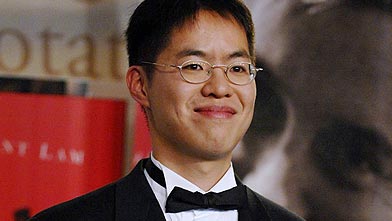 Jordan was kind enough to send me this link to a CBC interview with this year's Giller prize winner.
Canada's major literary award this year went to Toronto doctor and writer, Vincent Lam for his collection of short fiction Bloodletting & Miraculous Cures which follows the lives of four medical students. Lam beat four other authors in a field of relative unknowns.
Lam whose family migrated from Vietnam has apparently been mentored by Margaret Atwood, who helped him to find a publisher. And he is at work on his first novel, which is due out next year. His print debut, incidentally, was with a co-authored medical book: The Flu Pandemic and You.
Lam has a very demanding job as an emergency physician, yet finds no conflict between the day job and writing:
I find that I can be exhausted as a writer after having worked a fair bit and still have the energy to go to the hospital. In fact, I’m relieved by the concreteness of medicine. And I can be mentally exhausted as a doctor and I’ve still got writer energy. They’re very different processes. Writing is something that starts from the page and off you go, whereas with medicine, you’re confronted with a situation and then have to deal with it.And I liked his answer in the interview about whether his patients ever recognise him from the fiction:
Very occasionally. Thankfully, a couple of things work against that happening. One is that I do emergency medicine, so people come to me when they have emergencies, so they are primarily concerned with their health problems. Two, I’m a man of average build and figure. I haven’t got movie-star looks, so I can blend into the crowd. But I must say that one of the things that sets me apart from other doctors is that if a patient has a book with them, I’m always curious about what they’re reading.Postscript
Lotus Reads has a couple of interesting posts about the shortlist and Lam's win.
Wednesday, March 08, 2006
Atwood's Great Autograph Machine
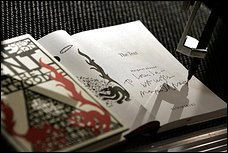 Booksignings can be bothersome for authors who really have better things to do than travel long distances just to meet fans and autograph books. (Write the next novel, for instance?) And now it seems, there is a way round the problem, thanks to Margaret Atwoods new invention: the LongPen. Now authors can talk to fans across the world via videoconferencing facilities, and scribble a personal message in real time, without leaving the comfort of their own homes.
Yes, I thought it was a joke too when I first read about the idea some months ago. But then Atwood set out to demonstrate her new toy by signing copies in a New York bookshop while she was physically at the London Book Fair.
But things didn't go according to plan, writes Oliver Burkeman in the Guardian:
Find out what went wrong!In novels such as Oryx and Crake and the Handmaid's Tale, Ms Atwood has demonstrated that she has few equals when it comes to imagining the transformative powers of technology on humanity. But turning science fiction into fact was proving tricky yesterday, thanks to the even more powerful force of sod's law.
Tuesday, October 18, 2005
It's A Crime!
If Dickens were alive today he would be writing genre fiction or churning out soaps for TV.Discuss with reference to at least five episodes of CSI London.
Okay, okay I'm being completely fascetious. I'm as guilty as anyone. of not taking genre fiction as seriously as that which we dub *"literary fiction" a.k.a. the real stuff, the hardcore.
The Guardian yesterday quite rightly rapped my pretentious knuckles:
What is it, when Man Booker juries meet, that makes genres "inferior"? ... Why is crime writing, with its "very conscious structure" and ability to raise "big moral issues" outside the box of introversion, such a poor relation of "literary fiction"?Truth is, a "very conscious structure" to me reeks of predictability and formulaic writing.
Give me genre fiction that subverts the genre and I will be thrilled. Just as I'm thrilled to read the "literary" novel which breaks new ground.
Give me an elegantly turned plot, language that's so rich I want to drink it, characters I can care about, deeper issues to keep me awake at night just wondering, wondering. And I won't care what kind of fiction you call it.
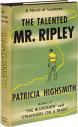 There are crime writers who manage it. Patricia Highsmith's The Talented Mr. Ripley, for example, caught me completely off balance - how does she get the reader to side with the truly despicable Ripley? Yet we do. And in the process are forced to confront our own definitions of "moral behaviour".
 Yet I really don't think it's true to say there is no genre fiction on Booker shortlists - it's just that the kind of authors who make it that far tend to play with the narrow definitions of genre. Is Margaret Atwood's The Blind Assassin science fiction or detective story? Both and more.
Atwood has also written some of the best "speculative" fiction (i.e. sci-fi that could happen) - the chilling Oryx and Crake (nightmares free of charge) and The Handmaid's Tale (so prophetic in it's vision of the religious extremism sweeping America).
Cloud Atlas by David Mitchell on last year's shortlist wraps a story within a story within a story and incorporates several genres - thriller, fantasy, comedy ... and each one superb.
Julian Barnes Arthur and George is a historical novel which is also centres on the solving of a crime.
 Susanna Clarke's Jonathan Strange and Mr. Norrell was not only shortlisted for the Booker but also also bagged the Hugo award for science ficition writing and the Mythopoetic award for fantasy.
In the end it isn't so much a choice between Literary fiction and genre, as between the straightforward and fomulaic and the multilayered and surprising.
I know which I'd rather have!
(*By the way, hadn't really realised until Tash's talk at Silverfish that American fiction does not recognise such artificial distinctions.)
Postscript:
Even deep-end litfic types dabble in genre. The Elegant Variation has the news that Banville is headed in that direction next.
Subscribe to:
Posts (Atom)