Showing posts with label the novel. Show all posts

Monday, May 30, 2011

The Naïve and Sentimental Novelist

My review which was in the Reads Monthly section of The Sunday Star yesterday :


What actually happens when we read a literary novel? And what is in the mind of an author when he writes one? These are the central questions addressed by Orhan Pamuk in The Naïve and Sentimental Novelist. And since the Turkish writer is both an avid reader and the Nobel Prize winning author of several internationally acclaimed novels (including Snow, My Name is Red, and The White Castle), he is extremely well-qualified to do so.

The title of the book is taken from the famous essay by Friedrich Schiller . Pamuk’s “naïve” novelists, he says, are unaware of the techniques they are using, and they write spontaneously as if carrying out a natural act, as opposed to “sentimental” or reflective novelists “who are concerned with artificiality of the text and its failure to attain reality”. I have to say though that I did not find the distinction a particularly useful scaffold for Pamuk’s arguments, particularly as the author himself admits that all great novelists ultimately have to be a blend of both. At times, his discussion seems rather abstract and academic, perhaps not surprisingly, as these six linked essays were initially delivered in the form of lectures at Harvard University in 2009.
On Naive and Sentimental Poetry

But it is when he writes more anecdotally and personally that he is at his best. Anyone who has fallen passionately in love with reading will recognize themselves in Pamuk’s descriptions of his younger self, encountering the great works of fiction for the first time, discovering in them important truths about life, and acquiring from them “a breathtaking sense of freedom and self-confidence”. Pamuk draws on the classics for his examples, including Tolstoy’s Anna Karenina and War and Peace, James Joyce’s Ulysses, Proust’s In Search of Lost Time, and Defoe’s Robinson Crusoe.

Pamuk captures the special magic of the literary form. He describes how the words on the page become invisible as we look through them onto an entire landscape with the ability “to oscillate between the long view and fleeting moments, general thoughts and specific events, at a speed no other literary genre can offer.” We can simultaneously see, he says “the broader picture, the whole landscape, the thoughts of the individual, and the nuances of the character’s mood.”

More than once he refers to the “intense and tiring effort” required to read a literary novel, and he lists a whole lot of different things that the reader actually has to do simultaneously to connect with the text. We observe the scene and follow the narrative, and transform the words on the page into images. Our memory labours intensively to hold all the threads of the story and what we know of the characters. We appreciate the style, make judgments about the moral choices the characters make, and congratulate ourselves for being able to read “a difficult” novel.

As we read, we are constantly wondering, he says, how much of the novel tells of real experience and how much is an act of imagination, and also how much of the author’s own life is invested in the fiction. Indeed, he devotes a whole essay to the topic, but concludes, not surprisingly, that “the novel is not completely imaginary nor completely factual.”

But even as we are deriving pleasure from the surface details of the novel, we are searching at a deeper level for “motive, idea, purpose”, in fact what he calls “a secret centre”. Reading literary fiction, he says, is the act of determining the real centre of the novel, “whose source remains ambiguous but which nevertheless illuminates the whole.” It is the slow uncovering of this centre that gives the reader full satisfaction.

Popular genre fiction, he says, typically lacks this centre, and is read largely for comfort. But he does single out some genre writers (including Patricia Highsmith, John Le Carre, Stanislaw Lem and Philip K. Dick) as authors whose work can be read at a deeper level.

Pamuk is perhaps at his most controversial when he talks about the creation of character in the novel. He suggests that over the past 150 years our curiosity about characters has taken up much more space in the novel than it has in life, and that “It has sometimes become too self-indulgent, almost vulgar”. He believes that “People do not actually have as much character as we find portrayed in novels” , and reckons that human character is not nearly as important in shaping our live as it is made out to be in the novels and literary criticism of the west. This certainly is food for serious thought.

He goes on to attack the idea of the character-driven plot, where the author seems to expect that “… the hero like a prompter on stage will whisper to the novelist the entire course of the novel.” This approach, taught extensively on creative writing courses, “merely goes to show that many novelists begin to write their novels without being sure of their story, and that is the only way they are able to write.” He says that in his own writing his protagonist’s character will be formed, as a real person’s is, by situations and events.

Much of what is written about literature in academic circles is made inaccessible to the ordinary book-lover and writer by the jargon of literary theory. This book can be enjoyed by both the enthusiastic reader and by writers, and should serve to spark deeper discussion of the craft of the novel - whether or not one chooses to agree on all points with Pamuk.

And of course, perhaps more importantly for fans of Pamuk’s work, The Naïve and Sentimental Novelist gives an intriguing insight into the preoccupations and approach to writing of one of the world’s most important authors.

Friday, July 18, 2008

Perfect!

Is there ever such a thing as a perfect novel?

I enjoyed this piece on the Paper Cuts blog, but must confess I am of the same opinion as the commenter who contributes Randall Jarrell's definition :
A novel is a prose narrative of a certain length that has something wrong with it.
Some of the novels for which perfection or near perfection are claimed by blog readers here are The Great Gatsby by F. Scott Fitzgerald, Lolita by Nabokov, David Mitchell’s Black Swan Green, As I Lay Dying by Faulkner, and To Kill a Mockingbird by Harper Lee among many many others.

(I would perhaps have added Ian McEwan's Atonement, Kazuo Ishiguro's Remains of the Day and Victor Hugo's Les Miserables.)

This is an excellent list of reading recommendations and whether any of these books really are "perfect" or not doesn't really matter, does it?

(Pin-up boy is of course Robert Redford in The Great Gatsby. Luscious.)

Thursday, November 08, 2007

Are Asian Stories Different?

Hang on! There's something else as well!

I dropped by Nury Vittachi's blog and found that after deliberately not writing about the controversy for months
because it is important that the focus goes on the writers, not on the backstage shenanigans
he was lured out to comment once more on the choice of judges for the prize:
Not only was it racially and culturally insensitive, but it raised some massive issues ...
he said. And this seemed to be the massivest:
Asian story arcs differ significantly from Western ones.* Our narrative traditions are also totally different. And modern Asian story conventions are simply not the same as classic ones, nor Western ones, nor do they trace their roots to the Greek drama form which is the bedrock of Western tale-spinning. I failed miserably to get any of the organizers to understand these issues or take them seriously.
(*My emphasis.)

Now this question intrigues me because I must say that I hadn't given it much thought until The Stars Rise in the East panel discussion at the Ubud Writers' and Readers' Festival when Xu Xi (who is incidentally one of the shortlisted authors for the Man Asian) talked about how Asian ways of telling stories differ from western ways.

Let me quote Ann Lee's article on the festival which appeared in Off the Edge, because clearly Ann was taking better notes than me!:
Xu Xi, maintains that there are Asian ways of storytelling - a climax at the end of the story is 'very western, very Greek'. She suggested, wryly, that perhaps as in the tale of Buddha, a short story should just 'mosey along, this way and that, and then one day achieve enlightenment if it happens'.
Xu Xi slipped in a very interesting example from the work of psychologist Richard Nisbett showing how groups of Asians and westerners tended to read the same news article very differently. (I wish I had the exact quote ...).

So Nury's point, I suppose, is that because Asians think differently, this is going to be reflected in the way that Asian authors write and therefore the best people to judge the writing and understand the cultural nuances are people with the same way of perceiving the world i.e. other Asians.

The influence of different writing traditions would, I suppose, have to be factored in too.

Now all this leaves me once again with more questions than answers. Would be grateful if you could help me out, dear reader, because you are likely to have a broader perspective than I have.

The Man Asian prize remember is for a novel, that most western of literary forms.

First, do Asian stories and Asian novel (particularly for us here Malay novels, Chinese novels) have a different story arc from western novels?

Would this be true also of Asian movies vs their western counterparts?

Is good storytelling the same thing in all cultures?

Are Malaysian novelists writing in Malay or in Chinese or in English more influenced by the literary traditions of those languages, or by western writing ... or indeed by other factors?

(As British novelist Patrick Gale pointed out in another session at Ubud, the dominant form of story telling now is the computer game and probably this is even truer in Asia than in the west!)

And if one of the aims of the prize is win Asian writers greater exposure and acceptance internationally, doesn't their work also have to succeed by western standards?

I've a feeling that Nury has opened up a big can of worms with this talk about story arcs and I suspect it would take a lengthy academic thesis to even begin answering the question!

Still, the debate could be very interesting!

Sunday, September 23, 2007

Has Fiction Lost Its Power?

An article that slipped beneath my radar at the time (I must have been shamefully snoozing!), but which I came across this morning (researching other stuff) on author Indra Sinha's website (he, of course, of the current Booker shortlist and on whom I have much more to blog soon).*

Rod Liddle (left) wrote in the Times back in January how contemporary fiction just doesn't hit the spot for him anymore, and it seems to me that the article is very well worth going back to.
... it dawned on me (that) I hadn’t actually finished a novel, any novel, for some considerable time. I couldn’t even remember the name of the last new novel I’d finished. Somehow, fiction had lost its power to enthral or inform.

I immediately assumed that I was to blame, that I had become inured to the form itself and was no longer entranced by the act of immersing myself in someone else’s imagination. But a little later, it occurred to me that, frankly, there wasn’t an awful lot of imagination kicking around in contemporary fiction. It has become so broad, so general, so eager to please, so self-satisfied, so anxious to make itself relevant and attuned to the times, so shamelessly — and again, forgive me, I can think of no better phrase — middlebrow. In other words, exactly like journalism, except with some made-up names. And we have journalists for journalism, don’t we? Literary fiction, it seemed to me, had stopped doing what literary fiction does best: getting beneath the skin of a subject, to the viscera, without even always intending to so do. It had started being like every other form of mass entertainment, aiming wide and broad, hoping to alienate nobody.
Liddle blames the publishing industry for wanting:
... books with a big, thick, broad base and, preferably, an uplifting, aspirational motif ... Dark themes such as suicide are okay only if they’re dealt with in the friendly, accessible prose of a colour-supplement article about interior design or colonic irrigation. Leave out the overexuberant writing, what Steinbeck called the “hoop de doodle”; leave out literary devices that might unsettle the reader. Make it general — anything else we will deem to be a bit too much, self-indulgent.
It's a sure-fire recipe, he insists, for bad literature, and reckons that the truly great writing these days is to be found in the non-fiction section ... or in France where publishers have resisted the great literary dumbing-down of the British and US literary scenes.

If I don't add a comment of my own at the moment, it's because I'm mulling it over. Once the cogitation is done, I will chuck in a thought or two of my own. (A nice blogger get-out!) You of course are bound to be more erudite.

(*Sorry for the horrendous overuse of brackets in this sentence, stylistically unforgivable! :-D)

Tuesday, September 18, 2007

When the Short Story Grows Up, It Wants to Be a Novel

The lines between the short story and the novel are becoming increasingly blurred, writes Julian Gough in the Guardian.

We've already seen that in the UK (though not in the US ... or here for that matter) the former is something of an endangered species and there have been conscious attempts to revive it, particularly through the National Short Story prize (which Gough won earlier this year).

He says that he thinks that the "membrane" between the two forms has become more "permeable", and reckons that much of the UK's best writing is from short story writers forced to find ways to write novel-length stuff.

He takes Ian McEwan as a case in point, and says he:
... started out as a terse, disciplined short story writer. But "the market demands novels". Now he is seen as a terse, disciplined novelist. Yet a more interesting way to think of him is as an increasingly, and deliberately, sprawling, short story writer.
And he reckons that On Chesil Beach, currently shortlisted for the Booker, is in fact a short story. (Something I agree with.)

... And it couldn't be a shorter story (skip the next line if you don't want the entire plot revealed): a man has a premature ejaculation which destroys two lives. That's it. Perfect, essential McEwan. Because McEwan has one thing he wants to write about again and again: middle-class lives destroyed by a single, shocking, unfair incident. His readers know that. So, in both Saturday and On Chesil Beach, he uses our knowledge against us, like the director of a good horror sequel. His chapters are now the equivalent of the slow pan around an empty room, with the viewer forced to look too long on every innocent object. Time gets stretched, objects obsessively overdescribed in an almost drugged atmosphere of dread. These are technically fascinating short stories of enormous length. Which is not to say McEwan is not a fine novelist. It's just that he is a writer who very seldom gets novel-length ideas (The Child in Time and Atonement, primarily).
David Mitchell, he says, is another author who is at heart a short story writer:

A genius of the unpublishable length, the long short story, the novella, he finds a new structuring principle and assembles a novel from modules of story. He nests six novellas (Cloud Atlas) in a marvellously metafictive regression. Or he weaves a gossamer-thin line from which to hang nine stories that drift west, around the world (Ghostwritten). It is revealing that the only book of his to have disappointed the critics was his first "proper" novel, Black Swan Green.
Gough also makes the point that readers don't seem to like short stories that don't connect to each other and reckons that writers need an "organising principle" for their work.

Lots more worthwhile reading on Julian Gough's website and blog. His new novel Jude: Level 1 was launched last month.

Friday, June 15, 2007

Cult Fiction

We've all heard of "cult fiction", but exactly how would you define it?

Jane Sullivan in the Age takes a look at the new Rough Guide to the topic edited by Michaela Bushell, Helen Rodiss and Paul Simpson and also Cult Fiction: A Reader's Guide by Andrew Calcutt and Richard Shephard. (Both of which I now want to buy!)

and her own definition works fine for me:
Whatever it is, cult fiction makes the heart beat faster. You discover it by accident, or word of mouth. You love this work, you're excited and disturbed by it, it speaks to you in a way nothing else does, and you're convinced you're the only person who gets it. ... Gradually you discover there are other like-minded nuts out there, and the cult is born. At some point, it may become so huge that it ceases to be a cult (think of Kerouac or Tolkien), but the thrill of belonging to an exclusive club is still there.
She mentions the cult novels and authors of her youth, which were the cult novels of my (quite long ago) youth too: Hermann Hesse, J. G. Ballard, John Fowles and Robert Pirsig's Zen and the Art of Motorcycle Maintenance.

Ahh ... but that was the 1970's, all idealism, belief in transcendence and looking for the meaning of life ...

So which books would you consider "cult" ... and do you think that the term is still valid in the same way? (Do the younger generations get their subversive kicks this way anyway?)

Here are a few titles tagged "cult fiction" by readers on LibraryThing to get you started.

Friday, May 11, 2007

A Question of Length

When I received Ian McEwan's new book the other day, I was surprised by what a slim volume it is - just 166 pages which I could (had I so desired) have read in a single sitting.

On Chesil Beach is no less satisfying for its brevity, and I will (as I promised before) tell you all about it later.

But it struck me as I read it that I do really appreciate short novels ... particularly in this age of frequently overstuffed fiction, where editors seem unwilling to take scissors to texts and authors seem to feel that they should tie up our undivided attention for weeks at a time.

Author Dan Rhodes commented in the Guardian some time back that:
... it seems obvious (doesn't it?) that writing overlong books is at the very least plain bad manners. I can't understand why writers are so often pilloried for writing short books. Brevity is mistaken for laziness when more often than not it's the opposite that is true. My new book, Gold, clocks in at 198 pages, and I'm convinced that, apart from in truly exceptional cases, this is about as long as a book ought to be. Of course I fully expect to eat my words next time I read a run of 400 page marvels ...
He includes a top ten list of works of fiction he loves, which:
... don't run a page over the 200 mark. All killer, no filler.
I can think of several more that I've greatly enjoyed myself including One Day in the Life of Ivan Denisovitch by Alexander Solzhenitsyn, Steinbeck's Burning Bright, and of course Of Mice and Men. And then of course there's another short book I greatly enjoyed recently; Beasts of No Nation.

I'm sure you have your favourite short books too.

McEwan has been a regular contender for the Booker prize, and On Chesil Beach is one of his best works, I'd say ... but will it be eligible? Will it even be submitted? According to Galleycat, UK bookmakers William Hill, famous for placing odds on those eligible to win the Booker Prize, are turning away those who want to bet early on the book because there is some doubt about whether is is a novel (eligible to enter) or a novella (not eligible to enter). And apparently even McEwan's publishers are unsure whether they will submit the book for the prize or not.

A simple word count should clarify the matter, one would have thought. But how long exactly does a work have to be before it can be considered a novel? Galleycat quotes author Elizabeth Hand:
A novel is usually considered to be a work over 40,000 words in length.
Those of us rash enough to enter the Nanowrimo (where competitors write a whole novel in thee month of November) know that the target is 50,000 words.

Australian writing coach Lee Masterson some useful guidelines about the length of different kinds of story on Author Network. (Have you ever heard of a novelette?) And here again the novel weighs in at 50, 000 words.

I checked a whole lost of websites asking for submissions or giving advice to writers. Some said 40,000. Some said 50,000. There is no rule written on tablets on stone.

Let the last word then go to Julian Gough (winner of the National Short Story Prize):
The short story doesn't exist. But don't worry, neither does the novel, or the novella. (Or the thriller, science fiction or chick-lit.)

All these terms are used after the fact. They are all mostly industrial terms, pretending to be art terms. The best writers write, and only find a name for what they've written later, when they have to describe it to an agent or a publisher.

Look at the recent fuss over Ian McEwan's On Chesil Beach: is it a novel, thus qualifying for the Man Booker Prize? Or a novella, thus not qualifying? The bookies have stopped taking bets till the mess is sorted out. But On Chesil Beach continues to exist, just being what it is, a piece of writing that is not the same as any other piece of writing. Good writers invent something new every time they write.

Is Hemingway's The Old Man And The Sea a short novel? A novella? Or a long short story? It could be any of the three, depending on which of the many definitions of each term you use. The way we describe art has nothing to do with the art. Theory is a separate game, that is only about itself.

Art exists, at all kinds of lengths. And industrial product exists, at all kinds of lengths. There are less things we call 'short stories' these days, because there are less outlets for short stories. But I doubt there is less art. That tends to be a constant. There's never very much of it, but there's always enough.
It would be very sad though if McEwan were disqualified for running for the Booker ... so I'd like to request that, if necessary, and entirely in the interests of good fiction, the prize committee shift the goal posts just a little!

Thursday, February 15, 2007

Where Novels Thrive

(Novels) require a book world which can review, alert, display and advertise to the consumer, and dispose of and renew its stock several times a year. They require diverse network delivery systems to the end users (libraries, bookshops, book clubs). Those end users have to be habituated and habitual consumers - good for innumerable repeated orders. The consumer of fiction needs to be educated and literate. The advent of the novel, it is fair to say required a more sophisticated creation, distribution, reception and consumption apparatus than any other cultural form until the arrival in the 1890's, of the cinema. ... The novel is the product of a developed, institutionalised, and commercially advanced society. The abiltity to read a novel intelligently, I would maintain, is the mark of a mature personal culture.
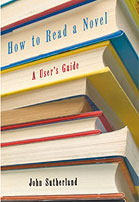
I post this extract from John Sutherland's How to Read a Novel: A User's Guide as a sort of postscript to the previous entry about the growth of the Indian writing community.

I think that when we ask ourselves why so few novels are emerging from Malaysia and Singapore, we tend to focus narrowly only on the writer and publisher, not on all the rest of the complicated machinery that needs to be in place to make writing a novel a viable proposition. And the fact that we need to have an intelligent readership.

Sutherland makes the point that the novel (as opposed to the poem, play, or short story) is a product of an industrialised society, which is a slant that hadn't occured to me before.

It's a whole ecosystem, as I've already said, and pondering how the parts of it might be put in place giving me much happy mental exercise.

Tuesday, January 09, 2007

A Novel Guide to the Novel

How to Read a Novel : A User's Guide was one of my recent impulse purchases from Kinokuniya, but I'm awfully glad that I succumbed.

Written by John Sutherland who sure has the credentials (he's Lord Northcliffe professor of modern English literature at University College London and was the committee chairman for the 2005 Man Booker Prize), the book is not so much about how to appreciate literature, as about how to choose a book in the first place.

The irony is though, I suppose, that he's preaching to the converted. Anyone literate enough to find pleasure in his book must be a pretty convinced reader anyway!

But I quibble not. This was a bookaholics perfect read, entertaining and full of literary minutiae and fancy-thats and stuff I'm itching to blog about in separate posts. Sutherland gives a potted history of the book and the novel in particular, and then runs through the parts of a novel: (e.g. dedication, font, copyright date, dust jacket, title, blurb), before tackling more general aspects such as genre, reviews, films of the book.

Here's a snippet to whet the appetite:
Put William Caxton in HG Wells's time machine and transport him from his busy little stall by Westminster Abbey, 1480, to Oxford Street, London, or Fifth Avenue, New York, in summer 2006. The founder of our British book trade would, like the philosopher William James's newborn babe, find himself in a booming, buzzing mass of confusion. Everything would seem as strange as Mr Wells's chronomobile which transported him here. One thing, however, would be comfortingly familiar to the master printer: the contents of Waterstone's, Borders and Barnes & Noble. Master Caxton might not understand how Mr Wells's time machine, or any other machine, worked. But he would know (roughly) how the Penguin Classic edition of HG Wells's The Time Machine had been manufactured.

The physical book, the master printer would have been overjoyed to discover, had changed hardly a jot. He would even have found his own catalogue leader, Chaucer's Canterbury Tales (c.1380s-90s), in the Classics section. Some physical aspects of the books on display would strike him as nifty improvements on the 15th-century commodity: dust jackets, indexes, covers (he, of course, sold his wares from his Westminster stall in quires), coated paper, italic print, perfect binding - all worth sticking in the boot of Mr Wells's machine for the trip back. Despite all these peripheral improvements to the book as a book, Master Caxton could, with his 15th-century technology, mock up the same product that the big W is currently pushing on its "3 for 2" tables.

Comforting as Caxton would have found the individual items in the high street bookstore, he would have been overwhelmed by their profusion. Even Caxton's lifetime output of some 18,000 printed pages, regarded as formidable in the late 15th century, represents less than one day's production in 2006. Well into the 1600s the total number of books, new and old, available to the literate Englishman is reckoned to have been around 2,000.

If you could afford them (few could), were literate in old and new languages (few were) and lived a long life (few did), you could take in the lot. And a good life it would have been. Nowadays, books hit the market at the rate of over 2,000 titles a week. Unlike baked beans, loaves of bread or Fuji apples, books, once consumed, do not disappear. Despite political legend, they are extremely hard to burn. Books more properly deserve the label "consumer durables" than refrigerators or cars. Most books look better after 70 years than their owners. Certainly after 100 they do. "Consumer imperishables" might be the more accurate term.

It is, for some reason, harder, psychologically, to throw away a paperback than a magazine that may have cost as much. The internet and eBay have boosted the market for pre-owned, pre-read (that is, second-hand) books. A vast number stay in print on the easily accessible backlist. There are about three million novels in the British Library, which is being enlarged by some 50,000 new and reissued titles every year. The staff there will deliver any one of them to your desk in St Pancras in hours. And since the Library's populist reforms of 2005, restrictions on the acquisition of a reader's ticket have been lifted. For any citizen over the age of 18 the country's major copyright library is liberty hall.

For the reader of novels the question is: where to start? Is there any point in starting, or shaping one's reading experiences? How can one organise a curriculum? Ours is not, like the 1940s, an age of austerity: it is not money - expensive as new hardback novels, quite irrationally, seem - but time that is in short supply. How, then, to find the novels that you do have the time to invest in? As the science-fiction writer Theodore Sturgeon (the original for Kurt Vonnegut's Kilgore Trout) observed: "Ninety per cent of science fiction is crap. But 90 per cent of everything is crap." How can we identify the 10 per cent, or less, of fiction available that is not crap? And while we are on the subject, is Ted Sturgeon's own work crap or caviare?
You can read the rest of this edited extract here and another (on the questions of copyright and authorship) here.

The book has come in for a fair bit of criticism from the press. Maureen Corrigan of the Washington Post reckons that the target audience for the book is women who belong to book groups:
We know this because Sutherland loses no opportunity to shower book groups with praise far more intoxicating than the wine usually served at their monthly gatherings. ... Most wince-making of all is this loony piece of readerly flattery that Sutherland flings out at the end of Chapter One: "It is, I would maintain, almost as difficult to read a novel well as to write one well."
And Sam Leith in the Telegraph catches some factual errors.

Those reservations apart, it's a guide I'm very pleased to have on my bookshelves!

Sunday, May 28, 2006

The State of the Novel

Robert McCrum in yesterday's Observer asks if the British novel has lost its way as money and celebrity and awards are thrown at it:
Out of a swamp of greed, ambition and creative writing crawled a new Gollum, the 'Booker novel', trailing the slime of self-promotion. This, typically, was a scarcely readable work of the imagination, devoid of narrative, character, plausible landscape or moral purpose, whose sole motivation was the desire to get on to that fabled shortlist. There was a boom in second-rate literary fiction, most of it now recycled into wallpaper and toilet tissue. Each year publishers began to bet ever more absurd sums on 'Booker novels' in the hopes of hitting the jackpot.
There's plenty of food for thought here, and McCrum gives an excellent history of the changing fortunes of the novel in Britain over time.

Now maybe I just haven't read enough beyond award lists recently (and even trying to keep up with the longlists and shortlists is a nightmare for this not terribly fast reader) ... but I've thoroughly enjoyed the contemporary fiction I've picked up recently and it's seemed to me that the novel is in pretty good shape.

I wonder which novels McCrum is thinking of when he talks of "scarcely readable works". His list of 20 all-time great Booker winners is very telling - John Banville's The Sea is so pointedly absent, as is Yann Martell's The Life of Pi ...

On the other side of the Atlantic, debate about the best American novel of the last 25 years (see my previous post on this) hots up with an online discussion between prominent authors and critics on the New York Times website about the books that made the list and about the state of US fiction in general.

There's quite a few more titles here for Animah's list too!

(Illustration nicked from the British Council's website)

Related Post

The Novel is Dead, Long Live the Novel (18/9/05)

Sunday, September 18, 2005

The Novel Is Dead ... Long Live the Novel

Is fiction really still up to telling the truth about our turbulent times?

VS Naipaul declared the novel dead in a New York Times interview last month. (You can also listen to an extract here.)

Now, novelist Jay McInerney, (himself a witness to the tragedy of 9/11) makes a convincing case for the continued relevance of fiction in the Guardian .

Leon Wing's very articulate take on the article can be read here. Leon also provides further proof, (if further proof is necessary!) that the form is alive an kicking by invoking Patrick McGrath’s novel, Port Mungo. (One I'll have to read now - thanks Leon.)

I also fail to see signs of the novel's untimely demise. Quite the opposite. (I've slipped between the covers of John Banville's The Sea now and am totally seduced: this is fiction writing alive and kicking!)

Still, one needs folks like Naipaul to take an extreme position now and again so that others can have the pleasure of knocking him down.

McInvery made me smile with this thought:
The only reason we listen to Naipaul is because he wrote A House for Mr Biswas and A Bend in the River. If the novel doesn't matter any more then his opinion wouldn't seem to count for more than my doorman's opinion.
Quite!

Thursday, September 15, 2005

Zadie Has Opinions

And I liked this one particularly:
"Writing a novel is quite stupid work," she said. "In a novel you're never wrong. Novelists aren't intellectuals, they're just intuitive, if they're lucky."
Yeah sure! For more Zadieisms check out this article from the Guardian.
Image hosted by Photobucket.com
Zadie is glam these days sans glasses, sans frizz.

Monday, August 08, 2005

New Life for the Novel

Jason Cowley, a former Booker Prize judge, reckons that this is the best year yet for British fiction since the prize began in this piece from today's Observer.

The Booker longlist is announced on Wednesday! Have got lots of catch-up reading to do.