Showing posts with label cookery books. Show all posts
Thursday, April 08, 2010
Taking Malaysian Food to Manchester
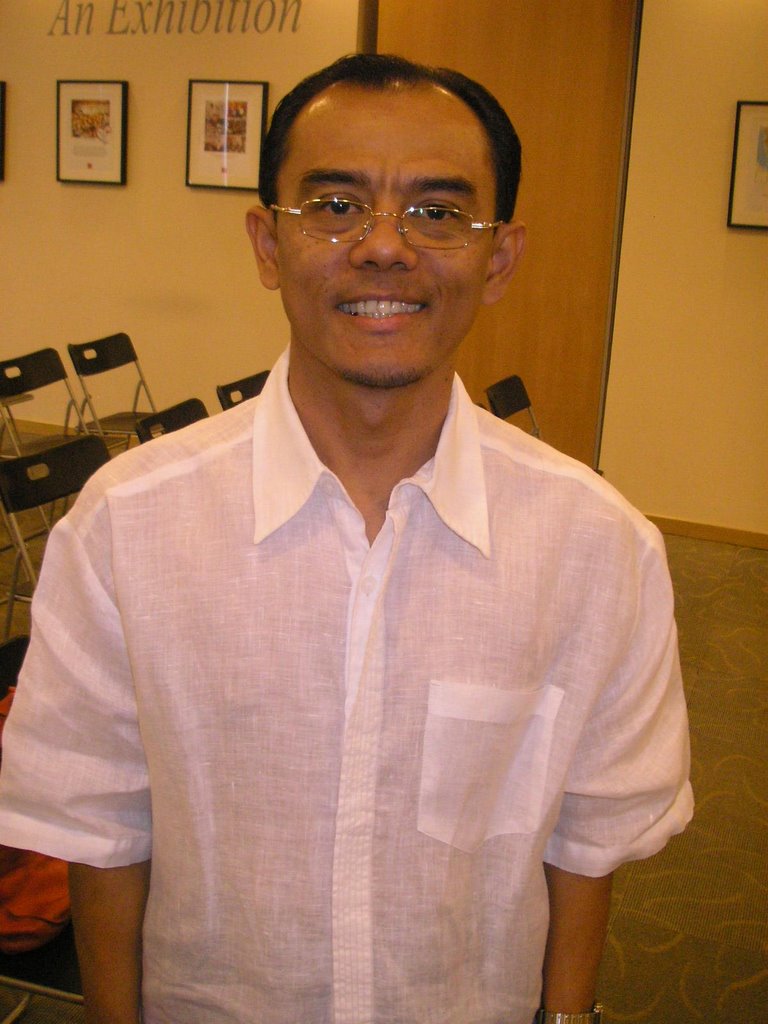
Yesterday I got invited along to the Malaysian launch of Chef Norman Musa's book Malaysian Food at Hotel Impiana.
Norman is the creator and Executive Chef of Ning restaurant in Manchester, which also boasts a cookery school, the first of its kind, I think, in the UK. I'm in favour of anything that teaches the Mat Salleh's what they are missing if they don't have great Malaysian food in their lives.
(And yes, Rob and Elaine in Manchester, I did ask him if he cooks vegetarian dishes in his restaurant and he says yes, even vegan, so trot along and have a makan for me.)
Now I'm a sucker for cookbooks, and although I've got my favourite Malaysian recipes (learned from my husband and a sister-in-law) down pat, I'm sort of stuck in a bit of a culinary rut, so am grateful for my copy of this.
Most of the recipes are Malaysian standards like rendang, nasi lemak, fish curry, prawn fritters, but there are a few things I haven't tried my hand at yet (murtubak, those pretty little Malay kueh), and the recipes are very simple to follow and don't contain a daunting list of impossible to get ingredients (even in the UK provided you can do a quick supermarket run to somewhere like Wing Yip.) I really like the way that Norman tells us what ingredients he substitutes in the UK because I love to cook there when I go back and making compromises is often miserable and things don't taste right.
But this is more than a cookbooks and I enjoyed the commentary too - especially the description of a Malaysian market and all the good things you can buy there, and the photos of the food, as well as more arty black and white shots of Malaysian faces.
This book would make a very nice gift, especially for someone who doesn't yet know too much about Malaysian food but is raring to have a go.
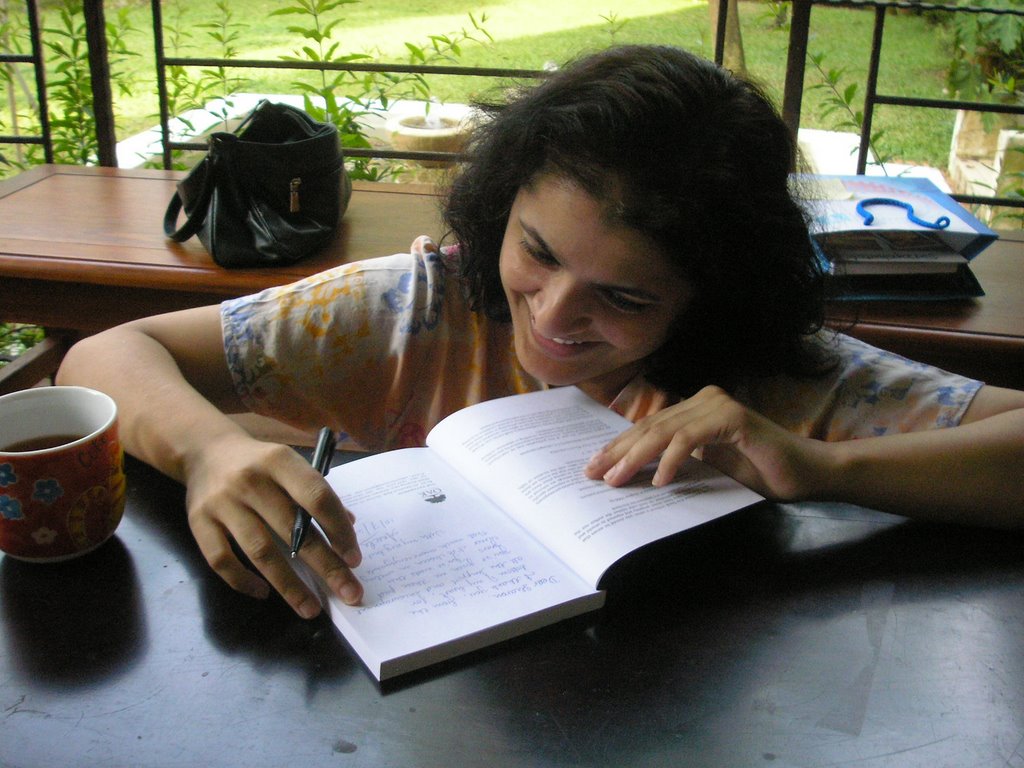
I enjoyed meeting Norman after the event, and got my copy of the book signed. It was great to meet so many friends from the bookshops too, and make some new ones. And we got great goody bags of ingredients including tons of Adabi curry powder ... so now I have no excuse not to cook the dishes!
Thursday, July 02, 2009
Mme Rabotswe Shares Recipes
You've read the books and now cook the food!Precious Ramotswe, the protagonist of Alexander McCall-Smith's No1 Ladies' Detective Agency series shares her recipes for a whole range of nicely fattening treats to raise money for a range of Botswanan charities.
The book Mma Ramotswe's Cookbook will be published by Polygon in November and is the brain child of charity worker Stuart Brown, and McCall-Smith said he is delighted with it.
Now all that remains to be seen is if the "traditionally built" Mme Rabotswe is in the same league as Nigella and Jamie!
And which other fictional characters would you like to see shares recipes?
Monday, December 15, 2008
Alone with an Eggplant
A recommendation from Preeta :If you're looking for more good nonfiction to read, consider this collection of essays called Alone In The Kitchen With An Eggplant-- I'll come clean and confess that a good friend edited it and that another has an essay in the book, but I still wouldn't be telling you to read it if I thought you wouldn't love it. It has essays by Murakami, Ann Patchett, plus a bunch of other lesser-known but equally talented writers, all on the subject of cooking and eating alone -- in the end it is more a book about solitude than about food, though food provides the perfect lens through which to study solitude. It isn't a cookbook (though there are a couple of recipes here and there) -- the essays are thought-provoking and literary and many of them manage to be fun as well.
And I do think many of your readers would enjoy the book. If you want more background information or a brief description of the book, you can find it at Jenni's lovely website .
*Sigh* I've done a lot of cooking and eating alone in my life, so I have to read this. (Delia - thanks for being my savior!)Preeta also pointed me in the direction of an excellent website she thinks you will enjoy : Fiction Writers Review run by :
... a community of emerging writers dedicated to reviewing, recommending, and discussing quality fiction—how it works and why it mattersThere are reviews, essays, interviews and a blog.
Wednesday, September 17, 2008
Literary Curry
If you picked up the free copy of MPH's Quill magazine, you will have read my interview with Janet de Neefe, who founded the Ubud Readers and Writers Festival. Janet and her husband Ketut Suardana run two of Bali's most famous restaurants, Casa Luna of Ubud and Indus of Campuan, (website here) as well as Honeymoon Guesthouse where regular cookery classes are held. Janet is also the author of Fragrant Rice: My Continuing Love Affair with Bali published by Harper Collins Australia.
Sadly, there was one question that had to be cut due to space constraints, and since I asked it for you, I append it here because this dish is absolutely yummy!:
Could you give us a typical Balinese recipe that our Malaysian readers might enjoy?
KARE AYAM
Chicken curry
Probably the most wonderful aspect of making a curry is the heavenly aromas that drift through the house when food is being prepared. Balinese chicken curry is lighter than its Indian counterpart. You can also replace the chicken with any other meat, fish or vegetable.
For maximum flavour, I always use chicken thigh or leg with the bone for a curry. However, you can use chicken breast or boned meat if you prefer. Use fresh galangal and turmeric for this dish as the flavour, aroma and texture will be far superior to the powdered varieties.
Serves 3-4
750 g chicken pieces
1-2 cups coconut milk
5 tbs oil for frying
1 lemongrass
3 salam leaves (These are a kind of Indonesian bay leaves)
4 lime leaves
sea salt
2 tsp tamarind
Spices:
5 small red shallots
7 small cloves garlic
3 large red chilli
2-3 bird's-eye chillies
1 tbs ginger
3 tbs galangal
3 candlenut
1 tbs fresh turmeric
½ tomato 2 stalks of lemongrass
1/4 tsp shrimp paste
2 tsp coriander seeds
1/4 tsp cumin (opt)
1 tbs palm sugar
Blend all the spices in the container of a food processor until paste-like. Add a little water if necessary. Bruise the extra lemon grass and tie into a loose knot.
Heat the oil in a wok over a medium flame. Throw in the spices, lemongrass, lime leaves and salam leaves. Push them back and forth confidently for 30 seconds until fragrant and shiny, making sure they don’t burn on the base of the wok. Add the chicken and toss around until sealed or half-cooked. This will take at least two minutes. Add two cups of water and boil for about fifteen minutes or until the meat is cooked. Now add the final layer of coconut milk.
Bring to the boil, simmer for a minute and then turn off.
Check seasonings and serve topped with shallots. Add sea salt to taste.
Alternatives:
Potatoes, beans, or carrots may be added, or tempe/tofu may be used as a meat substitute.
Wednesday, April 23, 2008
Mohana's Award
I am a very shamefaced Sharon right now.See, I don't usually read the New Straits Times (although I read newspapers from around the world online) so I missed the great news that Mohana Gill has won The Gourmand World Cookbook Award 2007 for her book on vegetarian cooking, Vegemania. This is actually her second award (she won the Special Jury Award for her earlier book Fruistastic!). Read Zahara Othman's article here.
I first met Mohana when she appeared at MPH's Writer's Circle, and was impressed with both her passion for getting out the message about healthy eating and her beautifully produced books with tempting recipes.
My biggest congrats, Aunty Mohana for very well deserved success. (And many thanks to my anonymous commentator who sent me this information. Don't let me slip up again!)
If you'd like a little taste of Mohana's recipes, take a look at these excellent little videos on Friedchillies.tv - Episode 1, Episode 2, Episode 3, Episode 4.
Saturday, March 15, 2008
The Convenience Food Martyrdom of St. Delia
I have most of her books, usually given to me as Christmas presents by my sister over the years. (I would usually buy her the same book in return!) Every single one of her recipes I've tried have turned out really well (apart from one curry recipe which was way too mild for my chilli-tempered tastebuds) and I've reaped the praise. (My book club members - even the non-vegies - are begging for my/Delia's nut loaf for the next meet.)
My mum hated cooking (apart from puddings and cakes which she pulled off rather well) and you tasted that resentment in every mouthful (soggy cabbage, congealed gravy, overcooked meat). She also relied on tinned and packet food and frozen foods much of the time, as did so many in her generation of British housewives, post-war rationing. Frozen fish fingers, cod in butter sauce, baked beans on toast, Heinz spaghetti hoops, boil-in-the-bag rice, faggots (the haggis actually was invented in the British Midlands!) with tinned mushy peas, instant coffee, television dinners in neat aluminum trays, tinned salmon for Sunday teas, oven chips ... the litany goes on.
I wasn't allowed into the kitchen which was her territory, and I had only a few cooking lessons at school with a veritable dragon of a domestic science teacher, so it was through books that I learned to cook. My first, a birthday present in 1973, was Good Housekeeping's Basic Cookery, which I still use a lot. (I'm working up the energy to go downstairs in a while to make a ginger loaf cake.)
Although I try to keep most of the books on my shelves in good condition, my cookbooks wear their war wounds with pride. The cover has almost come off my Complete Illustrated Cookery Course (above), and Delia Smith's Christmas (left) would provide a forensic scientist with much DNA evidence (including a smear of blood when I grated my finger in with the lemon peel).
I also scribble comments meant for future reference on all the recipes I've tried (below right), with notes of changes and substitutions and suggestions for future modifications. My cookbooks are completely interactive.
But now comes news that St. Delia's halo is crumbling. Britain's Daily Mail talks about the "demonising" of Delia (and puts a pair of red horns on her picture) and Delia Goes to the Darkside screams Alex Renton's headline on the Guardian website :
We burnt Delia last night. "How to Cook", Volumes One and Two: the books went up in strangely pungent smoke as the crusted pages gave up the essences of recipes we sweated over 10 years ago: coconut milk, lime juice, crème fraiche, "classic fresh tomato sauce". "Fresh" is on most pages: the black pepper never appears without the words "freshly milled".
What's the original kitchen diva done wrong? Well her latest book, and the TV programme based on it, is called How to Cheat at Cookery(which was also the title of the first book she wrote) and the recipes are all based on convenience foods. Tins, jars, packets, frozen stuff. Her fans are devastated and accuse her of selling out. Whilst I'm not averse to time-saving methods and a bit of creative cheatery myself, Delia in her previous incarnation taught me that food can be fast and delicious and composed of fresh ingredients. One of my favourite recipes I learned from her, a sort of pasta Alfredo of the sort that posh restaurants charge RM30 or so per portion for can be produced in 7 minutes with a couple of minutes spare to assemble a tomato salad. Drop by and time me if you don't believe it.
Here's what Delia herself says.
Incidentally, Delia was in KL not so long ago with Norwich City FC and she signed some books in Kinokuniya. I'm still kicking myself for not going with my food-splattered, falling apart, scribbled on copies for her to sign.
(Rob sent me the links via Facebook and I think he is horrified too!)
Monday, July 02, 2007
Weird Cookbooks
This top ten list of the World's Weirdest Cookbooks on second-hand bookseller AbeBooks site made me smile!
It makes perfect sense, doesn't it, to have your dinner cooking on the car engine while you travel? Bill Scheller, co-author of the winning title talks about how the book (now sadly out of print) came to be written and explains how all the recipes in Manifold Destiny are measured in miles rather than in minutes. Some of the gastronomic highlights:
Sorry pet lovers but ... It reminds me of the time I was in a shared taxi in Nigeria and for no apparent reason the driver swerved dangerously across the road. Apparently he had seen a dog and fancied it for dinner, but missed it. (There was just one village in my area where dogs were eaten as a delicacy, you'll no doubt be relieved to know.)
Another time in a another shared taxi, but this time in Cameroon, my co-passengers got all excited when a large mongoose ran out in from of the car. "Beef!" they chorused, using the generic pidgin English term in that part of the world for all bush-meat.
Can't think why the compilers of the list included the cookbook for cats. What's so weird about wanting to give your darlings a gourmet dinner?
- Manifold Destiny: The One, The Only, Guide To Cooking On Your Car Engine by Bill Scheller & Chris Maynard
- The Roadkill Cookbook by Buck Peterson
- The Eat-A-Bug Cookbook by David George Gordon
- The Special Effects Cookbook by Michael Samonek
- Cooking in the Nude by Stephen Cornwell & Debbra Cornwell
- Cooking to Kill: The Poison Cook Book by Ebenezer Murgatroyd
- Star Wars Cookbook: Wookiee Cookies and other Galactic Recipes by Robin Davis
- Mini Ketchup Cookbook by Cameron Pearl
- Cooking for Cats by Elisabeth Meyer
- Strange Foods: Bush Meats, Bats and Butterflies by Jerry Hopkins
Hyundai Halibut with Fennel (Distance 55-85 miles), Cruise-Control Pork Tenderloin (Distance: 250 miles), and Poached Fish Pontiac (Distance: 40 miles) ...Peterson's Roadkill Cookbook is thankfully a rather tongue-in-cheek guide to turning the beasties you accidentally hit on the road into palatable fare. The book has a cult following and has spawned other titles, including an international version.
Sorry pet lovers but ... It reminds me of the time I was in a shared taxi in Nigeria and for no apparent reason the driver swerved dangerously across the road. Apparently he had seen a dog and fancied it for dinner, but missed it. (There was just one village in my area where dogs were eaten as a delicacy, you'll no doubt be relieved to know.)Another time in a another shared taxi, but this time in Cameroon, my co-passengers got all excited when a large mongoose ran out in from of the car. "Beef!" they chorused, using the generic pidgin English term in that part of the world for all bush-meat.
Can't think why the compilers of the list included the cookbook for cats. What's so weird about wanting to give your darlings a gourmet dinner?
Tuesday, October 17, 2006
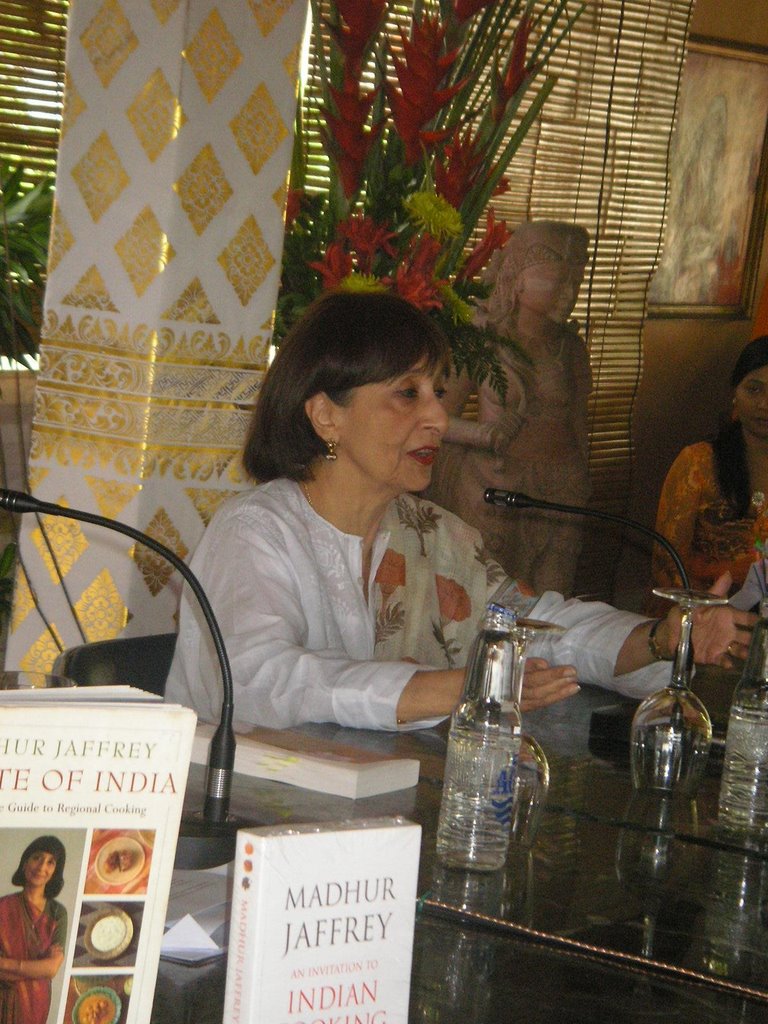
Mad for Madhur
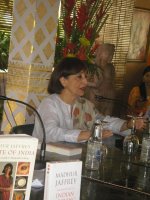
I've loved Madhur Jaffrey for years, with that special affection engendered for those who teach us to cook and transform our kitchen lives.I thought about taking my cookbooks along to Bali for Madhur to sign, but quite aside from AirAsia's measly baggage allowance, wouldn't she have been insulted to see her books curry splattered, the pages stuck together with splashes of my own attempts, and my comments and adaptations scribbled on them? (I have the fantasy of presenting her with a stained page and saying "Here, Madhur, sniff this. Did I get the proportions right?")
Madhur says that she learned to cook after she moved to London from Delhi to take up a course at the Royal Academy of Dramatic Arts (RADA) and discovered just how dreadful British food was "apart from the fish and chips". She encountered "beef grey in colour and cabbage boiled for days" in the canteen. She longed for the spicy food of home.
Learning to cook, then was a matter of survival. She asked her mother for recipes, and the air letter arrived with fairly vague instructions ("add a little bit of this, a little bit of that") so that she had to rely on her memory of taste to get the proportions right.
When she came to write recipes for others she said that she "thinks like a dummy" to make sure that the instructions are as foolproof as possible.
Althought there were numerous Indian restaurants in Britain at that time, they did not reflect the authentic cuisine of the subcontinent, and tended to behave for example, as if India did not have fish.
After graduation, Madhur became a successful film actress, appearing in Shakespeare Wallah, Heat and Dust, and numerous others, as well as in TV and radio productions. She moved married actor Saaed Jaffrey and moved to New York. (She later divorced, and married Sanford Allen.)But being an actress is a precarious business and she realised that if she wanted to be able to aford to send her children to good schools and colleges, she needed to supplement her income. She decided to write about the arts for newspapers and magazines, then got "somehow hijacked" into food writing and started writing for magazines like Gourmet.
She says she picked pieces according to countries she wanted to go to and then set out with her "begging bowl" to ask ordinary folk for their recipes. She would enlist "the farmer's wife, the fisherman's wife" and then go to their houses to watch exactly how the recipe was cooked. She enjoys exploring the cultural connections along with the food.I can personally attest for the authenticity and user-friendliness of the recipes in Far Eastern Cooking, one of my favourite cookbooks of all time. (I have the videos too.) Everything works. Everything tastes right.
Madhur has always been a "one woman band, with no assistance", she says. When she tests a recipe, she does all her own shopping, chopping, preparation and cooking, and records her notes onto the computer. "Any mistakes in the recipes are all mine," she says. She says that when writing a cookbook, she typically puts on 8lbs as she tests recipes and ends up with all the left overs in the fridge!
Her first book was published in 1973, though the early publications didn't do well. Then in the early 80's the BBC decided that they would like to do an educational programme about Indian food and asked Madhur to audition.
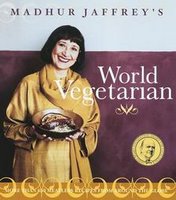
The print run of 30,000 copies of Indian Cooking sold out first week the programme aired! Her audience "were hungry for recipes that didn't come out of flock papered restaurants" and Indians wrote to tell her that they were proud of her. The restaurants began to change, and she says she feels responsible in a sense for that change.Several more very successful books followed it including World Vegetarian. My favourite (and she says it's hers too!) though is a book which did not sell well - Food for Family and Friends a fusion cookbook she says "was ahead of its time". (I got my copy at a bargain basement price at MPH years ago.)
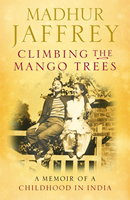
At the festival she read an extract from her latest book - not a cookbook this time, but a memoir, Climbing the Mango Trees: A Memoir of a Childhood in India. She says that in writing it she had to wrestle with issues such as how truthful should you be? Who do you hurt? Who do you not hurt? And she notes that "when you start writing one thing a whole host of other things come back to you: writing awakens what seems to be sleeping and dormant".At 73, (I couldn't believe it until I did the maths just now) Madhur Jaffrey shows no sign of slowing down and still relishes the idea of travelling the world to collect recipes. Indeed, one of the things she enjoyed doing in Ubud was going on the market walk Janet de Neefe organises weekly, along with a cookery demonstration.
No doubt there will be some Balinese dishes in her next collection!
Saturday, July 15, 2006
Self-Serving Great Grandmother's Dishes
MPH Writer's Circle today and it was nice to have Oon Yeoh back in the driver's seat.
The topic was self-publishing. Azizi Ali talked about his self-publishing venture first. This was pretty much a repetition of what he said in a session last year but I guess he was trying to drum up support for his seminar How to Write a Best-Seller in 88 Days. (Why 88? Why not 30 or 153? Think Chinese numerology lah!)
Best piece of info from Azizi - the most important page of your book is the back cover, since research has shown that readers spend an average of 3 seconds looking at the front cover and 8 seconds looking at the back.
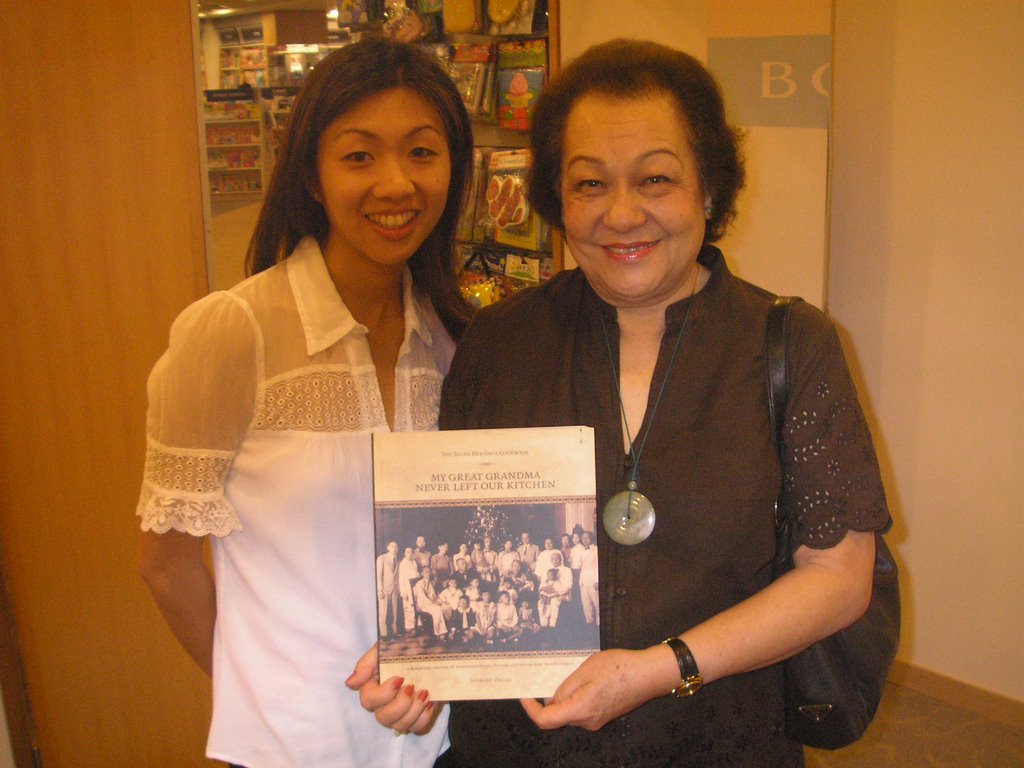
I was much more interested in hearing about Shirley Zecha's part family-history, part cookbook My Great Grandma Never Left Our Kitchen. Shirley talked about how family recipes (a unique blend of Indonesian/Dutch/Chinese/Nyonya influences) had been passed down the generations from her great-grandmother to her grandmother, to her aunt and finally to her. Four women who lived in different eras were united in their passion for food.
But it took a fifth woman to bring the book to fruition: Shirley's daughter Claudine realised that the recipes and stories were not just a family treasure in danger of being lost forever since she isn't a cook herfelf, but of much wider cultural relevance.
She put the book together and became the publisher. ("I'm only the cook," said Shirley, modestly.) After consulting cookbook publishers who seemed to have very set ideas about what a cookbook should look like, she decided to self-publish to have more control over the finished product and the process of putting it together.
Claudine says she managed to find the right team of people to edit and design the book (her background in advertising clearly came in useful), and all the cooking was done at home over 10 days, working from early moring till late night. The photos of the dishes, taken in and around the house, are absolutely mouthwatering and I couldn't bear to look at them because it was too near lunch time!
Claudine was pretty shrewd about approaching newspaper and magazine editors so that articles about the book appeared in the press, particularly at times of the year when interst was likely to be greatest, for example, Mother's Day. Cookery demos at MPH created more interest. Hotels in Malaysia were persuaded to stock copies, and HSBC adopted it as a corporate gift, which boosted sales. The book has sold about 3,000 copies so far and can also be found in London at Books for Cooks.
I'd love the book for the slice of Malaysian and Indonesian history it serves along with the food.
(Incidentally, while we're on the subject of putting cookbooks together, I was fascinated to read Starlight's behind-the-scenes-account of her current project ...)
Below is a picture I snapped this afternoon of Aneeta Sundararaj signing a copy of Snapshots! for me. Looking forward to reading it.
The topic was self-publishing. Azizi Ali talked about his self-publishing venture first. This was pretty much a repetition of what he said in a session last year but I guess he was trying to drum up support for his seminar How to Write a Best-Seller in 88 Days. (Why 88? Why not 30 or 153? Think Chinese numerology lah!)
Best piece of info from Azizi - the most important page of your book is the back cover, since research has shown that readers spend an average of 3 seconds looking at the front cover and 8 seconds looking at the back.I was much more interested in hearing about Shirley Zecha's part family-history, part cookbook My Great Grandma Never Left Our Kitchen. Shirley talked about how family recipes (a unique blend of Indonesian/Dutch/Chinese/Nyonya influences) had been passed down the generations from her great-grandmother to her grandmother, to her aunt and finally to her. Four women who lived in different eras were united in their passion for food.
But it took a fifth woman to bring the book to fruition: Shirley's daughter Claudine realised that the recipes and stories were not just a family treasure in danger of being lost forever since she isn't a cook herfelf, but of much wider cultural relevance.
She put the book together and became the publisher. ("I'm only the cook," said Shirley, modestly.) After consulting cookbook publishers who seemed to have very set ideas about what a cookbook should look like, she decided to self-publish to have more control over the finished product and the process of putting it together.Claudine says she managed to find the right team of people to edit and design the book (her background in advertising clearly came in useful), and all the cooking was done at home over 10 days, working from early moring till late night. The photos of the dishes, taken in and around the house, are absolutely mouthwatering and I couldn't bear to look at them because it was too near lunch time!
Claudine was pretty shrewd about approaching newspaper and magazine editors so that articles about the book appeared in the press, particularly at times of the year when interst was likely to be greatest, for example, Mother's Day. Cookery demos at MPH created more interest. Hotels in Malaysia were persuaded to stock copies, and HSBC adopted it as a corporate gift, which boosted sales. The book has sold about 3,000 copies so far and can also be found in London at Books for Cooks.
I'd love the book for the slice of Malaysian and Indonesian history it serves along with the food.
(Incidentally, while we're on the subject of putting cookbooks together, I was fascinated to read Starlight's behind-the-scenes-account of her current project ...)
Below is a picture I snapped this afternoon of Aneeta Sundararaj signing a copy of Snapshots! for me. Looking forward to reading it.
Monday, July 10, 2006
Shirley Zecha for Writers Circle
MPH Writer's Circle meets this coming Saturday, 15th July in the Booker Room of MPH 1 Utama.The topic is self-publication and the main speaker is Shirley Zecha, author of The Zecha Heritage Cookbook: My Great Grandma Never Left Our Kitchen.
If you'd like a place, please call Customer Service at 03-7726 9003 or email csoneutama@mph.com.my.
Subscribe to:
Posts (Atom)