Showing posts sorted by relevance for query wena poon. Sort by date Show all posts
Showing posts sorted by relevance for query wena poon. Sort by date Show all posts
Monday, February 22, 2010
When Is Buying a Book Like Buying an Organic Tomato?
I blogged earlier about UK small press publishers, Salt, and how they were seriously struggling and initiated the Buy One More Book Campain. yesterday I was chatting by email to Wena Poon about the problems the company faces, and asked her if she would like to write something for this blog. She sent me this :
The Singapore-born writer Wena Poon lives in Austin, Texas and drinks only small brewery beers. Her latest novel, Alex y Robert, about girl matadors in Spain, is coming out with Salt in July 2010.SALT PUBLISHING, OR HOW TO PICK BOOKS LIKE HEIRLOOM TOMATOESWena Poon, author and avid book consumer, reflects on a new kind of responsible book buying.
After reading about the swift consolidation of the publishing industry, I now realize that the different brands of books you see in the bookstores are all owned by the same conglomerate. It’s like dim sum – different shapes but all made in the same kitchen.
Now that I have been corrupted by hipster Americans and buy organic produce from local farms, I have also been converted into a new kind of Responsible Book Buying. I make an effort to buy books from Independent Presses. To me, it’s exactly like buying an heirloom tomato, or an artisanal cheese.
Ever since they published my first book, Lions In Winter, for the Western market, I have also begun appreciating the beauty of an independent press like Salt Publishing.
Salt is not owned by Mega Corp. Its books are beautifully designed, bound and printed on quality paper. The ten-year old press has 400 authors and 1,000 books, and is run entirely out of a cute little office in Cambridge, England by a husband and wife team and two young interns.
Salt authors have been recognized by literary festivals and competitions the world over, including, in 2010, the Adelaide Literary Festival and the Willesden Short Story Awards (3 of the 10 shortlistees are Salt authors, including me!)
Salt books are most widely available in England, but if you are not there, there is no reason why you should suffer. Forget it, your local bookstore will never order it. You can die waiting. Try buying a few books of contemporary poetry or short fiction from Salt online. (They’re also on Amazon).
Buying Salt books is the reason why I have started reading modern poetry again, and I find that I rather like it! Like an heirloom tomato, this content is not processed or genetically modified by legions of agents, editors, businessmen, promoters. It tastes real, hopeful, earthy, immediate. Try it!
Recession limited your spending funds? I’ve decided it’s more “worth it” to buy a book than eat a gourmet restaurant meal. The book lasts longer, and it doesn’t show around the waist! The UK tv personality Griff Rhys-Jones said it best: "If the recession is going to take things down, let it be motor manufacturers, let it be bad banks, let it be chains of fast food restaurants. We can lose a few of them, but we don’t have enough small independent and daring publishers like Salt."
Risk averse? Want a recommendation? Try Luke Kennard’s The Migraine Hotel (British Poetry). I bought it and it’s now one of my fav books. Luke is a twentysomething lyrical poet who’s very funny and clever (this is hard for me to admit, since I’m older and get so jealous sometimes.) You can see him on Youtube reading to giggling crowds.
Hardworking student type? Want to read tips about how to write better short stories? Try Vanessa Gebbie’s Short Circuits (Non-Fiction), containing reflections on this art form from Britain’s best short story writers.
Worried about shipping costs to your part of the world, including Australia/NZ/Malaysia? I have not found it to be a problem. Click here to see their reasonable rates.
For updates, and local get-togethers especially if you are in the UK, join the Salt Facebook Fan Page.

Monday, August 04, 2008
Wena in Cork
I'm excited for Wena Poon all over again.
Longlisted for the the Frank O'Connor Short Story Award, she had no chance of being shortlisted for the same ... because, of course, there wasn't a shortlist in the end.
But Wena has been invited to read her work at the Frank O’Connor Literary Festival in Cork, Ireland, on September 17-21, 2008. Also appearing will be Jhumpa Lahiri, Yiyun Li, Clare Wigfall and ZZ Packer. You just don't get bigger names in short fiction than these.
As Wena reminds us on her blog :
(Pic above is Wena being interviewed recently on Channel News Asia.)
Longlisted for the the Frank O'Connor Short Story Award, she had no chance of being shortlisted for the same ... because, of course, there wasn't a shortlist in the end.
But Wena has been invited to read her work at the Frank O’Connor Literary Festival in Cork, Ireland, on September 17-21, 2008. Also appearing will be Jhumpa Lahiri, Yiyun Li, Clare Wigfall and ZZ Packer. You just don't get bigger names in short fiction than these.
As Wena reminds us on her blog :
This is the first time a Singaporean author, and MPH, a Malaysian publisher, appeared on the FOC longlist. The longlist had a preponderance of authors from the West: 36 out of 39 authors. Only 3 authors were not from the West - they were from Singapore (Wena Poon), Nigeria and Taiwan.What I hope for most now is a way for Wena's book to find it's way into the hands of a wider readership overseas ...
(Pic above is Wena being interviewed recently on Channel News Asia.)
Sunday, November 25, 2007
Wena's Big Break

As an Asian writer, I have had enough of ‘prettified pathos’ ... It’s always about the past, about Chinese people being concubines, having their feet bound, etc. We’re not all Amy Tans, and we Asian women don’t all have ‘issues’ with our families or mothers, or have immigration issues. We’re ready to move on.Singaporean author Wena Poon is interviewed in Starmag by Alexandra Wong about why she has decided to represent modern Asian voices in her new collection of short stories, Lions in Winter, published by MPH.
She drew on real-life characters and situations for her stories, she says. Her stories, says Wong:
... examine the quiet lives of displaced Singaporeans living abroad, and those in Singapore who are often torn between two worlds in their search for an imaginary homeland.Poon adds:
My theory was: white people write so much about themselves, we should write more about ourselves. Don’t we have our own sorrows, stories, joys, histories? I never want to believe that Singaporeans, for example, are less interesting than any other group of people on Earth, but in Singapore we often think of ourselves as boring, dull, compliant, etc. Are we not worthy of being captured for posterity in our own writing?Of course, and one hopes that her writing will encourage others to capture those ordinary (but, oh so rich) lives as well.
She describes the almost accidental way the book happened. Her first ever short story Moving was scribbled on a legal pad during a plane journey, in response to a call for stories for the 2002 Merlion and the Hibiscus anthology put out by Penguin.
Two more stories appeared in Silverfish anthologies.
And then a number of things came together: me thinking (as I read a third great short story) that I'd love to read a whole book of her stuff Eric Forbes of MPH telling me every time we met that it was so hard to find good local writing that deserved to be published, and Wena's own piece on Raman's website about how she couldn't find a publisher and so had decided to go the print-on-demand route. There were loose ends that clearly needed to be connected. I'm so glad they were. Eric read her stories in the Silverfish collections and immediately scooped her up with a contract.
Alexandra Wong also reviews the book and finds it:
... an accomplished piece of work ... (which would) hold its own among works by more experienced Asian writers.
I think this is a story about what can happen when a publishing environment is working optimally, Penguin and Silverfish providing a platform for a new writer, MPH being so proactive in signing her up, and Starmag for highlighting her book even before it hits the shelves.
I really wish Wena the very best of luck with this collection when it is released next month, and I hope we get to see her here in Malaysia soon.
(Note: the title of this post is of course a nod to Wena's hilarious and very clever story Kenny's Big Break.)
Tuesday, September 01, 2009
Wena and Co for Southbank
It was very nice to hear this morning (via Twitter) that Singaporean author Wena Poon is going to be appearing with novelist Isa Kamari (left) and Edwin Thumboo at Level 5 Function Room at the Southbank centre in London on Monday 28 September 2009, 7.45pm. The event is called Writing Singapore and here is the blurb about it :
In a first for Southbank Centre, we welcome a group of Singaporean writers to read from their work and share insights about the literary culture of their nation. Isa Kamari is an experimental novelist and playwright whose most recent work is Tawassul (Nearness). Wena Poon writes from the diaspora experience of living in the US. Her fiction looks at Singaporean and American life in her latest novel Lions in Winter. Edwin Thumboo is a leading figure in Singaporean poetry, who edited some of the earliest anthologies of Singaporean and Malaysian literature in English.Do hope some of you who are living in London will be able to make it. I wish I could be there!
Wednesday, July 08, 2009
Foxy Wena
Wena Poon has just launched a website for her new collection of stories, The Proper Care of Foxes, which is published by Ethos in Singapore. the book will be avaialble from September and will be launched at this year's Ubud Writers and Readers Festival.
Wena Poon’s first book, Lions In Winter, was longlisted for the Irish Frank O’Connor International Award (there was no shortlist) and shortlisted for the Singapore Literature Prize. I do hope that she enjoys similar success with this one.
Tuesday, February 05, 2008
Wena's Lions and Lion City
Although several of the stories in Wena Poon's Lions in Winter have been published in different places and at different times, the collection as a whole is unified by the common thread of displacement. Like the Chinese lions in the snowy New York landscape in the title story, many of her characters are Asians transplanted to the west.
Sometimes they also make the journey back to Singapore, giving us the chance to see the country through their eyes. There is a very telling moment when the protagonist of the same story, Freddie stops for a moment to sniff the air as he goes through immigration at Changi airport, knowing that withing twenty minutes his nose would have got so used to the distinctive
Poon's great gift, though, is to keep that freshness of vision and to bring out the extraordinariness of the ordinary lives she describes, looking not only at immigration and the sometimes painful path to assimilation, but also questioning just what it means to be Singaporean.
She writes beautifully in a style that is both informal and conversational, and there are clever little asides thrown into the narrative that really tickle the funny-bone. This made me chuckle as I read Those Who Serve, Those Who Do Not :
But it is the poignancy of the other stories in the collection that hits home. In The Man Who Was Afraid of ATM's, an elderly Chinese teacher finds his confidence, and in fact his whole identity eroded after emigrating to Canada with his son and his family. He doesn't fit in Chinatown because he cannot speak the Cantonese which is the lingua-franca, and he finds he cannot cope with the westerners. A moment of crisis comes before an ATM machine as he struggles to make a withdrawal to pay for his daughter-in-law's dress (ironically of course, a cheong sam!). For me, the most moving part of the story is the description of this scholar's old Chinese books which he almost had to leave behind, and which represent a heritage that not even his own family care to share.
Toys is a particularly interesting story as the Asian character remains just outside the frame of the story throughout. The story is written from the point of view of a bed-ridden American woman recovering from a serious car accident. With little else to do but look out of the window, she becomes obsessed with the toys in the back of an Asian neighbour's car giving each one a name and becoming upset when the toys slowly start to disappear. Ironically the neighbour is never named, and lumped instead with all other Asians in an all-encompassing "they", we do not even learn what race she is. We can only wonder at how events might have turned out differently if that first impulse to invite her to thanksgiving dinner had not been stifled.
My favourite story though is The Shooting Ranch in which mother and daughter, Cynthia and Anouk, drive to Nevada to visit the daughter of an aunt who lives on a ranch. They imagine some pleasant get-away but instead they find themselves marooned in a situation of almost unbearable social awkwardness, and participating in one of the most uncomfortable meals I think I've ever read about in fiction. It turns out that this isn't even a ranch in the true sense, but a place where tourists come to shoot pheasants and rabbits released into the woods for their sporting pleasure.
The characterisation in this story is masterful, particularly in the contrast between sophisticated screenager Anouk with her terminal fear of the uncool, and Nancy's terrified and deprived twin daughters who undertake only the quietest form of rebellion, gathering the injured animals and nursing them back to health.
Poon doesn't surrender to the kind of sentimentalised depictions of heart wringing deprivation which are the hallmark of much Asian- American writing. In The Shooting Ranch she even takes time out to make fun of the stereotypes. As Cynthia tells Anouk:
I am so proud to have played a small part in this collection coming to print. I knew Wena deserved to be published, but this collection of short fiction is even stronger than I had expected, and I feel (honestly) that this is a book you could confidently put beside other collections by prominent Asian American short story writers. (Rattawat Lapcharoensap and - why not? - and even Yiyun Lee spring to mind.)
I'm also really happy to see that my friends at MPH went the extra mile with the production of the book, the design and the binding and the paper and the type size all meet my incredibly exacting standards. So well done too Janet and Eric!
Here's Wena at a book signing at MPH Raffles City in Singapore a few days ago.
You can meet her at MPH's Breakfast Club on the morning of March 22nd, and at Readings@Seksan's in the afternoon.
Sometimes they also make the journey back to Singapore, giving us the chance to see the country through their eyes. There is a very telling moment when the protagonist of the same story, Freddie stops for a moment to sniff the air as he goes through immigration at Changi airport, knowing that withing twenty minutes his nose would have got so used to the distinctive
warm, seeping, slightly musty smell of earth, tinged with the faintest hint of diesel ...that he will fail to notice it: it is in those first moments of homecoming, that we see everything with a sharp clarity that we quickly lose as we reassimulate.
Poon's great gift, though, is to keep that freshness of vision and to bring out the extraordinariness of the ordinary lives she describes, looking not only at immigration and the sometimes painful path to assimilation, but also questioning just what it means to be Singaporean.
She writes beautifully in a style that is both informal and conversational, and there are clever little asides thrown into the narrative that really tickle the funny-bone. This made me chuckle as I read Those Who Serve, Those Who Do Not :
National Service was the male equivalent of having one's period - predestined to occur at a certain age, repeated throughout the most productive years of one's life, and entirely and relentlessly gender specific. Like menstruation, it was an inscrutable rite of passage about which one gender hardly shared notes with the other.I'd had Poon down as a clever humourist after enjoying her two stories which appeared in the Silverfish collections. Kenny's Big Break in which a boy snaffles the ang-pow money at his sister's wedding to finance his education made me laugh as much as ever (and how many times have I read it?). Addiction, the story of a Singaporean medical student in London who decides to defect to do a fashion design course while stringing his mother along on the end of the phone, was another complete delight.
But it is the poignancy of the other stories in the collection that hits home. In The Man Who Was Afraid of ATM's, an elderly Chinese teacher finds his confidence, and in fact his whole identity eroded after emigrating to Canada with his son and his family. He doesn't fit in Chinatown because he cannot speak the Cantonese which is the lingua-franca, and he finds he cannot cope with the westerners. A moment of crisis comes before an ATM machine as he struggles to make a withdrawal to pay for his daughter-in-law's dress (ironically of course, a cheong sam!). For me, the most moving part of the story is the description of this scholar's old Chinese books which he almost had to leave behind, and which represent a heritage that not even his own family care to share.
Toys is a particularly interesting story as the Asian character remains just outside the frame of the story throughout. The story is written from the point of view of a bed-ridden American woman recovering from a serious car accident. With little else to do but look out of the window, she becomes obsessed with the toys in the back of an Asian neighbour's car giving each one a name and becoming upset when the toys slowly start to disappear. Ironically the neighbour is never named, and lumped instead with all other Asians in an all-encompassing "they", we do not even learn what race she is. We can only wonder at how events might have turned out differently if that first impulse to invite her to thanksgiving dinner had not been stifled.
My favourite story though is The Shooting Ranch in which mother and daughter, Cynthia and Anouk, drive to Nevada to visit the daughter of an aunt who lives on a ranch. They imagine some pleasant get-away but instead they find themselves marooned in a situation of almost unbearable social awkwardness, and participating in one of the most uncomfortable meals I think I've ever read about in fiction. It turns out that this isn't even a ranch in the true sense, but a place where tourists come to shoot pheasants and rabbits released into the woods for their sporting pleasure.
The characterisation in this story is masterful, particularly in the contrast between sophisticated screenager Anouk with her terminal fear of the uncool, and Nancy's terrified and deprived twin daughters who undertake only the quietest form of rebellion, gathering the injured animals and nursing them back to health.
Poon doesn't surrender to the kind of sentimentalised depictions of heart wringing deprivation which are the hallmark of much Asian- American writing. In The Shooting Ranch she even takes time out to make fun of the stereotypes. As Cynthia tells Anouk:
In America, Asian means we're the kind of people who live between the covers of books with geisha's pictured on the front and titles written in brushstroke font. usually a bird of flower forms part of the title. Memories of Lotus Leaves. Grandmother's Peony Diaries. Palace of dreams and Wild Cranes. My Hurting Achy Bound feet. That kind of thing.A case in point is The Hair-Washing Girl, a story which centres on a hair salon in New York's Chinatown. Mina works long shifts in conditions too cramped to allow her space to rest for just $8 an hour and shares and apartment with six others. Abandoned (out of necessity) by her Indonesian mother and made to shift for herself after her adoptive mother turned her back on her at the age of 15, she comes to work in New York as an illegal immigrant after being made unemployed in Singapore. Her employer, Mrs Fong, has a life story even more heartbreaking, yet as we eavesdrop on their lives for a few hours we realise that neither of them cast themselves as victims. Mina makes her first expedition into the city beyond Chinatown to see a film with a friend, while Mrs Fong makes plans for her 60th birthday celebrations.
I am so proud to have played a small part in this collection coming to print. I knew Wena deserved to be published, but this collection of short fiction is even stronger than I had expected, and I feel (honestly) that this is a book you could confidently put beside other collections by prominent Asian American short story writers. (Rattawat Lapcharoensap and - why not? - and even Yiyun Lee spring to mind.)
I'm also really happy to see that my friends at MPH went the extra mile with the production of the book, the design and the binding and the paper and the type size all meet my incredibly exacting standards. So well done too Janet and Eric!
Here's Wena at a book signing at MPH Raffles City in Singapore a few days ago.
You can meet her at MPH's Breakfast Club on the morning of March 22nd, and at Readings@Seksan's in the afternoon.
Sunday, May 24, 2009
Longlist for the Poppies 2009
Popular Bookstores are running their Reader's Choice (for books in English) and Anugerah Pilihan Pembaca (for books in Malay) awards again this year. Kimmy of Popular was kind enough to send me a copy of the lists of nominees (based, I believe on sales instore) so I guess I have the scoop before the newspapers!
I will blog the Readers Choice award first, and here's the listwhich I have subdivided into categories, although there is just one overall prize. (Wouldn't it be nice to have more, so that we could celebrate different categories?) *
Fiction (Novels/Novellas) :
It's a shame isn't it there is only one prize, with so much of interest on the list and so much diversity!
We have authors who have achieved acclaim for their work overseas and who have each been nominated for one the world's most prestigious literary prizes (Tan Twan Eng - Booker, Preeta Samarasan - Orange).
We have one Singaporean author (Wena Poon) eligible because she was published in Malaysia.
We have last year's winner Adibah Amin, coming back for another bite of the cherry.
We have one former prime minister.
We have two authors who have passed away since their books were written - Rustam A. Sani and Sheik Mustapha Shukor Al-Masrie who wrote about his brother Dr Sheikh Muszaphar Shukor Sheikh Mustapha, Malaysia's first "astronaut" and died just one day before his brother landed from his voyage to the international space station.
Voting will be once again via the Star's Reads Monthly Supplement (though I'm not sure when that will be). The bookstore is organising promotions of the books and from June onwards, customers that visit POPULAR outlets will get 20% discount when they buy any of the nominated books. The winner will be announced at Bookfest @ Malaysia 2009.
Yes, it is a popularity contest and yes, in that sense it cannot be considered a serious literary award.
But it does shine the spotlight on local authors and create some conversation about their books, which cannot be at all a bad thing.
Congrats to all the listed authors and their publishers.
Postscript :
Sorry for misleading info. There are separate prizes for fiction and non-fiction, and three prizes in each category - which means 6 winners. Whee!!
Postscript 2 :
The question of whether Khoo Kheng-Hor's book is fiction or non-fiction comes up in the comments to this post. Shirley Ng of MPH forwarded me an interesting note about this from Khoo herself who says :
I will blog the Readers Choice award first, and here's the list
Fiction (Novels/Novellas) :
Preeta Samarasan - Evening is the Whole DayFiction (Short Stories) :
Tunku Halim - Juriah's Song
Brian Gomez - Devil's Place
Tan Twan Eng - The Gift of Rain
Kuan Guat Choo - Mouse Clutching Winter Melon
Khoo Kheng-Hor - Nanyang : The Lure of Southern China to Lands of Opportunity and Danger
Wena Poon - Lions in WinterNon-Fiction :
Robert Raymer - Lovers and Strangers Revisited
Matthew Thomas - Tales from the Court and other Stories
Yvonne Lee - Vanity Drive: The Vagaries of Women's VanityIn case you're wondering, this year, unlike last, overseas published Malaysian authors have been included provided that their books were in mass market paperback during the qualifying period. Thus Chiew-Siah Tei's Little Hut of Leaping Fishes is expected to be on next year's list. Shih-Li Kow's collection of short stories, Ripples, wasn't published in time to qualify for this year's list but should make it for next.
Sheik Mustapha Shukor Al-Masrie - Reach for the Stars
Adeline Loh - Peeing in the Bush
Adibah Amin - Glimpses : Cameos of Malaysian Lives
Paddy Bowie - Datuk Teh Hong Pow : Banking Thoroughbred
Kee Thuan Chye : March 8: The Day Malaysia Woke Up
Tun Mahathir & Tan Sri Abdullah Ahmad - Dr. Mahathir's Letters to World Leaders
Rustam A. Sani - Failed Nation? Concerns of a Malaysian Nationalist
Amir Muhammad - New Malaysian Essays 1
Awang Goneng - Growing Up in Terengganu
It's a shame isn't it there is only one prize, with so much of interest on the list and so much diversity!
We have authors who have achieved acclaim for their work overseas and who have each been nominated for one the world's most prestigious literary prizes (Tan Twan Eng - Booker, Preeta Samarasan - Orange).
We have one Singaporean author (Wena Poon) eligible because she was published in Malaysia.
We have last year's winner Adibah Amin, coming back for another bite of the cherry.
We have one former prime minister.
We have two authors who have passed away since their books were written - Rustam A. Sani and Sheik Mustapha Shukor Al-Masrie who wrote about his brother Dr Sheikh Muszaphar Shukor Sheikh Mustapha, Malaysia's first "astronaut" and died just one day before his brother landed from his voyage to the international space station.
Voting will be once again via the Star's Reads Monthly Supplement (though I'm not sure when that will be). The bookstore is organising promotions of the books and from June onwards, customers that visit POPULAR outlets will get 20% discount when they buy any of the nominated books. The winner will be announced at Bookfest @ Malaysia 2009.
Yes, it is a popularity contest and yes, in that sense it cannot be considered a serious literary award.
But it does shine the spotlight on local authors and create some conversation about their books, which cannot be at all a bad thing.
Congrats to all the listed authors and their publishers.
Postscript :
Sorry for misleading info. There are separate prizes for fiction and non-fiction, and three prizes in each category - which means 6 winners. Whee!!
Postscript 2 :
The question of whether Khoo Kheng-Hor's book is fiction or non-fiction comes up in the comments to this post. Shirley Ng of MPH forwarded me an interesting note about this from Khoo herself who says :
... my case stories from China were based on what my aunts told me about my grand-father ... If you want to categorize it under non-fiction then it is not entirely true. If it is fiction then it is not entirely true too. So what shall we call it?I didn't notice on the initial list but Yvonne Lee's Vanity Drive has been categorised as fiction. Hmmm ... creative non-fiction okay, but ....
Sunday, October 05, 2008
Wena's Irish Adventure

Despite being excited about the opportunity to read from my book at Cork, I had my reservations. I've always had a horror of "lit fests." I was, however, relieved to find that the Frank O'Connor Short Story festival wasn't about writers preaching about "Literature" into microphones, or groupies lining up to get their books signed. It was about taking small, intimate workshops and learning from some of the most talented and generous writers in English fiction today. It was about chattering with writers and editors and getting pissed in the Long Valley, an old literary pub with faded lamps, night after night. And, best of all, it was about endless readings—which were really, at their best, performances—and screaming and giving high fives to the writers whenever they delivered a gut-wrenching, one-two punch performance of a story that just slew everybody. Together we rediscovered the oral tradition of storytelling, and for five days we experienced what the old bards already knew: the simple happiness of huddling together and telling each other stories over a pint or two.Wena Poon's account of the Frank O'Connor Short Story Festival is published in Starmag today.
By the end of the first night, I was delighted to find that the Frank O'Connor International Short Story Festival wasn't highfalutin. If anybody had any corners, they were knocked off. If anybody had any doubts, they were dispelled. We had—after many rounds of Beamish and Guinness—distilled the Frank O'Connor Short Story Festival to its very essence. It had become, as the American writer Jon Boilard calls it, the "Frank O." And whether we were world-famous, or not famous, or editors, or publishers, or literary agents, or writers, or poets, we had become a fellowship. It was as if Pat Cotter, the organiser, aimed to replicate in five days what a community of writers in Cork, Ireland, would have naturally formed in five decades. And he came very close to doing so. Good literary festivals inspire readers. Great literary festivals inspire writers. Thank you, City of Cork, and thank you, Pat. Old Frank O himself would have been proud..
Wena also wrote a lovely email to Eric Forbes which I'm sure neither of them will mind if I quote from :
I hope your business people know that Lions was very successful at this festival, that editors asked for my next book, that the audience loved the story I read, and wanted to buy copies of this book that sold out, and what a great publicity this event has been for both Lions In Winter and MPH. I told everyone what a great publisher MPH has been in terms of taking the risk and promoting this work in Singapore and Malaysia.
 To me Wena wrote:
 I feel like I'm standing right at a live volcano of contemporary fiction watching the red hot lava flow past. The writers that I got to know are all amazing.And then she asks the big question :
How, how can we create this in Malaysia?(Top pic is from Wena's blog, bottom pic is of Wena flanked by fellow short story writers Carys Davis and Vanessa Gebbis)
Sunday, March 23, 2008
Enjoying Dog Hotpot in Bangsar
Yesterday was another of those literary Saturdays in Bangsar.
/div>
 MPH's Breakfast Club at Bangsar Village 2 brought together the authors of two recently published collections of short stories, Wena Poon (above) and Chuah Guat Eng (below).
I was very excited to meet Wena at last, after reading her work and exchanging emails with her, and I thoroughly enjoyed her reading of Dog Hotpot, which also appears in Silverfish New Writing 7. She really brought out all the nuances and little touches of irony in this story about cultural values. (Wonder if there's scope for an audiobook? Wena clearly enjoys acting out her characters.)
 <
After that, Guat read from her story Two Pretty Men - one of my favourites from The Old House and we had a pretty interesting discussion about the gender of some of the characters, where their short stories come from :
<
After that, Guat read from her story Two Pretty Men - one of my favourites from The Old House and we had a pretty interesting discussion about the gender of some of the characters, where their short stories come from :
Wena added her thoughts about writing from a distance - being overseas, she said, enabled her to look back on Singapore more objectively, and she quoted Peter Carey saying that moving to New York had enabled him to write about Australia.
Both seemed quite amused when recalling the difficulty some local readers have with accepting that a writer isn't always putting their own life on the page in fiction, thinking everything in the stories must also have happened to the readers.
(This has happened to me too when a "friend" of mine blabbed the rumour far and wide that one of my characters was actually an ex-boyfriend who broke my heart!)
We didn't actually have dog hotpot for breakfast, but thanks MPH for the curry puffs and sandwiches!

I was very excited to meet Wena at last, after reading her work and exchanging emails with her, and I thoroughly enjoyed her reading of Dog Hotpot, which also appears in Silverfish New Writing 7. She really brought out all the nuances and little touches of irony in this story about cultural values. (Wonder if there's scope for an audiobook? Wena clearly enjoys acting out her characters.)
 <
After that, Guat read from her story Two Pretty Men - one of my favourites from The Old House and we had a pretty interesting discussion about the gender of some of the characters, where their short stories come from :
<
After that, Guat read from her story Two Pretty Men - one of my favourites from The Old House and we had a pretty interesting discussion about the gender of some of the characters, where their short stories come from :... a special place (said Wena) ...Guat told us that she had had a lot of pleasure writing her stories, although in many ways writing short stories is harder than writing a novel, and she often works on them over a long period of time. She also talked about the little seeds that had started the story she had been reading to us (the title of a nursery rhyme, a puppy which had come into her garden and died in a pool of blood though there was no mark on his body ...).
Wena added her thoughts about writing from a distance - being overseas, she said, enabled her to look back on Singapore more objectively, and she quoted Peter Carey saying that moving to New York had enabled him to write about Australia.
Both seemed quite amused when recalling the difficulty some local readers have with accepting that a writer isn't always putting their own life on the page in fiction, thinking everything in the stories must also have happened to the readers.
(This has happened to me too when a "friend" of mine blabbed the rumour far and wide that one of my characters was actually an ex-boyfriend who broke my heart!)
We didn't actually have dog hotpot for breakfast, but thanks MPH for the curry puffs and sandwiches!
Thursday, August 12, 2010
Wena at Bedtime

And this is especially great - the BBC is featuring it as a Book at Bedtime.:
The book has been abridged and turned into a 5-part script and auditions are underway to find a reader (the programme’s Producer, Jeremy Osborne from Sweet Productions, says that this process isn’t the easiest from a technical point of view. Read the book and you’ll find out why!). The recording studio is booked for the week of the 16th August (Wena and I are hoping to pop along to see how it all works) and — diaries out now, please, pens poised — broadcast dates are set for the 6th – 17th September, Mondays – Fridays on BBC Radio 4.
It will also be available online on the BBC iPlayer, so wherever you are in the world, you’ll be able to tune in and be guaranteed sweet dreams.
All this activity is so exciting; as Wena says: ‘Imagine actors auditioning, producers producing, casting directors casting!’ Add to that, millions of people lying in bed listening and readers reading. Wonderful!The premise of the book sounds very interesting :
Share and Enjoy:
In 1959, two famous Spanish matadors, who were best friends, died. Alex y Robert is the witty, modern fable of their grandchildren: Alejandra, a young American woman determined to become a matador, and Roberto, a reluctant star Spanish bullfighter whom she recruits to help her. Part travel adventure, part cultural critique, the novel portrays man’s complex relationship with animals and a new generation’s surprising take on an ancient and controversial spectacle.I'm sure we all wish Wena - and Salt - good luck with the book.
Wednesday, January 24, 2007
Wena Self-Published
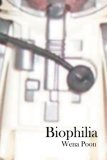 I mentioned Wena Poon in the previous post as one of the writers who has a story in SNW6. I first came across her work when I edited Collateral Damage and she submitted one of my favourite stories - Kenny's Big Break - in which a teenage boy swipes his sister's wedding ang-pow to pay for his studies overseas. Re-encoutering her work in SNW6 made me wonder: why doesn't this very-talented writer have a book out? I would definitely want to read it, as I've read both of these stories with a big grin of delight on my face, and Wena's stories have been widely published.
It turns out that she's gone the self-publishing route with her first sci-fi novel Biophilia. (Which I just - heaven help my poor overheated credit card - one-click ordered from Amazon). On Raman's website, Wena talks about her experiences with POD publishing with Amazon's BookSurge and encourages other local writers to do the same.
Personally I think it high time that some publisher in this part of the world would give Wena (who is Singaporean, but living in the US) a proper publishing contract.
I know I would.
Sunday, February 24, 2008
Wena's Story for Read! Singapore
 Wena Poon has set up a blog for her short fiction collection Lions in Winter (which I reviewed here the other day). You can vote for the story you like best in the collection.
I'm really happy to hear that the title story is one of two English short stories selected by the National Library of Singapore for the annual Read! Singapore campaign this summer, and also that the book has hit the Singaporean bestseller list where it was:
... above works by Stephen King, Mitch Albom and Khaled Hosseini. Not only was Lions the only book on that list by an Asian publisher, it was the only title written by a local writer.Wena will be in KL in March and appearing at MPH's Breakfast Club and reading at Seksan's (about which more later) on March 19th and her short story The Man Who Was Afraid of ATM's is in the Jan-March issue of MPH's Quill magazine.
Tuesday, March 11, 2008
The Author from Planet Nagy and her Cat
 Author Wena Poon emailed me from Hong Kong, where she is doing her Asian tour for her short story collection Lions In Winter, with this news about her latest book :
Cryptic Tonic is the second novel comprising the Biophilia trilogy. The first book, Biophilia, was published in 2005 and also available on Amazon. The trilogy came about one hot summer day when I was lamenting that Hollywood hasn't yet come up with the summer blockbuster action adventure that I really wanted to see (you know, one with a decent plot and really cool characters and non-corny lines), so I decided to write it myself.Now then, if you were an author with a new novel coming out, would you let YOUR cat interview you for your blog?* Wena did, and here's what W found out.
At that time, Bush had won for the second term and I really wanted to get off Planet Earth anyway. There appeared to be a dearth of good, new fantasy literature, which explained why adults were reduced to reading Harry Potter.
Figuring that an English major couldn't do any worse than a Hollywood hack, I decided to write a "Narnia for Adults" - a credible, kickass, action adventure story that stars thirtysomethings who normally work in an office and get sucked off to a Narnia-like space opera. Don't we all wish that would happen.After writing two books, readers started saying it sounded like Miyazaki's anime stories, with animal sidekicks.
So there you have it, Narnia plus Anime, with a bit of Marvel Comics thrown in for good measure. "Biophilia: Guaranteed to be more entertaining than your inflight movie." Please post your reviews and feedback on Amazon, and enjoy.

For something a shade more serious, you can also listen to Wena speak on a radio show about Asian women writers needing to escape the Amy Tan stereotypes.
*(I certainly wouldn't ask mine : Chiki, is not the sharpest knife in the drawer, and Nisbo is a husband-stealing strumpet.)
Sunday, March 23, 2008
Wena's Wet Weekend
Then, after lunch and a quick rush round the supermarket to get survival rations for the afternoon with Chet's help, dashed over to Seksan's and the heaven's opened.
I was drenched even before I had unpacked the car, and the inclement weather didn't let up the whole afternoon. (What is happening to the weather? It doesn't seem like the monsoon ever went away?) But fortunately our loyal audience turned up in decent numbers. (Thank you!)
 Wena Poon read a passage from her story The Shooting Ranch, my favourite story from Lions in Winter. Again, it was beautifully dramatised, and really showed how much she gets into the skin of her characters to write about them. (Not all authors - even some very big name ones - are good readers of their own work!)
Wena sadly had to rush off early as she had another appearance at Borders. I'm so glad she came, but sorry we couldn't have arranged better weather for her.
Animah Kosai (above right) dragged friends Dina Zaman (above left) ...
... and actor Na'a Murad (here getting his photo taken by a member of the press) along to read a couple of scenes from a new play she's working on called 100 Stones, which featured a woman married to a guy who has just become an elected representative. He doesn't seem to be too interested in sex, and there she is, desperately frustrated trying to seduce him with every trick in the book including sexy negligees.
It was interesting talking to Na'a in the break who reckons that the changed political landscape and the greater openness and willingness to engage in issues that has followed, is making it easier for artists of all kinds, but especially playwrights. It's early days yet ... but really, let's hope he's right.
I've been looking forward to Sufian Abas' first book for a very long time ... ever since we both got out first short stories published in Silverfish New Writing 1, in fact. Kasut Biru Robina is a collection of short shorts, some short short shorts just a few lines long. Bite size and snackable.
Sufian read a piece called Malam Mailakat Tidur (The Night the Angels Slept), and modest chap that he is, was going to end there but we encored him back for a second piece - Kisah Cinta (Love Story), a very amusing little tale about the fickleness of women.
Priya K. made an appeal for funds for the forthcoming Malaysian-UK exchange project, and illustrator Shahril Nizam brought some of his pictures along to be auctioned. The bidding is still ongoing and I'll post more about this later.
The break was extra long because the rain overhead was nosiy, but no-one seemed to mind too much as they were busy partying, networking, selling books ...
Ted Mahsun read a story, Pak Sudin's Bicycle I'd read on an e-group earlier and liked very much. He read it for the first time at Kata Suara the other week and had been surprised at how well it had gone down with the audience. Ted's writing is warm and whimsical, and it's really nice to see him developing as a writer. (He has a review of the new Stephen King book in the Star today, by the way.)
George Wielgus, poet, performer and writer describes himself as :
He was also selling his recently self-published limited edition zine for the price of a teh tarik (cup of "pulled tea"). You can read his poem Inside-Outsiders here.
We ended with a short tribute to Lloyd Fernando who passed away recently, and Priya K. read an extract from Green is the Colour.
Thanks : to all those who braved the rain, those who read, those who sold books, those who auctioned art, those who helped set up and put away and wash glasses, Shahril Nizam who designed the blogposter, and of course Seksan for the use of his beautiful space and the stunning visual backdrop provided by the current exhibition.
Our next readings is on April 19th and among the writers appearing will be author Kunal Basu.
I was drenched even before I had unpacked the car, and the inclement weather didn't let up the whole afternoon. (What is happening to the weather? It doesn't seem like the monsoon ever went away?) But fortunately our loyal audience turned up in decent numbers. (Thank you!)

Wena sadly had to rush off early as she had another appearance at Borders. I'm so glad she came, but sorry we couldn't have arranged better weather for her.
Animah Kosai (above right) dragged friends Dina Zaman (above left) ...
... and actor Na'a Murad (here getting his photo taken by a member of the press) along to read a couple of scenes from a new play she's working on called 100 Stones, which featured a woman married to a guy who has just become an elected representative. He doesn't seem to be too interested in sex, and there she is, desperately frustrated trying to seduce him with every trick in the book including sexy negligees.
It was interesting talking to Na'a in the break who reckons that the changed political landscape and the greater openness and willingness to engage in issues that has followed, is making it easier for artists of all kinds, but especially playwrights. It's early days yet ... but really, let's hope he's right.
I've been looking forward to Sufian Abas' first book for a very long time ... ever since we both got out first short stories published in Silverfish New Writing 1, in fact. Kasut Biru Robina is a collection of short shorts, some short short shorts just a few lines long. Bite size and snackable.
Sufian read a piece called Malam Mailakat Tidur (The Night the Angels Slept), and modest chap that he is, was going to end there but we encored him back for a second piece - Kisah Cinta (Love Story), a very amusing little tale about the fickleness of women.
Priya K. made an appeal for funds for the forthcoming Malaysian-UK exchange project, and illustrator Shahril Nizam brought some of his pictures along to be auctioned. The bidding is still ongoing and I'll post more about this later.
The break was extra long because the rain overhead was nosiy, but no-one seemed to mind too much as they were busy partying, networking, selling books ...
Ted Mahsun read a story, Pak Sudin's Bicycle I'd read on an e-group earlier and liked very much. He read it for the first time at Kata Suara the other week and had been surprised at how well it had gone down with the audience. Ted's writing is warm and whimsical, and it's really nice to see him developing as a writer. (He has a review of the new Stephen King book in the Star today, by the way.)
George Wielgus, poet, performer and writer describes himself as :
... a refugee from the wastelands of suburban England.Slipping into the persona of her alter-ego, Mighty Jah-J, he gave us some hard-hitting poems, including Liberation and Death No. 1, which left us in little doubt why he had won the last KL Poetry Slam.
He was also selling his recently self-published limited edition zine for the price of a teh tarik (cup of "pulled tea"). You can read his poem Inside-Outsiders here.
We ended with a short tribute to Lloyd Fernando who passed away recently, and Priya K. read an extract from Green is the Colour.
Thanks : to all those who braved the rain, those who read, those who sold books, those who auctioned art, those who helped set up and put away and wash glasses, Shahril Nizam who designed the blogposter, and of course Seksan for the use of his beautiful space and the stunning visual backdrop provided by the current exhibition.
Our next readings is on April 19th and among the writers appearing will be author Kunal Basu.
Friday, March 28, 2008
Quill in Orbit
 The latest edition of MPH's Quill magazine is out, complete with astronaut on the cover and some good content which editor Eric has listed here. The magazine is free to MPH card members and RM8 for non-members.
Tan Twan Eng's article about how to get an agent and improve the chances of your book being published is absolutely invaluable to anyone who plans to take that route.
I also loved Preeta Samarasan's review of Wena Poon's Lions in Winter :
Poon writes about the Asia I know, and she does so with grace, insight and compassion. In these eleven stories, East and West do not inhabit one dimensional roles - submissive versus dominant, traditional versus modern - but mingle to produce the knotty realities of globalisation.And of course, Deepika Shetty interviews one of the deities in my literary firmament, Vikram Seth.
I didn't blog about the previous issue because I forgot to pick up my copy until just the other day, and then some poor sales assistant had to dig round in a back room to see if any were left! It was nice to see that the front cover pin-up boys were Amir Muhammad and Shahril Nizam. Much more alluring than the politicians who graced (?) previous issues.
Wednesday, January 24, 2007
SNW6 - Best Yet?
 Am going to wax lyrical for a moment or two about Silverfish New Writing 6 which I thoroughly enjoyed - and it seems to me that the standard of writing in this latest anthology is the highest yet.
The Silverfish New Writing series gives many local writers their first experience of being published (myself among them). And while many still snipe that the writers should be paid for their efforts beyond the free copies they receive (something I don't dispute) - I feel that the very fact that writers manage to get their work into an edited collection of this kind, and in competition with a couple of hundred others (many from overseas), has real meaning.
(The closing date for stories for Silverfish New Writing 7 is March 31st. Details here. ).
SNW6 is edited by local academic Dipika Mukherjee, who also co-edited The Merlion and the Hibiscus, Penguin's very interesting collection of Malaysian and Singaporean short stories which was published back in 2002.
The stories I liked best in the collection were: Dumb Dumb by Rebecca Chew - who really manges to get inside the skin of a disillutioned adolescent boy, with very comic results; Addiction by Wena Poon (she's thoroughly entertaining, her characters so engaging - I want a whole book from this lady!); Bonsai Monkey by Arthur Goh (a beautifully observed slice of Malaysian life, with a very satisfying ending); and of course Saras' story Dey Raju (charming and funny... and I feel a personal connection to it because it was born on a night when we wrote together).
I also very much enjoyed In God's Belly (an extract from a novel in progress) by Thaatchaayini Kanantu, Nurfa-izah Tubi's poignant Ever After, and The Swamp Creek by Nadiyah Elias. All I can say is ... more, please!
Farting Frank by precociously good 17 year old Colin Gan is silly fun, and O Thiam Chin (remember his struggles to get published?) weaves a very dark tale in Creation. I was happy to find a story from Peter Brown (Dysfunction), whom I've known for years as a singer songwriter. Here he puts a human face on local social problems with a convincing cast of characters. (Peter will be reading this saturday at Sek San's.) Hi, I'm MS by Arun Subramaniam was unusual - a story told from the viewpoint of a disease!
What didn't work quite so well for me: Round Trip by Angelia Poon (well-written, good characters, but too involved for a piece of short fiction); The Prince of Frogs by Craig Cormick (clever structure but at the expense of real character development - and a bit self-conscious); and The Kampong by Randolph Williams (messy structure, a bit of a white-man's fantasy piece).
I guess, though, that every reader will have different favourites - as I found when I edited Collateral Damage. And that's the great thing about a collection like this -it's like a box of chocolates which you can dip into and extract what you fancy*.
The book can be found in most of the local bookstores and it is also available my mail order from Raman's site.
And if any of these writers drop by this blog and would like to do a reading later in the year ... consider yourself invited.
(Just a thought - if life's a box of chocolates, why do I end up with all the nuts?)
Friday, December 12, 2008
Art Chose Wena
Shirley also sent me scan of this article written by Wena Poon from the local edition of Marie Claire. Do read it because there are some lovely words of encouragment for local writers! (Click to full size.)
 Sad I actually am indeed that she didn't win the Singapore Literary Prize, because I feel such a strong connection to Lions in Winter (as you will understand if you read this).
 Sad I actually am indeed that she didn't win the Singapore Literary Prize, because I feel such a strong connection to Lions in Winter (as you will understand if you read this).
Sunday, April 11, 2010
Wena Wins Willesden
Congrats to Singaporean author Wena Poon who has won Willesden Herald's Short Story Prize with a piece called The Architects. The results were announced at a special event last night Charles Dickens' house, 48 Doughty Street, London, and equal runners-up were Willie Davis and Henrietta Rose-Innes.
I like this quote by author/poet Richard Peabody from the back of the collection of finalists' stories (left) :
I like this quote by author/poet Richard Peabody from the back of the collection of finalists' stories (left) :
In my next life I'm coming back as the brainy talented author of "The Architects." Talk about brazen, submitting a story about a contest to a writing contest. Does it work? Check. The focus might well be on writers—the same dynamics of love, jealousy, sex, and mentors, applies. New York City is captured in amber. Check. Foreign-born exiles get their due. Check. Authentic dialogue squeezes out sparks. Check. Jokes? Check. Do the juggled balls remain in the air? Check. Yes, I want to be this author, who like a sly child with an Erector Set creates miraculous buildings out of thin air."Am quite impressed that the prize is a mug! (I love mugs and always drink my tea from them.)
Sunday, March 16, 2008
Wena and Guat for Breakfast Club
A quick plug for MPH's Breakfast Club this coming Saturday. The focus is on the short story with two authors whose anthologies have recently been published. Appearing will be Wena Poon author of Lions in Winter and Chuah Guat Eng, author of The Old House. More details on Eric's blog.
So your whole day is taken care of. You come along for this. Have a nice relaxed lunch. And then proceed to Seksan's in the afternoon.
So your whole day is taken care of. You come along for this. Have a nice relaxed lunch. And then proceed to Seksan's in the afternoon.
Thursday, May 21, 2009
The Writer's Journey
If you're in Singapore, you might like to pop along to the Earshot Cafe at the Art House tomorrow, Friday 22nd May at 7 p.m.. I'm going to be in conversation with Wena Poon, talking about her first collection of stories Lions in Winter, which is also going to be published by Salt Publishing in the UK (hurray!!).
Wena has now completed a second collection The Proper Care of Foxes. We'll also be talking about writing and publishing in Malaysia and Singapore, and the problems of getting international distribution, and I'm sure, putting the world to rights (writes?) in general.
The event is presented by the Singapore Book Club and is part of the Singapore Writers' Festival. The talk is free but advanced registration is required. Email info@bookcouncil.sg with your full name and contact details.
Wena has now completed a second collection The Proper Care of Foxes. We'll also be talking about writing and publishing in Malaysia and Singapore, and the problems of getting international distribution, and I'm sure, putting the world to rights (writes?) in general.
The event is presented by the Singapore Book Club and is part of the Singapore Writers' Festival. The talk is free but advanced registration is required. Email info@bookcouncil.sg with your full name and contact details.
Subscribe to:
Posts (Atom)