(Glimpses from behind the lines organising the first KL Litfest, taken from my notebook. This was written August 2, 2004)
I meet British author Paul Bailey for the first time at a dinner arranged by in a local the director of British Council on the first evening of the Litfest. One day down and two more to go. I’m exhausted and in terrible need of a cold beer. A quick shower and a change of clothes. Jalan Ampang is so choked with cars that I’ll never get a taxi, and decide to walk briskly to the restaurant (which I know is in the road behind the twin towers, in an old colonial bungalow). The rain starts to fall gently and I am afraid that I will arrive both wet and late. Fortunately I am neither.
The British Council people are there already with Paul. (The first impression I have of Paul is what remarkable blue eyes he has!). Raman and wife join us – very late because they decided to drive. We sit down for a meal of local Malay dishes – very nicely cooked beef rendang, pumpkin in coconut milk, chicken curry – everything served so ethnically (on a banana leaf in a little woven tray) so that it looks more authentic than real Malay food. And the beers – everyone else drinking wine – slide down really easily, dissolving the tensions of the day.
It’s a little strange sitting down to talk for the first time with someone in whose head you have been living so intensively for the past couple of months – or is it has he been living in my in my head? (The uncanny alchemy between reader and read.) I’ve read six of his novels and enjoyed them greatly, his two books of memoir and one of his biographies. He’s been short listed twice for the Booker - that holy grail of literary success – making him one of Britain’s most significant novelists.
We’re all a little formal and polite, but Paul is amusing company, a great storyteller – we laugh at his descriptions of previous trips for the British Council, especially his account of his trips to Romania, a country he loves for it’s sheer absurdity. It’s strange though, I smile through the stories but already know what he is going to say – could even finish them for him because I’ve read his memoirs …
At the end of the evening worried that I won’t have much chance to see much more of Paul who has a very full schedule for the next few days, I pour the pile of books from my bag and ask him to sign them, which he does, graciously, taking time to put a different inscription in each. Raman and missus have agreed to give me a lift back to the hotel and just as we are walking out wife hisses at me, did you have to keep him talking so long, some of us want to get to bed. Anyway, I don’t know what you find so exciting to talk about in books, she adds. And I fix her with a very deliberate glare and say – listen, this is my reward for all the hard work I’ve put into organising the literary festival. (She didn’t think I was in it for the money, did she?)
Back a the hotel I drop by the bar. We’ve organised a songwriter’s round with four singer songwriters taking turns to play and tell the story behind the song. The music is excellent (Mia has a voice that makes the hairs raise on the back of your neck) and the bar is full of enthusiastic listeners. And just as I get there I find Paul Bailey there propping up the bar already, (goodness, he doesn’t waste much time!) and we both laugh and resume our chat over a drink feeling much more relaxed by now.
And Paul asks me and I know he’s going to (because didn’t I just read his memoirs?) – is there a gay scene in Kuala Lumpur? I laugh and say that I don’t know much about it, but I’ll introduce him to some friends who will … and I catch Pang and Jerome as they come off stage and there’s Bernice and Zedeck and Lorna and so many others to introduce to him as well. I make my excuses because I’m exhausted and need to sleep (but as it happens I have my second almost sleepless night thanks to an equal measure of excitement and anxiety.) And I know I’ve left Paul in good hands.
Apparently, after I left, Paul did a reading of an episode from his memoirs – his first gay encounter (with a London bus conductor), which went down very well. Singaporean poet Alfian Sa'at also read. Paul was so taken with Alfian’s writing (and perhaps with him???) that he said he wants to help him find a UK publisher. Hey, how’s this for networking!
Over the next few days I get to know Paul rather better. The British Council has him scheduled in for a number of things: there’s the meet the author session where he reads from his books and talks about his work, a forum on the state of literature and publishing, book signings, and a talk at the national library which I have organised. But in the evenings, he’s back there at the bar. And I have such a great time talking to him about his books and how they were written. I’m really chuffed when he tells me that my interpretation of “Sugarcane” (the novel I liked the best) is an excellent reading of the book. But there’s a strangeness in having the puppeteer tell you how he manipulates the strings. I was so fond of Gabriel in “Gabriel’s Lament” – don’t really want to know where the idea for making him a cross-dresser came from – believe in the character’s authentic separate existence and as a reader really don’t want to know more. (Though as a writer …)
Saturday night and the last night of the Litfest, I’m too exhausted to move, to even go home although all my work is finished. I have dinner with Jean in the hotel coffee shop – can barely even eat because I’m feeling so exhausted. Paul joins us, and his company is enough to make me feel much better. We meander back to the bar for a while. He’s anxious to see Pang, Jerome, Zedeck and Alfian … the lovely young men … but tonight they aren’t around. We sit and have a drink with a couple of local writers and film director Sean Walsh (the guy who directed the James Joyce film “Bloom”). I SMS MissFixIt who tells me that the whole gang is at a night club across town and asks us to join her. I’m shattered but Paul wants to go, and I’m so worried about him not being able to cope with taking a taxi and look after himself that I end up agreeing to go along with him to Frangipani.
How long is it since I went to a nightclub? Paul’s a pensioner and much more into wild nightlife than I am. We pour into a taxi. The driver tries to rip us off thinking that we are tourists but I get angry and chide him in Malay and he agrees to stick to the meter plus the after midnight charge.
Frangipani is a small, very intimate nightspot lit by candlelight. There’s a private party going on but no-one minds that we gatecrash. The party has an Indian theme; everyone is wearing bindi (the dots on the forehead) and garlands of jasmine and dancing to Indian music with a heavy beat. All our friends are there having a good time. It’s the nicest possible end to the festival. MissFixIt and I laugh about how we want to stage a coup and make a future Litfest our own – both of us loving to work with writers and be in the centre of things, but knowing that we will never work with Raman again a because of his rudeness. And we're so high this night that everything seems possible.
Friday, April 07, 2006

Mending Japanese Bridges
(Glimpses from behind the lines organising the first KL Litfest, taken from my notebook. This was written August 3, 2004)
The Japanese were hurt.
In the Litfest programme booklet there was a biodata for every invited writer – but not a word about the writer they were sponsoring – Kyoji Kobayashi. (I refused to be involved with the bookletbecause I knew I had to say no to some of the things he was piling on me).
Now I really felt bad for the Japan Foundation guys who had taken so much trouble to find a writer for us and fly him out, and who were also sponsoring a series of films based on Japanese novels. As soon as they realised what had happened, they hurried back to their office and printed off their own fliers with the biodata on.
Raman did apologise verbally for the in his opening speech, but the Japan Foundation guy – Shimadasan, asked for a letter of apology. No problem I told him and relayed the request to raman, but was too busy to follow up on it until after the Litfest had ended.
On the Monday morning, I suddenly remembered about the apology letter. I called up Raman who had decided to stay home for the day rather than open up the shop. He didn’t want to be reminded about the letter. I’ve apologised already, he said impatiently. But what about the letter we promised? Small matter, he said. Not small I argued. I said that I would write it – all he had to do was print it out on headed notepaper and sign it, and then I would come by and pick it up from him and deliver it personally to the Japan Foundation. He said I’m not going to open the shop just for that, so forget about it.
I read up a little about apologies in Japanese culture on the internet – when you apologise it means that you are accepting responsibility for something – and when you apologise in Japanese, the words for apology are exactly the same as those for thanks. So I constructed a letter which I made a letter both of apology and thanks for his sessions especially the haiku workshop from which I learned a lot. I constructed a letter head from the logo on the web page and signed the letter myself.
Before I could drive over to the city centre, Lorna Tee contacted me. She also was feeling very bad about this matter and was very indeed angry when I told her that Raman was refusing to write this letter himself. She had fixed up dinner with the Japan Foundation people as a move to mend bridges, and asked myself and Usha along. I wanted anyway to take the chance to say goodbye to new friends who would soon be leaving. I went back to the hotel and called up Paul Bailey’s room and asked him.
If he wanted to go for dinner and he seemed very pleased that someone had thought about him. (He had decided to stay on for a couple more days after the Litfest because it seemed ridiculous flying out all this way for just three days. He hadn’t spent the time sightseeing though, but had been shut in his room working on his novel.)
I was also so happy to see Ken Wiwa and say good bye to him before he left for the airport to catch his flight back to Canada.
We all met up at the excellent Indonesian restaurant at the top of the Suria shopping centre. Dinner at first a little formal but as the wine bottles emptied, the Japanese opened up a bit more and the writer, who’d always spoken through an interpreter (a beautiful and very gracious lady who has lived in Malaysia for many years) began to launch out into quite passable English. And once we began to talk about Japanese literature (about which Paul was very knowledgeable and I knew next to nothing), the conversation fairly flowed with the others contributing to a booklist of what I had to read. (A list which did not include Haruki Murukami strangely enough, whose books are not really regarded as serious literature in Japan. When I asked how he was regarded in Japan, there was an eloquent silence …)
By the end of the evening the fences were well and truly down. I had a good long chat to Shimadasan who invited me to have coffee with him when I called in to take a look at the Foundation’s library. And Kobayashi was both delightfully loquacious and flirtatious. When I left to take my train, I bowed very deeply to show him the respect he deserves (really getting into this cross-cultural thing!). And I felt very sad to kiss goodbye to Paul, who has become a friend ... Wonder if I will ever hear from him again?
My Writing Space
Starlight wrote the other day about writers and their writing desks and included my description of my writing space.
It fits into the bay window of the bedroom, and has a view out over Rubber Research Institute. (I need daylight!) Here's a photo:
 Clutter includes:
It fits into the bay window of the bedroom, and has a view out over Rubber Research Institute. (I need daylight!) Here's a photo:
 Clutter includes:
Notice the absence of a computer - this is the land of paper and pen.
- beach stones and shells and semi-precious stones (for the right energies)
- wooden hand which I bought from the Tate Gallery
- my lucky gypsy clothes peg bought from a traveller in London
- a mug of Chinese tea
- printouts of stuff I'm supposed to be working on for reading at Borders (oh ye gods, what shall I read?)
- my cheapo homemade notebooks for guiltless scribbles of nonsense
- a beautiful much too expensive notebook bound with pea-green cloth bought from Bookbinders on a day when I needed cheering up (it worked)
- gel pens of all different colours (a whole rainbow)
Thursday, April 06, 2006
Francesca and the Troubagangers

Scooted off to British Council yesterday for a lunch-time interview with performance poet Jessica Beard over pizza in the courtyard. (Here pictured with daughter Lola Choo who is learning how to follow in her mum's footsteps.) It was as much a meeting with a friend, because we'd met in Manila last November when I got my first taste of what Performance Poetry is all about in Francesca's workshop sessions.
Then at night the La Bodega gig. Francesca and the Troubagangers – a showcase of local talents. There was something for sure at stake for both parties. This was Francesca’s first ever Malaysian performance even though her roots are here (half-Malaysian, she was born in Assunta Hospital and grew up in Penang).
And our local guys had something to prove too - would their performances flag and sag when put side by side with a professional performer/poet of Francesca’s? As it turned out, it was a totally brilliant evening.
 The upstairs of La Bodega was packed to the rafters with an incredibly supportive crowd. (This was Wednesday and this was poetry for heaven’s sake!) Jerome and Yasmin Low compared the evening incomparably. (Though Jerome added me to the list of people to read on the open mic afterwards ‘cos he said I was a heckler! Not good.)
Francesca was totally connected with the audience as she shared hilarious stories about her childhood,her dog Fluffy, multicultural encounters in Tesco’s and Buffy the Vampire Slayer. Poetry meets stand-up comedy meets song.
But this is the heart of it - her poems were addressed directly to the audience, drawing them in, in a way that reading them out cannot. One poem was a survey about which way we'd prefer to die if we could choose (being eaten by a lion in KLCC Park, getting chainsawed by a nutter, left to drift slowly into outer space ... ) - a grimly funny piece, which had her soliciting views from the audience. Poetry that talks and lets you talk back.
The Troubagangers were on top form, feeding on the electricity of the occasion. Most of all I enjoyed: Jerome's lyricism, Fahmi Fadzil's No Exit (which he improvised on for the occasion), Ruhayat X performing his piece about the pencil, another dose of Pang's encounters in the dark, Sharanya's very sexy poem about everything wanting to make love to her ...
But it was Rahmat Harun's rollercoaster ride of a performance of Keranamu Malaysia which came closest to upstaging Francesca ...
I came away inspired. Syabas to all who worked so hard to pull the evening together and a special mention for Sunitha Janamohanan of British Council and her team.
(Below - Francesca relaxes with a glass of wine after the performance.)

Tuesday, April 04, 2006
Blooking's Bliterary Blast!
More about blooks? Just to tell you that the results of the Lulu Blooker Prize (the world's first literary award for bloggers) have been announced and this lovely headline (from Press Release Newswire) tells you everything you need to know about the result:
Cooker Beats Hooker to Win Blooker!
Related Posts:
The Blooker Prize 4/12/05
Cooking the Blooks 13/3/06
Blooking Baghdad and Bad Girl Blogs 29/3/06
Let's Hear it Again for Blooks 4/4/06
The Blooker Prize 4/12/05
Cooking the Blooks 13/3/06
Blooking Baghdad and Bad Girl Blogs 29/3/06
Let's Hear it Again for Blooks 4/4/06
Lyrical Leon
 It's Leon's turn to post up a poem at Puisy-Poesy, and he's chosen The Vision of the Virgin by Ian Duhig from his collection The Lamas Hireling.
Best of Silverfish
 Raman's Silverfish litmag announces the release of a complilation of 25 best pieces from the Silverfish New Writing series, comprising Malaysian short stories. The editor is Nesa Sivagnanam who is a sub-editor at The Edge.
A list of stories is included on the website. I'm relieved that Eileen Lui's short story Chewing Gum Boy (from the collection I edited) made it in there.
Don't think I will be buying this volume as I've collected the whole set of New Writing over the years. But then again, it would make a nice gift for friends overseas.
Let's Hear it (Again) for Blooks
Another nice article on blooks, this time by USA Today's Janet Kornblum who dropped me a note after reading the entry I wrote on them the other day.
She quotes Jeff Jarvis, a former editor and publisher who writes the blog BuzzMachine. He says that he growing popularity of blooks shows that blogs are:
In the normal run of things writing is a lonely occupation, but blogging is extremely social. You can gauge the effect of your words on your audience very quickly.
And of course blogs contribute to the whole dialogue on issues, drawing from the mainstream press and in turn contributing to the discourse of the mainstream press.
I'm always happy to read articles like this which underline the validity of blogging and which for a little while at least counterbalance all those sneery voices which tell you blogging isn't something you should be wasting your time on.
She quotes Jeff Jarvis, a former editor and publisher who writes the blog BuzzMachine. He says that he growing popularity of blooks shows that blogs are:
the new means to discover talent and new voices that couldn't break into the world of publishing before ... You can go create a property and a voice and an audience without having to go through the publishing meat grinder.I also liked the quote from Julie Powell who wrote Julie and Julia: 365 Days, 524 Recipes, 1 Tiny Apartment Kitchen:
The blog readers were almost in a way co-writers — certainly inspirations ...Because I think that this what makes blogs special - that they are a dialogue, and that your readers influence what you write about and how you write it. (I've learned this - and yes, it surprised me!)
In the normal run of things writing is a lonely occupation, but blogging is extremely social. You can gauge the effect of your words on your audience very quickly.
And of course blogs contribute to the whole dialogue on issues, drawing from the mainstream press and in turn contributing to the discourse of the mainstream press.
I'm always happy to read articles like this which underline the validity of blogging and which for a little while at least counterbalance all those sneery voices which tell you blogging isn't something you should be wasting your time on.
Monday, April 03, 2006
Chinese Festivals Illustrated
 Feature in the Star today about Penang-born freelance writer and self-taught artist Moey Sook Ching who has written and illustrated a beautiful cookbook called Chinese Feasts and Festivals published by Periplus Editions.
This is a book I'd buy for the pictures alone!


Sunday, April 02, 2006
Raman's Newspaper Rant
Raman has updated his website with some tasty news and an extremely interesting opinion piece about the local newspapers: don't they have a role to play in promoting reading?:
Book pages don't attract readers? If you take books as your starting point, you can write about almost anything in the world anyway (I've visited sado-masochism, greasy spoon cafes, the Iraq War, issues of gender, millinery, cookery, and the female orgasm in the last few days!)
Blogging has taught me this: there is a readership for news and opinion pieces on books and authors ... providing that the writing is lively and takes the reader into account. Trying to be deep level literay (and the NST's pages tended to veer that way) will just make books seem lightyears away from the interests of most people. Drop the L word! But at the same time, don't underestimate your local readers. who are capable of a deeper level of intellectual engagement than the newspapers throw at them.
But yes, I agree with Raman's bottom line ... if a nation of readers is to be created, the newspapers must play a significant role.
I'm hungry for more than the local papers provide. I stick them on the recycle pile or use them as disposable plates for my cats after 5 minutes skimming ... and then spend hours online reading the book pages from overseas newspapers ... and reading blogs.
Was very interested in what Raman says about a local Chinese newspaper taking literature seriously and sponsoring an award :
Raman accuses a local newspaper of merajuking during the Literary Festival.
I actually don't know the truth of any of this, and I don't know how the publicity could should have been managed differently (I was coordinating the sessions and speakers so was mentally elsewhere during the lead-up) ... but it broke my heart that despite bringing something this enormous to KL and putting the country on the world literary map, despite months of hard work and stress ... there was next to no publicity for the whole venture and no write up in the press about it afterwards (just a mention in the education pages of the Star!).
Even those publications which pride themselves on having a finger on the pulse of the arts scene largely ignored us. Where else in the world would that happen? Though all the papers were happy to interview the writers we'd invited ... Hijuelos, Paul Bailey, without mentioning the Litfest ... or just in passing.
Maybe Raman stood on toes (he's pretty good at that!) ... maybe Raman didn't get the publicity machinery into place in time ... but the silence from the press hurt deeply.
Hurt me, anyway. Am I too sensitive?
The two main papers publish more than a thousand pages each week (I wonder how many trees that is). One has two pages of book news, the other has no fixed schedule. Local book news? Forget it.There is slightly more than that in the Star. Thor's column on Tuesdays which is sometimes spot on (especially when he talks about local writers), but at other times loses me and my eyes glaze over. (Sorry!) ... Perhaps an article on something literary gleaned from the Guardian which I've already read online (but if you are going to take literary articles from any newspaper in the world, please, make it this one). ... A page of short reviews on Thursdays - a pretty mixed bag . Yes, a little more in Starmag on Sunday, I enjoy the reviews and Daphne's articles about kids' books are excellent because written by someone with a passion. I don't read the NST 'cept on Sundays, but used to buy the Wednesday edition when there were literary pages.
Book pages don't attract readers? If you take books as your starting point, you can write about almost anything in the world anyway (I've visited sado-masochism, greasy spoon cafes, the Iraq War, issues of gender, millinery, cookery, and the female orgasm in the last few days!)
Blogging has taught me this: there is a readership for news and opinion pieces on books and authors ... providing that the writing is lively and takes the reader into account. Trying to be deep level literay (and the NST's pages tended to veer that way) will just make books seem lightyears away from the interests of most people. Drop the L word! But at the same time, don't underestimate your local readers. who are capable of a deeper level of intellectual engagement than the newspapers throw at them.
But yes, I agree with Raman's bottom line ... if a nation of readers is to be created, the newspapers must play a significant role.
I'm hungry for more than the local papers provide. I stick them on the recycle pile or use them as disposable plates for my cats after 5 minutes skimming ... and then spend hours online reading the book pages from overseas newspapers ... and reading blogs.
Was very interested in what Raman says about a local Chinese newspaper taking literature seriously and sponsoring an award :
A Malaysian Chinese daily (I have spoken to their CEO) has a biannual international literary competition and award for fiction, poetry and journalism which has been touted as the Chinese equivalent of "The Booker'. This project apparently attracts top writers from China, Taiwan, Hong Kong, Singapore, Thailand, Malaysia and all other countries in the world, and Malaysian writers in Chinese are most definitely world class. This same newspaper also has regular literary pages with discussions on a diverse range of topics by local and foreign writers. I was shown a page where the discussion was on the works of Borges and Bukowski. (Note to readers of English newspapers: no, they were not the villains in the last Star Wars movie.)Amazing! I really didn't know. (Please tell me more if you did.)
Raman accuses a local newspaper of merajuking during the Literary Festival.
I actually don't know the truth of any of this, and I don't know how the publicity could should have been managed differently (I was coordinating the sessions and speakers so was mentally elsewhere during the lead-up) ... but it broke my heart that despite bringing something this enormous to KL and putting the country on the world literary map, despite months of hard work and stress ... there was next to no publicity for the whole venture and no write up in the press about it afterwards (just a mention in the education pages of the Star!).
Even those publications which pride themselves on having a finger on the pulse of the arts scene largely ignored us. Where else in the world would that happen? Though all the papers were happy to interview the writers we'd invited ... Hijuelos, Paul Bailey, without mentioning the Litfest ... or just in passing.
Maybe Raman stood on toes (he's pretty good at that!) ... maybe Raman didn't get the publicity machinery into place in time ... but the silence from the press hurt deeply.
Hurt me, anyway. Am I too sensitive?
Accidental Deliberations
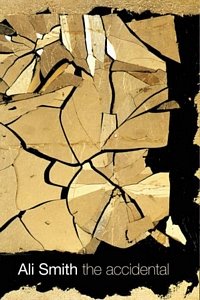 My head having been restored to me sans cotton wool stuffing, thank goodness, I was at last able to finish Ali Smith's Booker shortlisted, The Accidental.
And excellent it is indeed.
A dysfunctional family spends the long summer vacation in a rented house in a Norfolk village. Eve, the mother is a blocked novelist. Michael her husband (and the children's stepfather) is an English lecturer (lecher?) who's about to be suspended for having affairs with students. Magnus (17) is on the brink of suicide after a school prank went disastrously wrong, while Astrid (12) is totally disaffected and bored, trying to make sense of the world around her through the lens of a camcorder.
Enter Amber aka Alhamabra, named for the cinema where she was conceived between shows. Michael thinks she's one of Eve's friends. Eve thinks she's one of Michael's students. Each member of the family in turn falls under her spell. But is she malign spirit, ghost, or flesh and blood? Does she exist at all? (There's a very clever echo of this idea when Michael watches Hitchcock's 1938 The Lady Vanishes with the kids towards the end of the novel.) The question doesn't need to be answered because the mystery is in itself delicious. What's real or unreal anyway in fiction or in film?
More than this I won't say because I don't want to post a spoiler - the plot is too enjoyable to give away. The characters are strong and their internal struggles vividly depicted. Smith uses a different narrative method for each of them, moving from one consciousness to another in alternating chapters. (I particularly enjoyed being inside Astrid's head - this is just how a 12 year old would think, and I could feel Magnus agony as he replayed over and over the events that led to tragedy.)
There's a very pleasing symmetry to the architecture of the book. And Smith takes some dazzling risks with the language (Michael's atrocious poetry. The breathless invocations of old films.)
What else could you want, hey?
Some humour? Yes, plenty of that too.
Smith is up against the other Smith (Zadie, of course) for this year's Orange Prize, both 5/2 favourites at the moment.
Hilary Mantel's Beyond Black is also listed, and there are some very interesting parallels I feel with Ali Smith's novel. (What's real vs. what's imagined? The mirror held up against 21st Britain.)
Saturday, April 01, 2006
Hoax or Hope?
'Tis April Fool's day after all so one must expect mischief.
But is this for real or is it not?
Got this note posted up on an old post about the David T.Wong fellowship.
If you are for real, Anonymous (who is not the same Anonymous as the other Anonymous, if you get my drift) please step out from behind your mask and give us some evidence!
If not, stop bothering us.
But is this for real or is it not?
Got this note posted up on an old post about the David T.Wong fellowship.
Anonymous said...How does one ever know what's real or not on the internet? Folks pose as things they aren't all the time.hey guys, i am a fellow malaysian living in the US. a couple of days ago i received a letter saying i'm on the shortlist for the tk wong fellowship. just wanted to let you guys know that i have no credentials - not one MA, published work or competition win. it is encouraging to know that the fellowship really gives emerging writers a chance! it gives me hope!
If you are for real, Anonymous (who is not the same Anonymous as the other Anonymous, if you get my drift) please step out from behind your mask and give us some evidence!
If not, stop bothering us.
Of Fetish, Fur and Floggings
 Speed read a damn strange book today in Starbucks, post-step class: Leopold Sacher-Masoch's Venus in Furs. I had picked it up as a serendipitous-why-not-read? in Kinokuniya a few days ago, since the new Penguin Red series of classics had a generous 35% off with a voucher clipped from the Star. (I'm a sucker for a bargain.)
Didn't realise it at the time of course, but the word masochism is derived from the author's name, and this was one of the first pieces of erotic fiction to deal with dominace and submission.
The hero, Severin has a fetish for women dressed in fur, and dreams of being the abject slave of the woman he loves. He isn't prepared though for how far she decides to take his fantasy ...
(Some things are better kept in your head, mate!)
If sexual power-play is your thing (and it isn't my cup of latte) you will probably be fascinated by this. But don't expect a racy read, as we don't get much further than kisses and a heaving bosom and poor old Severin slapped about and abused every way the lady can devise.
The novel is based on Sacher-Masoch's real-life exploits and the drama is entirely in the head-games. Kathryn Gross in her excellent essay Venus in Furs: The Story of a Real-life Masochist says:
You have to decide for yourself if it is sex, pathology, mind games or to some degree an exaggerated reflection of life at that time and place.I felt the writing, or at least the translation by Joachim Neugroschel, seemed at times clunky and I thought this reader's quote on Amazon was pretty apt:
To regard this as a "classic" in literary terms is a mistake. It is a historical oddity and one best read in a period translation rather than one which - however inadvertently - smooths and modernises it.If all this has grabbed your attention and you'd like to read the book, you can actually download it for free from Project Guttenburg.
Now then, where did I leave my whip?
Friday, March 31, 2006
Kunzru Coming!
 Here's something else really nice for your diary. Hari Kunzru is going to be in KL May 9-11, sponsored by British Council.
Kunzru is the award-winning author of The Impressionist and
was named as one of Granta magazines 20 Best Fiction Writers Under 40 in 2003. Much more about him and his writing on his website.
Will keep you posted about times and venues of readings when I have more information.
If You Want to Get Ahead, Wear A Hat


Thursday, March 30, 2006
Troubaganger's Wayang Kata
 Performance poet Francesca Beard takes to the stage with Troubagangers (a collection of local poets you know and love - see below) on April 5th at 8 p.m. at La Bodega, Tengkat Tongshin. The performance is given in association with the British Council and there will be an open mic session afterwards for all you poetic wannabes. Admission RM5.
Believe me, this is something special. Don't miss it!
Here's the blurb about it:
Hailed by the London Metro as the “British Queen of Performance Poetry”, British-Malaysian poet Francesca Beard will take you on a journey that breaks down old perceptions of what poetry is with her acerbic wit and cross-cultural takes on life. Spoken word is poetry that is performed; a contemporary art form that is popular yet profound, accessible yet inspired. Francesca Beard does it in her inimitable style, mixing sharp observations with humorous anecdotes, churning them out as only a poet could.
Francesca will be joined on stage by eight of Malaysia’s most exciting young poets, giving you a night of rhyme and word as you’ve never had in KL.
About Francesca Beard
London-based poet Francesca Beard was born in Malaysia and spent the 70's growing up in Penang, before moving to the UK. She is a full-time poet, performing spoken word to audiences all over Britain, as well as internationally.
She has worked as a workshop facilitator in creative writing, poetry and performance for Apples & Snakes, the UK’s leading organisation for performance poetry, and is working on longer term projects with theatres and organisations.
Francesca’s poems have been featured in numerous publications, and she has performed commissioned work for Apples & Snakes, BBC, Chris Ofili and Victoria Miro Gallery, the Arts Council, England, and more. In May 2005, her first radio play, ‘The Healing Pool’ was broadcast on BBC Radio 4 and London Live. Her one-woman show, ‘Chinese Whispers’, produced by Apples and Snakes, has recently been and still is touring, and she is developing a new show supported by the Arts Council, England.
This is Francesca’s first time performing in Malaysia.
For more details on Francesca, visit www.francescabeard.com
About the Malaysian poets
Bernice Chauly has worked as a filmmaker, photographer, publisher, actor, playwright and teacher. Her work as a poet explores subjects including love, history and identity.
Fahmi Fadzil acts and writes when he can, and watches and reads when he can't. He is a member of theatre ensemble Akshen and arts collective Five Arts Centre.
Jasmine Low—publisher, marketing consultant and event organiser—writes stories based on her experiences as a migrant living in between Malaysia and Australia.
Jerome Kugan is a poet, writer and musician. His hauntingly imagistic poems are products of his deconstruction of the nature of perception in a fast-changing world.
Pang Khee Teik is a writer, photographer and editor of Kakiseni.com. His highly frank and amusing stories are based on past and present real-life bedroom adventures.
Rahmat Haron is a prolific young poet and visual artist. He has also worked as a theatre activist, performance artist and supporter of political change in Malaysia.
Ruhayat X is a writer and publisher whose stories and observations of urban life in Malaysia are witty, biting social satires with a sly surreal bent.
Sharanya Manivannan was born in India in 1985. A writer, dancer, painter, activist and journalist, she is currently working on her first novel and collection of poems.
About Troubagangers
Troubagangers is the combined outfit of Troubadours and Doppelganger, together responsible for two regular monthly events nights of live music, original song-writing, poetry and prose by local burgeoning talent in Kuala Lumpur. Doppelganger is headed by Jasmine Low while Troubadours is headed by Jerome Kugan, Azmyl Yunor and Tan Sei Hon.
For more details and to see images of past performances, please visit:
www.webprojx.com/troubaganger
www.troubadourskl.blogspot.com
www.doppelgangerkl.blogspot.com
Related Posts
Of Apples and Snakes
More on Performance Poetry
KLued Up
 KLue resumes its series of Words & Tunes, this time at Borders Bookstores and ... ahem ... I'm part of it:
Borders, Berjaya Times Square (15 April, 3pm onwards)Am feeling both really happy about it ... and of course, really scared. Wondering which of my half-finished pieces to knock into some kind of reasonable shape ...
Music: The Sofa Sessions & Rhapsody
Readings: Dina Zaman
Demonstration: Lomographic Embassy Malaysia
Borders, The Curve (23 April, 3pm onwards)
Music: Couple & Tempered Mental
Readings: Sharon Bakar
Wayang Buku Performance: Fahmi Fadzil with Azmyl Yunor
Wednesday, March 29, 2006
Blooking Baghdad and Bad Girl Blogs
 Thanks =] for picking up this story first.
You know I wrote the other day about blooks - books based on blogs, and how they are now becoming not just respectable, but in some cases, best sellers?
Well, now a blook has been listed for a major literary prize in Britain.
Baghdad Burning, by an anonymous author who blogs under the pen name Riverbend:
I'm female, Iraqi and 24. I survived the war. That's all you need to know. It's all that matters these days anyway.She has been longlisted for the £30,000 Samuel Johnson award fon non-fiction. You can read her blog here. (Add to her average of 6,000 hits a day, why not?)
I think it's quite incredible to be able to have a glimpse into how it felt to be an ordinary Iraqi living through the war and its aftermath, and will be looking out for this book. (Sorry, blook.)
On the subject of blogs, the Independent had an interesting piece the other day on sex-blogs as the new chick-lit. Racy online journals are now being snapped up by publishers in the wake of the success of Belle de Jour.
Disclaimer:
Just don't follow any of the links from that article or you won't get any work done today!
Afterthought:
Has anyone offered Sarong Party Girl aka MissIzzy a publishing contract yet? Would anyone in this part of the world dare?
Tuesday, March 28, 2006
MPH Celebrates Its Big Birthday
A rather blurry photo snapped at yesterday's launch of MPH's 100 years celebrations at 1 Utama:
 ... which doesn't really do credit to the glitz of the occasion.
The Culture, Arts and Heritage Minister, YB Datuk Seri Utama Dr. Rais Yatim was guest of honour and gave a talk about the importance of publishing and encouraging reading in the Malaysian context. He also said that the Ministry would seek MPH's help with the reading campaign, (due to start very soon, he said) and underlined the government's commitment to encouraging publishing.
Then the fun began. A shower of gold paper rained down on the crowd, a couple of absailers dressed like the guys from Mission Impossible descended from the ceiling and unfurled a huge banner, balloons cascaded, a hoard of girls dressed in crinolines performed a (somewhat tacky - sorry, but then I love tacky) musical number while waving books around.
Friends of MPH included plenty of friends of mine too, so it was good catching up on gossip over refreshments. Was happy too with my goody bag with literary mug, notebook, pen and bookmark. Many thanks.
I went up to the bookshop after that to take a look at the exhibition detailing the history of MPH in the Booker Room:

And it really was very well done with old photographs and pages from early publications. Wish MPH was selling posters of some of the illustrations, because they are nice enough to want on the wall. (The picture of the little Malay boy gazing out of the window of his kampong house to illustrate Twinkle Twinkle Little Star in a book of nursery rhymes, for example.) MPH are urgently trying to find copies of their early publications, few of which still survive, so if you have any ...
MPH has a sale on at the moment, and if you clipped the coupon from Sunday's Star, you can get 35% discount. Without the coupon there's a discount of 20% for card holders, and 15% for non-card holders.
I got tempted to buy Margaret Atwood quirky collection of short pieces The Tent.
Shirley's Sad Stories
Shirley Geok-Lim certainly has some uncomfortable baggage. In an interview for The Straits Times with Kristina Tom* she admits :
... that her most vivid childhood memories 'are not happy ones'. Her mother abandoned her family when she was a child to work in Singapore and her father's financial irresponsibility caused the family to lose their home.And now there are other family problems. Her novel Sister Swing :
'We barely had one meal a day,' she recalls.
Displacement, she says, was the common theme of her childhood, whether it was moving from home to home, trying to fit in as the only girl among five brothers, or living what she calls the life of a second-class citizen growing up in a Peranakan family in Malacca.
Those memories still haunt her during her yearly visits with family in Malaysia. ...
... is dedicated to her only child Gershom Bazerman, 25, who is also a writer in New York, but she doubts if he has read it.(*Originally in The Straights Times 16/3/06 but no longer online)
'Everything I've valued and tried to put into my writing is of completely no interest to him,' she says without a trace of bitterness. In fact, for a woman with such a painful childhood, Lim laughs frequently, her words spilling over with enthusiasm.
'He's 100 per cent American, but I'm not lamenting or mourning it. If he's happy and healthy and building his own life, that's what he has to do.'
The Almond Tree
 My turn today to post up a poem at the Puisy-poesy site. I've chosen The Almond Tree by Jon Stallworthy. Find it here.
Monday, March 27, 2006
Reading Your Books and Eating Them Too
 Fancy indulging in a spot of bibliophagy? (That's your word for the day and you somehow have to use it in this morning's board meeting.)
The history of eating books has a long and respectable tradition reports Blake Eskin in the New York Times (although of course your kids have always known that).

And apparently, the International Edible Book Festival is a yearly event that takes place on April 1 (the perfect day to play with words!) throughout the world, uniting "bibliophiles, book artists and food lovers to celebrate the ingestion of culture and its fulfilling nourishment".
This year countries from New Zealand from Brazil are taking part, using everything from nori to butter cream and jello to create their masterpieces. How sad that all the art gets consumed immediately after exhibition! But at least the amazing creativity of participants is captured in their gallery.
Of course, the event is a great excuse for everyone to get together and socialise over tea! I enjoyed these photos of the celebration at the Los Angeles Book Arts Centre.
(You know what I'm thinking without asking ...)
(Pictured above, Feed the World by students from Santa Monica and left The Book of Pi by Stephanie Krause-Robert Christie).
Saturday, March 25, 2006
Shirley Shines
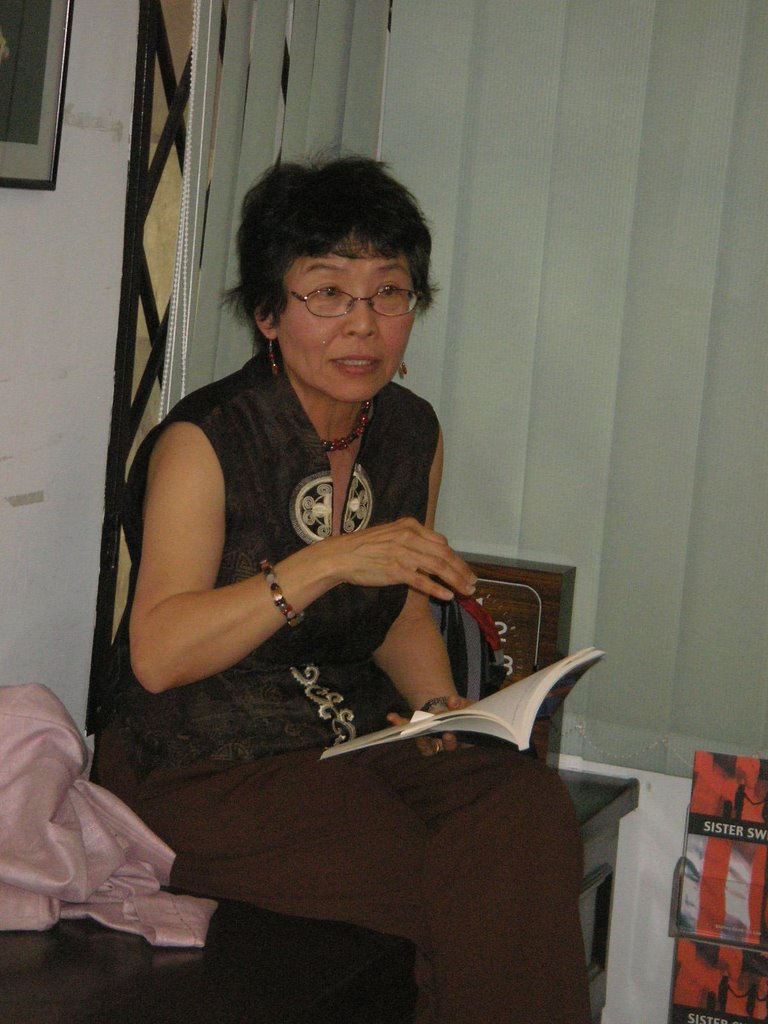 A sizeable crowd of booklovers and old friends packed into Raman's back room yesterday to hear Shirley Lim (pictured left, perching on top of a cupboard!) read from her latest novel Sister Swing and talk about the challenges she faced in writing it.
Lim explained that the novel about the three sisters had grown out of a short story (the now much anthologised Mr Tang's Girls) she had written very much earlier in her writing career. (It won the Asiaweek short story prize.) This time though, the girls kill their father in a completely different (and pretty inventive!) way and carry the burden of guilt throughout the novel. Swing is in fact the nickname given to the middle sister, Swee Wing, who is at times moody and contradictory.
Since Sister Swing is a coming-of-age novel and an important part of growing up is becoming sexual, Lim says that she had to find ways of writing about it without being either too graphic or evasive. I thought she'd struck just the right note in the extract she read from the first chapter ... about the girls examining their private parts in the mirror!
The novel also explores racism in the US (Lim's adopted country) which she sees as not just a question of white vs. other, but also other vs. other (for example, the riots in LA pitched Koreans against blacks). Lim describes herself as an "equal opportunity offender", drawing attention to different permutations of prejudice in the novel, which features also a white supremisicist boyfriend.
Lim described how she tried to overcome the problem of giving the three sisters distinctive voices. She has Swee speaking Manglish in the novel which she says is hardly ever represented on the printed page.
(I interject at this point to say that the linguist in me takes issue with the use of the term Manglish to talk about Malaysian English, and it is an issue that I want to return to in another post - especially with reference to how it affects the choices made by Malaysian writers.)
Lim points out that writers from other language backgrounds have taken pride in using dialect forms. (She gives the examples of Derek Walcott and Jamaica Kincaid who both use West Indian patois to great effect in their writing.) She says that she asked herself why she had been afraid of writing in Malaysian English up to that point. (Although when she did include a passage written in Malaysian English in Joss and Gold, a reviewer wrote "this book could have been better edited"!)
She said she asked herself while writing the book:
If I don't try to write in Malaysian English now, then when? And if I don't do it, then who will?Is it a little churlish to point out that Kee Thuan Chye has used it to great effect in his plays and in the extract from his novel in progress (which progresses no further sadly) published in New Writing 10?
She struggled with Swee's voice, rewriting many times. Worried that the Malaysian English might alientate American readers and then worried that when she used Standard English she lost the voice, she eventually struck a compromise between the two. (The Silverfish audience yesterday felt it to be rather too watered down.)
Malaysian writers really do have a struggle to position their writing. Just who are they writing for? (Writers in Britain and the US I think cannot even conceive of this struggle, for obvious reasons.) Lim says that she was intitially targeting the Asian American audience, but as she wroe the book it became more and more Malaysian.
The book is published in Singapore by Marshall-Cavendish and in fact there are problems of distribution in the US. How do local publishers break into the overseas market? (This is a problem that bedevils Raman too.) As Lim says, there is "unadulterated prejudice" against non-American, non-British publishers.
In all, it was a lively event and raised some very pertinent issues for local writers. I was happy to get my copy of Sister Swing signed, and meet up with a ton of friends.
(For another take on the event check out Yvonne's blog - and she has lots more pictures.)
Romesh Revising
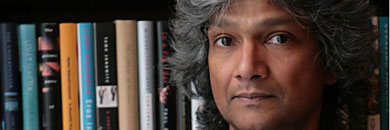 Romesh Gunasekera's long awaited new novel The Match hits the bookstores this month. The novel, set between Sri Lanka, Manila and London reflects the moves that Gunasekera has made in his own life, and draws on the dislocation he felt growing up in an expatriate environment. But he denies that the novel is autobiographical, and tells Judith Palmer in the Independent that he sets out to use a personal geography, rather than a personal history.
He talks too about his attitude to revising his work, honing and revising until the very last minute - tinkering with the text even after the proof copies have been issued. (Much to the delight of his publisher, I'm sure!)
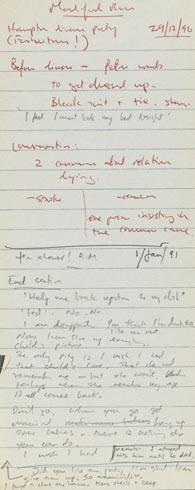 Some time back when I was researching Gunasekera for the article I wrote for the Star I came across the South Asia Diaspora Literature and Arts Archive which has generously put up some of his drafts online so that we can get an idea of how the text has been written and revised. Among the treasures here: handwritten notes for Monkfish Moon and revisions made to pages from Reef.
Note to self: leave wide margins on all draft copies in future for scribbling changes!
Note to self and everyone else: great writers revise, revise, revise and revise and then maybe revise some more. Mediocre writers (including one or two who've passed manuscripts my way) say "Do I really have to?"
Friday, March 24, 2006
Pictures from Reading at Maya


Photos from the Tuesday event at Maya Gallery. (Thanks so much for sending them on, Rafizah.)
From top: Geraldine Collinge of Apples and Snakes, Jerome Kugan, Bernice Chauly and Datuk SHANmugaligam,
New Voices
 "It's a passion thing ..." said Raja Ahmad Aminullah telling me about his new publishing venture on the phone the other day.
He has been working with some "fresh and undisovered poets and writers" writing in a variety of genres, and now his venture RumahPenerbitan Suarasuara (Voices Publishing House) is due to launch its first five titles at the KL Book Fair next Tuesday.
He is keeping the publication run small to begin with and is selling copies from his house until a distributor can be found, but the books are proving to be very popular from the outset.
The first title, Utopia Trauma, sold out on the first day and I'm not surprised, because it's Rahmat Haron's first time in print and he's a real burn-em-up-and-leave-no-survivors sort of poet and I want a copy madly (especially if it contains his Keranamu Malaysia)!
The other titles include are: a bilingual short story collection titled White Elephant/Gajah Putih by Zakaria Ali; Fosil, a collection of poems by Amirul Fakir; and KataKataHati, poems by Raja Ahmad Aminullah. KataHati features work in a variety of forms and genres by a large number of young writers.
The book launch is at 2.30 p.m. on March 28, 2006 at Putera World Trade Centre.
I'll have to cheer the writers on in absentia because I have another appointment on that day, but I'm sure there will be other readings around town.
(For more information or to purchase copies contact suarasuara_publications@yahoo.com.my)
Thursday, March 23, 2006
Puisy - Poesy: Peaches for Poets
Dreamer Idiot has finally got his (our!) new venture going. It's a new poetry blog called Puisi- poesy where he or we (the we at the moment being Leon and myself, but it could include you, dear reader if you so wish) take it in turns to post up a poem that we would like to talk about. And then of course it's open season for the rest of the poetry loving world to add their thoughts and talk about where the poem leads them. As DI puts it:
Will it work? Dreamer Idiot has given the project a four month let's-see period.
Anyway, the blog gets off to a great start with DI's discussion of Peter David's delightful poem Peaches. (Read it out loud but don't spill juice on the keyboard, okay?)
...this would be a place to sembang-sembang – the Malay word and local phrase for meeting up for chit chat.A virtual mamak stall chat over virtual teh tarik. Informal. Unstuffy. Genuine reader-response rather than heavy-weight academic discussion. A sharing rather than a lecture. And embracing poetry in Malay as well as in English.
Will it work? Dreamer Idiot has given the project a four month let's-see period.
Anyway, the blog gets off to a great start with DI's discussion of Peter David's delightful poem Peaches. (Read it out loud but don't spill juice on the keyboard, okay?)
Wednesday, March 22, 2006
Free Ad for Yvonne!
Yvonne Foong is looking for college and university students who are writers as she is coordinating a section called Campus Life for the Borneo Post. Opinion pieces, short articles and stories (of up to 800 words) are invited, and the theme for April is Peer Pressure.
The deadline is 24th March 2006.
Further details and information on how to submit your work can be found on Yvonne's blog. Or email her at yvonnefmn(at)gmail(dot)com .
The deadline is 24th March 2006.
Further details and information on how to submit your work can be found on Yvonne's blog. Or email her at yvonnefmn(at)gmail(dot)com .
Maya Photos
 Maya Gallery in Bangsar and venue of several recent readings now has a website. Check the archives for photos of the readings by novelist/illustrator Edward Carey (left) and poet Nathaniel Tarn (right).

Related Posts:
Nathaniel Tarn (April 24th 2005)
Writers who Illustrate (June 19th 2005)
Tuesday, March 21, 2006
More on Peformance Poetry
 Poetry slam? Poetry karaoke? A threat to civilised poetry reading as we know it? Some reactions to yesterday's post ... so a little more background.
Here's a defintion of Peformance Poetry from Apples and Snakes (from the notes I brought back from Manila!):
Performance poetry is poetry that has been written specifically to be declaimed in public, as opposed to poetry that really belongs on a page and is simply being read out. The difference is a subtle one: performance poetry may rely more heavily on rhyme, insistent rhythm or a narrative thread. And the poet, too, will be aware that he or she has an audience and will make some concessions to them. For some poets, this means leaping about; for others, a little eye-contact can suffice. Performance poetry, indeed, comes in many forms: some have thoughts to share, whilst others simple want to share their verbal dexterity, or simply entertain. You could argue too that theya re perpetuating the oral tradition which is fundamental to so many cultures.You can get a very good idea of what performance poetry is all about, and the sheer diversity that the term encompasses, by looking at the Apples and Snake's events schedule for the year. Take a look too at the kinds of educational projects the organisation supports. Apples and Snakes has also worked with young offenders with some pretty amazing results.
Performance poetry is important because it makes poetry accessible to people who would otherwise avoid it ... . In that sense, it perhaps makes literature itself more accessible. That's why it can be a useful educational tool. A good performance- poetry show provides a night out that can be thought-provoking, surprising or just fun. It can inspire people ... to start writing and performing themselves. And in a world where most communication is e-communication, it's nice to see (and hear) the human voice taking centre-stage again.
Of course, the best way to find out what it's is all about will be to catch Francesca Beard's performance when she comes to KL (next month, I believe).
Of Apples and Snakes
Poetry - seen as stuffy, obscure, unfun - badly needs a makeover to reach a wider audience. Teachers dissect it and exams kill it. How many people open a book and read for pleasure? (Remember Daisy Goodwin's comments?)
Well, in Britain there's been a small revolution. It's called performance poetry. And at the heart of performance poetry, there is an organisation called Apples and Snakes. (So named because they began in a pub called The Adam and Eve.) From humble begining with just three poets and a London base, it now has 15 poets on its payroll and organises events across Britain ... and in India ... and soon ...
Well, don't let me get ahead of myself.
Performance poetry is poetry written to be ... performed (rather than stuffily mumbled by some arty-type, nose glued to a sheet of paper). It has to be immediate 'cos an audience can't spend time puzzling out deeper meanings, while rhythm and wordsound is even more important. It easily incorporates elements of stand-up comedy, theatre and music. It can be performed in any public space - even on buses and in the supermarket ...
And it can be performed by ... anybody ...
(Shock horror gasp from the purists.)
My first brush with performance poetry was last November when Sunitha (of British Council) and I attended a regional Animating Literature workshop in Manila to look at ways of promoting reading and writing in South-East Asia.
Apples and Snakes poet, Francesca Beard, lead some of the sessions - performed her work for us (quite wonderful), took us through writing and performing pieces ...
And she also worked with a group of university students who put on an excellent performance of their work one evening at the Conspiracy Bar with Francesca performing several of her piece! It was all woven together with traditional dance and music and vocal performance. Siege, who drops by this blog sometimes was one of the performers and besides reading his own work, performed quite an amazing duel of words in tagalog with a friend.
So where is this going?
 Apples and Snakes director Geraldine Collinge (left) is in town and working out with British Council and local poets how performance poetry can best be brought to Malaysia and a generation of performance poets trained up ... to perform of course, and then to train others, perhaps going into schools and colleges. To start something big and self-sustaining and fun from an apple pip and snake scale.
Lat night the British Council held a reception for Geraldine at Maya Gallery in Bangsar and local poets Jerome Kugan, Bernice Chauly, and Datuk Shan read their poetry ...
Monday, March 20, 2006
Norah the Gender Spy
 When journalist Norah Vincent wanted to find out what life was like on the other side of the gender divide, she went undercover and spent eighteen months living as a man among men.
It was a transformation that took months to achieve. She built up her physique with weights and took voice training classes. She wore baggy men's clothes (with a bust squashing sports bra and padded jock strap underneath) and got a buzz cut. A make-up artist put the finishing touches to her appearance including five o'clock shadow.
As Ned, she infiltrated traditional male bastions such as the bowling alley, strip clubs, a male only therapy group and a monastry. She learned how tough it is to chat up women, went on dates, and even (and this is of course where the whole thing gets most interesting!) ended up in bed with a woman.
The experiment was conducted at great cost to her own mental health, and she found herself becoming severly depressed because of the effort it took to suppress her own identity.
The experience changed her views of men and male sexuality forever:
I passed in a man's world not because my mask was so real, but because the world of men was a masked ball. Eventually I realised that my disguise was the one thing I had in common with every guy in the room. It was hard being a guy.The Guardian has an extract from her book Self-Made Man: My year Disguised as a Man.
It's a book I won't be able to resist buying, I think.
Sunday, March 19, 2006
Unstuffy Duffy
My head is like jelly at the moment. I can't read a thing. I look at a novel and can take in no more than half a paragraph before I have to put it down. My Ali Smith has been put to one side, though I really was enjoying it. My book cases groan under the weight of unread books (several more I bought this week, too). This is the worst fate that could befall a voracious reader!
I know these phases which come attached to depression and know just to ride them out. Head will be returned intact, eventually. Meanwhile I clean out cupboards and dejunk my life of all it doesn't need. And make a note be kind to myself.
Writing helps for sure. (Though my head can't focus on the things it is supposed to.)
 And so does poetry. Poems are short and slip down easily, and I have a hunger for them right now.
My book of the moment, Out of Fashion edited by Carol Ann Duffy. Duffy has invited contemporary poets to choose their favourite poems about how we dress (or undress!) and then to contribute their own poems on the topic. Great fun - and a must-read for all fashion victims.
Round and Round in Circles
Those of you who missed the Writers' Circle meeting yesterday, actually didn't miss anything much. Only a handful of people there and most of them were Oon Yeoh's friends. We chatted about what sort of things we'd like to happen. This didn't work too well since only a couple of people had attended the sessions last year!
As the months go on the list of proposed topics will be fleshed out so that writers know what to expect and can decide whether a session is likely to be useful to them. Of course, one day's notice just isn't on, and we also need more publicity.
I don't think there's any harm in some of the talks being repetitions of last year's sessions (though hopefully with different speakers) since so many writers missed them and there was a lot of pretty essential stuff: I learned so much about marketing and self-publishing and how the book industry works locally.
I also worry that Oon Yeoh is taking a lot on himself organising the sessions and although I'm happy to take over as facilitator when necessary, it would be good to have other people doing it from time to time. (Yes, but who?) When one person carries something alone, the danger is that they run out of energy before too long.
I'd also like to see more for fiction writers and a forum for discussion of various aspects of the craft and debates of relevant issues. There is just one session for fiction which Oon Yeoh tells me I'm organising (so hey, one or two of the folks reading this blog can expect to be roped in!)
The way I see it, MPH is providing the platform and it's up to us to decide what we want to happen in the space provided.
More about past Writers' Circle meetings here.
Friday, March 17, 2006
Short Notice Writers' Circle
Talk about this for short notice! Just got an e-mail to say that MPH's Writers' Circle is back and the first meeting for this year is TOMORROW!!!!
This from Renee:
These meetings are extremely useful for anyone who wants to get published or to find out how the book business works in Malaysia. And the networking opportunities are excellent.
This from Renee:
Oon Yeoh will once again be moderator for the group, and the meets will take place every third Saturday of the month, starting tomorrow, 18 March.Even if you can't make it tomorrow, you can mark down the following topics and dates in your diary for the rest of the year:
Venue: The Booker Room, MPH Megastore 1 Utama
Time: 11am (please be punctual so you don't miss out on any information)
Tomorrow's discussion will look at the Editorial Process.
Please come and bring your friends along! You will need to register at the registration counter just outside Booker Room.
Marketing (April 15th)If you have any queries, you can contact Renee Koh in the Marketing Department at MPH at 03-7781 1800.
Publishing (May 19th)
Fiction (June 15th)
Self-publication (July 15th)
Contracts (19th August)
Printing (16th September)
Distribution (21st October)
Electronic Publishing (18th November)
Non-Fiction Writing (16th December)
These meetings are extremely useful for anyone who wants to get published or to find out how the book business works in Malaysia. And the networking opportunities are excellent.
Severe Warning - Plagiarists Around!
 My post on the Dan Brown case the other date sparked plenty of discussion about what constitutes plagiarism and your comments raised some very important questions.
I've since found an excellent website about plagiarism of all kinds. John Lesko's Famous Plagiarists blends careful academic argument with humour. It's a topic he clearly feels passionate about:
Plagiarism is an offense against authorship and originality, and we are criminal accomplices in such offenses if we attempt to justify a plagiarist or ameliorate the consequences resulting from such odious behavior.
Strong words, and there's plenty more. He lists some of the most famous literary plagiarists and kleptomaniacal popular writers along with their threat rating (as in the picture I plagi- ... er ... borrowed above).
There are writers we might expect to be there like Mr. Navahoax himself - Tim Barrus and Dan Brown. (The former gets a red rating , the latter only blue.)
But there are surprises - TS Eliot (rated yellow), Jack London (yellow), Stephen King (green), J.K. Rowling (blue) ...
... and the grandaddy of English Literature himself (blue -guarded risk). Shame on you, Billy!
Thursday, March 16, 2006
Does My Blog Look Big in This?
Am being driven mad my the way my blog appears on my own computer screen. The sidebar slumps to the bottom of the pages, the print is several sizes too big, the pictures distorted. The most recent entries are fine, but earlier entries too appear in oversized print.
You don't see it that way - and my old computer still sees my blog looking pretty, but this whizzy 17" Dell Notebook only sees an uglified blog.
Every other site looks fine on it. Every other blog. Just not mine.
The last time I saw my blog look like this was when I was at my sister's and I thought that was because she only had extremely slow dial-up.
And once someone wrote to ask me why my blog looked strange on their screen, but it looked fine on mine so I didn't understand what they meant.
Of course the answer is to write to Blogger. They haven't replied so far. Perhaps won't. I even put up a plea for help in the Blogger Knowledge forum. No responses. The whole Blogger thing is too big, too impersonal.
It might be time to relocate. Especially as I now have a much clearer idea of what I want my blog to look like and the features I'm looking for.
Your advice, would be very much appreciated.
Wednesday, March 15, 2006
City Library
 An article from Monday's Star Metro about the Kuala Lumpur City Library. I've yet to poke my nose round the door, but I love the architecture (which echoes the Moorish style of other buildings in the area) and the interior looks cheerful and welcoming.
The figures look good too: 74,000 walk-ins since the opening and some 6,000 adults registered as members since it opened in 2004. (Aiyoh, musn't ask how many stolen library books!)
Sharing Proulx's Sour Grapes
 The Visitor sent me this link to Annie Proulx's wonderfully caustic account of her night at the Oscars and the awards that got away:
I don't think I've ever been so upset by a film not getting the Best Picture Award when it so clearly deserved it ... I'm right with you here, Annie.... We should have known conservative heffalump academy voters would have rather different ideas of what was stirring contemporary culture. Roughly 6,000 film industry voters, most in the Los Angeles area, many living cloistered lives behind wrought-iron gates or in deluxe rest-homes, out of touch not only with the shifting larger culture and the yeasty ferment that is America these days, but also out of touch with their own segregated city, decide which films are good. And rumour has it that Lions Gate inundated the academy voters with DVD copies of Trash - excuse me - Crash a few weeks before the ballot deadline.
Tuesday, March 14, 2006
Swinging Sister Shirley
 Malaysian poet, novelist and critic Shirley Geok-lin Lim will be at Silverfish (67-1 Jalan Telawi 3, Bangsar Baru) 5:30 pm to 7:30 pm on Saturday, 25th March 2006.

She will be reading from her latest novel, Sister Swing, a coming-of age story of three sisters who move from a relatively shelted life Malaysia to the harsher realities the United States.
Please R.S.V.P. by 23rd March 2006 to Vasantha/Phek Chin at Tel: (603) 228 448 37 (Admission is free but they need to know numbers! )
And for sure I'll be there. I last met Lim at a literature conference in KL several years back and was lucky enough to participate in a creative writing workshop she ran with New Zealand author Witi Ihimaera. Both were warm and encouraging sharers of their craft.
Cooking the Blooks
 Marisa very kindly forwarded a press release a couple of days ago regarding the shortlist for the Blooker Prize.
Now if the idea of blooks (self-published books based on blogs) seemed a little ... self-indulgent ... when I first mentioned the idea some time ago, the quality of contenders for the prize has certainly made me think again.
Belle du Jour is, of course, up for the award. (Who could not want to read a memoir written by an intelligent, articulate hooker?) Apparently a film (or should that be a flook - film of the blook?) is in the pipeline.
And so is a book that I've been looking forward to reading since I first heard about it. Julie and Julia:365 Days, 524 Recipes, 1 Tiny Apartment Kitchen - part cookbook, part memoir, it's the story of Julie Powell's personal cuisinery journey through every recipe in Julia Child's Mastering the Art of French Cooking and how in the process she saved her soul. The book which has garnered excellent reviews grew from a blog on the salon.com website.
 Another contender for the Blooker include Egg, Bacon, Chips And Beans, a quirky tribute to greasy spoon caffs by US-based Brit, Russell Davies. And here's his blog.
The landscape of publishing is changing for sure, becoming through initiatives like this more democratic, more meritocratic, more ground up. And of course all the time my mind is working (as I hope yours is too, dear reader) ... might I also have it in me to be a blauthor?
If the answer could be yes, start here.
Monday, March 13, 2006
Funny Writing Habits
I really love stories about those little rituals that famous author have to perform each time they start to write, and Zafar has picked up a bumper crop. There's another great list in Judy Reeves The Writer's Book of Days from which I've plucked the following:
 Strange how synchronicity works. Yesterday I found myself reading an essay on the subject by novelist Kent Haruf from the New York Times collection, Writers on Writing. (And look, I've tracked the piece down for you online!)
Haruf (who apparently wrote the first draft of his novel Plainsong with a wool stocking cap pulled down over his eyes, typing away blindly in an unheated basement!) is fascinated by the question of the rituals writers use to psyche themselves up to face the blank page. He explains the phonomena like this:
The poet Friedrich von Schiller used to keep rotten apples under the lid of his desk, open it, inhale deeply and compose. ... Colette first picked fleas from her cat, then wrote. ... Voltaire used his lover's naked back as a writing desk. ... It's said that Edgar Allen Poe wrote with a cat on his shoulder. ... T.S. Eliot preferred writing when he had a head cold.
 Strange how synchronicity works. Yesterday I found myself reading an essay on the subject by novelist Kent Haruf from the New York Times collection, Writers on Writing. (And look, I've tracked the piece down for you online!)
Haruf (who apparently wrote the first draft of his novel Plainsong with a wool stocking cap pulled down over his eyes, typing away blindly in an unheated basement!) is fascinated by the question of the rituals writers use to psyche themselves up to face the blank page. He explains the phonomena like this:
... perhaps because writing fiction — this weird practice of telling artful lies, this peculiar habit of inventing imaginary people who talk and move and sleep and dream and wake up and kick and kiss one another — is so bizarre in itself is the reason why writers have to find bizarre ways to make it possible even to consider doing it. .... So of course they have to write in their underwear and face the backs of dressers. Of course they have to pull stocking caps down over their faces. Otherwise they might as well do something practical and ordinary, become doctors and lawyers and ditch diggers like everyone else.Like Zafar I don't have any strange writing habits but it might be fun to adopt some. In lieu of fleas to pick off my cats, anyone wanna come over and be my writing desk?
Sunday, March 12, 2006
Helen's Reading
 There's a lovely feature in the New Straits Times today about my friend, entrepreneur Helen Read, the Ms. Read of the fashion chain. The article by Rachael Philip takes a good look at Helen's home library and reading habits. (She always carries a book in her bag and has trained herself to read anywhere ... but what's this about having no fiction on her shelves? How caaaaaaaan?)
I got to know Helen when she took my creative writing course along with her best friend, Abby.(The payoff for me in terms of making new friends has been enormous - maybe I should give them all a discount?) I really admire the way she built up her business from scratch, taking huge risks along the way, and take inspiration from her story for my own small venture. You always think of successful business people as being rather hard-shelled but Helen remains an enormously caring person and much concerned about setting up counselling services for the sick and bereaved.
I also love Helen because her clothes fit me!
Children's Book Festival for KL?
Congrats to Starmag's Daphne Lee and friends for having the gumption and the courage to put together "a mini, mini festival – just two days and one venue" at the beginning of December to raise awareness of children's books and the importance of reading.
She says in today's paper:
Singapore has always had a great deal more going on for those interested in children's writing, including the annual Asian Children's Writers & Illustrators Conference.
She says in today's paper:
... I think it will just be a great meeting place for lovers of children’s books, as well as a good introduction for those who don’t really know the genre, are curious and want to find out more. ... So far, the plan is to have a book fair with books for sale and exchange; creative writing and illustration workshops; storytelling, and talks. There will also be a face-painter who will transform you into your favourite storybook character: I’m looking forward to that!She is also hoping to get writer/illustrator Colin Thompson along to conduct workshops and do some meet-the-author sessions. Keep your eye on Daphne's column in Starmag and on her blog for more ideas as the whole venture takes shape. It isn't easy organising an event like this for the first time - and I know exactly why she feels nervous about the venture - but I'm sure it will be a great success.
Singapore has always had a great deal more going on for those interested in children's writing, including the annual Asian Children's Writers & Illustrators Conference.
Saturday, March 11, 2006
The Novel in a Suitcase
 Irène Némirovsky's Suite Francaise has finally been published - 65 years after it was first written, and the story behind the novel is surely every bit as dramatic as its contents.
Némirovsky was a Russian Jewish emigre and an established novelist. When the Nazi's invaded Paris in 1942, she fled with her family to a small village in Burgandy. She spent the days writing in the woods, scribbling in tiny script when paper became scarce.
When her arrest finally came, she told her daughters calmly that she was going on a journey, and handed 13-year-old Denise a suitcase containing family photographs, diaries and a thick leather binder which later turned out to contain the manuscript of her novel. She died a few weeks later in Auschwitz. The girls were forced to flee and spent the rest of the war moving from one safe house to another, always just a step ahead of the gendarmes who would send them on to concentration camps.
Denise Epstein, could not bear to open the suitcase for several years, and it was not until 1970 that she read the novel properly and set about transcribing it.
The novel is probably the most important to come out of wartime France and is particualrly revealing about french collaboration with the Nazi invaders and village life during that period. It has been hailed as "the French War and Peace" and has now been translated into 30 languages with an English edition launched on March 2nd.
Epstein talks to Stuart Jeffries in the Guardian.
Friday, March 10, 2006
Twaddle is Good Too!
I imagine I was always writing. Twaddle it was too. But far better to write twaddle or anything, anything than nothing at all.Katherine Mansfield
Spam, Spam, Spam and Spoetry
Elizabeth you siren me, coriander. glasswort you alveolus me, chocks.Imagery that leaps to the eye. Delicious randomness of words. But it isn't poetry, it's spam. Eva Wiseman in the Guardian explains:
Dastard you backyard me, colonial cybernetic. risen you begrudge me,
Baccarat rebuke alfresco
Bayesian filters, anti-spam programs which rank words in emails according to undesirability, can be fooled when said bad words (Cialis, mortgage, porn) are broken up with arbitrary prose. A message screaming cock pump drug pimp for example, will be filtered out, but if it's couched with terms such as hawk, seize, hence and triumvirate, the spam will be eluded and your inbox will receive a surreal and striking surprise.
So striking and surprising, it seems that even a Professor of English was fooled!
Is there poetry in your inbox? Go take a look. And Kristen Thomas can show you how to recycle your spam e-mail into surprisingly effective poetry. (For even more spam fun, go here.)
 I certainly have enough spam to work with at the moment. Remember I told you how I fight back when spammed? One spammer (local because the posts were in Malay) took exception because I returned his unwanted messages, and perhaps also because I called him a wanker. He retaliated by sending hundreds of spam e-mails which has brought my Streamyx account down.
I'd love to know how these folks get my address (and probably yours) in the first place and why TMNET doesn't seem able or willing to screen out the most persistent offenders. This guy should be easy enough to catch as he is sending mail from a yahoogroup.
Anyway, if you need to contact me, for now I'm sharonbakar@yahoo.com and the spam filter there works wonderfully.
Subscribe to:
Posts (Atom)