Showing posts with label scottish authors. Show all posts

Wednesday, February 25, 2009

A Hobo's Life for Writers

A.L. Kennedy issues a stark warning to wannabe writers ... and knows no-one will heed it :
... I do try to tell other people what it will come to – hence my occasional visits to Warwick University and its creative writing students. They want to write, they have application and vigour, they've all come on since I read them last and yet ... it would be unfair not to remind them of how horrible their futures may become. If they're unsuccessful, they'll be clattering through a global Depression with a skill no one requires, a writing demon gnawing at their spine to be expressed and a delicately-nurtured sensitivity that will only make their predicaments seem worse – and yet somehow of no interest to anyone else. If they're successful, they still may not make a living, will travel more than a drug mule, may be so emotionally preoccupied that they fail to notice entire relationships, will have to deal with media demands no sane person would want to understand and may well wear far too much black. (Yes, it is slimming, but unisex Richard III isn't always what the occasion demands. Trust me: experience is a painful teacher.)

Naturally, I don't believe anyone will be deterred by my mad-eyed rantings. Once somebody wants to write it's almost impossible to stop them without also killing them to some significant degree. Nothing beats that raging delight at three in the morning when sentence number 15 finally agrees to do what you want, and never has banging wiggly marks on to a computer screen seemed so heroic – even if you're simply ensuring that the orthopaedic surgeon ravishing your senior nurse in the sluice room doesn't seem implausibly limber and can meanwhile reawaken echoes of that summer afternoon with her funny uncle ... And if you think you might actually be doing some good, amusing someone other than yourself – making them less lonely, more alive, more informed – well, you're just not going to chuck that over in favour of crafting, long walks and a quiet life. Hence the number of regimes and leaders who have discovered that killing writers until they are entirely dead is a highly effective method of slowing literary output. And may angels and ministers of grace preserve the students and indeed myself from any shades of that. We may feel hard done by, but we're not doing that badly – for individuals trapped in a society intent upon eating its own tongue.

Saturday, January 17, 2009

Little Hut Leaps Onto Shortlist!!!

Let's give a big collective cheer for Chiew-Siah Tei whose Little Hut of Leaping Fishes has been shortlisted for the Best Scottish Fiction, a prize held in conjunction with the Glasgow Book Festival, Aye Write. (More here.) It must be said that she's up against some very stiff competition!

The winner will be announced on March 14th.

Friday, February 08, 2008

Iain Banks' Advice

What advice would science fiction novelist Iain Banks give to new writers?
The Three Ps: practice, practice, practice. Writing is like everything else: the more you do it the better you get. Don't try to perfect as you go along, just get to the end of the damn thing. Accept imperfections. Get it finished and then you can go back. If you try to polish every sentence there's a chance you'll never get past the first chapter.
And when asked if there's a secret to writing he says:
Some people have just got it and some haven't. Although, I think it can be brought out of some people so it is worthwhile joining writers' groups or studying it. If a creative writing course produces one writer who wouldn't have been a writer otherwise then it's worthwhile. You kind of know if you are a writer or not. The real secret is to do it because you love writing rather than because you love the idea of being a Writer.

Wednesday, January 23, 2008

Kennedy's Big Day

Scottish author A. L. Kennedy has emerged the overall winner of the 2007 Costa Prize (narrowly beating Catherine O'Flynn). Her novel Day is about the after effects of war, and was written as a response to the invasion of Iraq and she says she set out to draw parallels, and highlight the difference in morality, between the two conflicts.

Day centres on a traumatised second world war tail gunner, and you can read an extract here.

Chair of the judges, Joanna Trollope called the book:
... a perfectly and beautifully written novel. ... a masterpiece ...
and declared Kennedy:
... an extraordinary stylist
Kennedy used her acceptance speech to make a plea for fair treatment for authors and issued a strong pro-literacy message. Her impassioned plea to her audience:
If you genuinely care about reading and books, defend them.
When Kennedy is not writing, she works as a stand-up comedian, and is also an ordained minister*. Find out more about her here.

*Oops. Got this sort of wrong. See Rob's correction in the comments.

Postscript:

Post-win, Kennedy is interviewed by Stuart Jeffries in the Guardian, and Fiona Sampson on the Guardian blog pays tribute.

I've also really enjoyed Ariffa Akbar's piece in the Independent which brings this unique, funny, haunted, complex woman to life. (I am much tickled that her strongest ambition now is to be allowed to write episodes of Dr. Who! I'd like to lobby for that.)

Saturday, August 11, 2007

It Jist Comes Oot ...

James Kelman looks back on his earliest struggles as a writer in the Guardian.(This article is required reading for anyone who argues that they don't have time or space for writing ... )

He also talks about his determination to use authentic voice to depict his working class characters in his short stories and later in his Booker Prize winning novel (extract here) and the prejudice he encountered as a result.
"Nice to be Nice" was my earliest attempt at the literary or phonetic transcription of a speaking voice. It so happens that the voice belongs to a working-class man from Glasgow. The story is told in the "I-voice", a first-person narrative. It was difficult to do. I spent ages working on it but learned much from the process.

It was one of the stories I later sent to Mary Gray Hughes. She commented on my early stories, and it was important to me, even if I disagreed with some of it. She advised caution in my use of "dialect", and warned me of the risk of alienating the reader. Mary Gray Hughes recommended I look at the work of Flannery O'Connor and Emily Brontë's use of dialect in Wuthering Heights. Of course I had my own opinions about "dialect" and I sent her "Nice to be Nice". She replied, "Forget all I said about dialect . . . you obviously know what you are doing better than anyone." I never bothered about alienating readers, neither then nor now. The priority was to write the story properly. The readers could take care of themselves.

My original intention in "Nice to be Nice" was to use the phonetic transcription only for the narrative. I thought to apply Standard English form for the dialogue. It was an attempt to turn the traditional elitist assumption on its head. I was irritated by so-called working-class writers who wrote third-party narratives in Standard English then applied conventional ideas of phonetics whenever a working-class character was called upon to say a few words. When a middle-class character entered the dialogue all attempts at "phonetics" disappeared; his or her lines were transcribed in standard form, leading to the extraordinary presumption that Standard English Literary Form is a literal transcription of Upper-Class Orature.

In "Nice to be Nice" the story is narrated in the first person by the central character. I was concerned about other characters. In what sense could the "I-voice" be defined as the central character? Only because he is telling the story. Each of the four characters would see it differently, each of the four characters had their own story, a different story. I started writing them, each as a first-person narrative. The shift in the language of each person was the most interesting factor. That subtlety, the sophistication of how human beings use language, is not possible for the elitist or racist for whom working-class existence may be an amorphous experiential mass, but if you hear one you hear them all, see one you see them all. During the Booker Prize controversy of 1994 much of the hostility directed at How Late It Was, How Late derived from the astounding proposition that the life of one working-class Glaswegian male is a subject worthy of art. I was used to the prejudice but the gleeful abandon with which some attacked my work took me by surprise. It never occurred to the literary mainstream that working-class males from Glasgow might be watching the programme or reading the newspaper.
On one occasion a member of an adjudicating panel asked him if he ever revised his stories "or did it just come out?":
It jist comes oot, ah says, it's the natchril rithm o the workin klass, ah jist opens ma mooth and oot it comes. Similar to the American dancer in reply to a related question, ah jes closes ma eyes an ma feets git to movin.
Kelman of course says he "sweated blood" getting them right.

His earliest collections of short fiction An Old Pub Near the Angel, A Chancer, Not Not While the Giro and The Busconductor Hines will be reissued by Polygon on August 30.

Thursday, August 09, 2007

Maths and Apes on the Beach

Another novel recently read was William Boyd's Brazzaville Beach. One of the TBR books I've pledged to read this year, it's been sitting on my shelves since I bought this copy, second-hand from Skoob a couple of years ago. The novel won the James Tait Black Memorial Prize for 1991.

It's the first William Boyd I've read, I'm ashamed to say, and I wonder just why it took me so long because it's such an intelligent, well-written novel that now I want to plunge into the others.

Hope Clearwater lives alone in a small beach house of Brazzaville Beach in an unnamed African country. (There actually is a Brazzaville Beach in the republic of Congo though!). She looks back on the cataclysmic events which have changed the course of her life, and throughout the book two stories run parallel, at times echoing each other.

She recalls her relationship and marriage to a brilliant but psychologically unstable mathematician genius. At the same time describes how she came to Africa to participate in a primate research project at The Grosso Arvore Research Center (there are echoes of Jane Goodall's work here) and finds herself uncovering an unnerving truth about the nature of chimpanzees (and by extension perhaps, about mankind's predisposition towards violence). Her discoveries have far reaching consequences and she finds herself pitched against her employer and mentor who refuses to accept her findings.

Boyd is particularly good here at pointing out the dangers of narrowly focused dogmatic belief and academic obsession. I enjoyed the way Hope refers to the mathematical principles she's learned from her husband, John, and tries to draw a philosophy from them to illuminate the seeming chaos of her own life.

The characters, human and ape, were all well-drawn. Here's a male author convincingly able to inhabit a female skin - I felt a lot for Hope. (And I like to imagine for her the happy ending that isn't quite reached in the book.) I also felt deeply for the manic-depressive John Clearwater who fails to fulfill his dream of great Mathematical discovery and suffers terribly because of it.

This book has one of the best first sentences ever:
I never really warmed to Clovis-he was far too stupid to inspire real affection-but he always claimed a corner of my heart, largely, I supposed, because of the way he instinctively and unconsciously cupped his genitals whenever he was alarmed or nervous.
And if that's whetted your appetite, you can also take a gander at the opening pages on amazon.com.

Blanche d'Alpuget's 1991 New York Times review is here, while Robin Mokie in New Scientist takes a look at how research scientists are portrayed!

Because, while anyone who loves a well-written thought provoking novel will enjoy this book, it will appeal particularly to those of you with a love and understanding of maths and science. (Sham? Machinist? Greenbottle? Burhan?)

Stef Penney's Rattling Good Yarn

Got an e-mail from someone in the publicity department of Simon & Schuster a week or two back asking me if I'd "take another look" at Stef Penney's The Tenderness of Wolves on my blog since the book has just been launched in the US. It quite amazed me that my blog, tapped in on a keyboard in Malaysia, might help to shift some copies on the other side of the world.

Well, the book was sitting on my TBR shelf already, looking forlorn, so what was I to do?

As it turned out, this book was just the read I needed: a rattling good yarn I could slip into my bag and read in odd moments between visiting my student-teachers in schools.

You'll probably remember that the novel won this year's Costa First Novel Award, and although it's set in Canada, the author suffered so badly from agoraphobia that she was unable to travel there and instead did her research in the British Library.

Not that that matters. I remember Kunal Basu at the Ubud Readers' and Writers' festival last year talking about writing his historical novels. It was impossible for him to visit the places where he set his novels because they no longer exist. He saw this in a positive light:
What excites is inaccessibility in real terms, but accessibility in the imagination.
Stef Penney sets her novel in mid C19th Canada and chucks in a whole load of ingredients ... murder, mysterious disappearances, codes to be cracked (one which may hold the secret of an ancient written Native American language and the other a fortune in furs), love stories (gay and straight).

If the story has a weakness it is that I think the author tried to cram in too much, and in parts, especially where the backgrounds of various characters were fleshed out, it seemed terribly rushed. There were an awful lot of threads to bring together by the end of the book, and whilst Penney largely managed this, some parts were left hanging.

I was sad that we did not have a chance to see the protagonist Mrs. Ross (what is her first name??) reunited with her adopted 17 year old son Francis after she finally (and how could she really miss all the clues?) realises that he is gay and that the murdered man was his lover.

And why was she in an asylum in Scotland ... and what does that have to do with the main drift of the story?

And why was there so little about the wolves?

The cast of characters is also very large - and some came alive rather more than others. Francis intrigued me. I liked the warm-hearted but bumbling accountant, Donald Moody, still trying to find his feet with the Hudson Bay Company.

But I loved the huge and ugly half-Mohawk, half-English trapper William Parker, and was so glad that Mrs Ross ended up warming her frostbitten fingers in his armpits ... even if I'd have liked something a lot steamier to melt the frozen Tundra.

Some characters didn't rise very far of the page though, including Knox and his wife and daughters. Others were well drawn but didn't have enough of a role in the book in my opinion, e.g. Jacob and Sturrock.

I also felt that the narration worked best in Mrs. Ross' first person, and got annoyed with the godlike omniscience with which the other chapters were narrated.

But as I say, a very good read which I'd recommend as I think many of you will enjoy it.

And I wouldn't be surprised to see it makes New York Times bestseller list.

Wednesday, August 08, 2007

No Memorial for the Bard of the Silv'ry Tay

Can you imagine a poet so absolutely horrendously awful that he had to carry an umbrella around at all times when he recited to fend off public offerings of rotten tomatoes?

Although Willam McGonagall was branded "the world's worst" by his own publisher (and on the cover of one of his collections of poetry), the poet himself was convinced of his genius and ranked himself alongside Shakespeare, says an article in The Age.

His most famous poem was The Tay Bridge Disaster, about the tragic collapse of a railway bridge in 1879. (A website now celebrates his work and you can sign up for the "gem of the day" to be sent to you by e-mail!)

McGonagall did indeed have his fans who celebrate the anniversay of his birthday with poetry recitals and suppers. And there is now is a move to have McGonagall recognised as one of the great Scottish writers with a suitable memorial. The Saltire Society (which fosters Scottish culture including literature) has vetoed the proposal for a memorial to the poet at the Writers Museum in Edinburgh, which honours the likes of Robert Burns, Robert Louis Stevenson, and Sir Walter Scott has turned down the request. "
His work appeals to people because it gives them a sense of superiority. This is mockery rather than appreciation. So-called fans are in fact cruel because they make fun of McGonagall's ineptitude," said Paul Scott, vice-convenor of the society.
And there is no statue of McGonagall in his home town of Edinburgh, nor his adopted city of Dundee.

Tuesday, May 01, 2007

Notes from Another Scandal

Andrew O'Hagan's Booker longlisted Be Near Me is one of those novels stories where you can see disaster looming for the protagonist a long way off, and feel like shouting him a warning. (But would he have listened? Would he have cared?)

Like Zoe Heller's excellent Notes from a Scandal, the novel takes as its territory the human story behind familiar tabloid headlines (in this case screaming about a paedophile Roman Catholic priest).

Father David Anderton becomes the parish priest for Dalgarnock, a small town in Ayrshire, Scotland. He's a fish out of water (Oxford educated, middle-class) in a former industrial town with high-unemployment rates and sectarian divisions as clear-cut as those in Ulster, across the water.

He befriends a group of loutish teens from the local school, and becomes a de facto member of the gang, smoking dope, popping E's, drinking, hanging out. He is particularly drawn to a boy called Mark, whom he kisses (and no more) after a night on a bender. The boy tells his father who then blows the whistle, and soon the the whole community is baying for his blood.

I could appreciate O'Hagan's depiction of the teenagers, having taught classes just like this!:

The pupils were waiting in World Religions. they hung over their desks as if they had just been dropped from a great height, looking like their limbs confounded them and their hair bothered them chewed the frayed ends of their sweaters in the style of caged animals attempting to escape their own quarters. They tended to wear uniform, though each pupil had customized it with badges and belts and sweatbands, you felt they had applied strict notions of themselves to the tying of their ties and the sticking up of their shirt collars. the small energies of disdain could be observed in all this, and the classroom fairly jingled with the sound of forbidden rings and bracelets.
David Anderton is a more difficult character to work out, since we are only gradually permitted to piece together his past. I didn't find him easy to sympathize with - he lacks conviction in his calling, he comes across as weak and ineffectual and simply to be going through the motions of running his parish.

It is a bit of a stretch that a parish priest should be so attracted to a group of yobbish teens that in some senses he seeks to emulate them, but O'Hagan does make the relationship seem credible ... and even inevitable.

Father David is attracted to the teenagers, and particularly to Mark, for their exuberance and their certainty (even when wrong-headed) and perhaps too for their sheer recklessness which contrast with his own lack of conviction and inertia. He clearly takes pleasure in experiencing life vicariously through them.

The title of the book is a line from Tennyson's In Memoriam and, as Hilary Mantel says, (reviewing the book in the Guardian) it is a prayer whispered by this celibate priest on all those lonely nights, still longing for the lover who was killed in a car accident decades before. It's a blow Father David hasn't recovered from. A sense of loss permeates the novel.

Would I recommend the book? Honestly - I'm not sure that it would appeal to the average Malaysian reader who might find it too slow and the setting perhaps too unfamiliar. (I carry the voices of the members of my book club around in my head - I know how they would react!)

But if you enjoy the kind of contemporary British literary fiction which finds its way onto Booker shortlists and longlists, you should find the novel extremely rewarding.

I did enjoy it very much because I so admired O'Hagan's craft: he writes beautifully (although some reviewers have felt that he rather overwrites) and I relished the language. Scenes were so vividly rendered, that I was watching the movie in my head. (British. Arty. Slow.) I also really liked Mrs. Poole the housekeeper whom I felt was particularly well-drawn.

Much better reviews than mine - Sean O'Brian's in the Independent and Andrew Ng's a few weeks back in StarMag. (Who says our local reviewers don't cut the mustard?)

Sunday, September 04, 2005

Readings at MPH

The readings from Scottish writers yesterday at MPH 1 Utama went well. It turned into a solo act because, sadly, Jaeson couldn't make it in the end. And I'm nowhere as good a reader as he is.

It was held in the main part of the bookshop and although it was a little noisy with human traffic passing through, the microphone was good and apparently there were plenty of folks stopped in their tracks to listen. (I say apparently because my eyes couldn't stray too far away from the text to look!) I thoroughly enjoyed reading the extracts I'd chosen - Gray's short-short about a mysterious e-mail message from wife to husband; Galloway's rabid child-abuser; Kay's feisty old woman dying on a hospital bed mourning the loss of her false teeth; Welsh's heroin addicts up before the judge for stealing books from a bookshop. (Don't you just love the irony of that!). Also read out the poem that dear old Porty sent me the other day in the comments at the end of this post with the translation a Scottish friend had written for me.

My voice was packing up by the end though and was glad of the afterwards reviving tea (and gummy bear cakes) at Delicious.

We were kicking around the idea of hiring a space to do the whole thing again before an invited audience. Hope so! Told you there were long-buried thespian tendencies ready to come to the fore!

Thursday, September 01, 2005

A Wee Dram O' The Scots

This morning's quick quiz. What do the following writers have in common?

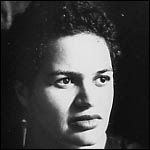
Image hosted by Photobucket.com Jackie Kay

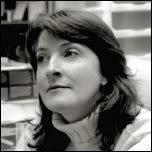
Image hosted by Photobucket.com Janice Galloway

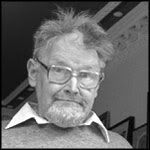
Image hosted by Photobucket.com Alasdair Gray

Image hosted by Photobucket.com Irvine Welsh

If you answered, "Hey, they're all Scottish", you did very well indeed. Ye mun hae a wee oattie cake fer yer brekfast ...

Which is my way of leading up to an advertisement. (Would I make a copywriter?)

If you want to hear some excellent short pieces by these writers, do come along to the Celebrating Scotland readings at MPH 1-Utama this Saturday at 3p.m. and try not to laugh at my accent. (I've been to Edinburgh for a whole weekend!) Jaeson Iskandar should be joining me - he does a pretty mean Glasgow accent ... and he's never even been there at all. (Not fair!)

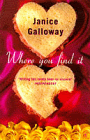
I've been having fun auditioning lots of stories ... goodness, the Janice Galloway story Someone Had To from her collection of love stories Where You Find It sends shivers down my spine ...
Image hosted by Photobucket.com

I'm also really happy to have discovered Jackie Kay. It goes to show that the short story is alive and well north of the border despite dire prognostications about the state of short fiction in Britain.

And on the subject of Celebrating Scotland (cue next ad) - tickets for Macbeth are on sale now. This is one you shouldn't miss.
Image hosted by Photobucket.com