It is a hard lesson to learn. Nevertheless, stealing other people’s written work is no less a crime than stealing their mobile phone, car or any other materialistic appendage you care to name. The more serious crime, I believe, is the ethical crime involved with plagiarising; the lack of thought that taking another person’s creative endeavour, publishing it as one’s own, gaining plaudits for it, might be wrong.See Yusof Martin's take on the affair. The picture of the extracts from the two books comes from his blog.
Showing posts with label rogues gallery of fakers and plagiarisers. Show all posts
Showing posts with label rogues gallery of fakers and plagiarisers. Show all posts
Monday, December 07, 2009
Adeline's Apology
One sad story came to light a few days ago. Yusof Martin sent me a copy of two PDF files. One of Adeline Lee's piece Define Happiness from her first collection, Lethal lessons and Other Stories the other of a piece called Happiness by Sarah Provencal from Chicken Soup for the Teenager's Soul IV. The similarities between the two could not be written off to coincidence.
Raman had already discovered two weeks previously and had destroyed all copies of the book. (His note about it is on the main page of his website.) Adeline has written an apology which is now up on the Silverfish website. If you bought the book and want your money back, then you can contact her for a refund.
My sadness is actually threefold. I feel very sorry for the publisher who took a risk on a new writer that he saw a great deal of potential in.
Secondly, although Adeline did something wrong and unbelievably stupid, she is just 18 and this is a tragic way for a writing career to end even before it has begun. She does have talent and I hope that she is able to pick herself up and keep writing ... and eventually regain our trust.
Thirdly, I am so sad that this disease of appropriating someone else's material and passing it off as your own is so widespread in Malaysian society. What really can be done about it? Isn't this something that schools and other educational instituions should really be drumming into kids?
In this case the situation has been handled entirely appropriately. Don't we wish that these people (here and here) had had the guts to make the public apology they owed us? Shouldn't that infamous poetry book have been withdrawn and pulped?
Postscript :

Sunday, July 12, 2009
Are Your Memories Real?
 There's a fascinating piece on false memory from Karl Taro Greenfeld in The Washington Post. Did the unforgettable moments of his life - even if they seem entirely real - really happen?
Memory, neuroscientists now believe, is a pattern or grouping of neighboring neurons firing in the brain in reproduction of the initial pattern that fired when the actual experience happened. Each time that experience is recalled, it triggers a similar pattern of neurons, thus strengthening the memory while at the same time altering it; the grouping may lose a few neurons and gain a few new ones. A memory, in other words, is nothing more than a chemical reaction that is subject to the same variations and inconsistencies as any other human endeavor; we can be no more sure of the accuracy of our recollections than we can be of, say, the accuracy of the next foul shot in basketball. A falsehood can be deposited in the brain and reinforced almost as easily as a true-life experience. MemoryOf course, all this presents many difficulties for the memoirist, and we've seen not a few cases of false memory highlighted in recent years.is fallible, we all acknowledge that, yet a memoirist is expected to report a version that is true to life.

Greenfeld's latest memoir is Boy Alone : A Brother's Memoir is about living with an autistic sibling and you can hear more about it in this podcast.
(Thanks, Chet, for the link.)
Tuesday, January 27, 2009
From False Memoir to Novel
Exactly what I thought should happen too - a falsified memoir gets turned into a work of fiction.
Remember a week or two ago I told you about Herman Rosenblat's Angel at the Fence? The original publisher canceled publication after some details were found to be false. Film rights were sold, and now a second publisher has made a deal for a novel adapted from the film.
This way a very valid story is not lost to the world, but readers aren't deceived. And I really wish that could be the case with some of the other bogus memoirs I've been blogging about ...
Postscript :
Very interesting side story - Dan Bloom in Taiwan was apparently the one who initially blew the whistle on the bogusness of Rosenblat's book ... while Gabe Sherman and The New Republic take the credit.
Remember a week or two ago I told you about Herman Rosenblat's Angel at the Fence? The original publisher canceled publication after some details were found to be false. Film rights were sold, and now a second publisher has made a deal for a novel adapted from the film.
This way a very valid story is not lost to the world, but readers aren't deceived. And I really wish that could be the case with some of the other bogus memoirs I've been blogging about ...
Postscript :
Very interesting side story - Dan Bloom in Taiwan was apparently the one who initially blew the whistle on the bogusness of Rosenblat's book ... while Gabe Sherman and The New Republic take the credit.
Monday, December 29, 2008
Hope Filled - But Sadly Hoax

I question why I never questioned it. I believed it; it was an incredible, hope-filled story.confesses literary agent Andrea Hurst about Herman Rosenblat's Angel at the Fence told how he and his wife met and fell in love on opposite sides of a barbed-wire fence as children in a concentration camp. And amazingly, he met the girl who'd saved his life years later - on a blind date!
Oprah featured the couple on her show. (You can see them below in a CBS news report) :
But holocaust historians and journalists questioned the veracity of aspects of the story (specifically that she threw him food and thus kept him alive) and the plug was pulled on the book. The movie deal too was off.
Rosenblat, though, says that he told the story the way he remembered it.
You may remember that there have been a whole string of "bogus memoirs" over the past few years, and one of the more recent featured another holocaust survivor, Misha Fonseca, with the incredible story of having been saved by wolves.
And I heard from a friend of another memoir set during the holocaust, this time by an elderly woman living in Britain, and that too was axed shortly before it was due to come out, after a prominent holocaust genealogist questioned some aspects of it. The author claims it was entirely true and those who have read it gave it very positive reviews. (Not mentioning specifics or giving links here because neither author or publisher would probably want the attention - but very sadly, the affair dealt a heavy financial blow to the small press in question.)
Anyway, it will be interesting to see if Oprah hauls Rosenblat up on her show to give him a good talking to as she did with James Frey!
(Thanks Chet for forwarding the link. The story is also in the Guardian today.)
Sunday, November 23, 2008
Things Turn Ugly for Constance Bristow
 Readers of this blog will know that truth vs fiction in memoir writing is a topic that has come up again and again over the past year or so, as the demand for stories depicting (particularly miserable) real life experience has grown.
Now things have turned ugly (if you will forgive the pun) for Constance Briscoe who is being sued by her mother over allegations of physical and emotional abuse made in her memoir.
Mrs. Briscoe has called her daughter, who is one of Britain's first black female judges, a "wicked thief and a liar" and told the court that she had forged documents for her defence. Briscoe admits she made some mistakes with the details in her book, but stands by the substance of her allegations. The case continues.
You can watch an interview with Briscoe on Sky Television's The Book Show :
Postscript :
On the Guardian blog Alison Flood asks whether this is the end of the "misery memoir".
Another Postscript :
Briscoe breaks down as she gives evidence and tells how she attempted suicide by drinking bleach, because of her mother's cruelty.
Thursday, August 21, 2008
A Signing of the Times?
 US bookbuyers seem to expect that a copy comes complete with author autograph and a while ago I blogged about Rushdie et al competing for the record of fastest book signer in the world. While it was amusing, there was a little voice in my head that said should an author really be spending precious writing time (hours and hours of it) on this, sitting in a warehouse wearing out the muscles in his/her precious writing hand?
Am much tickled by the news in the Guardian that an American publisher is looking to recruit a team of part-time workers who can forge the signature of millionaire best-seller writer (no-one knows who) for a fee of US$25 for 200 books signed. (The original ad is reproduced in Gawker which discovered the scam.)
And of course the article slips in a mention of authors who have found clever ways around turning up to bookstores for signings - Atwood with her longpen and JT LeRoy :
herself a fake, employed a co-conspirator to sit in her place at public events.
Postscript :
John Walsh shares his thoughts about book signing in the Independent.
Sunday, August 03, 2008
The Memoir of a Literary Forger
I have a background writing parody and humour and put that to good use ... But the dealers said they would pay more for better content - the more scandalous, the better. So of course I made them more scandalous.While down on her luck biographer Lee Israel turned literary forger extraordinare, and while she was able to fake and sell letters purportedly written by a whole range of literary luminaries, it was British playwright Noel Coward she did best
I loved doing Noël. I sat down with his diaries and a British dictionary and had a collection of Noëlisms for inspiration. He was so outré. It was such fun.she says in the Sunday Telegraph. In fact, she got his voice down so well that two letters she wrote as Coward ended up fooling expert Barry Day who included them in his Letters of Noël Coward, published last year and certainly does not sound amused.
Now Israel confesses all in a memoir about her career in forgery Can You Ever Forgive Me .
Thomas Mallon, author of Stolen Words: Forays Into the Origins and Ravages of Plagiarism (an excellent study on the subject which I've found very useful) reviews her book in the New York Times and reckons that :
There’s no honor in anything she didbut nevertheless appears to feel a certain grudging admiration for her, as does Lori Fradkin on the New York Magazine website :
We know we should take a moral stand against this author — after all, if liars are getting all the book deals, where does that leave honest folks? And yet our immediate reaction is not distaste, but fascination. The sixtysomething (or so she says!) author seems to feel little remorse — "They were fun, and nobody got hurt, and everybody made money," ... and though we wouldn't rush out to buy a James Frey or Margaret Seltzer tell-all, there's something about Israel that has us intrigued.Maybe we are willing to forgive the fakers and plagiarisers who 1) actually do it creatively 2) have a sense of humour 3) actually do come clean in the end!
Tuesday, March 11, 2008
Kafka the Fraud?
 Just in case you skipped a beat, Motoko Rich in the New York Times has a comprehensive list of naughty folks who fabricated memoirs.
Daniel Mendelsohn in the International Herald Tribune comments on the recent spate of fabricated memoirs, and blames not only the authors for appropriating real traumas suffered by real people for personal benefit, but also points the finger at a more worrying social trend :
We have so often been invited, in the past decade and a half, to "feel the pain" of others that we rarely pause to wonder whether this is, in fact, a good thing. ... Empathy and pity are strong and necessary emotions that deepen our sense of connection to others, but they depend on a kind of metaphorical imagination of what others are going through. The facile assumption that we can literally "feel others' pain" can be dangerous to our sense of who we are - and, more alarmingly, who the others are, too. "We all have AIDS," a recent public-awareness campaign declared. Well, no, actually we don't. And to pretend that we do, even rhetorically, debases the anguish of those who are stricken.Mark Leyner meanwhile tongue-in-cheekly outs Kafka as a fraud:
" 'The Metamorphosis' - purported to be the fictional account of a man who turns into a large cockroach - is actually non-fiction," according to a statement released by Kafka's editor, who spoke only on the condition that he be identified as E.But it's telling, is it not, that we never accuse fiction writers of appropriating "real life"?
"The story is true. Kafka simply wrote a completely verifiable, journalistic account of a neighbor by the name of Gregor Samsa who, because of some bizarre medical condition, turned into a 'monstrous vermin.' Kafka assured us that he'd made the whole thing up. We now know that to be completely false. The account is 100 percent true."
Friday, March 07, 2008
More on Dodgy Memoirs
There's more discussion in the papers on those dodgy memoirs.
Andy McSmith in the Independent doesn't have much sympathy for Margaret Jones' publishers :
If all this talk about bogus misery memoirs has got you thinking that you might quite like to write one of your own (and hey, I'm sure that in Malaysia you'd stand a pretty good chance of getting away with it!) John Crace in the Guardian offers us an excellent how-to guide to the genre.
 Now then, did you know that Heath Ledger kept a diary which is about to be published?
Well .... actually he didn't. The Last Days of Heath Ledger to be published in Esquire magazine is a fictional account of the actors last days in London and New York.
Tim Arango in the New York Times isn't too taken with the idea:
Andy McSmith in the Independent doesn't have much sympathy for Margaret Jones' publishers :
An unkind reaction might be that the world of publishing has been asking to be taken for a ride by someone like Margaret Seltzer for a very long time. Ever since McCourt won the Pulitzer Prize more than 10 years ago for his childhood memoir Angela's Ashes, the doors of publishing houses have swung open to more and more people with personal stories to tell about bad things that happened to them when they were young. ... This genre is booming as other aspects of publishing are struggling, and now have spawned three sub-genres – memoirs you can rely on, memoirs that are a bit dodgy but still a good read, and memoirs that are a pack of lies.Wouldn't it be nice to see these on separate shelves in the bookshops, or some sort of coding system so readers know where they stand?
If all this talk about bogus misery memoirs has got you thinking that you might quite like to write one of your own (and hey, I'm sure that in Malaysia you'd stand a pretty good chance of getting away with it!) John Crace in the Guardian offers us an excellent how-to guide to the genre.
 Now then, did you know that Heath Ledger kept a diary which is about to be published?
Well .... actually he didn't. The Last Days of Heath Ledger to be published in Esquire magazine is a fictional account of the actors last days in London and New York.
Tim Arango in the New York Times isn't too taken with the idea:
You are losing the veracity of journalism, and you are losing the imaginative license of fiction. You run the risk of ending up with something that is neither true nor interesting.The same could be said for all those bogus misery memoirs, couldn't it?
Tuesday, March 04, 2008
Made-Up Memoir and Consequences
 One can hardly credit it but the New York Times has yet another story of a memoirist being forced to come clean about their fakery! Margaret B. Jones, author of Love and Consequences :
.. about her life as a half-white, half-Native American girl growing up in South-Central Los Angeles as a foster child among gang-bangers, running drugs for the Bloods.(First chapter here.)
Except, as Motoko Rich points out,
The problem is that none of it is true. ... Margaret B. Jones is a pseudonym for Margaret Seltzer, who is all white and grew up in the well-to-do Sherman Oaks section of Los Angeles, in the San Fernando Valley, with her biological family. She graduated from the Campbell Hall School, a private Episcopal day school in the North Hollywood neighborhood. She has never lived with a foster family, nor did she run drugs for any gang members. Nor did she graduate from the University of Oregon, as she had claimed.Ouch!
Jones was outed by her own sister. The books have been recalled, the promotional tour cancelled. Ms Jones side of the story is that she was just giving a voice to the kind of people who don't usually get listened to.
One wonders why the lack of faith in fiction? That is worrying me every bit as much as the epidemic (for such it is) of fakery.
I was interested in what Preeta said in the comments to the previous bogus memoir post:
I really think the reason we're seeing so many of these now is the whole confessional culture -- people *want* to read "true stories," and everywhere I turn I hear vapid comments like "I felt I could relate to this more because it was a true story." Certainly as a young writer in the US one is repeatedly told that nonfiction sells these days, write a memoir, write a memoir, it's what people want to read. Of course if you have any integrity you will resist the temptation to write a memoir unless you really have something to say about your own life, but then if more people had integrity the world would be a very different place indeed, and not just in terms of what sells in the bookshops :-) . Perhaps the more interesting question is, why is it that people these days feel they can only "relate" to true stories?!? Whatever happened to being able to relate to fictional characters?To even things up perhaps, Claire Armistead on the Guardian blog has an intriguing post about a work of memoir that has been published as a novel in the US; and another published as a novel in Russia and a memoir in the UK!
Armistead says that :
Of all the genres around at the moment I find memoir the most troubling - and at the heart of the trouble is the notion of a form of truth that is by necessity not the same as a got-out-of-bed-and-brushed-my-teeth reality. But who is to decide where the line lies?
Postscript:
A day on, Motoko Rich examines the fallout.
Monday, March 03, 2008
Lying with Wolves
 Here's news of yet another bogus memoir, this one entirely made up as Rachel Field discovers in the Independent.
Belgian author Misha Defonseca's 1997 Misha: A Memoir of the Holocaust Years describes how the author (pictured left) at six years old :
... trudged across three countries to try to find her Jewish parents who had been carted off to Auschwitz by the Nazis. She collapsed in a forest but was rescued by pack of wolves who adopted her as their cub.Now that does seem to me to be rather a large stretch of the imagination (whether you factor in the wolves or not) and I'm surprised at the surprise that has met the announcement just a few weeks after the premier of the film version that Defonseca invented the story!
The Belgian newspaper Le Soir blew the whistle and discovered along the way that Defonseca is not Jewish but Roman-Catholic and (get this!) has a parent who was probably a Nazi collaborator.
The 71 year old author has issued an apology:
This story is mine. It is not actually reality, but my reality, my way of surviving. ... I ask forgiveness to all who felt betrayed.She said that the story was her way of coping with a deeply unhappy childhood with an adoptive family who called her the daughter of a traitor and that she:
... found it difficult to differentiate between what was real and what was part of my imagination.
 Her lawyer in a letter to the newspaper said :
It matters little whether the account is real or partly allegorical, it is the product of absolute good faith, a cry of suffering and an act of courage. In that it deserves only respect.Now me, I've no problem at all with that. (I'm finding it hard to summon up any of my usual outrage at all.)
But just call it fiction, okay?
(You can read extracts from the book here. And watch the film trailer below.)
Postscript :
This isn't the only scandal that has dogged (wolved?) the book.
Tuesday, February 19, 2008
Scandal Proof Your Writing
Plagiarism scandals.
Memoirs that turn out to be a little factually suspect.
Levi Asher on the Guardian blog reckons journalists and publishers
And while we're on the subject of memoirs that don't quite factually check out, the Australian reports that the authenticity of Ishmael Beah's acclaimed but now somewhat discredited A Long Way Gone will be discussed by a panel of academics at a reading festival in Portland, Oregon this week.
Methinks the whole issue has gone cold already.
Memoirs that turn out to be a little factually suspect.
Levi Asher on the Guardian blog reckons journalists and publishers
... must must take some of the blame for the lack of clarity regarding truth in authorship ...and offers the following guidelines to help authors avoid scandal:
1. Do not use the word "memoir" unless you mean it.Want to know why he chooses these particular tips? Check out the post.
2. If you're not sure whether what you're writing is a memoir or not, guess what? It's a novel.
3. No more than half a page of plagiarism per book.
4. Don't make up exact dates that you can't remember. Instead, be general: "The most important day of my life was the day of my son's birth, in the summer of 2005 ..."
5. Just say no to sending a friend out in public with a wig as you.
6. If you're in a flame war and you're about to go sock puppet, take a 10-minute break and go to a coffee shop without a wi-fi facility. Maybe the walk will cool you down.
7. Go ahead and make up dialogue. Everybody except Tom Wolfe does.
8. Pick a name. "Benjamin Black is John Banville" is just not a good look.
And while we're on the subject of memoirs that don't quite factually check out, the Australian reports that the authenticity of Ishmael Beah's acclaimed but now somewhat discredited A Long Way Gone will be discussed by a panel of academics at a reading festival in Portland, Oregon this week.
Methinks the whole issue has gone cold already.
Friday, February 15, 2008
Fisk-al Forgery
 What would you do if you discovered a book on sale with your name on it, and it was a book that you definitely didn't write?
Independent journalist Robert Fisk discovers a biography of Saddam Hussein with his name on the cover.
It arrived for me in Beirut under plain cover, a brown envelope containing a small, glossy paperback in Arabic, accompanied by a note from an Egyptian friend. "Robert!" it began. "Did you really write this?"And of course being the great investigative journalist he is, Fisk is soon on Magdi Chukri's tale.
The front cover bore a photograph of Saddam Hussein in the dock in Baghdad, the left side of his head in colour, the right side bleached out, wearing a black sports jacket but with no tie, holding a Koran in his right hand. "Saddam Hussein," the cover said in huge letters. "From Birth to Martyrdom." And then there was the author's name – in beautiful, calligraphic typeface and in gold in the top, right-hand corner. "By Robert Fisk."
So there it was, 272 paperback pages on the life and times of the Hitler of Baghdad and selling very well in the Egyptian capital. "We all suspect a well-known man here," she added. "His name is Magdi Chukri."
A very enjoyable piece which you can read here.
Monday, February 04, 2008
Does the Truth Matter in Memoir?
 More questions are being asked now about the accuracy of Ishmael Beah's A Long Way Gone (now incidentally a best seller here in Malaysia), with the Australian still hot on the case.
Not only does there appear to be a "timeline discrepancy", (and more evidence on this score has been collected by the newspapers European corespondent Peter Wilson who publicly confronted Beah with it) but it seems that the deadly fight that Beah describes in a UNICEF rehabilitation camp (and one of the scenes in the book that most shocked me) may not have taken place - relief workers and international agencies have said that they could find no record of such a thing happening. Enough evidence is in to seriously question the veracity of the book.
Leaving quite aside the question of the morality of passing off something as memoir when it contains fictitious elements, just how does it get past the editor and publisher anyway? (And don't forget, there have been not just one but several cases in past years of memoir fakery and/or embellishment - see here and here which ought to have made publishers jumpy.)
Deborah Hope does the rounds of Australian publishers to see what measures for checking veracity are in place. Not many, it seems.
The paper's New York correspondent quotes Janice Harayda, a former vice-president of the National Book Critics Circle as saying that the US literary establishment gave former Sierra Leone child soldier Ishmael Beah a "free pass" on the accuracy of his international bestselling memoir A Long Way Gone because it wanted to believe his story was true. She adds that she believes that an investigation is long overdue:
The truth matters ... If there are parts of this book that are not based on real events or are not part of the writer's personal experience, then these should be identified somewhere in the book.When Dan Chaon, Beah's creative writing teacher at Oberon College, Ohio was challenged he said that:
... factual inaccuracies did not necessarily compromise the work because it was a memoir rather than a piece of journalism.Which isn't I'm afraid my own understanding of "memoir".
And I have to agree with Harayda:
... There is a clear line between fiction and non-fiction ... Readers bring different expectations to non-fiction and they have a right to know whether it is fiction or has been fictionalised.Brian Appleyard in the Sunday Times discoveres that the scale of a map included in the book is wildly inaccurate and makes Beah's wanderings look more pronounced than they could possibly have been.
In all this, though, I feel extremely sorry for Beah, who has surely gone through enough pain and trauma in his short life, and whether or not always factually accurate, has written an exceptionally powerful book full of strong emotional truth. He was trying to survive a situation that remains beyond our worst nightmares, and he was at times high on drugs. He didn't have a watch or a calendar in the jungle. Memory lapses could be expected. Probably the line between objective fact and just telling the best story was blurred for him.
But does that fully exonerate him, or Chaon, or his publishers?
I think the only honourable way out for all concerned is to admit fault and print a simple disclaimer to go with the book:
Some parts of this story have been fictionalised.We will still love the book, and Beah has survived much much worse.
Tuesday, January 15, 2008
Not Just a Pretty Face
Has Natasha Hudson added plagiarist to her list of achievements which include (actress, model and very very dubious poet) and has Jannah Raffali has rumbled her?
Well, you be the judge:
This is a poem called Cake by Roger McGough:
Just in case anyone is unclear on the concept, plagiarism is not a very nice thing to do to another writer, and I believe it counts even when translation is involved.
Postscript:
Here is a link to the site where Ms. Hudson and her publishers should have applied for rights to reproduce one of McGough's poems.
Postscript 2:
Nina Shah's post on the matter made me laugh, suggesting that N.H's translations sound like they've been done via babelfish and she suggests:
Other bloggers who have picked the story up include Chech and Da Cookie, while Liyana inspired me to this.

Well, you be the judge:
This is a poem called Cake by Roger McGough:
i wanted one lifeAnd this is Hudson's Cokolat:
you wanted another
we couldn't have our cake
so we ate each other.
Saya mahu satu kehidupan,A direct translation and not attributed to McGough.
Kamu mahu sesuatu yang lain,
Kita tidak dapat makan kek coklat,
Jadi kita makan sesama diri.
Just in case anyone is unclear on the concept, plagiarism is not a very nice thing to do to another writer, and I believe it counts even when translation is involved.
Postscript:
Here is a link to the site where Ms. Hudson and her publishers should have applied for rights to reproduce one of McGough's poems.
Postscript 2:
Nina Shah's post on the matter made me laugh, suggesting that N.H's translations sound like they've been done via babelfish and she suggests:
Someone should make a makro, with a pic of th DBP Kamus Dwibahasa with the caption: ICANHAZPLAJIARIZMNAO?I'd like that on a t-shirt!
Other bloggers who have picked the story up include Chech and Da Cookie, while Liyana inspired me to this.
Monday, September 04, 2006
Biographer's Betjemen Bombshell
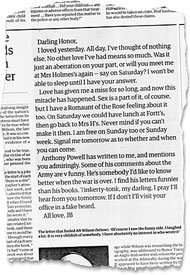 Imagine this. You're writing a biography of a famous literary figure, and someone sends you a letter (written by that famous figure) which sheds light on a hitherto unknown love affair. Thrilled to bits with this new avenue of investigation, you include the letter in your book, speculate on the nature of the relationship (short, passionate) and send the manuscript off to print.
And only after the book is published does it become apparent that the letter is a complete hoax.
Even worse, the letter contains a coded message which turns out to be a joke at your expense. Worse still, the joke is an extremely rude insult aimed at you personally.
This is precisely what happened to biographer A.N.Wilson who recently published book about the life of former poet-laureate, John Betjemen. The leading suspect in the hoax was another Betjemen biographer, Bevis Hillier, with whom Wilson had been having an ongoing feud in print. (Hillier has since admitted the deception.)
The hidden message was discovered by the Sunday Times. The first letters of each sentence in the letter (except the first) spell out the insulting message:
AN WILSON IS A SHITThe letter was sent to Wilson by a woman called Eve de Harben who said that it had been originally owned by an American collector. Eve de Harben is an anagram for:
Ever been had?Literary London probably hasn't had such a good laugh in ages.
Read Sarah Lyall's account of the hoax in the New York Times, and fellow biographer Kathryn Jones' opinion piece in the Guardian.
Monday, February 06, 2006
A Clutch of Bogus Memoirs
 I'm writing a piece about truth and the memoir and if you haven't already been bored to death by the Oprah/Frey story, you might like to read the original expose piece, A Million Little Lies, on the Smoking Gun website.
(If you decide that this whole issue is being taken way too seriously, please do go read the very funny spoof by Kenneth J. Harvey on the Times website!)
Anyway - I decided to see if I could find other memoirs which have pulled the wool over the eyes of readers (and publishers) and found, surprise surprise, that Frey is certainly not the first nor the worst offender.
 First there's the case of Nasdijj. Purportedly of Navajo descent, Nasdijj wrote an ode to his adopted son who died of fetal alchohol syndrome. The piece, published in Esquire magazine was a finalist for a National Magazine Award and won him a contract for a full-length memoir. He went on to write two more volumes of memoir about his lifetime of suffering.
Except that Nasdijj was no more Native American than my left elbow, and his stories were largely lifted from accounts by other writers. The LA Times blew the whistle and outed Nasdijj as Tim Barrus a white-writer of gay erotica.
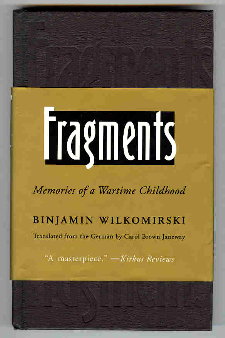
Then there's Binjamin Wilkomirski. His prize-winning memoir Fragments: Memories of a Wartime Childhood, was hailed as a classic and earned him comparisons to Elie Wiesel, Primo Levi and Anne Frank.
Except that he never was the holocaust survivor he claimed to be.
Author Daniel Ganzfried researched the case and discovered that legal documents and school records contradict the author's claims. Wilkomirski was outed in an article in Swiss publication, Weltwoche in 1998, and revealed to be a Swiss protestant called Bruno Grosjean. Unlike Barrus though, he appeared to be genuinely convinced of the truth of his story.
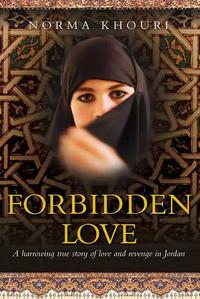 Another memoir fraud was unmasked in Australia's Sydney Morning Herald with the aid of Jordanian journalist and woman's rights activist Rana Husseini .
In her memoir Forbidden Love, Norma Khouri told the "true" story of the murder of a young Jordanian woman by her father because she dared to date a Christian man . The book was a great hit and sold more than 250,000 globally. In Australia, where the author has been granted asylum, it was voted one of the country's 100 favorite books of all time.
Her story was exposed as a fraud and as the Lebanese Times reports:
The scandal was a setback for advocates of women's rights in Jordan and provided a disturbing case study of how lies and distortions can masquerade as "fact" in Western discussions of the Arab world and Islam.and the book was withdrawn from sale.
Publishers beware!
Subscribe to:
Posts (Atom)