 Today it's my turn to post up a poem for discussion at Puisi-poesy and I've chosen my favourite poem of all time: To His Coy Mistress by Alexander Marvell. Go take a look.
Tuesday, April 25, 2006
Simply Marvell-ous
Today it's my turn to post up a poem for discussion at Puisi-poesy and I've chosen my favourite poem of all time: To His Coy Mistress by Alexander Marvell. Go take a look.
Another Day, Another Warehouse Sale
 Are you (and more importantly, your bank balance) ready for yet another warehouse sale?
It's Times again:
26th April - 1st May (with the first day being member's preview). Venue: 5th floor, City Square Centre, Jalan Tun Razak.A little inside gossip (so lean closer) ... apparently Times is bringing books up from it's Singapore warehouse: the books are surplus to requirments down there and would meet an untimely pulpy end if not snapped up by book-hungry KLites.
The last warehouse sale that Times held was absolutely brilliant and I won't miss this one ... no matter the size of my to-be-read shelf.
The other bookshops must be pretty pissed off though, as Times is saturating the market with quality books at knockdown prices which means even the second-hand bookshops will have a job to compete. (I heard that Pay Less has been cutting back on staff.) This won't be the last of the Times warehouse sales for this year either ...
Monday, April 24, 2006
Bardic at Borders
,Thanks to all who sent good wishes. And big hugs to those who turned up.
There was a pretty good crowd there and I was happy that they didn't wander off after Tempered Metal (excellent!) had done their set.
The reading went fine. Read some poems and an autobigraphical piece based on The Leaves of Life entry I posted here yonks ago (but have rewritten quite a lot thanks to friends who have told me more about the music's possible origins ...), it's a piece close to my heart and I plan to tighten it up a bit more to send out soon to find a home.
It's true what Dina says, you feel a piece when you read it aloud and see where it connects with an audience (or doesn't!)...

Fahmi and Azmyl were up after me with their Wayang Buku - perfectly nutty, and very funny ... Books by local authors (the loneliest books on Borders' shelves) became shadow puppets and talk show characters ...
 Sat outside Starbucks for a good long time with Ruhayat X, Irman and Raja Ahmad talking about publishing and ways to make things move.

Sunday, April 23, 2006
Writer - Where Do You Belong?
Literature isn't a matter of postcodes or coastlines, it's a matter of obsessions and of the universal human experience.Thomas Keneally to Geraldine Brooks after her Pulitzer win.
There is a petty meaness in words like these: "So and so is not really a Malaysian/British/American/Australian (fill in the blank for yourself) author because he/she wasn't born here/only lived here for X years/has lived for abroad for X years/doesn't write about living here," especially as so many writers live between cultures and countries.
I think Keneally's quote wraps up the argument quite nicely.
Happy (UNESCO) World Book Day
 Happy World Book Day! April 23rd is UNESCO's celebration of the event, and here's what you do:
Go to a bookshop.
Buy a book for someone you love.
(And one or two for yourself while you're at it.)
Buy a red rose.
Give book and red rose to your loved one.
See? That wasn't too hard, was it?
Saturday, April 22, 2006
Aussie Steals March on the Pulitzer
 Geraldine Brooks has been named as this year's recipient of the Pulitzer prize for Fiction with her novel March, The Age reports.
Taking Louisa May Alcott's Little Women as her starting point, she tells the story of the girls' largely absent father and his involvement in the American Civil War. Brooks based much of the story on the journals and letters of Bronson Alcott, Louisa May's father, and was inspired to write the novel by the reminders of the war she saw around her when she moved to rural Virginia:
There were bullet holes in the bricks of the local church where a Civil War skirmish had taken place; a Union soldiers belt buckle was unearthed in our backyard. Thinking about the young man who had worn that buckle was the beginning, in my mind, of March.Brooks was born in 1955 in Sydney (she holds dual nationality) and began writing as a reporter on The Sydney Morning Herald. She later worked as a foreign correspondent, mostly for The Wall Street Journal, covering crises in the Middle East, Africa and Bosnia. She has written non-fiction, including Nine Parts of Desire: The Hidden World of Muslim Women. Her previous novel Year of Wonders, is set in 17th-century England, where the plague strikes a small village. It became an international bestseller
Much more about her here,and hear her in interview with Jane Holroyd at The Sydney Morning Herald.
It's been a great year for Australian writers with Kate Grenville winning the Commonwealth Writers' Prize.
Related Post:
Prequels, Sequels and More-quels (12/5/05)
A Fib But Not A Lie
(A silence punctuated by the sound of a writer hyperventilating, and the frantic shuffling of paper)
Can't
blog
right now.
Got to fret
about my reading
at Borders. Rewriting like mad.
(Tomorrow at 3p.m. at Borders, the Curve)
Can't
blog
right now.
Got to fret
about my reading
at Borders. Rewriting like mad.
(Tomorrow at 3p.m. at Borders, the Curve)
Friday, April 21, 2006
Best Film Adaptations?
The Guardian has drawn up a list of the 50 best film adaptations of all time, as determined by "a panel of experts". The British public will have the chance to vote for their favourites in branches of Waterstones and Borders, before the winner is revealed at the Guardian Hay Literary Festival at the end of May. And the nominations are:
And which of the above would you vote for? Forced to choose one I might go for The Talented Mr. Ripley. But it's a tough choice.
Some readers' opinions in the Guardian blog, and here are some of my thoughts about film adaptations in an earlier post.
1984So what's missing? I just know that the Visitor is going to drop by and exclaim "Where's Fear and Loathing in Las Vegas?" And Jane Sunshine is going to lament the leaving out of Angela's Ashes.
Alice in Wonderland
American Psycho
Breakfast at Tiffany's
Brighton Rock
Catch 22
Charlie & the Chocolate Factory
A Clockwork Orange
Close Range (inc Brokeback Mountain)
The Day of the Triffids
Devil in a Blue Dress
Different Seasons (inc The Shawshank Redemption)
Do Androids Dream of Electric Sheep? (aka Bladerunner)
Doctor Zhivago
Empire of the Sun
The English Patient
Fight Club
The French Lieutenant's Woman
Get Shorty
The Godfather
Goldfinger
Goodfellas
Heart of Darkness (aka Apocalypse Now)
The Hound of the Baskervilles
Jaws
The Jungle Book
A Kestrel for a Knave (aka Kes)
LA Confidential
Les Liaisons Dangereuses
Lolita
Lord of the Flies
The Maltese Falcon
Oliver Twist
One Flew Over the Cuckoo's Nest
Orlando
The Outsiders
Pride and Prejudice
The Prime of Miss Jean Brodie
The Railway Children
Rebecca
The Remains of the Day
Schindler's Ark (aka Schindler's List)
Sin City
The Spy Who Came in From the Cold
The Talented Mr Ripley
Tess of the D'Urbervilles
To Kill a Mockingbird
Trainspotting
The Vanishing
Watership Down

And which of the above would you vote for? Forced to choose one I might go for The Talented Mr. Ripley. But it's a tough choice.
Some readers' opinions in the Guardian blog, and here are some of my thoughts about film adaptations in an earlier post.
Wednesday, April 19, 2006
Writing Fibs
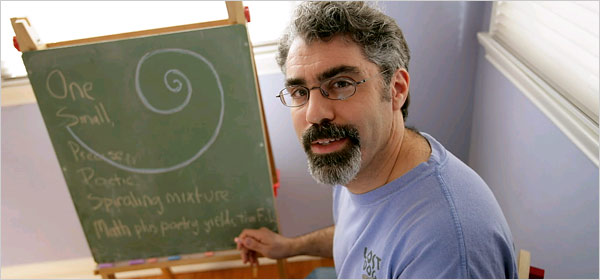
 A new form of poetry has taken off the U.S. in the last couple of weeks. Gregory K. Pincus, A Los Angeles screenwriter invited blog readers to send him Fibs* - sixline poems that use a mathematical progression known as the Fibonacci sequence to dictate the number of syllables in each line. The idea spread like wildfire across the internet, and it has been estimated that more than 1,000 Fibs have been posted since the beginning of April.
The New York Times explains:
The sequence apparently features in the Da Vinci Code, and shows up in the nautilus shell, knitting patterns and the compositions of Bartok.The Fibonacci progression is a mathematical formula that starts with 0 and 1 and then continues to add numbers that are equal to the sum of the previous two numbers. Thus, the first seven numbers in the sequence are: 0-1-1-2-3-5-8. ... To write a Fib, a more complicated version of the classic, highly constrained haiku, the poet composes a six-line poem that has the correct number of syllables in each line corresponding to each digit in the sequence. (The real first line of each Fib is silence.)

Now me, I don't understand maths at all and managed to fail every single maths exam that life ever threw at me (honestly!), but the creative part of one's soul can't resist squeezing itself into self-imposed limits. Here's my very first one.
INow it's over to you. Compose one or two while the boss isn' t looking and post them up. The best Fibber buys me lunch at a fancy restaurant of their choice.
don't
care that
i'm not math
matical, I just
want to write a poem in this form.
(*Hmmm. I'm just wondering if a better name for the form might not have been the Pincushion, immortalising its inventor.)
1001 Books You Must read
 This is the book I picked up in Borders on Saturday. (The one with a dollop of something sticky on the back cover. But never mind that.)
1001 Books You Must Read Before You Die edited by Peter Boxall is a book all bibliophiles and bookaholics will adore. And less experienced readers who'd appreciate a guide to what's well worth spending their precious reading time on, will find it here.
There are excellent short reviews of each of the books, all of which tell stories, most of them novels. (The novel as we know it originated in the early C18th, but Boxall includes the best of what went before. )The list starts with Aessop's Fables and ends with books which made it to last year's Booker shortlist.
Of course "best" must always be subjective, but I was so delighted to find most of the fiction I would have included if I'd been compiling such a list, I can forgive the omissions. (Hey, this is an impossible task Boxall has set himself anyway!)
And it isn't a stuffy list only embracing boring "classics" either, - there's plenty of lighter fare (though no less deserving of a place) and the best genre fiction is also included. Steven King, Douglas Adams, John Le Carre, Anne Rice and Patricia Highsmith all make it in.
Some novels I greeted like old friends:
Underworld by Don de Lillo
The Corrections by Jonathan Franzen
Contact by Carl Sagan
Cancer Ward and A Day in the Life of Ivan Denisovitch by Aleksandr Solzhenitsyn
The Good Soldier by Ford Maddox Ford
Midnight's Children by Salman Rushdie
On a Black Hill by Bruce Chatwin
Waterland by Graham Swift
The Unbearable Lightness of Being by Milan Kundera
A Fine Balance by Rohinton Mistry
The Reader by Bernhard Sclink
The Poisonwood Bible by Barabar Kingsolver
Captain Corelli's Mandolin by Louis de Bernieres
... and many, many more!
For those too mean or too broke to buy the book, you can access Boxall's complete list here.
But then you'd be missing out out the wonderful illustrations - author photos, book covers, movie posters. The cover illustration brings back happy memories of reading yet another favourite novel: A Clockwork Orange by Anthony Burgess.
The Guardian reviews the book here.
Tuesday, April 18, 2006
Rojak Revisited
Fiona and I went to see The Oral Stage's Rojak on Sunday with Fiona Wan at KLPac, principally to cheer on one of our own. (Both Priya and Fiona did my writing class.) But I always suffer pangs of guilt that I don't make enough effort to see local productions, particularly when some of the freshest local writing finds its way onto stage. As happened too with this collection of shorts and monologues.
Rojak was an excellent name for the production, because there was such a variety of stories and styles. Sanjiv Gnaneswaran's Who Wants to be a Malaysian? was a hilarious skit in the Instant Cafe Theatre mould - a multiple choice test for all those who want to become citizens. Sample question: What do malaysian's use least when they're on the road: a) their indicators b)their helmets c)their seatbelts d) their brains.
Rauf Fadzillah's The Damnation Recital was most surreal and dark - the characters trapped in a kind of hell. I'm not sure I "got" it, but the staging was compelling. I loved the moment when his main character laughed at the audience telling them that he had taken something from us all, something we didn't have anymore - fifteeen minutes of our lives.
My favourite piece was Me Speak No French written by Doreen Loo and performed by Emily Yoon - a very clever monologue on the difficulties of hosting an elegant dinner party. I suppose I enjoyed it most because I can identify with it. I've also ended up with a beautifully laid table, a gourmet dinner in the oven - and no guests.
Two very good pieces by Patricia Low could have been stronger with a little more dramatic tension. Print was an extended conversation between two guys sitting at a roadside mamak stall. Low has an excellent ear for dialogue, and you got the impression that you could have been a fly on the table at a real stall. But there was no climax in the scene until the two guys got hit by a passing car. (Quite realistic in the Malaysian context!) But all drama needs conflict or it sags.
Low's A Very Happy Story showed how life would be in the perfect family with no discord. Kids who have their mind set firmly on their studies and don't talk back, parents who are constantly kind and considerate. Of course it all becomes surreal and even a little frightening! (Have these guys been lobotomised?!) But I was expecting something to happen and shatter the dream - and it needed to happen. As Lagos Egri says:
Fiona and I were pondering everything we had seen in the car on the way home. There was a fair bit we hadn't quite understood (What do you think that represented? Was it supposed to be -?). But we both agreed we'd been thoroughly entertained and there was an awful lot of emerging talent on that stage.

 Rauf and Priya looking ghoulish in the lobby afterwards!
Rojak was an excellent name for the production, because there was such a variety of stories and styles. Sanjiv Gnaneswaran's Who Wants to be a Malaysian? was a hilarious skit in the Instant Cafe Theatre mould - a multiple choice test for all those who want to become citizens. Sample question: What do malaysian's use least when they're on the road: a) their indicators b)their helmets c)their seatbelts d) their brains.
Rauf Fadzillah's The Damnation Recital was most surreal and dark - the characters trapped in a kind of hell. I'm not sure I "got" it, but the staging was compelling. I loved the moment when his main character laughed at the audience telling them that he had taken something from us all, something we didn't have anymore - fifteeen minutes of our lives.
My favourite piece was Me Speak No French written by Doreen Loo and performed by Emily Yoon - a very clever monologue on the difficulties of hosting an elegant dinner party. I suppose I enjoyed it most because I can identify with it. I've also ended up with a beautifully laid table, a gourmet dinner in the oven - and no guests.
Two very good pieces by Patricia Low could have been stronger with a little more dramatic tension. Print was an extended conversation between two guys sitting at a roadside mamak stall. Low has an excellent ear for dialogue, and you got the impression that you could have been a fly on the table at a real stall. But there was no climax in the scene until the two guys got hit by a passing car. (Quite realistic in the Malaysian context!) But all drama needs conflict or it sags.
Low's A Very Happy Story showed how life would be in the perfect family with no discord. Kids who have their mind set firmly on their studies and don't talk back, parents who are constantly kind and considerate. Of course it all becomes surreal and even a little frightening! (Have these guys been lobotomised?!) But I was expecting something to happen and shatter the dream - and it needed to happen. As Lagos Egri says:
Conflict is the heartbeat of all writing.Priya appeared in her own Romanticization, looking desperately sick, arm in sling, on a hospital bed and was soon involved in a conversation with a "nurse" who seemed to be another part of herself, reminding her of all the abuse and exploitation at the hands of the different men in her life and the way women are often in denial about what happens to them.
Fiona and I were pondering everything we had seen in the car on the way home. There was a fair bit we hadn't quite understood (What do you think that represented? Was it supposed to be -?). But we both agreed we'd been thoroughly entertained and there was an awful lot of emerging talent on that stage.

 Rauf and Priya looking ghoulish in the lobby afterwards!
Red Earth and Pouring Rain
Sharanya has joined the list of contributors for our poetry blog and this week introduces us to a poem translated from the Tamil. Step across!
Monday, April 17, 2006
Poetry from Pain
 My article on Francesca Beard is in Starmag yesterday.
How she began performing her work:
Although she wrote poetry for years, she didn’t consider performing it until, after being dumped very painfully by a boyfriend, she lugged her badly bruised ego along to an open mike session where she felt no one would know her. She describes her first experience of standing in front of an audience as being like a bungee jump. But fear took away the heartbreak, and performing her work for an audience quickly became addictive. “When people say that creative writing is a form of therapy, it really was for me.” The anger she felt towards her boyfriend was channelled into a powerful poem called Length of String, which she included in her collection of poems, Cheap, a cyclostyled chapbook that she sells at gigs.Pain and anger and a desire for revenge on those who cause us greatest hurt can be a terrific boost to creativity! Just sharpen up those knives!
Kitty Kaye has written a very good piece about Francesca, while Ridzwan A. Rahim has penned a very good introduction to peformance poetry for "the opposition"!
I like Ridzwan's suggestion that:
In Malaysia, the closest that we have to performance poetry is perhaps pantun, which is really a battle between poets where the audience is also highly involved.I agree. I love pantuns and think so much more could be done with them - particularly in performance ...
Sunday, April 16, 2006
Dina's KLue Reading
 I hurried across town afer the MPH writer's Circle Meeting (another story), parking in Bangsar and then LRTing and Monorailing to Times Square, cursing the unconnectedness of KL transport. Met up with Dina and her friend (she calls him Miyot on her blog, so I will too) who used to be one of my kids at MCKK - 21 years ago. (Can it really be that long?).
At the Starbucks inside Borders, we were joined by Leon, Patrick and Raja Ahmad (who has now lost his pony tail and looks less like an eccentric poet than he did) and we had fun catching up while Dina panicked and shuffled her papers and the two bands (The Sofa Sessions & Rhapsody) did their sessions (very pleasant music, and Rhapsody's Nichole has one hell of a voice).
Dina had a hoard of friends turn up to cheer her on, which is just what you need. Sharanya turned up. And IreneQ. So the Dina Supporters Club provided a reaonable crowd.
Well, she did great despite all her protestations beforehand of "I can't go through with this!". (To which I just think, yeah yeah yeah, heard it all before.) She was much less nervous than before her last reading at Seksen's. Looked lovely of course. Patrick in his best schoolmaster voice told her to sit up straight when she first took to the microphone.
But the nervousness seemed to evaporate and she read confidently and clearly: two of her columns I am Muslim, (as engaging as her fiction) and a short story The King of the Sea from her (forthcoming) collection.
I stayed to watch a documentary about Lomography - and now desire one of those funny little cameras with multiple lenses I've seen when noseying in Wondermilk. Hope I don't feel a new hobby coming on.
Two things strike me. 1) The way that as soon as technology goes leaping ahead making all things digital and perfect, we begin to desire the imperfect, the simple, the analogue. 2) The rules for Lomography are very close to the rules for creative writing I lay out in my classes - don't think, shoot fast, go up close.
My expensive Olympus digital camera pisses me off - I have to constantly remember to recharge it, and I constantly forget, being the blur thing I am, so am constantly having to beg photos off the more organised. Miyot took the photo of Dina above. (Many thanks!) Might have been fun to shoot Dina with a frog eye lense though or to have snapped a multiplicity of Dinas!
Have decided that this branch of Borders is wonderfully squidgy, a nice place just to hangout and meet friends, an excellent venue for KLues's Words and Music.
Bought books (of course). Discovered one had a sticky patch on the back which is one of the perils of letting folks do their "free reading" in a cafe.
Friday, April 14, 2006
The Dina Zaman File
 Dina Zaman suggested the idea of a blog interview the other day to tie in with her reading this afternoon at Borders. Since we'd arranged to meet yesterday morning to talk over a couple of her stories, it seemed like the right opportunity.
After all, if as Raman suggests, the local newspapers aren't featuring much book news, doesn't a self-styled litblogger have a duty to scoop an exclusive?
I've enjoyed Dina's writing for some time. The first stories I came across were published in a little volume called Night & Day (Rhino Press) and I felt rush of joy as I read them. Not only did the writing slip down easily, she was the first writer I'd come across who'd manged to get down to the page a Malaysia I recognised. (Heck, She even captured characters I had seen myself on the street!)
Dina told me that she had spent hours observing people while waiting for her bus after work (she was a PR executive for Central Market or wandering Petaling Street. The stories were there and waiting for her.
Dina says that she's always felt a sense of rootlessness, of being in the outside of things. Her father was a diplomat and the family had to continually move between postings so that she always felt like the new kid in town.
Born in 1969, she spent her early years in Tokyo and grew up speaking Japanese with "just a smattering of English, so that no-one knew what to do with me". One of her strongest memories from these early years was her mum making her a pair of wings because she fancied being a butterfly. The family later moved to the former Soviet Union where she attended an Indonesian school and has vivid memories of being bullied.
Because of the disruptions to her education, Dina moved back to live with her grandparents in rural Terrenganu and fell in love with kampong life. She was also homeschooled for a while - an experiment she describes as not being too successful, before the prestigious Sekolah Tungku Kurshiah and then Convent Bukit Nanas.
She discovered that writing was her vocation whilst on a degree course in Mass Communication at Western Michigan University. Forced to find a subsidiary subject, she chose creative writing initially because it seemed an easy option, but she found she had a flair for it, and Philippa, one of the pieces she wrote while there, found its way into Skoob Pacifica Anthology Volume 2 (1994) published by Thor Kah Hoong of Skoob Books.
A spell in PR followed, but Dina began to submit pieces to the New Straits Times, and before long she was offered her own column by editors Rose Ismail and Fatimah Abu Bakar. Christened Dina's Dalca (named after a kind of lentil curry which contains a whole mixture of ingredients), she soon had a large number of followers intrigued by the frankness of the writing, delighted by the humour. She also had pieces accepted by Men's Review where she describes editors Kam Raslan and Sheryl Stoddard as supportive "but tough".
She runs through the names which were most prominent in the writing scene in the early '90's, a time when the writing scene seemed so much more exciting, ("There were so few of us in the KL writing scene in those days, so we all knew each other and were working towards a common goal") but laments that of all those promising young voices only Bernice Chauly and Jit Murad are still writing.
Dina's blog The Gongkapas Times (written she says "to let off steam") carried on from where Dalca left off, and was one of the most popular destinations in the Malaysian blogosphere. There was a collective howl of sorrow when the blog suddenly got taken down by a hacker and months of entries were completely lost. (The good news though, is that it's back.)
She did an MA in Creative Writing in Lancaster, choosing it over SOAS because of London prices and a desire to be in the countryside and "live out farm girl fantasies". And there was the Lake District close at hand of course, with its writerly associations with Beatrice Potter and William Wordsworth.
She says that she didn't really feel stretched by the course where she felt she was repeating stuff she had done for her first degree. But homesicknesses was assuaged by writing about kampong life, and she finished the draft of a collection of short stories set in rural Malaysia. One of the stories, And She Became an Angel, was shortlisted for the Ian St. James Awards. (The collection The Road to Elvis and Other Stories will be published later this year.)
Her year in Britain also gave Dina the opportunity to travel around Britain and talk to fellow Muslims, and the idea for a new column about Islam was formed.
After a spell working for Marie Claire, she became editor of Rentakini, the magazine section of the controversial online newspaper, Malaysiakini. Her I Am Muslim column was born and Dina became a powerful female voice for moderate Islam in the country.
If Dina has become something of a public figure, she is at heart is a very private person who feels uneasy when her personal space is invaded. Her writing has attracted legions of fans, including some who don't respect her boundaries. "When you're very open and write about your life, people feel they know you."
She's also had her fair share of detractors over the years, she says, including those who ask "What is this Malay girl trying to prove?" and her early fiction has been criticised for being "too sexual, too angry". There's less anger, a great deal more humour in the new collection, but the stories are still bound to stir some controversy.
And once The Road to Elvis is Published? Dina's colourful stories about the larger than life characters in her extended family can keep me enthralled for hours, and I'd love to see her write a dynastic novel about her Terengganu roots ala Allende or Marquez.
Curiosity stirred? Well then, come over and hear her read some of her writing this afternoon at Borders! The fun begins at 3 p.m.
Rojak, Anyone?
 This is a plug for Rojak playing at KLPac until Sunday.
It's :
... an original blend of shorts and monologues, tossed with a spoonful of youth and matters close to our hearts. From happy families, sudden deaths, sinking boats to talking mannequins, ROJAK! is dark, gooey and pedas as we Malaysians like it. Every serving includes a generous portion of nuts, on the house. ... This production is presented by The Oral Stage, which is a non-profit group of theatre-curious youth who direct and star in their own plays. Immersing themselves in theatre without lifejackets, they hope to come out alive learning a thing or two. Currently in their second season, TOS strives to make theatre more accessible to the public, especially young people, through their stage performances and community involvement.Priya who did my creative writing course last year wrote one of the plays and is performing (I feel like a proud mum!). Also in the cast is Rauf Fadzillah a very talented young writer I've written about before. The Oral Stage also has a lively blog which you might like to check out.
By the way, for anyone across the world who doesn't know what rojak means: it's a delicious Malaysian fruit salad, and so is used to refer metaphorically to an eclectic mix of things in Malaysian English.
The Birth of Neohikayat
 Ruhayat X (captured left at the La Bodega gig) sends out some of his short pieces by email to friends which are always a delight to receive. Yesterday he wrote about the birth of the publishing venture he set up and I asked for his permission to paste it here - because I think it gives an important insight into the local publishing scene where small scale enterprise provides an outlet for fiction and poetry. (Note: I've added the links to fill in a little background.)
As Ruhayat explains, he sank his own money into the scheme, and although the book has been selling well, he still has present stock to clear before he can publish his next collection. If you don't yet have a copy of Willayah Kutu, hasten to the Neohikayat blog or Silverfish to buy one. (They make great gifts for friends, so buy several.)
This month marks the first anniversary of Neohikayat, that publishing entity I started up with the intention of doing something about the Malay literary world, which I felt had stagnated since the early 70's. And, by extension, the Malay mind.
I've always believed that you don't need to join a political party if you're really honest about wanting to effect change in the world around you; not when you can hijack the arts to do a far better job. There are many ways to work smart.
I can't remember when exactly the entity was formed, since the company has yet to be incorporated, but it was between February and April 2005, after several long sessions at Devi's Corner or Lotus in Bangsar.
In fact, the Neohikayat story began in November 2003, while I was still working with the KLSE.
Well, no, actually it began in 2001, when Raman of Silverfishbooks roped in Irman, Amir Muhammad and I to work on a book of short stories in English. It seems amazing, thinking about it now, that no one had attempted to do something like that before.
Yes, there were Rhino Press and Hikayat Press, of course. But those companies had different aspirations and approaches. While the earlier efforts were targeted at publishing original works of already known names, the Silverfish New Writing project wanted to create something out of nothing.
Round about that time, the local film world was also about to experience a similar democratic movement of sorts. That was when Amir and James Lee just decided, one bright morning, to make their own film. Lips to Lips was the result. As far as I am concerned, that was ground zero for the current swell of DIY film-making in this country.
The DIY spirit ran thick in the SNW project, too.
Irman and I did the cover design and page layouts, which isn't very good in hindsight, but then it was done virtually overnight and for free.
I can't remember how many hours the four of us would sit in Silverfishbooks in Bangsar, poring through the submissions and selecting our favourites. The final selection was made by Amir. And then we'd spend another few weeks editing the shortlist.
Or at least, we tried to edit them as best we could.
It's become almost second nature by now, but back then we had to come up with everything from scratch. None of us had published anything before, although Amir and I had journalistic experience. Book publishing was a long, dark corridor and basically we just felt our way around.
At the time I was still gainfully - albeit rather bored-out-of-my-skull-ly - employed in a corporate company. MESDAQ had been forced to merge with the KLSE in 2000, and by February 2001 I was staring out of my lonely little office at the brass band practising on the grounds of St John's Institution every morning.
Previously I had a great vista of the sumptuous bungalows hugging the Damansara Heights hills, where the MESDAQ office was located.
They didn't know yet what to do with the MESDAQ board at the time. Rumours were going around that it was to be scrapped or absorbed into the Second Board.
The MESDAQ vets didn't like it, of course. MESDAQ was basically a startup when I first joined it, albeit one with substantial Government funding. We'd worked our arses off to make it into something resembling the steamrolling NASDAQ in the US, the tech board that humbled all other boards in the world at the time. We weren't very successful.
But it was a new environment, with new rules. More importantly, it was a post-dotcom world, and MESDAQ was being viewed as a failure. In this new place we had not much power. And so the previously upper middle management of MESDAQ - our top managers all decided not to continue - was basically left fiddling our thumbs most days.
It was a depressing time for me, professionally, coming from the frantic atmosphere first at Intel and then MESDAQ, both startup-type environments. I spent most days at the KLSE just staring out of the window, trying to read a book but not really seeing the words.
If you think having too much work is stressful, you should try not having any work to do at all. No wonder when companies want to get rid of someone, they'd strip the guy of all power and tasks, and let him sit in a windowless office all day. That was my life for about a year.
Thank God for Raman and his crazy scheme, then. I was just thankful to have an outlet to focus my mind on, so even though we weren't being paid a single cent for our time, I just piled in and made that my priority.
By the time SNW3 appeared, the zest had disappeared.
By then the series was becoming a business venture to my mind, not an ideal. It just so happened that round about that time the MESDAQ market suddenly began outperforming the Second Board. People were excited about it once again, and suddenly I had lots of strategy papers and reports to do, pre-submissions to review and meetings to attend. So I focused my energies back to my proper work.
Still, during this time we had an active teh tarik crew in Bangsar. We'd meet informally almost every other night and talk about everything under the sun. We must have bored the odd semi-regulars to death, because we'd never see any of them again.
There we were, being boring about clever things while just a few blocks away people in hip clothes were gyrating to pumping music. Those were the days.
During these sessions the topic of publishing an SNW-like compilation in Malay would crop up from time to time. As usual, the idea just languished by the wayside after everyone went home. We were still looking to Silverfish to do it, but Raman at the time was adamant about focusing on the English-speaking market.
It went on like that for about a year. And then, in November 2003, I thought why not just do it ourselves. There was no profound reason underlying the decision at all. It's just one of those days when I'd wake up in the morning and think it would be a terribly great idea to produce my own book.
The regulars at the sessions during that time were Irman, Amir, Dhojee and me. But still it took a year of preambling to get to a point where we were relatively sure of what we wanted to do. That's what happens when you leave things up to a bunch of Malays, I guess.
The real work began in November 2004. The project didn't have a name yet at the time. It was still dilly-dallying here and there, sometimes being this and other times being that. That's usually because Dhojee would always turn up for each session with a new idea.
He was excited about it, yes, what with his constant text messages and e-mails. But if it had gone on like that we'd never get anywhere. I felt at the time that the most important thing was just to get the damn thing out the door and deal with the consequences or improve it later.
Someone had to take charge and since no one appeared willing to shoulder the burden, I said fine, I'll do it. To maintain a semblance of control, I said I'd pay for it out of my own pocket. Then no one can say much.
In this way I bought myself the freedom to name the little project.
We began sounding out potential writers in November and December that year. By January 2005 we'd had our roster of contributors. They were all male, but not by design I can assure you. None except for Saifulizan Tahir had been published in Malay before.
Just to spice things up I thought we should make it multi-racial, so I invited Jerome, Danny Lim and Pang to join in. Jerome and Danny managed to keep to the deadline, and I'm glad we got them in, as their presence added to the book's coolness factor.
The book went into production in March 2005, and was finally finished in May. It was formally launched in June with a reading session at Silverfish. I was supervising an event in Kuantan that weekend, and I had to drive all the way to KL to attend it (because Dhojee at first said he couldn't make it), and then drove back again the same night. It made me fall in love with my dinky little Kelisa even more.
The cover, which some people had enthused about, was actually a misprint. I had orginally designed it so that the title and names of writers would be glossy (they call it Spot UV), whereas the rest of the picture would be in matte. The spot UV folks somehow reversed the design, and that's how we ended up with a glossy cover with a title that looked as though it was reverse-embossed.
Pijat, my friend who did the printing, showed some samples that they had chruned out before they'd realised the mistake. It was this one night and we parked our cars in the side road along Bangsar Shopping Complex. I thought the effect was interesting so I told Pijat to just go ahead with the print run. The rest, as they say, is history.
We had a pre-launch reading at the Darling Muse Gallery in May, courtesy of Bernice Chauly. The session was a minor hit, and that was when I remember thinking, cool, this thing might just work after all.
Of course, we haven't been able to produce 4 books a year (one every quarter) as per the original plan. Much of the blame for that rests entirely on me.
The original strategy I had devised called for pricing the first book so that it would be affordable, yet at the same time make enough to cover the production cost of the next book. Which meant that all I had to do was fork out for the first book, and after that the funding would self-generate.
I thought that was a brilliant idea, if I do say so myself. Except that I never factored in distribution difficulties into the equation. That was an oversight that I'm still saddled with now: we still have another 450 unsold copies sitting in the store-room of our supposed distributor.
Amazingly, we'd sold 400 copies entirely by word of mouth. About 150 of those were sold through Silverfishbooks (the only bookstore where you can buy the damned thing - the distributor had told us that they'd approached Times, MPH and Kino but they'd all declined to stock the title. Personally, I think that's just bollocks). The rest were sold by either Nizam Zakaria, Irman or myself through our respective blogs.
Again, that made me think, yeah, this thing could actually work. But it is still a lot of hard work. And now that it's become more like a hobby rather than a main concern, since I'm more focused on getting this graphics design studio stable since July last year, it's harder work still.
Actually, if I were to just put my mind to it I'm sure I can tie up all the loose ends in two weeks, and Aweks KL - the second title - as well as Elarti - the Malay language literary magazine - would be out by May and June respectively. I just need to create clones of me, that's all.
Money to burn and time are the two things I don't exactly have in abundance these days. Yeah, I got a handsome VSS pay-out, but foolishly I'd lent about half of it out to people, and I'm still waiting for half of them to pay me back.
Happily, ever since the Troubagangers event I'd been in contact with the British Council and just being in the loop again is exciting.
It's not like Neohikayat has been dormant in the meantime. We have a semi-active blog (www.neohikayat.blogspot.com). We've sparked a mini revolution of sorts, what with bunches of people now coming out with their own compilations of works in Malay.
Competition? Maybe. But this is all good, because that was one of my stated goals right from the beginning.
Amir, James and Yasmin might not want to make movies with messages, but Neohikayat was always intended as a democratic experiment.
It was never meant to be a money-making business. I wanted to prove that people don't have to depend on the Government for anything in this country, and if there was something wrong that we think ought to be improved, then we should just go ahead and do something about it instead of calling the Malay Mail headline, so to speak.
In this respect, Silverfish New Writing and the DIY film-makers influenced my thinking. But the spiritual godfather of Neohikayat was always the myriad enthusiast communities in the UK who'd produce their own publications from their bedrooms and basements.
They did it simply because they believed in something, and they believed that it was just too important not to do something about it.
I'm glad to see the same spirit beginning to rise up in the limited circle that I call my world. Right now I'm helping a bunch of young people in their early 20's to produce a compilation of their writings. They're a bunch of young punks (literally), which amuses me because you'd never think such a grouping would be interested in something so mundane as literature.
It's great to have such enthusiasm in the young. They need something to latch on to, somewhere to expend the creative energies that build up within them. I've always thought that if we were to allow them more space to express themselves, then what a healthier country we might find ourselves in.
So maybe it's been a year and just one measly book. The more significant achievement, I think, is that this little experiment shows that you can indeed change the world, one person at a time. Yes, even in Malaysia.
No amount of money can buy that kind of satisfaction, I can tell you that.
Thursday, April 13, 2006
Index: On the Craft of Writing
Just Do It!
Bag Lady in the City of Fiction (2/6/05)
When to Stop Making Excuses (10/10/05)
Reprise: Air and Light and Time and Space (26/10/05)
The Secret Author (3/9/06)
The Creative Process and Finding Ideas
Kobayashi on Haiku (30/3/05)
Crazy Dumbsaints Unite (25/3/05)
Where Do Little Stories Come From, Mummy? (23/07/05)
Litt-craft: the Art of Writing Recklessly (13/3/05)
Drawing on Real Life Relationships for your Writing
The Vampire and the Alimony Whore (16/5/06)
Fictionalising Family (19/5/06)
Researching
Home on the Range (13/12/04)
Getting Past the Critic
Closet 7/6/05
That Pesky Inner Critic (16/9/05)
In Praise of Truly Awful Writing (26/9/05)
On Writer's Block (30/1/06)
Twaddle is Good Too (10/3/06)
Writers Who Can't ... or Won't (3/5/06)
Style
Neurological Opiates and Agatha Christie (19/12/05)
Reading for Writers
You are What you Read (21/7/05)
A Writer's Reading List (13/7/06)
Health Tips for Writers
Writing that Marathon (6/11/05)
Getting Rejected
Rejected Not Dejected (13/7/05)
Revising
Romesh Revising (24/3/06)
A Writer's Reading List
 I wrote an entry some time back about the need for writers to read.
Well, the last time I was dusting my books, I came across a slim paperback I had completely forgotten about and - to my shame - not got round to reading. (Such pleasant surprises can happen when books take over a large part of your house! The downside is the cleaning doesn't get finished.)
Education of a Wandering Man is the autobigraphy of Louis L'Amour - a prolific writer of westerns. This is a genre that I have never developed a taste for (really we're talking books for the boys here) and have never read a single one apart from Larry McMurtry's Lonesome Dove - and that under protest.
But I'm always fascinated by what makes a writer - any writer tick, so dipped into it. It's a rather rambling read, documenting L'Amour's many adventures - his travels in the US and Far East, his time as a seaman, cattle skinner, mine guard, hobo. All material that found it's way into the stories he wrote. (If you want to be a writer, live a life, hey?) He wrote mainly (out of economic necessity) what is termed "pulp fiction" for the entertainment of the masses but is still regarded as the best writer of "frontier fiction".
But what fascinated me most is L'Amour's account of his other journey - through books. His reading lists from 1930 onwards are included in an appendix at the back of the book. And I just marvel at how voraciously and widely L'Amour read. Here's his list for 1930:

1. Three Philosophical Poets by SantayanaFiction. Non-fiction. Novels. Plays. Poems. Classic. Popular. Ancient. Modern. Philosophy. Psychology. American. International.
2. Winds of Doctrine by George Santayana
3. Reason in Society by George Santayana
4. Selected Stories by Joseph Conrad
5. Schleimacher's Soliloquies by Frederick Schleimacher
6. Tales, Volume II by Edgar Allan Poe
7. Romances, Volume II by Voltaire
8. Romances, Volume I by Voltaire
9. The Hermit of Carmel by George Santayana
10. Thus Sparta Zarathustra by Nietzsche
11. Black Sparta by Naomi Mitchison
12. The War of the Worlds by H.G. Wells
13. Dynamo by Eugene O'Neill
14. Fruit Gathering by Rabindranath Tagore
15. Circus Parade by Jim Tully
16. The Gardener by Rabindranath Tagore
17. Strange Interlude by Eugene O'Neill
18. Moon of Madness by Sax Rohmer
19. The Island of Dr. Moreau by H.G. Wells
20. The Wisdom of the East, Vol I
21. In Search of a Villain by Robert Gose-Brown
22. Master Mind of Mars by Edgar Rice Burroughs
23. Poems by Henry Van Dyke
24. The Hairy Ape by Eugene O'Neill
25. Mountain City by Upton Sinclair
26. The Dreamy Kid by Eugene O'Neill
27. Terror Keep by Edgar Wallace
28. The Emperor Jones by Eugene O'Neill
29. The Author's Mind by Lawrence Conrad
30. Marco Millions by Eugene O'Neill
31. Anna Christie by Eugene O'Neill
32. The Case of Sergeant Grischa by Arnold Zweig
33. Essays by Ralph Waldo Emerson
34. The Long Voyage Home by Eugene O'Neill
35. The Moon of the Caribbean by Eugene O'Neill
36. Bound East For Cardiff by Eugene O'Neill
37. In the Zone by Eugene O'Neill
38. The Great God Brown by Eugene O'Neill
39. The Crime in the Crypt by Carolyn Wells
40. The Fountain by Eugene O'Neill
41. Bird in Hand by John Drinkwater
42. The Science of Hypnotism by Dr. L.E. Young
43. Fu Manchu's Daughter by Sax Rohmer
44. Jew Suss by Ashley Dukes
45. Memories and Studies by William James
46. Jorgenson by Tristan Tupper
47. Lazarus Laughed by Eugene O'Neill
48. The Dance of the Machines by Edward J. O'Brien
49. The War In the Air by H.G. Wells
50. Beyond the Horizon by Eugene O'Neill
51. Studies in Pessimism by Arthur Schopenhauer
52. Why We Behave Like Human Beings by George Dorsey
53. Bitter Biance by C. Hartley Grattan
54. The Rope by Eugene O'Neill
55. Tales of Unrest by Joseph Conrad
56. Four Faces of Siva by Robert J. Carey
57. See Naples and Die by Elmer Rice
58. The Fifteen Cells by Stuart Martin
59. Gold by Eugene O'Neill
60. Men and Machines by Stuart Chase
61. Odyssey by Homer
62. The Man of Destiny by G. Bernard Shaw
63. The Journey's End by R.C. Shariff
64. Erewhon by Samuel Butler
65. Ecce Homo by Friedrick Nietzsche
66. Ghosts by Hendrick Ibsen
67. The Tavern Knight by Rafael Sabatini
68. The Birth of Tragedy by Friedrick Nietzsche
69. Marriage and Morals by Bertrand Russell
70. Liberty Under the Soviets by Roger N. Baldwin
71. All Quiet on The Western Front by Erich Remarque
72. Cheri by Colette 73. Condemned by Blair Niles
74. Mystery of Lynden Sands by J. J. Connington
75. Mirope by Voltaire 76. Bajaget by Jean Racine
77. Don Juan by Moliere
78. The World Set Free by H.G. Wells
79. Criminology by Wellington Scott
80. The Art of Life by Havelock Ellis
81. Athahie by Jean Racine
82. All God's Children Got Wings by Eugene O'Neill
83. Stendahl by Paul Hazard
84. Poems and Prose Poems by Charles Baudelaine
85. The Winds of the World by Talbot Mundy
86. Plays by Anton Tchekoff
87. Lilian by Franz Molnar
88. Doctor Faustus by Christopher Marlowe
89. Rattling the Cup on Chicago Crime by Edward D. Sullivan
90. A Woman Of No Importance by Oscar Wilde
91. The Mystic Will by Charles G. Leland
92. Trader Horn by A. A. Horn and E. Levine
93. The Fan by Carlo Goldoni
94. The World of William Chissold by H.G. Wells
95. Mandragola by Niccolo Machiavelli
96. Criminology by Horace Wyndham
97. Many Lands of the South Seas by Nordhoff and Hall
98. Man and Superman by G. Bernard Shaw
99. An Ideal Husband by Oscar Wilde
100. Egotisms in German Philosophy by George Santayana
101. Laws of Mental Medicine by Thomas J. Hadson
102. Mental Fascination by William W. Atkinson
103. Mind Energy by Henri Bergson
104 Repressed Emotions by Isador M. Coriat, M.D.
105. The Horla and Other Stories by Guy DeMaupassant
106 What Is Civilization? by Maurice Masterlinck and others
107. The Jungle by Upton Sinclair
108. Philosophy by Bertrand Russell
109. The Power Within Us by Charles Baudouin
110. The Will to Power by Friedrick Nietzsche
111. Tantalous by H.C.S. Schiller, M.A.D. Sc.
112. The Psychology of Insanity by Bernard Hart, M.D.
113. The Meaning of Dreams by Isador Coriat, M.D.
114. The New Arabian Nights by Robert L. Stevenson
115. The Mind at Mischief by William S. Sadler, M.D.
A serendipitous mix.
You look at someone's life-reading and you look at the furniture of their minds.
I took the list from the Louis L'Amour's Lost Treasures website which has plans to put up his lists for all 30 years for subscribers. This project really looks like a labour of love.
Wednesday, April 12, 2006
What Kind of Writer?
| You Should Be A Poet |
 You craft words well, in creative and unexpected ways. And you have a great talent for evoking beautiful imagery... Or describing the most intense heartbreak ever. You're already naturally a poet, even if you've never written a poem. |
What Type of Writer Should You Be?
Found the link to this blogthing on John Baker's blog. All I can say is - okay then! Glad that's sorted out.
And talking about poetry, Dreamer Idiot has posted up this week's poem for discussion over at the Puisy-Poesy blog. Go share your thoughts about William Wordsworth's She was a Phantom of Delight, and (if you don't know already) learn what iambic meter is in poetspeak.
Since I'm supposed to be a poet now, I'd better make sure I know about these things!
Since I'm supposed to be a poet now, I'd better make sure I know about these things!
Tuesday, April 11, 2006
Who is Vyvyane Loh?
A local writer has been shortlisted for the IMPAC Dublin Prize - one of the world's major literary awards ... I needed Dreamer Idiot to nudge my elbow and point it out to me. (Who learns from who, hey, on this blog?)
 Vyvyane was born in Ipoh, and grew up in Singapore. She's a dancer, a choreographer, studied medicine at Boston University Medical School, travelled to Brazil and Nepal to do medical electives, worked up to four jobs (spinning/aerobics instructor, personal trainer, dance instructor, moonlighting doctor) while pursuing her MFA in Creative Writing ... her life-story is fascinating (makes me feel utterly totally inadequate), go take a look. Not to mention she has a body to die for. I'm not jealous. Not really.
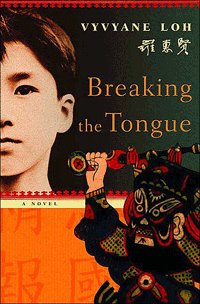
And of course, there's the novel. Her first. Breaking the Tongue, which chronicles the fall of Singapore to the Japanese in World War II. And she's been compared to Rushdie and Ondaatje.
This is for sure someone we should be cheering on and learning from.
 Vyvyane was born in Ipoh, and grew up in Singapore. She's a dancer, a choreographer, studied medicine at Boston University Medical School, travelled to Brazil and Nepal to do medical electives, worked up to four jobs (spinning/aerobics instructor, personal trainer, dance instructor, moonlighting doctor) while pursuing her MFA in Creative Writing ... her life-story is fascinating (makes me feel utterly totally inadequate), go take a look. Not to mention she has a body to die for. I'm not jealous. Not really.
And of course, there's the novel. Her first. Breaking the Tongue, which chronicles the fall of Singapore to the Japanese in World War II. And she's been compared to Rushdie and Ondaatje.
This is for sure someone we should be cheering on and learning from.
Who Do You Write For?
You know how it is, googling around looking for something else (i.e. after Dreamer Idiot mentioned Vyvyanne Loh, I had to go look for information on her) I stumbled across a page which stopped me in my tracks ...
Yew Leong Lee, Singaporean Fiction Writer and Media Artist, posted up this quotation from Coetzee's Elizabeth Costello on his blog :
Yew Leong talks about his own writing dilemma:
Yew Leong Lee, Singaporean Fiction Writer and Media Artist, posted up this quotation from Coetzee's Elizabeth Costello on his blog :
‘The English novel,’ she says, ‘is written in the first place by English people for English people. That is what makes it the English novel. The Russian novel is written by Russians for Russians. But the African novel is not written by Africans for Africans. African novelists may write about Africa, about African experiences, but they seem to me to be glancing over their shoulder all the time they write, at the foreigners who will read them. Whether they like it or not, they have accepted the role of interpreter, interpreting Africa to their readers. Yet how can you explore a world in all its depth if at the same time you are having to explain it to outsiders? It is like a scientist trying to give full, creative attention to his investigations while at the same time explaining what he is doing to a class of ignorant students. It is too much for one person, it can’t be done, not at the deepest level. That, it seems to me, is the root of your problem. Having to perform your Africanness at the same time as you write.’The question of course: if you live in this part of the world and write fiction, who do you write for? If you write for an overseas audience, you are constantly having to explain the local context. It's not a problem that British and American writers, for example, have to even consider (unless, of course, they write about subcultures), because through the media we've lived in their headspace for much of our lives. (Hey, sorry about the 'our' creeping in there when I'm a double agent with a foot in both camps.) It seems unfair, but it's a reality ...
Yew Leong talks about his own writing dilemma:
If I were to write about Singapore, the subject matter would make me interpreter, because I can’t fathom writing for Singaporeans and Singaporeans only. (One need only remember how Hwee Hwee Tan kept explicating in Foreign Bodies. Even Vyvyanne Loh had some explaining to do.) So I drop the Singaporeanness of my locale, and write about rootless, peregrinating characters (something anyway I know). For which I get obliquely critiqued by friends who think the only novels worth two cents are those that transcend personal experience to depict national character.It's a question that every local writer looking for overseas recognition needs to resolve, and Shirley Lim was also saying something along these lines the other day at Silverfish ...
Monday, April 10, 2006
Pictures from La Bodega
Some photos from the other night at La Bodega, all but the first taken by Arnee of British Council. (My efforts were pathetic - blurry profile images of poets with their eyes closed - blame it on the Long Island Iced Tea ...)


No room for even one more ... have you ever seen a poetry reading so packed?

Kutu guy Fahmi Fadzil reads No Exit ...

The sexy Sharanya Manivannan struts her stuff ...

Rahmat Harun sets the world on fire ...

The incomparable Francesca Beard ...
The Healing Pen
 Can you think of an irony stranger than this: you're a writer, you get a job as a government censor ... and you're forced to ban your own books! This is what happened to Cambodian author Pal Vannarirak (left) when she found work with the Vietnamese-backed government - as a censor. But, she adds:
Because I knew the kinds of books I was hunting, I knew the kind of books I was not supposed to write. So I wrote them.And then copied them by hand to sell door-to-door.
Geoff Ryman in the Guardian gives a fascinating glimpse into Cambodia's literary landscape 31 years after the Khymer Rouge genocide left only 300 intellectuals alive out of an estimated 38,000.
The writing community is working to reestablish itself, but faces many challenges. Professor Terry Shaffer Yamada, project coordinator of the Nou Hach literary journal lists them:
The first problem is venues to publish. Most newspapers and magazines will only publish your work if you pay them. Second, piracy. People will photocopy your book and sell it without your knowledge. There's no distribution system for books, no bookstore chains. Books are sold in outdoor stalls. We (Nou Hach) are the only literary journal for modern literature. Otherwise, you have to self-publish and try to figure out how to get it distributed.But at least they now have programme about books and authors (with Vannarirak at the helm), which is more than we have here ...
And Ryman looks forward to the day when writers will be able to move beyond the pain of the past ...
I'm going to stick this quote from playwright Chhay Bora on my noticeboard:
A writer with the tip of his pen, can make the earth flip.
Sunday, April 09, 2006
Award Fatigue
Ho hum. I'm not a very good litblogger because I suffer from Literary Award fatigue. There are just so many longlists, shortlists, winners, that one can blog about ... but that's a shameful admission because these lists serve as useful reading guides for anyone who wants to be a bit more adventurous in their reading and get out of the sticking-with-familiar-writers-rut.
But if there seem to be more such lists around than there used to be - there probably are. Apparently even the Booker committee hadn't used to announce it's longlist (and now that they do I feel oliged to buy and read the whole bloody lot and severe bookguilt if I miss any out). It's probably true for the other awards as well. And of course, there are more awards these days.
Anyway. The shortlist for the Dublin-based 2006 IMPAC prize was announced a few days ago. It's a very interesting literary prize since it is open to authors of any nationality and written in any language, provided they have been published in English translation, and thus casts its net a lot more widely than other literary awards. The longlist is actually nominated by libraries across the world, and you may remember that I picked up a controversy about the librarians in some countries (inc. Malaysia) nominating a title by a national writer rather than for the best book of the year.
Thankfully librarians from elsewhere seem to have been clearer on the concept and less kiasu: the original longlist of 132 books has now been whittled down to a shortlist of just 10 titles. And the nominations are:
The winner will be announced on July 14 2006.
While I'm on the subject of shortlists and the best of world literature, let me apologise for not linking to this piece on the Independent Foreign Fiction Prize shortlist which was announced back in March. This prize is entirely for works in translation - and that's all to the good since we often just don't hear about the best books from the rest of the world.
This award will be presented on the 2nd May.
Enough awards for one day, though I can think of several others I should have blogged about. With any luck you won't even notice which they are ...
But if there seem to be more such lists around than there used to be - there probably are. Apparently even the Booker committee hadn't used to announce it's longlist (and now that they do I feel oliged to buy and read the whole bloody lot and severe bookguilt if I miss any out). It's probably true for the other awards as well. And of course, there are more awards these days.
Anyway. The shortlist for the Dublin-based 2006 IMPAC prize was announced a few days ago. It's a very interesting literary prize since it is open to authors of any nationality and written in any language, provided they have been published in English translation, and thus casts its net a lot more widely than other literary awards. The longlist is actually nominated by libraries across the world, and you may remember that I picked up a controversy about the librarians in some countries (inc. Malaysia) nominating a title by a national writer rather than for the best book of the year.
Thankfully librarians from elsewhere seem to have been clearer on the concept and less kiasu: the original longlist of 132 books has now been whittled down to a shortlist of just 10 titles. And the nominations are:
 Graceland by Chris Abani
- Maps for Lost Lovers by Nadeem Aslam
- Havoc, In Its Third Year by Ronan Bennett
- The Closed Circle by Jonathan Coe
- An Altered Light by Jens Christian Grondahl - translated from the Danish by Anne Born
- The Swallows of Kabul by Yasmina Khadra - translated from the French by John Cullen
- Breaking the Tongue by Vyvyane Loh
- Don't Move by Margaret Mazzantini - translated from the Italian by John Cullen
- The Master by Colm Tóibín
- The Logogryph by Thomas Wharton
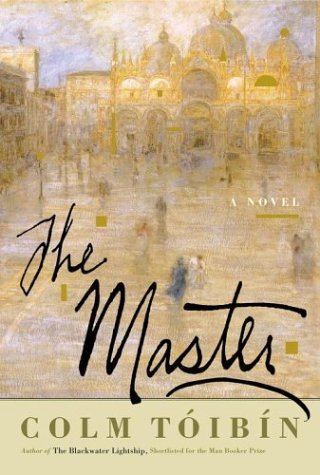
The winner will be announced on July 14 2006.
While I'm on the subject of shortlists and the best of world literature, let me apologise for not linking to this piece on the Independent Foreign Fiction Prize shortlist which was announced back in March. This prize is entirely for works in translation - and that's all to the good since we often just don't hear about the best books from the rest of the world.
This award will be presented on the 2nd May.
Enough awards for one day, though I can think of several others I should have blogged about. With any luck you won't even notice which they are ...
Saturday, April 08, 2006
Da Vinci Codswallop
 Yes, as =] so succinctly put it:
Dan Brown 1, Baigent and Leigh 0
Across the Atlantic though, Lewis Purdue is fighting on, and I wish him luck.
The judge ruled that novelists "remain free to draw in ideas and historical research". I'm glad of that, though I do not feel like popping the cork of a bottle of champagne to celebrate Brown's victory. We know he took the easy way out, swiped fascinating material and churned out (and this is really what can't forgive him for) a third-rate novel that all the marginal readers of the world applaud as if it were in itself some kind of holy grail.
And he didn't even do his own research as it turns out ... it was his wife who downloaded stuff from the internet for him (often without the sources being clearly noted).
Don't know about you but I have no respect for writers who don't get their own hands dirty with digging up the facts ...
Related post:
Holy Plagiarised Madonnas (1/3/06)
All Angst and Orwell?
 Gender differences in reading habits is a topic that keeps coming back to haunt this blog. Small wonder because these differences in reding habit give a fascinating glimpse into the mindset of the opposite sex.
Researchers Lisa Jardine and Annie Watkins of the University of London interviewed 500 men, all with some professional connection to literature, and asked them about the novel that most changed their life. This piece of research was actually a follow-up to a similar survey carried out last year, asking women for their seminal novel. Both studies were conducted in conjunction with the Orange Prize.
They found that:
The novel that means most to men is about indifference, alienation and lack of emotional responses. That which means most to women is about deeply held feelings, a struggle to overcome circumstances and passion ...And here's the list of favourites that emerged:
- The Outsider by Albert Camus
- Heart of Darkness by Joseph Conrad
- Crime and Punishment by Fyodor Dostoevsky
- The Great Gatsby by F Scott Fitzgerald
- Brighton Rock by Graham Greene
- Catch 22 by Joseph Heller
- High Fidelity by Nick Hornby
- Ulysses by James Joyce
- Metamorphosis by Franz Kafka
- The Book of Laughter and Forgetting by Milan Kundera
- To Kill a Mockingbird by Harper Lee
- One Hundred Years of Solitude by Gabriel Garcia Marquez
- Lolita by Vladimir Nabokov
- 1984 by George Orwell
- The Catcher in the Rye by JD Salinger
- The Grapes of Wrath by John Steinbeck
- The Hobbit by JRR Tolkien
- The Lord of the Rings by JRR Tolkien
- The Adventures of Huckleberry Finn by Mark Twain
- Slaughterhouse Five by Kurt Vonnegut
... men do not regard books as a constant companion to their life's journey, as consolers or guides, as women do. They read novels a bit like they read photography manuals. The men's list was all angst and Orwell. Sort of puberty reading.Men did not come up with anywhere like the range of titles that the women did, and did not regard novels as life companions in the same way that women did.
And shock horror: the study also revealed that men between the ages of 20 and 50 generally do not read fiction. (Actually, I think we more or less knew this already.)
Does the survey actually teach us anything useful? There's lively discussion of the issues raised on the Guardian blog.
Anyway, let's chuck the discussion over to the male readers of this blog - what is the most important novel you've ever read? Is it on the list or something different?
Y'know I've really got to scratch my head to think about the answer to this for myself ... there are so many ...
But 1984 would be pretty high up on my list too ...
Friday, April 07, 2006
Mambo with Foot In Mouth
(Glimpses from behind the lines organising the first KL Litfest, taken from my notebook. This was written July 1 2004)
July has come upon me too fast. I had anticipated a 31st June ...
Went to hotel in city centre today with Usha and Lorna to check over the rooms and facilities for Litfest. There was a seminar (on reading) on at the hotel and met an old teaching friend of mine I hadn't seen for years. Kurnia had been doing her PhD in the US ... but had returned to Malaysia for cancer treatment. She's had operations for tumours in her throat, breast and elsewhere ... but at the moment is in remission and determined to come through it.
Went over to bookshop p.m. with heavy heart. Raman all smiles as if last Friday had never happened, and I managed to get him to sit down and talk about the programme. He's come up with his own version of the thing, though fortunately hasn't changed too much about. All that anger and pain over what has ended up being one or two small changes in the end! The programme is not as I would have wanted it to be, but as a compromise solution it will work okay and save his face, and him turning round at some future point of time and saying I told you so when things go wrong.
Lorna gave him the full blast of her fury for having delayed the programme. I was proud of her.
A very nice Indian woman came in to the shop to volunter her services for the Litfest, a friend of Yolanda's. When we asked what she does for a living she said in a very larconic voice, I'm a professional dilentante. Other people think I should have ambition and do things, she added, so here I am.
The guys from the US Embassy came by for a business chat with Lorna. They are apparently thinking of having a party for Oscar Hijuelos when he comes, with lots of latin music and dancing. I said, I must come. And they said, of course ... and we are also going to invite our friends from the other embassies, particularly those from Latin America. I said, you can invite the Cubans ... oops ... and bit my tongue. Not the C word, they said and laughed.
(Originally written 8/7/04)
Litfest preparations move on. Raman is not saying a lot to me, and maintaining a polite distance. He also doesn't seem to be delegating much to me, which I won't complain about. Today I'm worrying about my Japanese writer, who at the last moment says he wants to run a three-hour haiku workshop which will involve some kind of walkabout to look at nature and scribble stuff on paper. Great, except now I have to find a venue - which involves moving other sessions around. Am also discovering how easily offended some of our local writers are - difficult personalities that will need to be handled carefully.
Litfest Litanies Litter My Life
(Glimpses from behind the lines organising the first KL Litfest, taken from my notebook. This was written July 23, 2004)
By this time next week we will be two-thirds of the way through the Litfest and perhaps beginning to breathe again.
But there's still the time till then to go, filled with panic and anxiety and the certainty that any little thing that's overlooked will turn in to a big problem later on!
I am not well. I feel under so much stress I cannot sleep for more than an hour or two at a time, and then wake up with beating heart praying that I will be able to get back to sleep again. I have gastritis very badly - a dull ache behind the breastbone - is it anxiety or is it the antibiotics I am still taking for the tummy upset? My eyes are sore from spending too many hours replying to the stream of e-mails - and no sooner have I answered one batch, than another batch floods in, all needing to be answered right now.
Plenty of crises to cope with.
Only now do we have information about the performance the Singaporeans are putting on for us. (They finally found their own venue in a new nightclub - absolutely THE place in town.)
One of our keynote speakers is proving to be totally uncontactable, but the embassy in question have found us someone else much more exciting at the last minute.
One embassy called up angrily and said "Who told you we were showing that film? We certainly didn't". But that is now sorted out amicably.
One speaker whom I thought didn't want to present because he didn't send me an outline of his session, now says "How come I'm not on the programme?"
Just examples. Just a little selection.
Then dealing with Raman who drives me mad. Today I walked out on him when he refused to discuss something sensibly and trust my professional judgment. Later he saw me on the street and came actually gave me a hug and kissed my cheek (and this is Malaysia where such things are never done) and seemed to have had backed off from his previous intractable position. I was pleased I hadn't got angry or upset, but had made my point.
But nice things too. A before breakfast (because of the across-the-world time difference) press conference with Oscar Hijuelos in New York. the journalist once again asked pretty daft questions and weren't prepared, but he managed them graciously. He seems so nice and it was a delight to hear him talking about his work. His wife Laurie (?) also put in an appearance and gave us a big wave across the world.
Tonight went for a meal (the usual tapas and beers) with Saras and Mercy, all of us with lots to share. Felt immediately better.
Subscribe to:
Posts (Atom)