And talking (as we were) about the problems that writers face locally and elsewhere, a friend (thanks Jes!) very kindly posted me photocopy of an article about Singapore's Literary Scene. It's called
Writer's Block by Elaine Meyers, but I'm not sure of the title of the magazine is appeared in (
I-S?) I couldn't find an online link to it, so what follows is just selected highlights. I'm posting this because I think that there are interesting parallels with the situation for writers in English in Malaysia. (If you find it a bit boring, save it to read before bed!)
Meyers begins by saying that Singapore is nowhere on the world's literary map and at least
"the neighbours to the north" have Tash Aw. (See, Malaysia boleh!)
Then she talks about the various reasons for this beginning with publication.
Marshall Cavendish (formerly Times Publishing) is the largest publisher in Singpaore but only publish two to six manuscripts a year. There are only a handful of other publishers who publish local writing.
Ethos used to be a key publisher of Singaporean fiction but today does not publish new titles. Goh Eck Kheng of Landmark Books says it has been a long time since he received a manuscript that he wanted to publish. (So are Singaporean authors just not making the grade?)
The only publisher which seems to be thriving and publishing new stuff at the moment is First Fruits which focuses on poetry. Poetry apparently attracts the largest number of new, young and active writers in Singapore. (If you want to know about the poetry scene in Singapore,
this article by Alvin Pang is a very good introduction.)
Singaporean literature does not sell well. An average print run is only 2,000 copies (500 for poetry).
The only publisher which appears to have an international outlook is
Monsoon Books which published Gerrie Lim's bestseller
Invisible Trades. (Non-fiction though.)
Meyers says that Singaporean writers tend to look outside of Singapore for inspiration, both in style and content.
The most common themes are:
"A sense of losing something, modernization, a migrant culture and claustrophobia."Meyer says that Singapore lit is in a woeful state because literature is not a compulsory subject in school and don't grow up to be literary adults. Alvin Pang says
"Include local writers in syllabi and everything will change." (The question of the role of literature teaching in schools is one that interests me greatly.)
The article ends on a positive note as Meyer highlights some of the most important recent developments.
The
National Arts Council "is pulling its weight".
The National Book Development Council has resurrected the
Singapore Literature Prize. It also provides support for writers in the form of mentorship, courses, writing grants and scholarships.
Alvin Pang and Toh Hsien Min, started
The Literary Centre in 2003, a non-profit centre that promotes the literary arts. Their main activity is the biennnial literature festival,
Wordfeast.
Toh also founded and is editor-in chief of Singapore's online literary magazine, the excellent Quarterly Literary Review of Singapore (
QLRS).
Meyer concludes:
... the heart of the matter is this: No matter how much money or how many resources we throw at Singaporean literature, we won't cut it unless we understand the value of literature, and make it part of our lives and our education."I rather think she's right!




 A very moving and funny
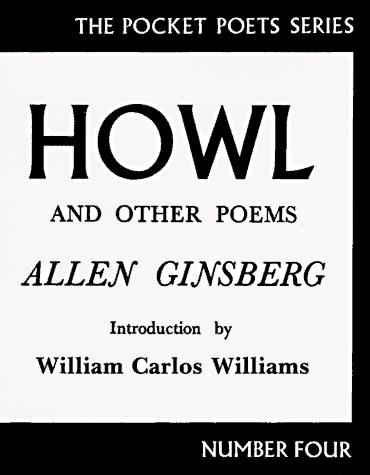
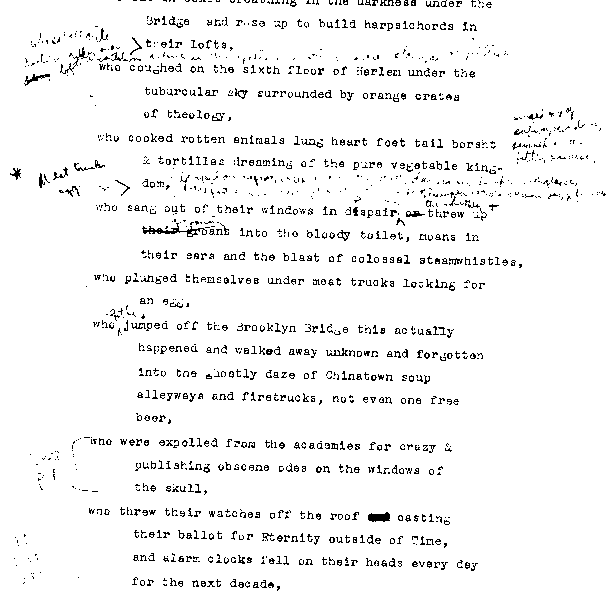
 And yes, it would be terrible if you had access to banned books like
  . It has been banned in Malaysia since 1992, never mind that it has been described as
  It's quite obvious too that
  Peculiarly for Irish writers, English isn't really our language. We might have spoken it for 200 years, but we don't necessarily always feel at home in it. The problem for us Irish novelists is that we publish in London and are reviewed in England by English reviewers who often regard Irish novels as a failed attempt to be English. I read something the other day that referred to the 'Celtic fringe' of writers. I thought: Wilde, Shaw, Joyce, Yeats, Beckett - if this is the Celtic fringe, where would I find the full head of hair?
 I bought


 Just as we had the
 This is not a test of wit or brilliance. It's a test of bum glue, pure and simple.
 From
From  Some weeks ago I

 Fans of Philip Pullman's
  German author Holger Kersten asserts that we've been getting it all wrong about the life and crucifixion of Christ for a couple of millenia - actually, as the title of the book states: