Monday, February 13, 2006

More Love Among the Bookshelves

Still warming up for Valentine's. Still exploring the connection between love and books.

Let's recap.

So now we've learned that Kak Teh and rhelynn found love among the bookshelves. And bookshops are a favourite pick up spot for Walker, so it works for some. (Though Lil Ms D sadly believes it's her karma to only find gonks wherever she looks. Sadly, she may be right.)

A British Council friend in Taipei told me about a bookshop which stays open all night. It has become one of the favourite pick-up spots in the city. A Taiwanese Government report says about the Eslite bookshop:
Besides the store's cozy atmosphere, with places to sit and read, one reason for the economic success of its late-night operations is its popularity with young people looking for romance, especially for those hoping to find a more intellectual or refined companion.
So never mind speed-dating, maybe all you have to do is hang out in front of the right shelves and see who happens to pick up the kind of books that makes your heart happiest. It's bib-dating of a more free-ranging kind.

Oh let's do a quick survey - suppose you want to meet the love of your life in a bookshop, which section would you hang out in?* If you don't have that special someone yet, why not put a rose between your teeth and go stand in MPH or Borders or Kino during your lunch-break tomorrow and see which other lonely hearts happen along ...

Incidentally, did you know that a certain local bookshop owner rearranged his floorspace because of the folks who found - ahem - a bit tooooo much love among the bookshelves? (True) But then, why deny spontaneity?

In tomorrow's Valentine installment: a gift suggestion that will cost you next to nothing but melt your loved one's heart.


*If I were footloose and fancy-free and whole-lot younger my choice would be next to the books on tantric sex. (Cut to the chase, why not?!) Not that you're in danger of finding too many of those in KL bookshops!

Sunday, February 12, 2006

Yvonne's Valentine Ad

As most of my local readers will know (and if you don't, which rock have you been hiding under?) blogger Yvonne Foong is raising money for an urgent brain operation. I have (at last!) bought one of her fundraising t-shirts and will be proudly wearing it around town.

Picture (above) is just an excuse to flash my boobs at you all! Hope Yvonne appreciates the trouble I went to to fish the garment out of the dirty laundry basket for the fashion shoot. (You can work out for yourselves why the writing is back to front, okay?)

Anyway, now BlueMoutain Arts have donated 5,000 copies of a poetry book called This Valentine's Day, I Promise You All My Love to help her raise money for her surgery.

Yvonne is selling it for just RM10 and you can drop by her place in Subang Jaya to pick up a copy before Valentine's Day. For an extra RM3, she will mail it to you.

You can e-mail Yvonne at yvonnefmn@gmail.com for further details.

She gets money for her fund, you get a valentine's gift ... and the warm fuzzies come free. Sorted!

Love Among the Bookshelves

I was tickled by an article I read in the Malay Mail yesterday:
Librarians across Belgium are putting aside their reading glasses for arrows as they play Cupid. Using candles and romance to lure single readers to the library, they hope it will become the next trend in dating.

Dubbing it 'bib-dating' in Dutch - literally, library dating - they hope to draw more people to books by appealing to their hearts - while giving singles a new place to find love.

"Basically it's speed-dating, but in a new setting - with books," said librarian Eric Van der Straeten.

He and fellow librarian Danny Theuwis are hoping their idea will blow the dust off stereotypes of libraries as stuffy and suffocating.

Theuwis experimented with the dating idea three years ago, combining 14 single bookworms - most between 18 and 35 years old - with novels.

"I got some flowers for the tables, got some candles and gave those who came a glass of red wine," Theuwis said.

The informal setting and two people huddling to discuss their favorite books was all that was needed to break the ice and let relationships blossom, he said.

The idea of speed dating (aka bib dating!) with books has apparently taken off in the UK too in both libraries and bookshops.

Wouldn't it be fun to try it out here?

Books for Your True Love

Stumped as to what to buy your true love for Valentine's Day? How about a book?

Starmag reviewers share their choices in today's issue and there are some fun ideas. My recommendations are Daisy Goodwin’s delightful Essential Poems (to Fall in Love with) and Carol Ann Duffy's Rapture (taste a little sample here).

What would you have chosen?

Saturday, February 11, 2006

Commonwealth Champs!

I'll never make a litblogger with street cred at this rate! The regional winners of the Commonwealth Writer's Prize were announced days ago and I was clearly sleeping on the job.

I'll just cut to the chase. Our Tash has done us proud yet again with a win in the Best First Book category for the South East Asia and South Pacific region. (Australian Writer Kate Grenville won for the best book overall with The Secret River)

Zadie Smith won Best Book Prize for the Eurasia region for On Beauty while Donna Daley-Clarke won the Best First Book Award for Lazy Eye. (I've just noticed incidentally, that Daley-Clarke is yet another UEA grad. But of course, creative writing courses don't help anyone, do they?)

The overall winner will be announced March 14th in Melbourne.

Dropping Keys

The small man

Builds cages for everyone

He

Knows.

While the sage,

Who has to duck his head

When the moon is low,

Keeps dropping keys all night long

For the

Beautiful

Rowdy

Prisoners.
Hafiz

Friday, February 10, 2006

The Role of the Reviewer

I don't think that a writing community can really grow strong without the feedback reviews provide, and I feel that too few books get reviewed here in Malaysia where the newspapers give very little space to them. Books by local writers continually slip through the net, and the public don't even get to hear about most of the titles from overseas that they might be interested in. (The bookshops fight their own corners, but still ...)

Local fantasy writer and environmentalist Glenda Larke (whom I wrote about some time back) talks about the role of the reviewer, and her own feelings about being reviewed:
... a good review should do one major thing: it should give a reader who hasn’t read the work an idea whether he would like it or not (or alternatively give a reader who has read it something more to think about).

It is not enough to retell the story, obviously. And it is certainly not enough to criticise the work – favourably or otherwise – without saying, coherently, why. There are three kinds of reviews which particularly bug me: the one that is dismissive from the start, e.g. the snide reviewer given a science fiction book to review by a newspaper editor when he loathes the genre, and who then has fun ridiculing it for being science fiction; secondly, the reviewer who attacks the author rather than the work, e.g. on his or her politics; and thirdly the reviewer who slams (or praises) a work but never gives a thoughtful reason.

As an author, I look upon all reviews as a chance for me to learn. What worked, at least as far as this particular reviewer is concerned? What didn’t? And why? If the reviewer can tell me any of that, I am pathetically grateful.
I'm usually on the other side of the equation, reviewing writers. Just hope I get it right.

Thursday, February 09, 2006

Will the Real World Book Day Please Stand Up?

MPH's Renee Koh seemed very amused yesterday, when I told her that British Council had plans to celebrate World Book Day on March 2nd. She told me that the book chain would be celebrating the event on April 23rd.

Seeing my obvious bewilderment, she explained:
"There's actually TWO World Book Days. The British World Book Day is in March and the UNESCO one is in April. MPH celebrates the event in collaboration with the Spanish embassy because World Book Day actually began in Spain."

Now why do the Brits (and Irish) have to be different?

Anyway, two days to celebrate books in KL can't be bad!


Wednesday, February 08, 2006

My Bookshelves

So many books, so little time. My to-be-read shelf ...

Why are my novels in alphabetical order, when my handbag is a disaster zone?

Warning: Reading is Bad for You!

Reading books chronically understimulates the senses. Unlike the longstanding tradition of gameplaying—which engages the child in a vivid, three-dimensional world filled with moving images and musical sound-scapes, navigated and controlled with complex muscular movements—books are simply a barren string of words on the page. . . .

Books are also tragically isolating. While games have for many years engaged the young in complex social relationships with their peers, building and exploring worlds together, books force the child to sequester him or herself in a quiet space, shut off from interaction with other children. . . .

But perhaps the most dangerous property of these books is the fact that they follow a fixed linear path. You can’t control their narratives in any fashion—you simply sit back and have the story dictated to you. . . .

This risks instilling a general passivity in our children, making them feel as though they’re powerless to change their circumstances. Reading is not an active, participatory process; it’s a submissive one.
And to think we've been advocating reading for so long! How could we have been so muddle-headed and mistaken?

Relax booklovers! The extract from Steven Berlin Johnson's book
Everything Bad is Good for You
above is intended as an "imagined rendition of what some pompous, self-satisfied gamer would say about books had he never actually sat down and read one." His book argues the case that all those elements of popular culture (e.g video games, television) that are generally assumed to be bad for us are in fact making us smarter.

Now if you were taken in by the extract, you're not alone. When this piece appeared in a New York Times review, Johnson received "innumerable confused responses" from readers unclear on the idea of satire. One wonders if they've been playing too many computer games!

Tuesday, February 07, 2006

When a Story Bites You on the Bum

So I'm having lunch with an editor friend one day and I tell him the story. The ins and outs of it. The complexities of it.

When I stop, he prompts "And then?"

"That's it."

"And then?"

"There is no 'and then'. That's all I know."

"And then?"

I begin to get angry. Isn't the guy listening?

"Look" I say "I've told you everything that happened. "

He sits back in his chair and considers me.

"Sure, he says, that's the end of the real life stuff but you're a fiction writer so you can keep going past this point."

"I could but I don't write in that genre. I'm into the serious stuff the lit fic. I'm not a thriller writer. why couldn't this story go away and bite Robert Ludlum or Dan Brown or John Le Carre on the leg. They could do it justice. not me."


Some times there's a story that won't go away.

you try to ignore it
but it keeps on yapping and yapping
so you push it away

then it comes and nips you on the ankle
and you say 'go away'
and throw it a stick
"i'll think about it" but you never do

but then it comes back
and bites you on the bum
so in the end you have to get nasty with it

i don't know how you end
i have no interest
i don't write in that genre
i'm into literary fiction
heavyweight stuff
go bite dan brown or john le carre
they'd get it right
go find an investigative journalistic
who claims moral high ground

bu no, the story wants my lap
my fingers on the computer

Monday, February 06, 2006

A Clutch of Bogus Memoirs

I'm writing a piece about truth and the memoir and if you haven't already been bored to death by the Oprah/Frey story, you might like to read the original expose piece, A Million Little Lies, on the Smoking Gun website.

(If you decide that this whole issue is being taken way too seriously, please do go read the very funny spoof by Kenneth J. Harvey on the Times website!)

Anyway - I decided to see if I could find other memoirs which have pulled the wool over the eyes of readers (and publishers) and found, surprise surprise, that Frey is certainly not the first nor the worst offender.

First there's the case of Nasdijj. Purportedly of Navajo descent, Nasdijj wrote an ode to his adopted son who died of fetal alchohol syndrome. The piece, published in Esquire magazine was a finalist for a National Magazine Award and won him a contract for a full-length memoir. He went on to write two more volumes of memoir about his lifetime of suffering.

Except that Nasdijj was no more Native American than my left elbow, and his stories were largely lifted from accounts by other writers. The LA Times blew the whistle and outed Nasdijj as Tim Barrus a white-writer of gay erotica.

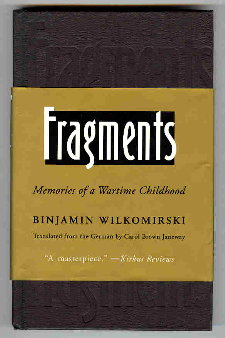
Then there's Binjamin Wilkomirski. His prize-winning memoir Fragments: Memories of a Wartime Childhood, was hailed as a classic and earned him comparisons to Elie Wiesel, Primo Levi and Anne Frank.

Except that he never was the holocaust survivor he claimed to be.

Author Daniel Ganzfried researched the case and discovered that legal documents and school records contradict the author's claims. Wilkomirski was outed in an article in Swiss publication, Weltwoche in 1998, and revealed to be a Swiss protestant called Bruno Grosjean. Unlike Barrus though, he appeared to be genuinely convinced of the truth of his story.

Another memoir fraud was unmasked in Australia's Sydney Morning Herald with the aid of Jordanian journalist and woman's rights activist Rana Husseini .

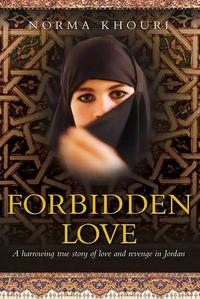
In her memoir Forbidden Love, Norma Khouri told the "true" story of the murder of a young Jordanian woman by her father because she dared to date a Christian man . The book was a great hit and sold more than 250,000 globally. In Australia, where the author has been granted asylum, it was voted one of the country's 100 favorite books of all time.

Her story was exposed as a fraud and as the Lebanese Times reports:
The scandal was a setback for advocates of women's rights in Jordan and provided a disturbing case study of how lies and distortions can masquerade as "fact" in Western discussions of the Arab world and Islam.
and the book was withdrawn from sale.

Publishers beware!

From Page to Screen

Seeing the film disturbed me. I felt that, just as the ancient Egyptians had removed a corpse's brain through the nostril with a slender hook before mummification, the cast and crew of this film, from the director down, had gotten into my mind and pulled out images.

... I
was not prepared for the emotional hammering I got when I saw it. The characters roared back into my mind, larger and stronger than they had ever been.

...
I realised that I, as a writer, was having the rarest film trip: my story was not mangled but enlarged into huge and gripping imagery that rattled minds and squeezed hearts.

Annie Proulx talks about how her story Brokeback Mountain moved from page to filmscreen and pays director Ang Lee the ultimate accolade.

Sunday, February 05, 2006

When is a Writer Like a Lava Lamp?

There is an awkward period in the lives of clothes, furniture and writers, when they become something more than dated but something less than a piece of history. We call things that have reached this state ‘unfashionable’, and usually throw such stuff away without thinking any more about it ...
writes Colin Burrow in the London Review of Books, describing novelist Anthony Burgess as:
.... a 1960s sideboard of a writer ...
Tastes change. Authors fall horribly out of fashion. Never noticed it when I was younger, but I've realised that many of the writers I read back then are no longer talked about on literary pages, no longer to be found in the bookshops, not read by posers on the tube, not studied on courses. Burgess, John Fowles, William Golding and perhaps D.H. Lawrence don't seem to be enjoying too much popularity at the moment, although all are held in great respect. (Who would you say is missing from the list?)

An obituary creates a brief flurry of attention. A controversial biography revives interest for a while among the literatti if not the general public.

The Hollywoodisation of your life works best, though it seems you have to be as loopy as a carousel (ala Iris or Sylvia) if you want to achieve big-screen immortality.

But books which still have something to say to future generations will eventually be rediscovered. And that in the end is the acid-test of a classic.

A Novel in a Year

Here's something good - and for free!

Novelist Louise Doughty shares her secrets about the craft in the Telegraph and invites readers to share their thoughts and some writerly solidarity on a message board. The series is now in it's fifth week, but the past articles are archived on the site ... and it's all good stuff. Today Doughty talks about passion being the beginner writer's greatest asset:
It's disastrous for anyone's art when they stop being hungry.

Saturday, February 04, 2006

Great First Lines

Saras said that she'd once been told on a creative writing course that the first line of a story should make you spill your coffee. Whilst not actually wanting to get my books any more messed up with food and drink than they already are, I have to agree that a whole lot of promise has to be coiled up in those first few words.

A sort of meme thing about best first lines seems to be being passed around among litbloggers : Edward Champion (whom I found via this post on the subject by Bud Parr) seems to be the guy who kicked off the challenge in his search for:
... an opening sentence so utterly irresistible, something that is so unquestionably curious and so absolutely tantalizing that you, as a reader, simply must read the whole thing!
And I, of course, am only too happy to pass the challenge on to you!

I think my favourite has to be the opening of Graham Greene's Brighton Rock and remember the pleasure with which I settled down to read it:
Hale knew they meant to murder him before he had been in Brighton three hours.
The opening line of marquez's One Hundred Years of Solitude is another classic:
Many years later, as he faced the firing squad, Colonel Aureliano Buendia was to remember that distant afternoon when his father took him to discover ice.

And then there's the audacity of Burgess in Earthly Powers :
It was the afternoon of my eighty-first birthday, and I was in bed with my catamite when Ali announced that the archbishop had come to see me.
I love too the way that Katherine Mansfield begins some of her short stories as if she's picking up the threads of an earlier conversation, so that you feel invited into a confidence, which is a pretty neat trick, if you think about it. The Garden Party for example begins:
And after all the weather was ideal.

Etgar Keret's short short stories have irresistible first lines and this I think is a big part of the joy of reading him:
That night when the daemon came to take away his talent, he didn't whine or argue or put up a fuss. (From One Last story and That's It)

In Hell, they put me in a cauldron of boiling water. (From Katzenstein)

In June, after the plague of frogs, people began leaving the valley in droves. (From Plague of the Firstborn)

Dad wouldn't buy me a Bart Simpson doll. (Breaking the Pig)
If you want to waste some serious time here's a fun literary quiz about first lines, try this. (I scored 44 out of 66 which I don't think is too bad since most of it was guesswork!) And if you want even more, the American Book Review lists 100 Best First Lines from Novels here.

Bud Parr points out, this pondering on favourite first lines is more than a little dangerous:
I find myself thinking about the great books I've read, thumbing through them, trying to resist dropping everything to re-read them. Should I pop open a bottle of wine?
In my case I'm suddenly overcome with a terrible sadness for books once owned but lost along the way. Gaps in my collection that need to be filled.

Friday, February 03, 2006

Poetry and Healing

I was intrigued by Christina Patterson's proposition in the Independent the other day that poetry might be the new prozac.

The article brought together several areas that I'm interested in. Poetry of course. Then the link between depressive illness and creativity, and the use of creative writing as therapy.

Patterson argues that whilst poetry is increasingly being heralded as a panacea for many ills including depression, it doesn't actually seem to have helped mentally-ill poets like Anne Sexton, Robert Lowell, or Sylvia Plath.

But here I think that here she's got her argument back to front: surely the desire to write poetry is often a symptom of manic-depressive illness, as sufferers tend to delight in language play (punning, rhyming, repetition, torrents of words) and have a sense of divine inspiration. (Patterson might note that Lowell was saved in the end, not by poetry, but by lithium.)

But there is no doubt that writing poetry is good for the health! Patterson cites a joint study between the Arts Council of Great Britain and the Department of Health which suggests that writing poetry boosted levels of immunoglobin A (i.e. the antibody that helps you fend off illness). Write poetry and you won't fall sick so often, is the bottom line.

I decided to google up the other studies she mentions and found much interesting stuff along the way:

Dr Robin Philipp, an occupational physician at the Bristol Royal Infirmary studied the therapeutic properties of poetry writing over several years and found that writing poetry can lift depression in nearly three-quarters of cases:
The study, found 70 per cent of sufferers felt better writing poems and eight per cent improved so much they came off anti-depressants. ... Researchers believe writing poetry forces people to confront their emotions, an essential process in overcoming mental torment. ... Poetry helped them articulate disordered thoughts.
There's plenty of other poetry-in-healthcare projects listed on the Poetry Society website if you want to read further.

The Poetry in the Waiting Room Project is an interesting initiative based on the premise that reading poetry is good for your health. Small poetry pamplets are supplied to doctors' waiting rooms and readers are encouraged to keep them. As Patterson points out, it is difficult to substantiate the health benefits from such an approach. But I think that even without the health benefits, getting poetry into the hands of the population at large is no bad thing and could lead to an addiction! (Never mind the patients, this initiative just might be good for poetry!)

I do agree with Patterson's conclusion that poetry for healing is not the same thing as poetry for art. But perhaps in rare cases the two things could overlap? ...

Related posts:

Touched with Fire
Obituary for Egolf
Creative Writing as Therapy

Thursday, February 02, 2006

Malay Teen Lit

Nisah forwarded an invitation (which I forward on to you) to a panel discussion about teen literature in Malay. It's at UKM next Tuesday. Would love to hear how the discussion goes ...

Farris Putera Yang Hilang (Nisah Haji Haron)

Rita '20 (Ariff Ahmad)

Mungkin… (Siti Jasmina Ibrahim)

Panel:

Wan Azreena Wan Jaafar (Pusat Psikologi dan Pembangunan Manusia, FSSK)

Dr Misran Rokimin (PPBKKM, FSSK)

Dr Fariza Md Sham (Pusat Pengajian Dakwah dan Kepimpinan, FPI)

Pengerusi:

Mawar Shafei

Tarikh: 7 Februari 2006 (Selasa)

Tempat: DK 3F302, FSKK, UKM

Masa: 10 pagi -12 tengahari

Anjuran:

PENA dengan kerjasama PPBKKM, UKM

-------------------------------------------------------------------------------------------

Bersama kembara Putera Farris Mustafa, mahu bebas mengenal diri remaja,
menemui orang tua berjanggut putih misteri dan keanehan demi keanehan… Cinta sesama manusia, jika benar dan jujur jalannya pasti membawa kebahagiaan. Zulhelmi yang istimewa di hati Rita … dalam hidup mungkin akan bersua luka, mungkin
persis citra legenda, mungkin perlu menentang masa, mungkin kasih akan menjelma, mungkin intan, menjadi takdir buatnya, mungkin menjadi miliknya…

Kehadiran tuan/puan dialu-alukan.

Poetry in Crisis

First we heard that the short story was in seriously ill in the UK, and then a serious attempt was made to rescue it. And now poetry has decided to take to its sick bed according to the Observer .

TV presenter and champion of all things poetic Daisy Goodwin, (apparently dubbed the Nigella Lawson of Poetry and you can see why from the piccy on the left!) predicts that

It will be like morris dancing: really interesting to people who do it, and incomprehensible and slightly annoying to people who don't. ... Twenty years ago everyone could name a Larkin or a Betjeman poem and had read them. I think you'd be very hard pressed to find anybody who could name a poem by any of the top 10 poets today. It's an endangered species.
Is Goodwin right? Others in the article (including poet laureate, Andrew Motion, don't agree) but plummeting sales figures for poetry seem to back Goodwin up.

Clearly some emergency resusitation is necessary. But how should it be delivered?

Wednesday, February 01, 2006

Mantel Piece

Blissful. Just relax in my planter's chair on the verandah, early morning sunlight washing the garden, mug of coffee in hand, and read and read. No guilt either because everyone's still on holiday.

This morning finished Beyond Black by Hilary Mantel. A curious book. A comedy about ... the life beyond, child abuse ... the general crapness of modern day Britain. All things to laugh at, hey?

Alison is a clairvoyant, passing on banal messages from dead relatives to audiences in seedy venues in the South-East. But there's no trickery involved - Alison's the real thing. She even has a spirit guide: "a grizzled grinning apparition in a bookmaker’s check jacket and suede shoes with bald toe caps” who sits around making lewd remarks and fondling himself, unseen by anyone but Alison. The dead are as solidly drawn as the living in the novel and even a disorientated Princess Di turns up in Alison's hallway a few hours after passing over.

I felt great sympathy for Alison, increasingly under psychic attack from a group of men who abused her sexually and physically as a child, yet unable to share with anyone the true horror of what she sees in the world beyond.

Her self-styled "manager" Colette, is a deliciously awful character - prim, humourless and cold ... and the way she gets her come-uppance delighted me. (Guess whose grubby little sock turns up in her washing machine?)

But what I loved most about the book was Mantel's spot-on portrayal of an England I recognise all too well, in prose that sings. (Check out the first page.)

If you've read the book you will enjoy this podcast interview with Hilary Mantel at the Guardian website. And there's also her article about where the novel came from. I liked this:
Which other self-employed persons stand up in public to talk about non-existent people? Novelists, of course. We listen to non-existent voices and write down what they say. Then we talk with passion and conviction about people no one can see.

Tuesday, January 31, 2006

Astonishing Adam and Adversary and Apple

I'd better post up something fun and quickly after the academic seriousness of the last entry before you all desert me!

Here's something that made me smile in Mark Sanderson's column in the Telegraph. He's commenting on linguist David Crystal's new book Words, Words, Words which, he says "... provides many astonishing examples of lexical ingenuity".
How, for instance, does one tell the story of the Book of Genesis with words only beginning with the letter 'A'? A magazine called Word Ways came up with an answer: 'Adam and alert associate, agreeably accommodated, aptly achieved accord and amiability - ample ambrosias available, and arbors alone adequate against ambient airs. Ah auspicious artlessness! Adversity and affliction attacked appallingly, as avowed antagonists, Adonai, almighty Author, announced, and Apollyon, archangel-adder, asserted. "Avoid apples and abide amid abundance," admonished Adonai. "Admire apples and acquire acumen," advised Apollyon. Alas! Apollyon attained ascendancy. Ancestor Adam's attractive associate ate, arch and alluring against an antinomian apple-tree. Adam ate also, amoral although aware.'
Okay - here's your challenge, then. (To rouse yourself out of your long public holiday stupor!) Rewrite a well known story using only words that begin with a single letter of the alphabet. You're such an inventive lot, I've no doubt at all you'll find a way. And I'm sure I can find a prize for the best.

Dreamer Idiot Tackles Postcolonialism

One of the most exciting things about this blog is that very often when I post something up, readers drop by to debate a point or add a comment and suddenly there's a dialogue going on from which I learn so much.

The other day I was totally gobsmacked to receive a long and very eloquent e-mail from dreamer idiot who picked up a dismissive comment I made about post-colonialism ( after reading Raman's piece on the term). With his permission I post it up part of his e-mail (but totally forgive those with no interest in literary studies if they choose to tune out at this point - this is the academic stuff after all and not everyone's cup of tea) :
This ... brings me to both Raman’s and your discomfort with the term ‘post-colonial’, which certainly has its many detractors, and as my limited knowledge both as reader and former student of literature would enable me to say, a contested term in literary studies. Yes, the term doesn’t sit well with many readers, but as Mr. Raman pointed out, it has been a helpful, but still problematic term for academics to employ when looking at the writings of writers from post-colonial nations. In the words of Philip Roth (as quoted in your post), I’m probably one of the people that needs be shot. (So, here’s my response to some of Mr.Raman’s partly misunderstood but still legitimate grievances.

You probably know all of these already, but I am just putting everything in as part of my response)
The study of post-colonial literature may be traced to the pioneering work of the late Edward Said and the group of Australian literary critics, Bill Ashcroft, Graham Huggan, Helen Tiffin on Australian, African, Caribbean literature (probably Pacific as well) led to the formation of a post-colonial literature as a field of academic study. (There is also Anne Brewster whose PhD research about twenty years ago centred on Malaysian and S’pore literature in English.)


‘Post-colonial’ as a term becomes misleading because of the debates surrounding what constitute the ‘post-colonial’, hence it is probably best, to avoid the confusion and frustration of readers, to say that ‘post-colonial’ is a theory of literature (and culture). By and large, ‘post-colonial’, as the term suggests, examines and explores the social (cultural), historical, economical and political conditions of colonialism that shape the nature of the fictions and poetry that are produced. Although European colonialism may have ended for about a good forty years, the lingering effects of colonialism and the varying responses and reactions to them (again, social, political etc) may be felt and experienced till today. As ‘post-colonial’ is a theoretical framework, it has been used in a variety of ways. Yes, Irish writers like James Joyce and Seamus Heaney are sometimes examined under the term ‘post-colonial’, because their Irish identity stands out markedly and emerges out of a sense of being historically subjected under the English, and in Heaney’s case, the politics of the British and the IRA. Not surprisingly, J.M.Coetzee is also considered a post-colonial (and also post-modern) writer who struggles to make sense and redress or apologise, if you will, for the trauma of colonialism in South Africa.

Mr.Raman’s issue on why ‘post-colonial’ has not been employed for American and Canadian literature is a another good case in point of the problematics of the term.
Firstly, there have been critics who have applied ‘post-colonial’ to American literature, but it has been mainly restricted to African-American literature, but the scholarship has not been very productively developed, because African-American literature is unique in its own position of displacement and identity politics (these writers are still American not Africans). Moreover, American literature (and history) has its roots in an Anglo-European tradition, hence it is not exactly ‘colonial’ in that it does not constitute a foreign political and economical (or cultural) imposition or influence. American literature, also, has developed its own voice/s through its writers and poets like Hawthorne, Melville, Whitman and Emily Dickinson, blazing a path and establishing a tradition of its own.

In contrast, Australian literature presents a slightly different situation, mainly because of the complication of its convict history. ‘Post-colonial’ has been used by some literary critics to characterise, describe even white Australian writers (it’s true).
Mr. Raman is right on the point that many writers, not just ‘white’ writers, but even writers like Romesh Gunasekera reject such labelling which, though a term of convenience for academic study, can be rather constrictive and limited. With regard to N.K..Narayan, Mr. Raman is mistaken, because he is considered a post-colonial writer. The only reason he does not appear on the list Mr.Raman mentioned is that he is not as widely read or rather taught in literature courses, since most are often only introductory courses to a whole range of post-colonial literatures; and then, those courses are dependent on the speciality of the lecturer. Unless one works specifically on Indian or what is sometimes called South-Asian literature in English, one probably might not read him.

It therefore appears that post-colonial writers belong to a specific ‘species’ of writers, as many have noticed. They are often writers , whom you may prefer to call ‘World writers’ and their works, ‘World literature;, but they have been called ‘post-colonial’, simply because their writing draws upon their ambiguous or double position as writers who are somewhat ‘exiled’ or disconnected from the land of their birth or family’s origin, and being so, feel simultaneously at home and not at home in the ‘First’ World country that they are residing in and from which they write their fictions.
... Another problem with the ‘post-colonial’ is that there appears to be a degree of literary exoticism and orientalism involved, (something Mr. Raman took issue with), which is also probably why Thor Kar Hong picked a bone with what he deems a rather ‘forced’ use and depiction of cultural and temporal setting in Tash Aw’s novel. The term ‘post-colonial’ then turns more contentious, as the politics of reading comes into the picture. Among the criticisms that get levelled is that ultimately the imperial ‘West’ still holds the epistemic ‘power’ in defining and designating what it deems ‘good’ literature. ...
dreamer idiot - am most touched to think that you've taken the time and trouble to fill in the (clearly considerable!) gaps in my knowledge of the subject.


By the way, am I a postcolonial hangover?

Monday, January 30, 2006

On Writer's Block

I never use the phrase. I don't think of it as writer's block. You just look out the window a bit more.
Alan Bennett (quoted in the Independent 29/7/05)

Sunday, January 29, 2006

Misery is Money!

Pain sells. We love to watch the descent into hell of the mentally anguished and the chronically addicted. We just adore our voyeuristic glimpses into childhoods scarred by cruelty and abuse. And of course, we hope to be redeemed by an emerging message of spiritual survival against the odds.

At least that's what the publishers on both sides of the Atlantic appear to be banking on in 2006.

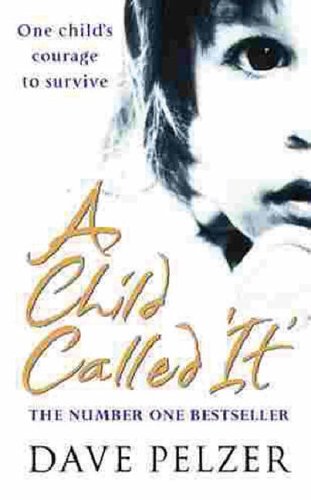
Michael Prodger in the Telegraph blames Dave Pelzer's abuse memoir A Child Called 'It' for starting the trend and notes that:
... the flood of misery he unleashed still shows no sign of abating. ... alumni of the school of Pelzer are everywhere. ... Whether your ailment is physical or psychological, there will be a memoir to suit. You're no oil painting? Try Ugly, Constance Briscoe's account of how her mother hated her looks and everything else about her (the author, incidentally, looks rather fetching in her jacket photograph). Behavioural difficulties? Joe by Michael Blastland recounts the pain (and occasional pleasures) of living with an autistic son. Eating disorder? The Invisible Girl is Peter Barham's memoir of his dead anorexic daughter. Disability? White on Black by Ruben Gallego details a Russian man with cerebral palsy. Grim home life? Dragonslippers is Rosalind Penfold's diary of a decade in which she endured physical, mental and sexual abuse as a wife. (Or, failing that, there's also A Secret Madness in which Elaine Bass recalls marriage to a man with compulsive obsessive disorder.) Drugs? Out of Time by James Fountain tells how a lemonade and LSD cocktail sent him into a psychiatric unit. That's just January's crop - and not all of it.

These books invariably come garnished with a carefully defined set of adjectives that can be well merited: the stories they tell are 'inspiring', 'profound', 'touching', their authors are always 'brave' and the books themselves are never less than 'remarkable'. The ordeals the authors have endured are undoubtedly harrowing in the extreme, their reasons for sharing their experiences are cathartic, possibly altruistic and totally understandable. The books world might indeed be a blander place without this grist. But where most non-fiction offers the reader a range of possible responses, these books offer, or rather demand, only one - empathy. With poignancy comes impoverishment.
Tim Adams in the Observer identifies the same publishing trend and believes that:
Misery is set to be the new celebrity.

... It is tempting - though profoundly odd, given what is on the news - to see these narratives as our war stories, vicarious triumphs over outrageous adversity, except that these wars are nearly all private ones, and the battleground rarely extends beyond the author's head. Since Pelzer sold many million copies of his books, there has inevitably been a kind of arms race of his kind of extreme confession. Some of these horrific childhoods have been imported from America - including that of Pelzer's brother Richard - but the British have been quick to embrace the mood. Strange to think now that despite several years on the top of the American bestseller list, no publisher here bought Dave Pelzer initially, thinking his mix of abasement and aggrandisement would not wash on this side of the Atlantic: how wrong they were.

Hmmm ... I remember when the Brits would actually be more inclined to find humour instead of pathos in such accounts. (Anyone else remember the Born in a Shoebox sketch from The Secret Policeman's Ball?)

But there's misery and there's misery, I suppose. What makes a book palatable in the end is surely great writing. Frank McCourt's Angela's Ashes is one of the strongest memoirs I've read and rises way above maudling self-pity.

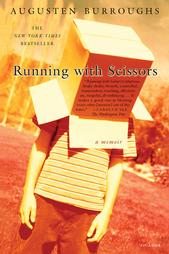
And one book about an abusive childhood I must read is Augusten Burrough's Running with Scissors: his account of a childhood with an alcholic father and manic-depressive poet mother who eventually gave him away to a deranged psychiatrist in whose household he was fed drugs and sexually abused.

Incidentally, there's an interesting little aside in Robert Chalmers interview of Burroughs which could happily be tossed into the Frey fray(!):
He (Burroughs) has never called his work autobiography, but memoir, a term whose standard definition ... doesn't explicitly demand rigorous adherence to fact.

Saturday, January 28, 2006

Chinese New Year Card


Wishing all my Chinese friends

Gong Xi Fa Chai!

Oprah Chops Frey into a Million Little Pieces (Fries Him in Hot Oil)

Poor old Oprah - she doesn't seems to have much luck with the living authors she features on her show, does she?

Reverberations continue to be felt after her most recent pick, James Frey, admitted that he had embellished parts of his memoir A Million Little Pieces. According to the Guardian, Frey:

.. made a second appearance on her show yesterday, and listened in silence as the occasionally tearful host accused him of "embarrassing and disappointing" her. In his memoir, Frey claimed to have spent three months in jail. When allegations first emerged that he had exaggerated his criminal record, Winfrey made a surprise call to Larry King's CNN show in support of him, in which she called the alleged fabrications "much ado about nothing". But yesterday, to the delight of her viewers, she made a sharp about-turn, telling Frey that she felt "duped", and accusing him of "betray[ing] millions of readers." Frey was met with a barrage of groans, gasps and boos when he confessed that certain facts and characters had been "altered" for inclusion in the memoir. He admitted that he had been jailed for just a few hours, rather than (as he initially claimed) 87 days, and went on to say that he had made mistakes and lied.

The big question is how much does all this really matter? Oprah's public clearly seems to think that it does.

But truth is of course entirely subjective, and all writers who use their lives as material select and shape facts to serve their purpose.

As one reader said in a New York Times forum :
It's about unreliable narrative, baby.

Friday, January 27, 2006

Get KL Reading?


Now here's news of an initiative I wholeheartedly applaud:
The Get London Reading campaign, which will run annually from February 2006, aims to encourage Londoners to make more time for reading and promote London as an international centre for books. ... A challenge will be made to the book industry, cultural organisations, businesses and libraries, asking ‘what will you do to get Londoners reading?’. Responses, in the form of promotions, events, book groups in workplaces and writers in residence, will be collated in a free Get London Reading Guide Book.
The event, led by independent charity, Booktrust, runs from 17th February to the 7th March 2006, and is timed to culminate in World Book Day. Other partners in the project include Arts Council London, British Council, and the London International Book Fair. Businesses and organisations across the city are encouraged to pledge their support and come up with "quirky and interesting intitiatives to engage readers and get press attention."

Some of the suggestions offered:
  • A discount offered when the customer presents their Guide Book.
  • Guide Book encourages Londoners to visit X bookshop on a specific date, to collect a free copy of X new title, of which 500 are available.
  • Londoners could be encouraged to gather at a specific London landmark at noon on a specific date to hear Author X read from her latest work.
  • Londoners could get a free coffee if they purchase three books, in association with X local coffee shop.
  • Bookshops could offer a series of special breakfast or lunchtime events to encourage Londoners to take time out of their busy days.
Now of courselah, most of you who graze this blog are here in Malaysia and are probably scratching your heads in wonderment at this Mat Salleh going on yet again about things Britishly bookish. But you can surely see which way my mind is going?

A lot has been talked about the need to encourage reading here, and funds have been made available ... but so far nothing seems to be happening. What's happened to the proposed reading campaign announced last November?????

It is indeed very depressing to look at the activity calendar for reading events organised by the National Library. From January to December 2006 the pages tell you:
There are no activities organised for this month.
Seems that really it's best for folks to organise things for themselves, and there's really no better place to start than thinking about World Book Day on March 2nd. Last year MPH and Instituto Cervantes were the only organisations in the city to celebrate it, as far as I know.

Perhaps this year your own organisation might like to mark the day in some way? If so, I'd love to hear about it ... You can check out the official website for fun ideas about how the event is being celebrated in England and Wales and get some inspiration.

Oh yes and ... hint hint ... you might just want to become a member of the British Council library before March 2nd. (More than that I can't divulge at the moment ..... shhhhhhhh!)

Thursday, January 26, 2006

Stumped by Salina

Kak Teh wrote a very nice piece about our national laureate, Dato A. Saman Said, the other day: do go take a look.

I see him around town, quite often - riding the LRT or browsing in Kinokuniya. With his distinctive white beard you can't miss him, and he looks every inch the eccentric writer.

Years ago, when I was learning Malay I hoped to become a fluent enough reader to tackle some of the classics written in the language, and everyone told me that Salina was the one Malay novel I must read.

Up to that point I'd been doing fine with my Malay and felt that I was ready to graduate from kid's books and newspaper articles to the fiction I longed to read in the original language.

But I managed just half a page of Salina.

You see, I got to a sentence that read: Mentari terbit, and I just couldn't imagine what a government minister was doing rising in a field. Nothing that came after that seemed to make sense.

I asked my friends at school and they just laughed at me. A minister, of course is menteri. Mentari is a literary way of saying matahari, meaning sun.

It struck me then that the serviceable, everyday Malay I'd learned wasn't up to the task of coping with the literature.

I'll read Salina in an English translation, I said, put the two editions side by side and study the Malay that way.

But I never found one in the bookshops.

And more or less my Malay got stuck at that point. Frustration point. In a sense it was a good lesson for me, because I understood what many of my students were feeling about English.

But I feel still sad about my inability to read literature in Malay and I'd love to do something even now. Especially so that I could read all those old books of poetry in the backroom of Raman's shop.

And of course, Salina.

Wednesday, January 25, 2006

Reasons to be Cheerful: Part One

Am feeling pretty chirpy today. I'm gradually getting my head together after getting back. Taking a little time out just to catch up with jobs I should have finished and then it's time to get organised and start planning this year's calendar for my "portfolio career" .

My EPF money arrived today. (The Employees Provident fund for those of you from across the world - a form of compulsory savings which you can take out once you start to crumble!) Now I can buy a new notebook computer and a digital camera and a new writing desk for my "office" and put the rest sensibly in the bank.

But not before I've bought a few books. I picked up some in MPH and a few more today in Kinokuniya. Sebastian Barry's A Long Long Way; Clare Morrall's Astonishing Splashes of Colour as well as her new one Natural Flights of the Human Mind; Neil Gaiman's Anansi Boys ('cos you guys talked me into it); J.G. Ballard's Crash (a should-have-read from long ago) and A Thousand Years of Good Prayers, Yiyun Li's award winning short story collection. Some time intensive reading needed now! (Especially as I have so many books on my 'to-be-read shelf' sulking away even as we speak.)

Today, had a meeting with British Council friends and we're cooking up some exciting happenings for the months ahead, especially for library members. The new books are arriving steadily now and finding their way onto the shelves. I'll be ordering some more in a few weeks, including some poetry because we don't seem to have a lot of that. If you have any requests, do let me know. (Remember the authors should preferably be British or have a strong British connection.)

Monumental Matisse

I was impressed to see that Walker had a story about the Whitbread Book of the Year up before the media got it! Bloggers are out at the front of the field ...

The £30,000 prize is awarded to the best book overall, from all the other Whitbread categories. I don't envy the judges, having to make comparisons across genre, and apparently last night the voting was the closest in the prize's two-decade history.

In the end, the winner was not odds on favourite Ali Smith for The Accidental, or Tash (whom previously won the first novel award, if you remember), or Kate Thompson's children's book The New Policeman, or poet Christopher Logue's Iliad epic ... but the second volume of Hilary Spurling's biography of the artist Matisse.

Matisse The Master has been described as monumental and ground-breaking and took the author 15 years to write. (An earlier volume about Matisse's early work, The Unknown Matisse, covered his evolution into a painter.) The work has been widely praised and Michael Morpurgo, who chaired the judges, said of it:
So many people felt it was a massive work, but yet it didn't read like it. It read like a story. ... We were reading about this man and his pictures and the life that he had, his family and his travels. Somehow she managed to paint a picture of a painter that was accessible to people not necessarily familiar with art. It was an extraordinary achievement to write a book that length and you get to the end and you're sorry it's finished.
Check out this review of the book from the Sunday Times.

The painting below comes without the usual (for Malaysia) censor's black pen bikini, lest our eyes fall out of our heads for looking at such forbidden fruit! If you want to know more about Matisse's work and see some of his art, go here.

And if you want to read the book ... it's going on my must-buy list for the British Council Library.

Tuesday, January 24, 2006

Bits of Burgess

In a shop called Bookthrift in South Kensington, I found the Biswell biography of Anthony Burgess I mentioned some time ago, and there and then skim read the Malaysian part. (Too poor to buy it for now.) See if you can recognise the following very famous poem which Burgess attempted to translate into Malay:
Bulan April ia-lah bulan yang dzalim sa-kali
membawa bunga lilac daripada tanah mati
menchamporkan ingatan dengan nafsu.
I say attempted because I think Burgess gave up before he got much further. It's one thing to be able to find equivalent words and quite another to cope with all the references to things that the local audience has had no experience of.

A Malaysian audience would ask: What's so special about April? Why is it "cruel"? And what's a lilac anyway?

How can anyone who hasn't experienced it first-hand truly understand the stirrings of new life after the grey and freezing winter?

It's a lesson I wish could be learned by those who set the literature syllabuses here! I've already mentioned the ubiquitous Daffodils. And then there's Sonnet 18 on the present SPM syllabus - how do you explain to Malaysian kids just why a poet might want to compare his lady love to a hot sunny day when we suffer from an overabundance of heat and sun?

Burgess apparently wrote a book called English Literature: A Survey for Schools while he was in Malaya just prior to independence. This quote may well cheer you all up:
Chinese, Malays, Africans and Indians reading this book may well themselves contribute to English literature.
They may. They just may!
Burgess also wrote a piece for orchestra called Symphoni Malaya. I've never heard it performed and have no idea if it's any good or not. But maybe the MPO could resurrect it!

Monday, January 23, 2006

Articles of Faith

Had forgotten all about my article in Quill until I happened to see lots of freebie copies on a rack outside MPH. It's the third article in a series about creative writing and talks about fastwriting and gives a whole lot of writing prompts to get a beginner writer started.

Currently on the newstands too is chrome and my article about men not reading books by women, and I've included quotes from my drop-by-the-blog friends, Amir and Greenbottle.

Love to see my articles out there all artistically laid out ... but the one thing that spoils the pleasure is that there's always the next article sitting on my hard drive, refusing to be shaped into anything decent and always always the scary editor ...

Sorry Marisa. Sorry Gim Ean. Sorry Renee. Sorry Ruhayat. Sorry Raman. Sorry Dina.

Perhaps another article for you soon, Pang, now that I've received the check for the last one.

Sunday, January 22, 2006

Teacherly Insiration

The greatest pleasure a teacher can have is to know that they have inspired their students and given them direction in life. This from an interview with Teacher Man author, Frank McCourt:
I was walking up Second Avenue with my wife a few years ago, and this young man is walking towards me. He said, 'Hi, Mr. McCourt.' I said, 'Hi, Moose.'

'You know my name?' I said, 'Yeah, Moose Kline.' 'You know my last name?' I said, 'Yeah!' He said, 'I was in your class fifteen years ago!' I said, 'I know, Moose.' I said, 'So, how are you doing?' 'I was in your writing class!' I said, 'I know!' He said, 'I was in your writing class for a year and a half!' I said, 'I know. So how are you doing?' 'I was in your writing class, and now I’m a poet, and I’m starving. And fuck you!'"

Coming to Terms

The Silverfish litmag both online and in its printed form (pickupable from the the shop) is growing ever more substantial and interesting, and the website is now much less clunky. Not bad for a publication that's effectively a one-man show, (though one of my reviews is in there, and a good short story by Robert Raymer).

Raman has also slipped in a couple of eloquent sound-off pieces. He takes issue with the term "creative writing" and talks about how creative writing courses are invariably rip-offs creating unreal expectations for those who just want easy fixes, while the charlatans who teach such course just run away with the money, I suppose.

The article by Sam Sacks that Raman refers to is well worth a read. It highlights the dangers of formulaic teaching of creative writing "rules", resulting in a homogeneity of style which can undoubtedly be seen in much recent American writing. (Golden's Memoir's of a Geisha is wonderfully formulaic, for example, and he was a product of such a course.)

The UEA course on the other hand has continued to turn out distinctive writers, Rattawat Lapcharoensap, Tash Aw, Diana Evans, Tracy Chevalier, Andrew Miller, and Toby Litt. My favourite new writer of last year, Marina Lewycka did the creative writing MA at Sheffield Hallam University. (Not Union Jack-waving here but.)

As Tash said on that occasion at Silverfish :
No-one's ever going to teach you how to write. The (UEA) course makes you look at your own work and develop critical skills very quickly.
And that really is the heart of the matter. Rule bound formulaic teaching vs. providing the opportunity for writers to discover what works for them, and what doesn't, in a relatively unstressful environment.

There are courses and there are courses, then. Teachers worth their salt need to constantly reevalaute their methodology and ask themself the toughest of questions - what kind of writers are we producing? The UEA course is clearly doing something right: the Iowa Writers workshop perhaps not.

I could argue much further but won't. Raman's piece is well worth a read, and you might also like to look at some of my previous posts about creative writing courses.

Raman's other rant is against the term post-colonial literature. And here, I agree with him entirely. I guess it's just that those who spend time in the academic pursuit of Literature (with a big L) need lots of funny expressions that make the rest us mere readers feel like ignorant yoiks.

Index: On Creative Writing Courses

Can Creative Writing Be Taught?

My Creative Writing Courses

Other Benefits of Creative Writing Courses

Saturday, January 21, 2006

Migrating Books

A serene sunrise. A flock of books has just taken flight.

This is one of the clever postcards Silverfish is giving away when you spend RM50 or more. I got mine free. You can see the rest of the set on the website.

Translated Books

Since beginning this blog, I've been surprised by just how many different book awards there are in the UK alone.

The Independent has just released the longlist for its Foreign Fiction Prize which is to be whittled down to a shortlist of six. The winner and translator will share the prize of £10,000.

And the titles are:

  • Tonino Benacquista, Someone Else (French)
  • Tahar Ben Jelloun, This Blinding Absence of Light (French)
  • Stefan Chwin, Death in Danzig (Polish)
  • Philippe Claudel, Grey Souls (French)
  • Marie Darrieussecq, White (French)
  • Karen Duve, This is Not a Love Song (German)
  • David Grossman, Lovers and Strangers (Hebrew)
  • Pawel Huelle, Mercedes-Benz (Polish)
  • Imre Kértesz, Fatelessness (Hungarian)
  • Ellen Mattson, Snow (Swedish)
  • Haruki Murakami, Kafka on the Shore (Japanese)
  • Per Petterson, Out Stealing Horses (Norwegian)
  • Dai Sijie, Mr Muo's Travelling Couch (French)
  • Magda Szabó, The Door (Hungarian)
  • Dubravka Ugresic, The Ministry of Pain (Croatian)
Among those that narrowly got away was Etgar Keret's The Nimrod Flip-out.

Friday, January 20, 2006

Graveside Tribute

For fifty-seven years running, a mystery man has been placing roses and a bottle of cognac on Edgar Allan Poe's grave to mark the horror writer's birthday, the Guardian reports.

Quirky Shorts

After reading that marathon of a Western and while slogging through the draft of a friend's novel, the book that is currently scratching my itch for a short and fun read is Etgar Keret's The Bus Driver Who Wanted To Be God and Other Stories which jumped into my hands the other day in Daunts.

Most of the stories are short-shorts, just a couple of pages long - snack length. Just right.

He reminds me so much of Murukami. His characters inhabit a universe where all the rules of nature can be broken - the inhabitants of hell are allowed out now and again for souvenir shopping in Uzbekistan, a man screams a wish into a hole in the wall and gains an angel for a friend, another makes a giant pipe into which he vanishes. (You can hear Etgar reading Pipes, here and there are plenty of other links to his work and downloadable stories on this site.)

Keret was born in 1967 and says his name translates as 'Urban challenge'. According to an interview in the Guardian, he began writing while in the Israeli Army where he wound up in an operation codenamed Quasimodo, working 48-hour shifts in front of a computer in an old underground atomic shelter.

He found in writing a way to release bits of himself that he denied and bottled up:
The reason I write is that I'm not in dialogue with my emotions; writing puts me in touch with myself.

Thursday, January 19, 2006

Naipaul Gets Binned, Jodie Gets Book Deal

Think literary agents and publishers are fickle?

Found a link to this incredible story from the Sunday Times on Zafar's blog (and Zafar found it in Kitabkhana's blog and while it's still fresh you might want to pass it on some more because it might make a writer near you feel better about that rejection slip).
Being 29, blonde, good-looking and vaguely famous should be enough to get you a book published nowadays.
says novelist/critic David Taylor. Having read this morning that the ghastly Jodie Marsh of Celebrity Big Brother fame has just scooped a five book deal I would say his cynicism is well placed.

And those of you who don't know the programme, consider yourself very very lucky. This is television of the lowest ugliest gutter-crawling kind ... and I was hooked.