Showing posts sorted by relevance for query bissme. Sort by date Show all posts

Tuesday, May 27, 2008

Feeling the Heat at the Coolest Event

Readings@Seksan might have been voted one of the coolest events in town, but I can tell you that on Saturday afternoon the heat was intense, the humidity suffocating. So hot in fact that our first writer started to feel unwell halfway through his set, and had to stop.

But Shinji Moriwaki came back in the second part of the afternoon with a high-energy delivery of very powerful hip-hop poems with social and political themes- the first one about Islamic fundamentalism particularly clever.

I first heard Shinji during the open mic session at one of the Wayang Kata gigs last year and knew I had to invite him. Some of you may know him better as Figure of Speech, a hip-hop drum 'n' bass emcee who is also a member of The Works.

Our Nigerian-resident-in-Malaysia author Anthony Isoh told us a little about his latest novel Black Banana and read to us from the first chapter.

Bissme S. is a journalist with The Sun and I've linked to his interviews with authors several times. He also writes short fiction, and has had stories published in Dark City 2 and now in Aweks (translated into Malay). He read for us a story called To Be His Lover which had a very surprising ending.

Kenny Mah catches the insecurities and the bitter-sweetness of love so well. (One of the pieces he was Hide and Seek).

Nazri M. Annuar, better known as Vovin who read a short story from K-Eight the latest publication put out by Sindiket Soljah.

Poet Pey Colbourne was also making her second appearance at Readings and I hope it isn't too long before we have a book of her work. Among the poems she read Lost Seasons of Sun and Rain which expressed a nostalgia for the Malaysian climate (and a peel of thunder rang out bang on cue!) and a magical piece called Fox Women based on a Chinese legend.

Kathleen Choo, George Wielgus, Reza Rosli and Hazlan Zakaria members of Poetry Underground (a very active group which meets regularly to work on their poetry and practice performance skills - find them here on Facebook) gave us a poem each, (and very appropriately Kathleen's and George's were about about what poetry should be like!)

Our afternoon ended with slices of a delicious butter cake (with a slightly salty to tease the tongue topping) baked for us by Nigel Skelchy of Just Heavenly.


Sincere thanks to all who read and all who came. To Shahril Nizam for the lovely poster - his only reward for which is plenty of good karma! To Seksan (below) for the beautiful space, even more good karma.

Apologies for not being too fast blogging all this. My camera packed up and I had to beg the photos from Lyrical Lemongrass from whom I lifted the pictures of Kenny, Pey, Shinji, cake and Seksan (see the whole set here) and from Daphne Lee (the pictures of Anthony and Bissme).

Our next event is on June 28th and among the readers will be award-winning Sri Lankan author, Elmo Jayawardena.

Thursday, July 16, 2009

Discrimination at the DBP?

This year I am celebrating my tenth anniversary of this so-called war. ... It all began when I submitted a collection of short stories to DBP for publication. The collection comprised stories from ten Malaysian Indian writers including myself. In the foreword I wrote, an editor in DBP wanted to change the word "Bahasa Malaysia" to "Bahasa Melayu". When I still wanted to use the term "Bahasa Malaysia", he started to lecture me that the term doesn’t exist. The matter was even taken up to (prime minister) Datuk Seri Najib Razak who was then the education minister. He made a statement to the press that it was all right to use the term "Bahasa Malaysia". But DBP said it’d only publish the book if I used the term "Bahasa Melayu". In the end, I did not allow the book to be published by DBP.
Uthaya Sankar SB talks to Bissme S in The Sun about non-malay authors writing in Bahasa Malaysia and his run-ins with Dewan Bahasa dan Pustaka. He puts his finger very nicely on just what is wrong with the organisation :
DBP works at a snail’s pace. Once it does get a manuscript, it can take years to publish it. It’s also an open secret that it does not have a good marketing strategy. DBP should learn from Alaf 21 (a publication house owned by Kumpulan Karangkraf Sdn Bhd). Alaf 21 starts its marketing and publicity drive long before the books hit the market. Publishing books per se is not good enough anymore. You need to promote the books vigorously so readers will pick up the books. You need to make sure the books are available everywhere. But this is not happening in DBP because most of the time, the books are merely available in the Dawama (the marketing and distribution department of DBP) storerooms. Therefore, it is not surprising that (national laureate) Datuk A. Samad Said has taken back the rights to most of his books from DBP and wants to publish under his own publishing house, Wira Bukit Sdn Bhd. Haslina Usman has also done something similar with her father (national laureate) Datuk Usman Awang’s works by taking back all the copyright from DBP and publishing under UA Enterprises Sdn Bhd. DBP is given the task and responsibility to look after our national laureates but it appears it is not doing a good job. The fact that these national laureates do not want to be under DBP’s umbrella doesn’t paint a good picture of DBP. I submitted a letter to DBP recently to officially take back the rights to my books under it. I have no other choice. In 2007, I gave DBP a letter to reprint my books under their publication since there was a demand for my books. But it has not done anything to date. It’s a sad fact that DBP is not proactive. ... Every year, DBP is getting funding from the government to publish a certain number of good quality books. It does not have to generate profit since it relies on the government funding. It feels as long as it publishes books, it has done its job.
...
Privatisation is not the answer. It is the mentality of the people involved that should change.
and one hope the right people are reading and will take the comments to heart. Despite the criticisms, he describes his relationship with DBP like that of a father and son.

Another point he makes quite nicely is that* :
So far no non-Malays have made it as sasterawan negara (national laureate) and this proves discrimination exists.*
and he cites the example of poet Dr Lim Swee Tin whom he says is really deserving of the honour ...

Postscript :

(*Apologies - I attributed these words wrongly to Utthaya when these were the words used by the interviewer, Bissme S.)

Saturday, July 03, 2010

Alfian's Thoughts on Singapore

Some of the challenges that we face are universal. It is difficult to make a living and a career out of writing and publishing in Singapore. For a country of 4.5 million people, I believe that there are fewer than 10% who are active readers. From that percentage, even fewer pick up and read works written locally. Readership is a challenge. We don’t have a reading culture. If you look at the bestseller lists, they are works, in a sense, already successfully and globally marketed, like Harry Potter. A lot of self-help books reach the bestseller list. That happens to be the reading diet of the Singapore population.
Bissme S interviews award-winning playwright Alfian Sa’at in The Sun about living and writing in Singapore, and his brushes with censorship. 

This I find interesting :
I am inspired whenever I come to Kuala Lumpur. I feel there are little pocket freedoms which I do not find in Singapore. There is greater freedom of expression in Malaysia.
(Alfian is currently doing a residence at CHAI House.)

*Thanks Bissme for sending me the link.

Thursday, October 09, 2008

Thuan Chye Rides the Tsunami

Kee Thuan Chye is interviewed in the Sun by Bissme S about the political tsunami that swept the country on March 8th, the subject of his latest book (subtitled The Day Malaysia Woke Up)which features interviews with and essays with Malaysians from all walks of life and which he believes (and I think we would totally agree) that there has been an awakening to "the true meaning and practice of democracy".

I liked this :
Fear will inhibit you from doing a lot of things. If Raja Petra had been cowed by fear, he would not have spoken out and captured the imagination of so many people. He knew he would have to face the consequences and, sure enough, he is now being detained unfairly under the ISA. ... But he set an example that surpasses any example that any of our leaders has set. We all need to be more like Raja Petra.
and also his vision of :
A regard for all Malaysians as human beings, and therefore equal and inferior to none.
He also says (quite rightly) that :

He would also like to see literature written by Malaysians regarded as Malaysian literature, not segmented into national literature and communal literature, and wishes that the Printing Presses and Publications Act would be abolished.
*A round of applause.*

(Thanks too to Bissme for letting me know about this.)

Sunday, August 03, 2008

Tough Skin!

Bissme S. interviews local author Ahadiat Akashah who has published 75 novels to date, but garnered little respect for his efforts ... in fact there was an uproar when the Ministry of Education announced plans to include one of his novels in the school literature curriculum, and once when he was picked to represent Malaysia at an international literary event :
A few of his more vocal critics even threatened to burn down Dewan Bahasa & Pustaka (DBP) for choosing him.
Clearly much thicker skinned than most, none of this though has prevented him from writing. He says :
When you cook well and a lot people says your food is nice, you have to be happy ... If there are only one or two chefs who do not like your cooking, you have to live with the fact. You cannot make everyone happy.

Thursday, June 11, 2009

Daughter Keeps Father's Work Alive

Haslina Usman (left) daughter of the late National Laureate Usman Awang, talks about keeping her father's legacy alive to Bissme S. in The Sun. :
In 2006, she republished his first and only novel, Tulang2 Berserakan, which was first published in 1966. The following year, she compiled 18 of his short stories into a book called Turunnya Sebuah Bendera.

This year, together with Institut Terjemahan Negara Malaysia (the national translation institute), UA Enterprise has come out with a ­collection of his poems with English translations entitled Jiwa Hamba (Enslave Soul).

With Usman’s Tulang2 Berserakan also having been translated into ­English under the title Scattered Bones, Haslina hopes to reach a new and larger audience that may have heard about him but never read his work because they are not fluent in Bahasa Malaysia.

Haslina is currently working on two collections of her father’s poems. The first is called Sahabat and it will showcase 12 of his poems in the four major languages – Bahasa Malaysia, English, Tamil and Mandarin.
This first collection should be launched on July 12, which was Usman's birthday. The second, Kekasih, is a collection of 50 poems and she is looking for illustrators and photographers to interpret her father's work.

This, I think is sad :
She recalls a painful incident at a book fair last year where she had a booth displaying her father’s books. When a young boy did not know who Usman Awang was, Haslina realised that she has to do more to ensure her father’s works reach the new, younger generation of Malaysians.
I had the pleasure of meeting Haslina at the same book fair and came away with several Of Usman Awang's novels. Am really looking forward to finding a copy of Scattered Bones to read alongside my Malay version ...

Also worth reading about Usman Awang is this piece from way back by Feisal Tehrani.

Sunday, February 22, 2009

Adeline Goes Bush

A couple of months after I returned from Zambia. I was seeking a more meaningful direction in my life, and decided that I wanted to do some creative writing. At the same time, I had what you could call an “African hangover”, which made me reflect obsessively about my trip. Nobody I knew understood what was so great about my trip or where in the world was Zambia. ... So I thought, why don’t I write about it and tell people about the wonders of this country? It was when I started to work on it that I knew a book was taking shape. Mostly because I think Chan and me were hilarious together.
Adeline Loh shares the story behind her new book, Peeing in the Bush, with Amy de Kanter in the Readsmonthly supplement of Starmag today, while S.W. Low reviews it. And Bissme S. also interviews her in The Sun.

It's an account of a journey into Zambia that I enjoyed very much, and it reminded me of my own backpacking days and the odd characters and scrapes along the way with her naive sidekick, Chan, in tow.

Adeline is more a Bill Bryson than a Paul Theroux, and the humour often somewhat erm ... scatalogical. But I really hope that it encourages more Malaysians to venture off the beaten track and away from the package tour.

Adeline will be reading from the book at Seksan's next Saturday.

(BTW there's a 20% off coupon to clip in the paper to use at Popular Bookstores!)

Friday, January 04, 2008

Malay Literature ... In the Doldrums?

Lim Swee Tin is interviewed by Bissme S. in the Sun. Of Chinese and Thai parentage and one of the few non-Malay writers to write poetry and short fiction in the Malay language, Lim paints a depressing picture of a stagnant Malay language literary scene:
There has not been much progress. Our literature is far behind that of the (rest of the) world. We need to shake things up so our literature scene will move at a fast pace and we will catch up with the rest of the world.

We are stagnant in terms of new ideas. And it is not enough just to have new ideas. It is also important to present these new ideas in a way the world’s readers can relate to them. It also boils down to your writing technique and presentation.

Malaysian writers writing in English such as Tash Aw (Harmony Silk Factory) and Rani Manicka (The Rice Mother) are on the right track. They have somehow perfected the art, presented their ideas so world readers could relate to them. It is not surprising that western journals feature them and their books. At the same time, I also find there are not enough writers producing serious Malay literature. We can count them on our fingers. One particular young writer I am really impressed with is Faisal Tehrani. I see a lot of potential in him.

Thursday, February 19, 2009

Cooking Up A Stormkitchen

Author and Publisher Amri Ruhayat (aka Ruhayat X), talks to Bissme S. in The Sun and I think some of his comments are bound to stir up some lively discussion.

On the philosophy behind his imprint, Stormkitchen, he says :
A stormkitchen is this cheap cooker you use on camping trips. It is simple and utilitarian. That is the underlying philosophy: to make writing fun. Even frivolous. ... My belief and experience is that young Malays are repressed. Our society behaves like it does not welcome young ideas … That these youngsters have no value. Fair enough. But we still need to give the young an outlet to express themselves safely before it gets too late. Otherwise it will be like a pressure cooker without a safety valve. But there are not many places where they can be creative and expressive. I wanted to give them one such platform. If they go to mainstream publications, they are unlikely to get published. ... Maybe it is simply the job of the mainstream anywhere to not tolerate alternative viewpoints. Or maybe it is simply because often there are no messages in these "karya picisan" (unimportant works). When I first started out I was often asked: "What is the message of the story? What is the moral?" But heck, not every story needs to have a moral purpose.
No moral values writ large, to cram down kids' throats?? *Blink*

I feel the same, but Amri says it better :
A writer needs to be aware that whatever he writes will have an influence on at least someone. If words have no weight then people would not have burnt books or prosecuted writers throughout history. But honestly, a writer of fiction should write for no reason other than to tell a story. It is not for the writer to guide society. In the realm of fiction, the story should operate on its own moral terms. That is what separates it from reality. ... I do believe that writers have a responsibility, but that responsibility is simply that they should be true to themselves. Anyone who writes deliberately with a subtext in mind is being manipulative, if not naive. Today you cannot dictate what the subtext is going to be anymore.
He also talks about his challenges in running the magazine Elarti. Besides the financial burden he says the publication hasn't been appearing because :
... we just don’t get enough quality contributions. And my bar is not set very high, so that ought to give you something to think about.
And not enough writers are prepared to challenge convention, which, he says, may be a result of upbringing :
Traditionally, the Malays are not outspoken. Even when we criticise, we are very polite. We do not say things directly to your face. For example, if you asked us to do something, we always say "Insya Allah" even when we already know we are not going to do it. It is one of the things I admire about this culture, but these days it is not always the right solution.
He also reckons :
Culture has become stagnant and stereotypical here.
Do the rest of you reckon things are as bleak as Amri paints them? I see writing in English really taking off in Malaysia ... at all levels. But am not at all qualified to talk about writing in Malay. And if Amri's right - then is there anything we can do?

Wednesday, February 11, 2009

My MPH Friends - Toonified!

I picked up the current issue of Quill magazine while I was at MPH yesterday, and was delighted to see my friends who run the magazine immortalised in cartoon form by E. Yu who recently an illustrated biography of the former Prime Minister (very nicely reviewed by Amir).

In the background you can see Datuk Ng Tieh Chuan, the CEO of MPH, with (in blue shirt) Tan Sri Syed Mokhtar Al-Bukhari (whose company Jalinan Inspirasi Sdn Bhd bought over the bookstore chain), while in the foreground is E. Yu (in a red check shirt) the editorial team of MPH. Janet Tay (in purple jacket), May Lee (in green) and finally Eric Forbes, set a trap to lure readers into the trap of reading a nice thick book! Really a nice picture.

(I put link to those guys' mugshots, so that if you don't know them you can see how close the likeness is. I think Janet and Eric are spot on!)

The picture above was intended to be the magazine cover (and do click up to full size so you can appreciate it fully) although in the end the ex-PM was featured instead.

Here are the same guys, spotting E. Yu's face in his cartoons ...

E. Yu actually runs food outlets in several food courts around the city ...

and here he is interviewed by Bissme S. in The Sun.

Monday, April 14, 2008

Pak Samad and the Copyright

National Laureate A. Samad Said talks to Bissme S. in the Sun about the serious neglect of Malay literature in this country, and how he doesn't see the situation improving.

The dumbing down of the Malay literature syllabus in schools is a particular cause for concern :
Just think of these students two decades from now. They are not exposed to good literature.

If you start saying the work of Sasterawan Negara are difficult at school level, then don’t expect them to touch these books when they leave school. You are sending out a clear message - do not read the work of Sasterawan Negara. Everything should start in school. We are not creating a situation where people will read good literature.

In America the students are studying To Kill A Mocking Bird, and in England they go for Lord Of The Flies. All are difficult books. If you want simple books, then just read ABC all the time.
Pak Samad also talks about his attempt to get the copyright of his books back from Dewan Bahasa dan Pustaka, so that now they are out of print and unavailable, he can publish them himself. Apparently they have given him the rights to seven books, but not to twelve others :
... the most important ones ... the ones I want.
including to Pak Samad's best known work, Salina.
DBP always says the work of Sasterawan Negara is difficult to sell. When you ask for your copyright, they don’t want to give it to you. ... I think it is the right time to give me the rights to all my books. What is the point of keeping the copyright for my books if people are not interested in reading them?
Now this is where you, my blog readers, come in.

There is a petition organised by Pak Samad's son Helmy (which I learned about from Ted's blog) urging the DBP to give the author the copyright, and you can your names to the online version.

Pak Samad now has a beautiful website where you can read about his latest publications and enjoy samples of his work. And he's also on Facebook (although no-one has thrown a sheep at him yet, it seems.)

Tuesday, December 09, 2008

Reclaiming History

It saddens me that Malaysia does not make more of its wide and varied history.
How on earth does a British engineer in the oil and gas industry end up writing a huge historical novel set in Miri, Sarawak?

In the Sun Bissme S. interviews Paul Leslie Smith (whom some of you will remember from Readings@Seksan a couple of months back).

Paul describes how most of his novel, Rainforest Tears, which centres on the love story of a British man and a Chinese/Melanau woman, was written in hotel rooms as he travelled for business. (Writing it kept him out of the bars, he says!) He also explains how he interviewed folks in Miri who had lived through the war, including one 82 year old man who moved him to tears:
He told me how they had a fine, thriving town before the Japanese arrive. ... Then he said the Japanese spent three years beating them, raping them, killing them and leaving them with nothing.
I met Paul for coffee a week or two ago and he showed me the old photographs he collected as he was doing his research and will soon be putting up on a website. I had no idea that Miri had such a fascinating past!

Saturday, June 19, 2010

Local Books Good Enough to Eat

Haven't written yet about the KL Alternative Bookfair. Went along last Saturday afternoon and it was a very enjoyable occasion, meeting all my book-loving friends, including some I hadn't actually met in three-dimensions before.

I'm not too comfortable in crowds (agoraphobic!) and the confined space was heaving especially as next door was the Arts for Grabs event.  I did a stint on Daphne's second-hand stall, twisting a few arms to get copies sold.

It was also great to collect some very nice local books, for which I must say thanks. I think the titles speak volumes about how food obsessed Malaysians are, and how proud of their cuisine.

The first course was Rojak, Amir Muhammad's collection of short shorts, written for the City of Shared Stories Kuala Lumpur project, and published by ZI Publications.

For the uninitiated (my overseas readers who need a glossary) Rojak is actually a salad served with a sweet  sauce with fishy undertones, and it is nicely described here. It is also used in a more metaphorical sense to describe Malaysian society with all its cultural variations, and in fact it fits this dip-into sweet-sour-crunchy collection of bite-sized stories. This book is beautifully illustrated by Chin Yew and in fact has the prettiest end-papers on any local publication I've seen.

If you want a nibble, here are links to some of his short-shorts : Correspondence, 1997: My Life as an Artis (You have to know a little Malaysian history to enjoy this one!), The Sex thing With the Tempoyak*.

(*Another food note : tempoyak is   fermented durian used in sambals and sauces. it's not stinky like the fresh fruit, but has a tongue-teasing sourness ... which I love.). 

Way back, I tried to nudge the enigmatic Amir into writing some fiction, and I am so glad that the British Council's project gave him the push he needed. (C'mon Amir, you are the person I most want to read a novel from!)

You can read Bissme's interview with Amir about the book in The Sun, and The New Straits Times review is up on Amir's blog.

Next in our food literary tour is Tapai by Hishamudin Rais, also published by ZI. Tapai is a desert made either from fermented rice or tapioca.  It's the ultimate boozy pudding. (Think rice pudding made with vodka!)

Tapai the book is equally delightful.  I've been enjoying Isham's columns which tell of his gastronomic adventures in the most far flung parts of the country in Off The Edge for years, and I will really treasure this compilation. He's entertaining, erudite, and refreshingly irreverent and the book offers as much in way of social commentary as it does information about different cuisines. One example which made me giggle - he describes at one point a Melayu Baru wedding reception :
Cold food surrounded by plastic flowers ... it's as tedious as trying to haggle a student concession price with a prostitute in Soho.
If you really want to get to the heart of the country, this book would be a great place to start.  And if you need more persuading - could you resist a chapter entitled Sex and the National Vegetables?

This is another beautifully produced book, the paper feels nice, the cover illustration (a picture of Isham made out of vegetables and spices) extremely clever, and it's lavishly illustrated with colour photos. (I hope some will be up on the ZI website in time and if they are, will link to them.)
The third book with a (tenuous!) gastronomic link is Chuah Kok Yee's collection of short stories Without Anchovies.  The title refers to the ikan bilis that comes along with the hot sambal to top the steaming dish of nasi lemak (coconut rice) - which is a Malaysian breakfast staple and features in the first story.

For the moment I would like to say that I am enjoying reading this very much indeed and intend to put up something more in another post soon.

At KLAB when the books were launched we were given - nice little touch this - little plastic containers of rojak, little twists of fragrant leaves containing tapai ... but where oh where, Kok Yee, was our nasi lemak?  You owe me!

By the way, did anyone work out why the doughnuts on sale at KLAB were named after Vincent Tan?  This is still seriously bothering me.

Friday, August 01, 2008

Uncovering the Real Faisal

An Islamic extremist? An ultra-nationalist? A West basher? A national laureate in the making?

Award-winning author Faisal Tehrani has been accused of all of the above, but Bissme S. digs among the misconceptions for the truth in a Sun interview. Along the way he finds out how Faisal first got started as a writer, how he was encouraged by a couple of other great Malay authors, and how he became politically and socially aware.

I'm glad that Faisal talks about how he feels there is a market for serious Malay language literature (he's a lot more positive than most other commentators have been) and agree with him about the need for translation, not just into English but across Malaysian languages.

I would very much like to read Faisal's novels as I've heard them highly praised, but have yet to find any translations into English.

Tuesday, December 09, 2008

Rahmat the Rebel

It is not only the artists who should change the country and the world that they live in. It is everybody’s responsibility. The first step is to open up imagination.
Controversial poet (and artist and rebel!) Rahman Harun responds to Bissme's searching questions in the Sun and along the way talks about (among much else) the ISA, the environment, the state of the country, and how he marched to Putrajaya with others to hand the PM a pillow.

You can watch Rahmat performing his most famous poem, Keranamu Malaysia, a liturgy of Malaysian slogans on YouTube, here.

Thursday, October 30, 2008

The Undead Danny Lim

Some of us may not believe in the supernatural world but we are always curious about it.
Malaysia is blessed with kinds of ghosts the rest of the world has never heard of (as I mentioned once before, here). And being such a multicultural land, every race has brought their own ghouls along to add to the cultural mix.

Danny Lim (left) talks to Bissme S. in the Sun about his new book The Malaysian Book of the Undead .

Here's a guide to some of the fellows you will find among the pages :

Hantu Bunyi-Bunyian
Ghosts that are only heard but not seen. They like to confuse people in the jungle. In Malay folklore, they could marry humans and even bear invisible children. Marriage with such a ghost can grant the human spouse magical powers.

Hantu Gerasi
A gigantic ghost accompanied by its spectral hounds, believed by the Ibans, to have a voracious appetite, especially for human beings. When hungry, the ghost is said to bring sickness. Whenever an Iban village experiences an epidemic of sorts, a special hut will be erected and food offered to appease it.

Hantu Balung Bidai
An evil spirit that lives in water, resembles a mat and with a mouth at each corner. It wraps itself around victims and drown them.

Hantu Langut
This hunter ghost with a dog’s head on a human body originates from Pahang. It tells of a father and son who went hunting with their dog in tow. A leech bit the father’s foot. He sliced it in two but was amazed to see the leech reattach itself and become whole again. The father thought if his own head were cut off, it could be reattached with leech blood. He asked his son to do it but alas, the head rolled into a crevice in the rocks. Panic-stricken, the son cut off the dog’s head, fixing it on his father’s body, and smearing it with leech blood. The father was revived but was so ashamed of his appearance that he remained in the depths of the jungle as the Hantu Langut.

Mohini Pisasu
A seductive female ghost in Indian folklore, this temptress dressed in white with anklets roams the night seducing unsuspecting bachelors. She leads them into the jungle and kills them.

Vellaisamy
This male counterpart of the Mohini Pisasu is fond of occupying the bodies of young female virgins who begin to display male behaviour like smoking cigarette. The Vellaisamy-possessed girls can finish a cigarette in a single, long drag without any smoke coming out of their mouths.
I think it will be fun hantu spotting at the Halloween launch this Friday.

Psst - Amir is offering some free copies to bloggers, but I'm not going to tell you about that, because I want one myself.


(Right - an illustration from the book about a ghost with big boobies called a churel .)

Friday, October 09, 2009

Anwar Ridhwan on the Malay Literary Landscape

I am happy that a few young writers such as Faisal Tehrani, Nisah Haron, Mawar Shafie and SM Zakir are still producing serious literature but I would like to see more youngsters doing so. ... [They aren't because] That is the influence from the popular culture. Today, people want recognition fast. People want more royalty. So they prefer to produce popular rather than serious literature. When you write serious literature, you have to be patient before recognition comes your way. ... It is also related to our school system, our reading habits and the level of discussion in society. All of them have not come to an intellectual level where it stimulates good writing. So it is difficult to get writers who can think seriously about life, people, the environment and culture.
Bissme S talks to Malaysia's new literary laureate, Datuk Dr Mohd Anuar Rethwan, alias Anwar Ridhwan in The Sun about the problems facing the Malay literary scene, and why there are so few non-Malays on it. Asked whether Malay literature can appeal to the international market, the author says :
We have very good Malay literary works. But producing good work is not enough. You need to translate these into English and other foreign languages, and most important of all, you need to promote and advertise these works. We have been translating some works but we have not been promoting these books aggressively outside the country. Mark Twain said, “Many a small thing has been made large by the right kind of advertising.”
On Dewan Bahasa's not playing an active role in promoting Malay literature, he says :
To be fair, DBP is trying to be effective. But most of their staff are young and inexperienced. I believe they should work with outside publishers so the quality of their books can be improved. ... They should not only work with Malay publishers and distributors. They must also work with Chinese and Indian publishers as long as these publishers are willing to publish books in Malay. ... I have worked with DBP and I know the responsibility put on DBP is very heavy. They must have good in-house training for their staff. They must also learn to work fast. When they get a manuscript they must publish it within three to six months. But this is not the case. Some writers have to wait from one to two years to see their work published.
I would so like to see good Malay novels available in translation - not only for the international market, but in our own bookshops here too. The Sun also has this very interesting guide to laureates past (Click to full size.) :

Saturday, July 30, 2005

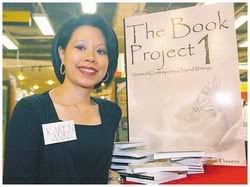
The Book Project

It's great to hear about anyone providing encouragment for new writers locally. But isn't the whole point about publication that it performs a "gatekeeping" function, preventing the market being flooded by mediocre fiction?

Iolanda forwarded this article to me which she found in today's Sun newspaper about a woman who believes it is everyone's right to write and be published.

Image hosted by Photobucket.com

IT SEEMED - at least on the face of it - an impossible task. An unassuming former flight stewardess-turned-restauranteur, with no background in publishing, decides to source, edit and publish a collection of short stories, with the promise never to reject a single manuscript that comes her way.

A woolly fantasy? Tell that to Karen Ann Theseira, who has put her time and energy in getting her idea to bear fruit with the publication of her maiden effort, called The Book Project 1.

The idea for the project came to her two years ago, when Karen Ann, a self-confessed book lover who firmly believes everyone has a story to tell, wanted to find a way to encourage ordinary people to write.

The result is The Book Project 1 (published by Various Channel Marketing Sdn Bhd) which offers 23 original short stories from 21 writers in one collection.

Karen Ann herself contributed two short stories, Women (under the pen name Ira) and Dating Game in this compilation. The lanky lady, who is married to an engineer and currently resides in Johor Baru, has began working on the second volume, The Book Project 2.

Here's a link to the rest of the article by Bissme S. and his interview with Karen.